Choosing an Air Purifier Filter For Claritin starts with a simple distinction: Claritin is an allergy medicine, while a purifier reduces airborne particles. It does not replace medication or medical advice. Still, cleaner air may help limit exposure to common indoor triggers, including pollen, pet dander, and some dust particles.
The U.S. Environmental Protection Agency reports that indoor concentrations of some pollutants can be two to five times higher than outdoor levels. That figure covers many pollutants, not allergies alone. For airborne allergens, a properly sized purifier with a true HEPA filter is often a practical option. HEPA media are rated to capture at least 99.97% of particles measuring 0.3 microns under specified test conditions. The rating matters, but so do the complete unit’s design, airflow, and filter fit.
Room size matters.
AHAM’s Clean Air Delivery Rate (CADR) testing offers a useful way to compare purifier performance for smoke, dust, and pollen. Check the model’s CADR against your room size, then consider noise, replacement-filter cost, and how often you will run it. A carbon layer may help reduce odors, but it is not a substitute for particle filtration. One caveat: no filter removes every allergen, especially sources settling on bedding, carpets, or furniture. This guide compares filter types and selection criteria, while keeping expectations realistic. The best choice is the one that fits your room, your likely triggers, and your routine.
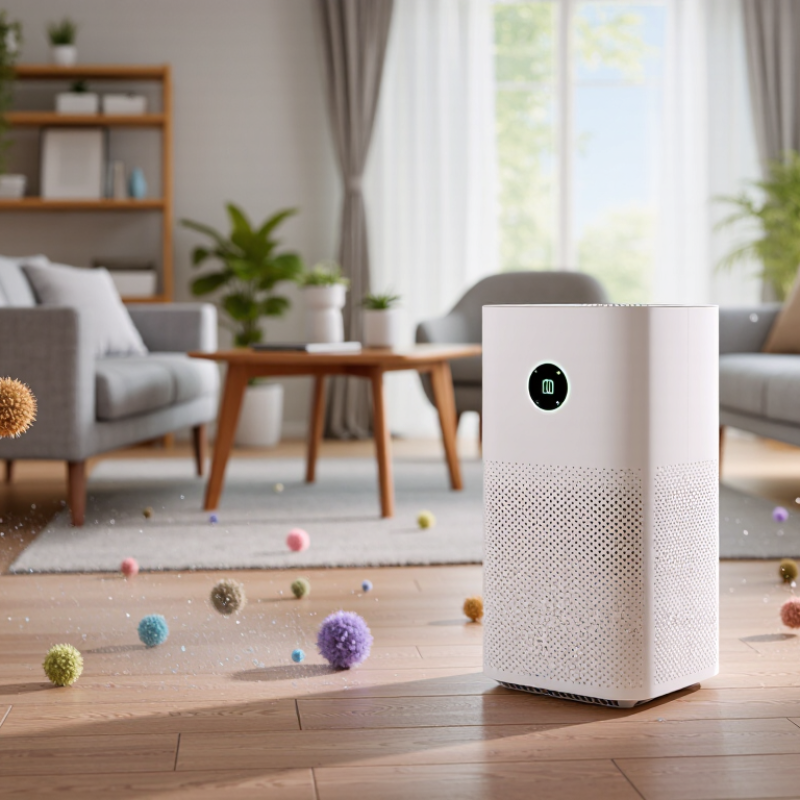
What Claritin Treats and Which Airborne Allergens Can Trigger Symptoms
Loratadine, the active ingredient in some nonprescription allergy medicines, can ease sneezing, a runny nose, and itchy or watery eyes. These symptoms often follow exposure to allergens, not a cold virus. It blocks histamine, a chemical involved in allergic reactions. Relief varies, and it does not remove allergens from a room or treat every cause of congestion. That distinction matters.
Common airborne triggers include tree, grass, and weed pollen; mold spores; and tiny particles from dust mites or pets. Pollen may drift through an open window and settle on a pillow. Dust mite particles can rise when bedding is shaken, while mold spores may circulate from damp areas. Not every trigger floats constantly. Some settle, then become airborne again when someone vacuums or moves furniture. I find that detail easy to overlook. A room’s visible dust also cannot reveal which allergen is causing symptoms. A properly sized air purifier with a HEPA filter can capture many airborne particles as air passes through it, but it cannot clear allergens trapped in fabrics or stop new pollen entering. Matching symptom timing and location with likely exposures can help guide practical steps.
Choosing an Air Purifier Filter for Allergy Symptoms
| Filter or feature |
What it can capture |
How it may help |
Limitations and selection notes |
| True HEPA filter |
Airborne particles such as pollen, pet dander, mold spores, and some dust-mite allergen particles. |
A strong choice for reducing airborne particles that can trigger nasal, eye, or respiratory allergy symptoms. A HEPA filter is tested to remove at least 99.97% of particles 0.3 micrometers in size as air passes through it. |
It does not remove allergens that have settled on bedding, carpets, or furniture. Choose a purifier sized for the room and follow the filter-replacement instructions. |
| High-efficiency particle filter |
Many airborne particles, depending on the filter’s tested efficiency and the device’s design. |
May reduce airborne allergen particles when the filter is well sealed and the purifier moves enough air for the room. |
“High efficiency” alone does not establish that a filter meets the True HEPA test standard. Check the stated performance and room coverage. |
| Activated carbon filter |
Some gases, odors, and volatile organic compounds, depending on the amount and type of carbon. |
Can complement a particle filter when odors or certain gases are a concern. |
It is not a substitute for a particle filter and generally does not capture pollen, dander, or mold spores. Performance varies by filter design and use. |
| Room coverage and clean-air delivery |
Not a filter type; these indicate how much cleaned air a purifier can deliver for a space. |
An appropriately sized purifier can circulate and filter room air more effectively when operated at a suitable setting. |
Check the stated room area and clean-air delivery information. A small unit may be less effective in a large room, especially at a quiet, low setting. |
| Common airborne allergy triggers |
Pollen, pet dander, mold spores, and particles carrying dust-mite allergens. |
Identifying likely triggers can help guide filtration and other exposure-reduction steps. |
Triggers vary by person and season. Dust mites are commonly found in bedding and upholstery, so washing bedding and reducing settled dust may also be important. |
| Symptom treatment |
An air purifier filters air; allergy medicines act on symptoms through different mechanisms. |
Antihistamines can relieve symptoms such as sneezing, runny nose, itchy nose or throat, and itchy or watery eyes in some people. |
A purifier does not treat an allergy or replace medical care. Follow medicine directions and consult a healthcare professional about persistent or severe symptoms. |
Practical takeaway: For airborne allergy particles, look for a well-sealed purifier with a True HEPA filter, suitable room coverage, and replacement filters that are maintained as directed.
How True HEPA Filters Capture at Least 99.97% of 0.3-Micron Particles
For allergy-sensitive households, a True HEPA filter is a strong choice for capturing airborne particles. The U.S. Department of Energy defines HEPA performance as removing at least 99.97% of particles measuring 0.3 microns under specified test conditions. This size is especially difficult to capture; larger particles, such as much pollen, and smaller particles can also be trapped through different physical mechanisms. Tiny particles matter.
That figure describes filter performance, not a guarantee that every room’s air becomes 99.97% cleaner. The U.S. Environmental Protection Agency’s Guide to Air Cleaners in the Home notes that portable air cleaners can reduce airborne particles, but results depend on room size, airflow, and placement. Check the unit’s clean air delivery rate (CADR), an industry rating used to compare how quickly it filters particles. Place it where air can circulate, not behind a curtain or beside a blocked sofa. Real rooms are messy. Open windows, cooking, and foot traffic continually add particles, so a purifier works best alongside regular cleaning and source control. It may ease exposure; it does not treat allergies or replace medical advice.
How AHAM’s CADR-to-Room-Size Guidance Helps Match Purifier Capacity
For allergy season, a high-efficiency particle filter is a practical choice for capturing airborne pollen, dust, and pet dander. But filter type alone does not determine performance. A purifier must move enough clean air through the room. AHAM’s CADR-to-room-size guidance helps compare that capacity with the space you want to treat. CADR measures how quickly a unit delivers filtered air for specific particles, including dust, pollen, and smoke.
Measure the room’s floor area before choosing a purifier. Then check the recommended room size and CADR on its certification label. A larger room generally needs a higher CADR; high ceilings may call for extra capacity, too. If the unit will run on a quiet, low setting, its real-world cleaning rate may be lower than its maximum rating. It is a useful guide, not a guarantee. Room layout matters, and I would not treat one number as the whole story.
Tips: Keep doors and windows closed when practical, and leave space around the purifier’s air intake. Check the filter regularly; a visibly dusty filter may need attention sooner. Match the replacement filter to the purifier’s specifications. CADR helps size the machine, while the filter captures particles. Both matter.
Where Activated Carbon Fits: Odors and Gases, Not Allergy Particles
For allergy relief, activated carbon is useful—but for a different job. It adsorbs some gases and odor-causing compounds, such as cooking smells or fumes from household products. It does not reliably capture pollen, pet dander, or other airborne allergy particles. EPA’s Guide to Air Cleaners in the Home notes that gas-phase filters need enough sorbent material to work effectively, and there is no widely used rating system for comparing their gas removal. A thin carbon sheet may freshen the air briefly. It is not a substitute for particle filtration.
Particle capture matters more for allergens. The U.S. Department of Energy defines HEPA filtration as capturing at least 99.97% of particles 0.3 micrometers in size under specified test conditions. That figure describes a filter test, not a guarantee that every room will become allergen-free. In practice, a well-fitted particle filter, suitable airflow, and regular replacement all matter. Check the purifier’s clean-air delivery rate for the room, too.
Carbon still has a place. A noticeable kitchen odor may fade while pollen remains untouched. That distinction is easy to miss. One caveat: carbon performance varies with the amount and type of material, and odors can return as it becomes saturated. For allergy particles, prioritize a high-efficiency particle filter; add substantial carbon when gases or persistent odors are also a concern.
How to Maintain a HEPA Purifier Alongside Claritin Use
A HEPA purifier can support allergy management, but it does not replace an antihistamine or medical advice.
The U.S. Environmental Protection Agency says true HEPA filters capture at least 99.97% of 0.3-micron particles under specified test conditions. That rating does not mean every purifier cleans every room equally well. The Association of Home Appliance Manufacturers recommends checking clean air delivery rate (CADR) against room size; its guidance suggests a smoke CADR of at least two-thirds of the room’s area in square feet. Measure the room, then place the purifier where air can move freely—not behind a curtain or beside a pile of laundry.
Maintenance matters. Small details count.
Check the manufacturer’s schedule, because a clogged prefilter can restrict airflow before the HEPA filter looks dirty. Wash or vacuum a prefilter only if its instructions allow it; many HEPA filters are not washable. Replace disposable filters as directed, and seat each one firmly to prevent air from bypassing the filter. Keep the unit running during allergy-heavy periods if practical, with doors and windows closed when outdoor pollen is high. A purifier may reduce airborne particles, but it cannot remove allergens already settled on bedding or floors. Vacuum regularly, wash bedding, and track symptoms. I’ve found that filter changes are easy to postpone; a calendar reminder helps, though it is not a perfect fix.
Conclusion
An Air Purifier Filter For Claritin can help reduce airborne allergens in your home, while Claritin is used to relieve allergy symptoms rather than remove their causes. Pollen, dust, pet dander, and mold spores may trigger symptoms, so choosing a purifier with a true HEPA filter is a practical way to capture particles from indoor air. True HEPA filters are designed to capture at least 99.97% of particles measuring 0.3 microns under specified test conditions.
To choose a purifier with suitable capacity, compare its Clean Air Delivery Rate (CADR) with the size of the room where it will be used. Activated carbon can help reduce certain odors and gases, but it does not replace HEPA filtration for allergy particles. Follow the purifier’s maintenance instructions, keep air inlets unobstructed, and replace or clean filters as directed. Used alongside appropriate allergy care, a well-maintained purifier can support a cleaner indoor environment.

