
Featured High-Demand Filtration Products (Primary Portfolio)
Explore our industrial-grade, certified product lines engineered for precision airborne containment, HVAC energy optimization, and specialized indoor air quality (IAQ) deployment.





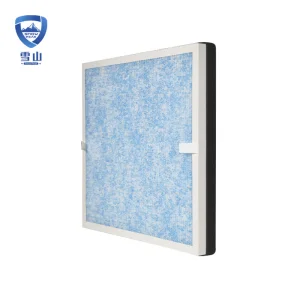
High Efficiency HEPA Air Filter Frame - Heat Resistant Stainless Steel/Aluminum
View Product Details

Executive Overview: Macro Industrial Clean Air Landscape
The global filtration industry is undergoing a structural paradigm shift. Rapid urbanization, stringent decarbonization mandates (such as EU Green Deal and US EPA Clean Air Regulations), and the explosion of sub-micron manufacturing environments (semiconductor fabs, biotechs, and EV battery gigafactories) have elevated air filtration from a basic facility maintenance item to a critical strategic asset.
High-performance filtration systems are directly responsible for maintaining mechanical operating efficiency, preventing catastrophic cleanroom contamination yield losses, and ensuring regulatory health compliance. Modern engineering demands multi-stage filtration architectures that dynamically balance low initial pressure drop ($\Delta P$), maximized dust holding capacity (DHC), and absolute particulate capture efficiencies down to 0.1 microns.
At Shenzhen Snow Peak Clean Technology Co., Ltd., we sit at the intersection of material science innovation and high-volume automated manufacturing. By synthesizing advanced electret-charged meltblown media, synthetic fiber matrices, and catalytic carbon substrates, our product lineup provides end-to-end coverage across coarse pre-filtration (G1-G4), fine particulate separation (M5-F9), and absolute HEPA/ULPA purification (H13-U17).
Global Commercial & Industrial Sector Engineering Applications
Air filtration demands vary drastically by operational vertical. Snow Peak’s specialized filter configurations are customized to solve sector-specific physical, thermal, and chemical airborne challenges.
Microelectronics & Fabs
Semiconductor manufacturing demands pristine ISO Class 1 to Class 5 environments. Ultra-low pressure drop mini-pleat HEPA/ULPA filters eliminate sub-micron silica dust, preventing wafer defectivity while cutting fan energy usage by up to 18%.
Pharmaceutical & Biosafety
Compounding pharmacies and bio-laboratories rely on robust, heat-resistant aluminum and stainless-steel frame HEPA units capable of withstanding aggressive inline sterilization and thermal cycles without elastomeric seal degradation.
Automotive Paint Spray Booths
Laminar airflow optimization in spray booths requires high-density thermal-bonded ceiling filter cotton (G4/M5). These filters capture fine paint overspray while maintaining non-turbulent downward airflow to prevent surface defects.
Data Center Cooling HVAC
Hyperscale server facilities require continuous high-volume air turnover. Synthetic pocket bag filters (F7-F9) offer extreme surface area profiles, buffering heavy dust loads and preventing corrosive salt aerosol ingress.
Commercial IAQ & Purifier Aftermarket
OEM/ODM compound replacement filters combine true H13 HEPA media with coconut-shell honeycomb activated carbon, capturing 99.97% of bio-aerosols, pet dander, pollen, and volatile organic compounds (VOCs).
Commercial Kitchens & Odor Control
High-iodine activated carbon foam and wire-mesh media rolls efficiently adsorb gaseous sulfur dioxide, formaldehyde, and cooking grease smoke, maintaining compliance with urban municipal discharge codes.
Material Science Innovation & Technology Roadmap
Snow Peak's engineering laboratory focuses on continuous material advancements to break the classic compromise between filtration efficiency and airflow resistance. Our technology roadmap highlights key breakthroughs driving our product performance:
Phase 1: Nano-Electret
Corona charging integration into polypropylene meltblown media to boost electrostatic sub-micron capture without raising mechanical density.
Phase 2: Hybrid Composite
Lamination of hydrophobic synthetic mesh onto structural glass-fiber backings to withstand extreme humidity and mechanical stress.
Phase 3: Catalytic Decomp
Cold-catalyst functionalization on activated carbon to room-temperature decompose formaldehyde ($HCHO$) into $H_2O$ and $CO_2$.
Phase 4: Low Energy Pleating
Thermoplastic continuous bead spacing technology ensuring uniform airflow channels and minimizing dead-zone pressure drop spikes.
Phase 5: Sustainable Polymers
Development of biodegradable bio-based filter media rolls aligned with global zero-waste corporate initiatives.
| Filter Class (EN779 / ISO 16890) | Primary Substrate Material | Average Efficiency (Particle Size) | Recommended Airflow Velocity | Target Operational Setting |
|---|---|---|---|---|
| Coarse G3 - G4 (ePM10 50%) | Nylon Mesh / Wire-Laminated Poly | >90% coarse dust (>10 µm) | 1.5 - 2.5 m/s | AHU Pre-filtration, HVAC Intake |
| Medium M5 - M6 (ePM2.5 65%) | Thermally Bonded Synthetic Cotton | 60% - 80% (0.4 µm) | 1.2 - 1.8 m/s | Spray Booths, Commercial AC |
| Fine F7 - F9 (ePM1 85%) | Meltblown Non-woven Synthetic | 80% - 95% (0.4 µm) | 1.0 - 1.5 m/s | Hospitals, Server Rooms, Cleanrooms |
| HEPA H13 - H14 (ISO 35E) | Sub-micron Glass Fiber / PTFE | 99.97% - 99.995% (0.3 µm / MPPS) | 0.45 m/s (±20%) | Pharma, SMT Cleanroom, Medical Devices |
| Chemical / Gas-Phase | Honeycomb Activated Carbon | CTC Adsorption >60% | 0.2 - 0.8 m/s | VOC Removal, Odor Control Units |
Localized Compliance, Quality Assurance & Global Logistics Support
Navigating cross-border procurement requires absolute guarantee of material compliance, international certification, and localized logistical agility. Snow Peak provides localized documentation and technical support across Europe, North America, Southeast Asia, and the Middle East.
Strict Quality Control Protocols
Every production batch undergoes a rigid 4-stage Quality Control lifecycle: Incoming Material Quality Control (IQC), In-Process Quality Control (IPQC) during automated pleating, Finished Product Inspection (FQC) using laser particle counters, and Outgoing Quality Control (OQC).
Full International Compliance
Our products strictly align with international standard testing criteria including EN779:2012, ISO 16890, EN1822, and ASHRAE 52.2. Raw materials are fully RoHS and REACH compliant, guaranteeing freedom from hazardous heavy metals and off-gassing agents.
Flexible OEM / ODM & Private Label
We empower regional distributors and brand owners with total OEM/ODM flexibility: fully customizable frame dimensions (cardboard, galvanized iron, aluminum alloy, ABS), custom branding/packaging, custom pleat densities, and tailored drop-ship distribution.
Localized Application Scenarios & Engineering Field Results
Real-world validation is the cornerstone of our engineering authority. Below are detailed field deployments demonstrating the impact of Snow Peak's optimized filtration solutions:
Scenario A: Tier-1 Automotive Paint Line
Challenge: Micro-particulate contamination causing paint cratering defects and excessive operational energy usage in a high-speed vehicle painting facility.
Solution: Implementation of Snow Peak’s High-Efficiency G4/M5 Ceiling Filter Cotton combined with customized deep-pleat pre-filters.
Outcome: Paint surface rework rate reduced by 34%; overall AHU pressure drop declined by 42 Pa, reducing fan electricity consumption.
Scenario B: Semiconductor Cleanroom retrofitting
Challenge: Strict requirement to upgrade an existing cleanroom facility from ISO Class 7 to ISO Class 5 without expanding the footprint of ceiling HVAC fan units.
Solution: Installation of ultra-thin mini-pleated HEPA filters featuring custom extruded aluminum frames and thermoplastic separators.
Outcome: Achieved airborne particulate counts below ISO Class 5 threshold while operating at 0.45 m/s laminar flow velocity.
Scenario C: Commercial Tower VOC Mitigation
Challenge: Urban commercial high-rise experiencing severe traffic exhaust fumes and volatile organic compound (VOC) complaints from tenants.
Solution: Retrospective fitting of ODM Honeycomb Activated Carbon Filters alongside G4 pleated synthetic panel pre-filters.
Outcome: Indoor $TVOC$ levels fell below 0.3 mg/m³; tenant air quality satisfaction scores improved to 98%.
Secondary Portfolio & Specialized Filter Media Solutions
Explore our extended catalog including evaporative humidification pads, specialty replacement filter packs, and bulk non-woven media rolls available for global B2B procurement.








Deep Technical FAQ & Knowledge Base (Procurement & Engineering)
Clear, definitive answers to complex technical questions encountered by HVAC engineers, cleanroom managers, and procurement specialists.
A: Initial pressure drop directly correlates with fan power requirements via the affinity laws. A filter designed with a lower initial resistance (e.g., 25 Pa vs 45 Pa at rated flow) allows AHU variable frequency drives (VFDs) to run at lower RPMs. Over a standard 12-month lifecycle, choosing low-resistance media can reduce total HVAC system electrical consumption by 15% to 25%, easily offsetting the initial capital outlay of premium filtration units.
A: MPPS represents the particle size at which a specific filter media exhibits its lowest capture efficiency. Particles larger than the MPPS are captured via interception and impaction, while smaller particles are captured via Brownian diffusion. Under EN 1822 standards, MPPS typically falls between 0.12 and 0.25 microns. A certified True H13 filter guarantees at least 99.95% efficiency *at the MPPS*, not merely for larger 0.3-micron particles.
A: Synthetic meltblown pocket filters offer superior mechanical durability, complete resistance to moisture/hydrolysis, and non-shedding fiber structure, making them ideal for high-humidity HVAC systems and food/beverage plants. Glass fiber pocket media, while offering exceptional thermal resistance, can be prone to fiber shedding if subject to severe turbulence or physical mishandling during installation.
A: Honeycomb carbon structures feature rigid geometric airflow channels coated with high-purity micro-porous carbon granules (Iodine value >900 mg/g). This structural layout maximizes the active chemical contact surface area while maintaining an exceptionally low pressure drop. In contrast, carbon foam often suffers from rapid surface saturation and higher airflow resistance under heavy gas loads.
A: Yes. We specialize in custom OEM and replacement manufacturing. Our automated CNC framing, pleating, and sealant injection lines can produce custom dimensions down to millimeter precision across cardboard, galvanized steel, extruded aluminum, and molded plastic frames without requiring expensive tooling setup fees for moderate order volumes.