
Featured Air Filtration Products & Compatible Media Series (Part I)
Precision-engineered replacement filter elements and high-performance gas-phase adsorption materials manufactured under rigorous international ISO/EN quality standards.
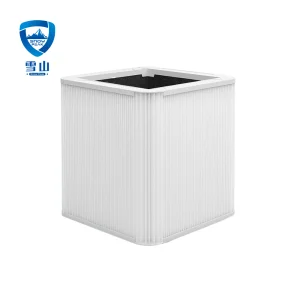


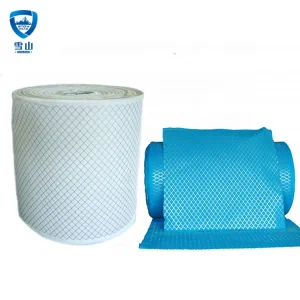
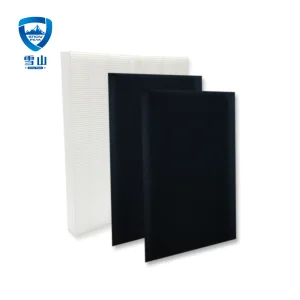

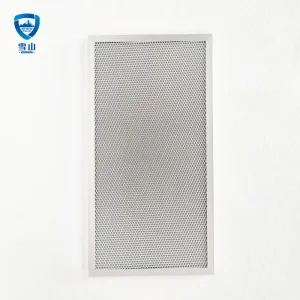
Global Commercial Status & OEM Industrial Ecosystem for Blueair Systems
The global commercial landscape for premium indoor air quality (IAQ) solutions has undergone a paradigm shift. As high-efficiency air purifiers transitions from luxury consumer appliances into critical healthcare, commercial, and residential infrastructure, original equipment manufacturers (OEMs) and contract service providers require advanced engineering capabilities, robust supply chains, and precise component customization.
In the specialized domain of Blueair-compatible filtration systems and service solutions, manufacturing standards must align with complex aerodynamic parameters, stringent low-pressure-drop requirements, and multi-stage gas/particulate filtration dynamics. The global market demand for high clean air delivery rates (CADR) across volatile organic compounds (VOCs), ultra-fine PM2.5, airborne allergens, and microbial pathogens has placed immense technical focus on the underlying media matrix and structural assembly of replacement filter units.
Industrial vendors and service suppliers catering to Blueair ecosystems face distinct market dynamics across key global territories:
North American Market Dynamics
High demand for AHAM AC-1 certified replacement filters, focusing heavily on wildfire smoke mitigation (fine ash and VOC adsorption) and high CADR performance in large residential footprints (e.g., Blueair Classic & Blue Pure series compatibility).
European Regulatory Strictness
Governed by EN 1822 and ISO 16890 protocols, European procurement prioritizes eco-design compliance, low-energy motor compatibility, recyclable frame materials, and zero chemical off-gassing from hot-melt adhesives.
Asia-Pacific High-Density Urban Needs
Driven by dense metropolitan indoor spaces, industrial smog, and heavy formaldehyde off-gassing from interior renovations. Requires augmented multi-layer composite media combining H13 True HEPA with high-iodine activated carbon layers.
Advanced Engineering: HEPASilent™ Mechanics & Media Synthesis
Achieving peak filtration efficiency while maintaining minimal acoustic output and low power consumption requires deep domain expertise in fluid dynamics and non-woven fiber physics. Blueair systems rely on a hybrid mechanical and electrostatic filtration paradigm—often commercialized as HEPASilent™ technology. For third-party manufacturers, OEM providers, and technical service networks, replicating or enhancing this performance envelope demands ultra-precise material engineering.
1. Electrostatic Hydro-charging & Meltblown Microfiber Matrix
Standard mechanical HEPA filters rely on ultra-dense glass-fiber webs that create high resistance to airflow, forcing fans to draw more power and generate noticeable noise. In contrast, optimized Blueair-compatible replacement media utilizes synthetic polyolefin (polypropylene) fibers generated via advanced meltblown processes, followed by high-voltage Corona or Hydro-charging treatment.
This permanent dipol-moment electrostatic charge allows the fibers to attract and trap microscopic sub-micron particles down to 0.1 microns (viral vectors, combustion nanoparticles, smoke) at physical fiber spacings that would otherwise allow them to pass. The result is a dramatically reduced air resistance ($\Delta P$) without compromising Most Penetrating Particle Size (MPPS) efficiency.
2. Gas-Phase Adsorption & Carbon Impregnation Protocols
Particulate filtration addresses only half of the indoor air hazard. Volatile Organic Compounds (benzene, toluene, formaldehyde) and environmental odors require high-surface-area gas-phase chemisorption. Professional Blueair replacement filter manufacturing integrates virgin coconut-shell activated carbon matrix layers.
By controlling carbon particle mesh size (typically 20x40 or 30x60 mesh), iodine numbers (>1000 mg/g), and utilizing thermal bonding instead of solvent-based glues, manufacturers ensure maximum gas retention capacity without dusting or blocking the downstream particulate pleated pack.
| Performance Characteristic | Standard Dense Glass HEPA (H13) | Optimized Hydro-Charged Meltblown (Compatible) | Industrial Composite Dual-Layer (Filter Pack) |
|---|---|---|---|
| 0.3µm Efficiency | 99.97% (Strict Mechanical) | 99.97% - 99.99% (Electrostatic + Mechanical) | 99.99% (Multi-stage Optimized) |
| Initial Airflow Resistance ($\Delta P$) | 120 - 180 Pa (High) | 22 - 38 Pa (Ultra-Low) | 35 - 55 Pa (Balanced) |
| Acoustic Profile (Noise Output) | High (Requires Fan Boost) | Whisper-Quiet (Low Blower Load) | Low-to-Medium |
| VOC & Formaldehyde Retention | None (Particulate Only) | Optional Integrated Micro-Carbon | Heavy Granular Activated Carbon Matrix |
| Energy Consumption Index | Elevated (Higher Wattage) | Minimal (Eco-Energy Compliant) | Low-to-Moderate |
Industry Trends & Regulatory Compliance Landscape
The filtration manufacturing sector operates within a rapidly evolving framework of international quality standards, environmental directives, and smart consumer expectations. Importers, aftermarket distributors, and OEM service teams must navigate these trends to maintain competitive advantage and legal compliance across major geographic regions.
ISO 16890 & EN 1822 Shift
Transitioning from legacy ASHRAE MERV ratings to ISO 16890 (ePM1, ePM2.5, ePM10) and EN 1822 MPPS standards requires precise fractional efficiency testing across all batch outputs.
ESG & Bio-Based Materials
Rising mandate for sustainable manufacturing: bio-based PLA frames, post-consumer recycled (PCR) plastics, compostable pre-filter layers, and water-based eco-adhesives.
Smart RFID Integration
Modern purifier series feature encrypted RFID chips embedded within the filter housing to monitor lifetime usage, pressure drops, and ensure authentic filter replacement compliance.
Zero-Ozone Certification
Strict compliance with CARB (California Air Resources Board) regulations ensuring ion-assisted electrostatic media does not generate hazardous ozone byproducts ($< 0.050\text{ ppm}$).
Localized Application Scenarios & Specialized Engineering Solutons
While Blueair units are widely recognized in premium consumer homes, commercial service providers adapt these filtration systems into diverse localized environments. Each deployment scenario requires customized filter construction to maximize service life and operational stability.
Medical Clinics & Isolation Facilities
In dental suites, outpatient clinics, and eldercare centers, biological load control is paramount. Blueair-compatible units utilized in these spaces are upgraded with antimicrobial synthetic pre-treatments (silver-ion micro-encapsulation) within the non-woven fibers to prevent mold sporation and bacterial amplification across the media matrix during extended operation.
Luxury Hospitality & Executive Offices
Acoustic comfort combined with zero-odor performance is essential for 5-star hotel suites and corporate boardrooms. Compatible replacement packs feature dense, noise-damping frame gaskets made from closed-cell EVA foam, coupled with catalytic carbon blends that target tobacco smoke, perfumes, and cooking odors seamlessly.
Educational Institutions & Childcare
High occupant density leads to rapid dust buildup and elevated carbon dioxide/airborne pathogen levels. Heavy-duty foldable replacement filters (such as Blue Pure 211+ compatibles) provide massive surface area extension, allowing up to 12 months of continuous dust holding without causing fan motor thermal overload.
Industrial Clean Environments & Laboratories
For cleanroom pre-filtration and precision instrument labs, high-temperature resistant frames (stainless steel or aluminum alloys) combined with specialized pleated media prevent degradation under chemical solvent exposure and continuous airflow friction.
Technical Roadmap & Future Filtration Outlook (2025–2030)
The next decade of air filtration technology will blur the line between passive physical media and active digital components. Manufacturers partnering with global distributors must prepare for systemic shifts in media engineering:
Ultra-Low Resistance Nanofiber Webbing
Transitioning from conventional meltblown to electrospun nanofiber coatings (fiber diameter 50–100nm). This creates extremely uniform pore size distribution, yielding true HEPA filtration with up to 40% less initial pressure drop than legacy synthetic packs.
Self-Regenerating Gas-Phase Media
Deployment of room-temperature cold catalyst layers (nano-metal oxide composites) capable of breaking down formaldehyde and VOCs into water ($H_2O$) and carbon dioxide ($CO_2$) continuously without active carbon saturation limits.
Fully Biodegradable Intelligent Filters
Introduction of fully circular, ocean-degradable non-woven polymers paired with printed conductive carbon traces. These embedded traces act as real-time particle-loading and humidity sensors directly communicating with home automation networks.
Comprehensive OEM / ODM Manufacturing & Service Solutions
From raw material synthesis to finished shelf-ready retail packaging, high-grade filter manufacturing requires an end-to-end quality assurance ecosystem. Our facility delivers tailored solutions for brand owners, aftermarket service chains, and commercial HVAC buyers.
1. Custom Dimensional Pleating
High-speed computer-controlled pleating lines capable of handling pleat heights from 8mm to 280mm with precise hot-melt bead spacing to prevent pleat blinding under high velocity airflow.
2. Quality Control & MPPS Testing
100% batch testing using TSI 8130A automated filter testers and particle counters to verify fractional efficiency, airflow resistance, and zero leakage prior to boxing.
3. Private Label & Packaging
Complete turnkey OEM packaging solutions including customized color boxes, drop-ship protective inserts, barcode printing, multi-language manuals, and branded frame printing.
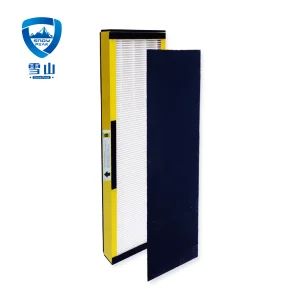
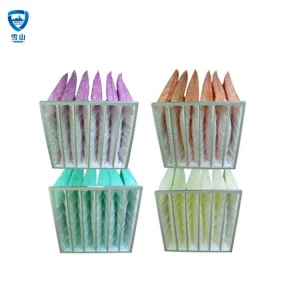
Industrial & Replacement Filtration Catalog (Part II)
Comprehensive filtration elements spanning pre-filters, HVAC pocket bags, custom replacements, and specialized industrial spray booth media.


Frequently Asked Questions (FAQ) & Service Knowledge Base
Technical insights for B2B procurement managers, OEM buyers, and aftermarket service providers.
How do compatible replacement filters maintain low pressure drop similar to Blueair OEM filters?
Compatible high-performance filters achieve low initial pressure drop ($\Delta P < 30\text{ Pa}$) by combining electrostatically charged polypropylene meltblown media with optimized pleat spacing technology. Rather than relying solely on dense physical barrier fiberglass, the electrostatic charge attracts sub-micron particles, allowing for a more open fiber structural matrix that permits high volumetric airflow with minimal resistance.
What is the difference between foldable filters (e.g., Blue Pure 211+) and rigid frame filter packs?
Foldable filters utilize flexible non-woven side bands and collapsible pleat geometry. This design significantly reduces shipping volume and packaging footprint for global distribution while allowing easy user installation. Rigid frame packs utilize solid extruded ABS, polystyrene, or aluminum frames designed for heavy industrial or high-vibration commercial HVAC environments where structural rigidity is necessary to prevent airflow bypass under high static pressure.
Can OEM custom filters be manufactured with integrated RFID chips for filter life monitoring?
Yes. We support complete OEM smart filter integration, including custom RFID/NFC tag embedding, custom serial number printing, and proprietary frame keying. This ensures compatibility with modern smart air purifiers that track filter life based on operating hours, fan speed, and localized sensor feedback.
How is carbon off-gassing and dusting prevented in activated carbon replacement media?
To prevent carbon dust from shedding into the purified airstream, we utilize high-hardness coconut shell activated carbon (hardness rating > 98%) bound between synthetic non-woven carrier layers or immobilized within a honeycomb matrix. Furthermore, thermal laminating adhesives replace volatile solvent glues, eliminating secondary chemical off-gassing.
What quality assurance steps are taken during volume manufacturing to ensure zero air bypass?
Every batch undergoes rigorous 4-stage Quality Control: IQC (Incoming Quality Control) on raw non-wovens and carbon; IPQC (In-Process Quality Control) inspecting pleat uniformity and polyurethane potting seal integrity; FQC (Final Quality Control) running TSI 8130A automated MPPS particulate penetration tests; and OQC (Outgoing Quality Control) inspecting seal gasket dimensioning and drop-test packaging compliance.