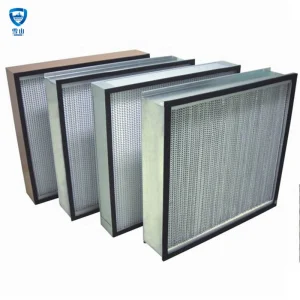
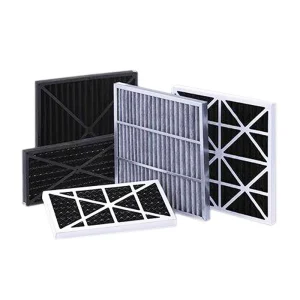
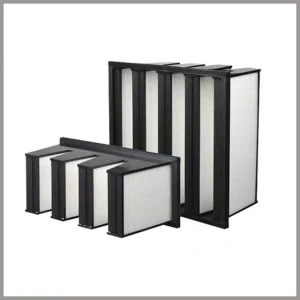
High-capacity media rolls, antibacterial HEPA matrices, and custom VOC adsorption solutions validated for severe industrial environments.




Analyzing global environmental mandates, industrial solvent emission dynamics, and the commercial imperative for certified carbon filtration solutions.
Under the European Union’s Industrial Emissions Directive (IED 2010/75/EU) and national environmental protection frameworks (such as US EPA Clean Air Act Title V), industrial facilities must implement Best Available Techniques (BAT) to capture organic solvents. Achieving a CE Certification for VOC removal activated carbon assemblies validates that the equipment meets stringent European safety, health, and environmental protection requirements—encompassing the Low Voltage Directive (2014/35/EU), Electromagnetic Compatibility (EMC 2014/30/EU), and, where explosive vapors are present, the ATEX Directive (2014/34/EU).
Global engineering procurement teams no longer accept unverified filtration media. Industrial OEMs and plant managers demand complete traceability, standardized carbon tetrachloride (CTC) adsorption ratings, controlled pressure drops, and structural integrity. Obtaining certified activated carbon solutions guarantees operational continuity, eliminates regulatory penalty risks, and minimizes total cost of ownership (TCO) through extended media lifecycle and reduced energy consumption.
Deep dive into physical adsorption kinetics, pore size distribution, chemical impregnation, and mass transfer zone thermodynamics.
| Pore Classification | Pore Diameter Range | Primary Physical Function | Target VOC Molecular Types |
|---|---|---|---|
| Micropores | < 2.0 nm | High-energy adsorption sites via van der Waals forces | Low MW VOCs, Benzene, Toluene, Small Solvents |
| Mesopores | 2.0 nm – 50.0 nm | Transport pathways & physical capillary condensation | Medium/Large Organic Hydrocarbons, Polymers |
| Macropores | > 50.0 nm | Feeder channels for gas transport into internal matrix | Bulk gas diffusion, high-flow aerosol entry |
CTC (Carbon Tetrachloride Value): Measures the pore volume available for VOC adsorption. Premium coal-based or coconut-shell carbons exhibit CTC ratings between 60% and 105%.
Iodine Number (mg/g): Reflects micropore capacity (0-2 nm). Higher iodine numbers (>1050 mg/g) correlate directly with longer operational life when capturing light molecular weight organic gases.
When raw physical activated carbon cannot capture reactive or polar molecules (e.g., formaldehyde, hydrogen sulfide, ammonia, or organic acids), chemical impregnants are bonded to the matrix.
Targeted chemicals such as Potassium Permanganate (KMnO₄), Phosphoric Acid (H₃PO₄), or Potassium Hydroxide (KOH) induce catalytic breakdown or neutralization reactions.
As VOC-laden air streams pass through an activated carbon bed, a moving gradient called the Mass Transfer Zone (MTZ) forms.
Proper carbon depth, residence time (typically 0.1 to 0.5 seconds), and optimized bed velocity prevent early VOC breakthrough, maintaining purification efficiencies exceeding 98.5%.
Compliance architecture verifying mechanical integrity, flame retardancy, low pressure drop, and chemical safety standards.
VOC purification systems frequently treat flammable organic solvents (e.g., acetone, toluene, ethanol vapors). Under ATEX directives, carbon housings must utilize anti-static media bonding, grounding connections, spark-proof metal frames (galvanized steel, stainless steel 304/316), and burst-pressure mitigation design to prevent electrostatic ignition.
Activated carbon granules, extruded pellets, and carbon-impregnated non-woven media must comply with REACH (Registration, Evaluation, Authorisation and Restriction of Chemicals) regulations. Synthetic binders, polyurethane frames, or wire mesh laminations must be free of SVHCs (Substances of Very High Concern) and toxic heavy metals.
Gas-phase air cleaning performance is standardized under ISO 10121-1/2, evaluating the removal efficiency and capacity of sorbent media against specific VOC challenge gases (toluene, sulfur dioxide, ozone, formaldehyde). Structural particulate pre-filters integrated into carbon cells are classified under ISO 16890 (ePM1, ePM2.5, ePM10).
CE certified housings undergo continuous pressure testing to guarantee air-tight sealing (Class C/D under EN 15727). Double-lip gaskets (EPDM, continuous polyurethane foam) prevent untreated VOC bypass around the filter frame edges, protecting downstream cleanrooms and ambient exhausts.
Tailored VOC filtration architectures across specialized industrial environments and commercial HVAC infrastructure.
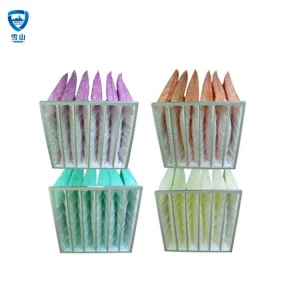
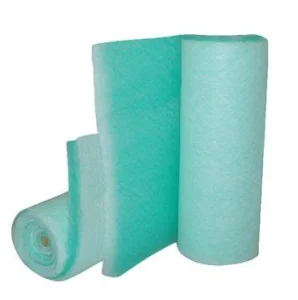
High-volume paint lines generate heavy concentrations of overspray aerosols and solvent vapors (xylene, butyl acetate). Multi-stage filtration utilizes fiberglass paint-stop floor rolls (G2-G4) followed by honeycomb activated carbon panels laminated with wire mesh to capture fine VOC emissions before atmospheric venting.
Airborne Molecular Contamination (AMC) severely degrades silicon wafer lithography. CE certified V-bank chemical filters using high-purity synthetic carbon matrices remove organosiloxanes, phthalates, and acid gases to sub-ppb levels, safeguarding ultra-clean microelectronics fabrication environments.
Active Pharmaceutical Ingredient (API) reactors emit toxic organic intermediate gases. Heavy-duty stainless steel frame carbon canisters with thermal-desorption capability ensure continuous operation, meeting strict environmental discharge thresholds and workplace exposure limits (WEL).
Pioneering hybrid catalytic carbon structures, smart sensor integration, and sustainable circular carbon reactivation lifecycle management.
The next generation of gas-phase filtration merges porous carbon matrices with room-temperature cold catalysts (titanium dioxide, manganese dioxide nanocomposites). Instead of merely storing trapped VOCs, the catalyst actively oxidizes formaldehyde, TVOCs, and benzene into harmless CO₂ and H₂O at room temperature, dramatically extending carbon saturation life.
Industry 4.0 integration incorporates miniaturized photoionization detectors (PID) and differential pressure transducers directly into the filter cassette. Real-time telemetry streams VOC breakthrough data and pressure drop metrics to building management systems (BMS), switching from scheduled maintenance to true predictive filter replacement.
Addressing key engineering inquiries regarding CE certification, carbon bed maintenance, CTC values, and OEM customization.
Industrial pre-filters, high-temperature HEPA units, deep-pleat cleanroom cassettes, and custom wire-mesh VOC carbon cells.