
High-Efficiency OEM Air Filtration Products
Explore our CE-certified replacement filters, mini-pleated HEPA units, and customized activated carbon media crafted for global distributors and industrial systems.

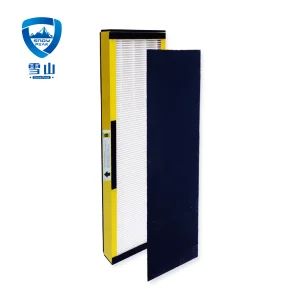

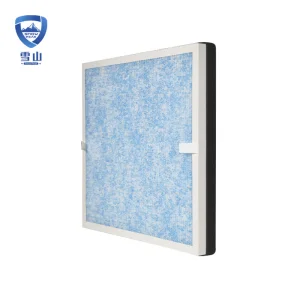




The Paradigm Shift in Gas-Phase Activated Carbon Filtration
From passive odor masking to high-performance molecular containment: how rigorous European Union compliance and global IAQ benchmarks are redesigning B2B procurement standards.
1. Global Industry Growth & Shift Toward Molecular Filtration
In the contemporary environmental engineering ecosystem, the demand for CE Certification Activated Charcoal As Air Purifier Suppliers & Products has evolved far beyond basic residential particulate trapping. Rapid global urbanization, compounding industrial emissions, tighter building envelope tightness standards, and rising awareness of Indoor Air Quality (IAQ) risks have pushed gas-phase filtration into the engineering spotlight. Volatile Organic Compounds (VOCs) such as formaldehyde, benzene, toluene, as well as inorganic toxic gases like hydrogen sulfide ($H_2S$), ammonia ($NH_3$), and nitrogen oxides ($NO_x$) represent critical chemical hazards that mechanical HEPA filters alone cannot intercept.
As a result, leading global original equipment manufacturers (OEMs), HVAC system engineering firms, and commercial air purifier brand owners require advanced activated charcoal media matrices engineered specifically for high micro-porosity, high Carbon Tetrachloride (CTC) adsorption capacity, and minimal mechanical resistance. Obtaining certified, compliant supply lines from proven manufacturing hubs is now a strategic prerequisite for market access across Europe, North America, and East Asia.
Pore Structure Optimization
Targeted thermal activation yields pore distributions optimized for molecular sizes ranging from 0.4 nm (gas molecules) to 50 nm (complex VOC complexes).
CE & Safety Compliance
Rigorously certified under EU Harmonized Standards, verifying non-toxicity, low dust abrasion rates, structural fire retardancy, and material safety.
Low Pressure-Drop Formats
Engineered carbon-impregnated nonwovens and honeycomb geometries minimize fan power consumption while maintaining maximum contact residence time.
Technical Insight: Activated charcoal operates via physical physisorption (Van der Waals forces) within its extensive internal micropore network. When augmented with specific chemical impregnants (chemisorption catalysts), its single-pass removal efficiency for low-boiling polar compounds like Formaldehyde ($CH_2O$) increases by up to 400% compared to virgin carbon substrate.
Charcoal Selection Parameters: Coconut Shell vs. Bituminous vs. Wood
Understanding the micro-porous infrastructure, BET surface area metrics, and catalytic impregnation techniques vital for procuring high-performance air purification media.
To specify the ideal activated carbon media for commercial purifiers or HVAC fresh air intakes, procurement specialists and HVAC engineers must evaluate the precursor material and activation methodologies. The three primary carbon sources exhibit distinctly different physical characteristics:
| Raw Precursor Material | Predominant Pore Type | BET Surface Area ($m^2/g$) | Iodine Number (mg/g) | Target Gas Spectrum | Mechanical Hardness |
|---|---|---|---|---|---|
| Coconut Shell Carbon | Microporous (< 2 nm) | 1,000 – 1,400 | 950 – 1,200+ | Low Molecular Weight VOCs, Odors, Radon | Exceptional (> 98%) |
| Coal / Bituminous Carbon | Meso / Macroporous (2-50 nm) | 800 – 1,100 | 800 – 1,000 | High Molecular Mass Organics, Smog, Tar | High (93% – 96%) |
| Wood-Based Carbon | Macroporous (> 50 nm) | 1,100 – 1,500 | 900 – 1,100 | Large Color Molecules, Decolorization, Heavy Smoke | Moderate (85% – 90%) |
2. Advanced Chemisorption & Impregnation Technologies
While physical adsorption captures standard volatile hydrocarbon vapors, light polar gases require chemical reaction pathways to lock them permanently within the media. Manufacturing facilities utilize proprietary liquid chemical bath impregnation or mist spraying followed by thermal stabilization:
- Acidic Impregnation ($H_3PO_4$, $H_2SO_4$): Engineered to neutralize basic gases, achieving high dynamic binding capacity for Ammonia ($NH_3$) and Amines in agricultural or laboratory HVAC systems.
- Alkaline Impregnation ($KOH$, $K_2CO_3$): Targeted specifically for acidic contaminants including Hydrogen Sulfide ($H_2S$), Sulfur Dioxide ($SO_2$), and Chlorine ($Cl_2$).
- Metal Oxide / Transition Catalyst Impregnation ($KMnO_4$, $CuO$, $MnO_2$): Drives room-temperature oxidation of Formaldehyde into harmless $CO_2$ and $H_2O$, effectively eliminating the chemical saturation limit and secondary off-gassing associated with standard carbon filters.
Commercial Form Factor Architecture & Integration
Tailored structural configurations designed to meet varying pressure drop allowances, CADR (Clean Air Delivery Rate) requirements, and housing geometries.
1. Laminated & Pleated Carbon Fabrics
Utilizes multi-layer nonwoven synthetic backings holding fine granular activated carbon (GAC) fixed via hot-melt adhesives. Offers superior airflow velocity, flexible pleating, and zero carbon-powder shedding into downstream HEPA stages.
2. Honeycomb Carbon Assemblies
Aluminum, PVC, or flame-retardant paper honeycomb cores filled with high-density activated carbon granules. Delivers maximum surface contact with extremely low static pressure penalty—ideal for premium residential units and central air handling units (AHUs).
3. Dual-Layer Compound HEPA Filters
Engineered composite structures uniting an H13/H14 fiberglass or meltblown HEPA layer with an integrated activated carbon backing. Provides space-saving single-cassette replacement ease for end consumers.
4. Carbon-Impregnated Polyurethane Foams
Open-cell reticulated foams loaded with micronized activated carbon powder. Serves primarily as washable or low-cost pre-filter media to capture large debris while knocking down initial VOC spikes.
Engineering Considerations for Airflow & Pressure Drop ($\Delta P$)
In high-efficiency air purifier design, fan noise and power efficiency are directly linked to system impedance. Increasing activated charcoal mass improves total holding capacity ($t_{\text{breakthrough}}$) but elevates pressure drop if improperly formatted. Through computer-aided pleat spacing, optimized binder distribution, and tight particle mesh sizing (e.g., 20x40 mesh vs 30x60 mesh), our manufacturing techniques minimize resistance while maximizing residence time ($t_r = V_{\text{bed}} / Q$).
CE Certification, REACH, and Global Market Access Requirements
How verified quality management systems safeguard cross-border supply chains and ensure frictionless compliance across international borders.
Navigating global regulatory landscapes requires meticulous adherence to environmental, safety, and performance standards. Procurement from non-certified sources risks border rejections, customs delays, and severe liability under consumer safety directives.
Key Compliance Checkpoints for Overseas Procurement:
- CE Marking Compliance: Demonstrates compliance with applicable EU health, safety, and environmental protection legislation. For air filtration products, this includes structural integrity, non-release of toxic dust fines, and compatibility with electrical safety requirements in integrated active purifiers.
- EU REACH Regulation (EC 1907/2006): Guarantees that activated charcoal matrices and chemical impregnants are completely free of Substances of Very High Concern (SVHC) above threshold limits (e.g., heavy metals, hazardous chemical binders).
- RoHS Directive (2011/65/EU): Verifies that frames, hot-melt adhesives, wire mesh supports, and synthetic fabrics contain no lead, mercury, cadmium, or specific phthalates.
- ISO 16890 / EN 779 & EN 1822 Testing: Standardized test protocols confirming particle fraction efficiency alongside gas-phase loading capacity benchmarks.
- UL 94 Flammability Ratings: Flame-retardant treatment options available for commercial HVAC filters requiring HB, V-0, or V-1 ratings.
Supply Chain Security & Protective Packaging: Activated carbon is highly susceptible to premature atmospheric saturation during maritime transport. All export-grade shipments from our factories feature hermetically sealed barrier foil packaging with inline desiccant packs, guaranteeing 100% active adsorption capacity upon opening at destination facilities.
Next-Generation Innovations in Gas-Phase Filtration
Pioneering eco-friendly binders, nano-composite catalytic networks, and real-time smart sensor integration for smart IAQ management.
Zero-VOC Green Binders
Transitioning from traditional solvent-based thermal adhesives to bio-based waterborne polymers, eliminating background off-gassing during initial filter startup.
Graphene & Metal-Organic Frameworks (MOFs)
Incorporating synthetic MOF nanostructures into activated carbon beds to achieve ultra-selective adsorption of specific industrial gaseous toxins at lower filter weights.
Dynamic Carbon Life Modeling
Working alongside OEM partners to develop predictive saturation algorithms based on cumulative TVOC sensor readings and airflow integration.
Frequently Asked Questions (FAQ)
Expert answers covering procurement technical specifications, CE verification, OEM customization, and product longevity.
Complete OEM Replacement & Filter Media Solutions
Explore additional high-demand replacement elements, air conditioning pre-filters, and containment bag options engineered for global shipment.





