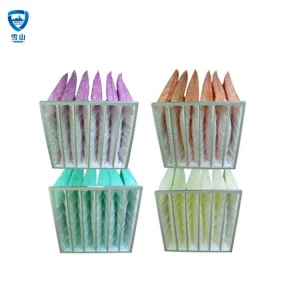
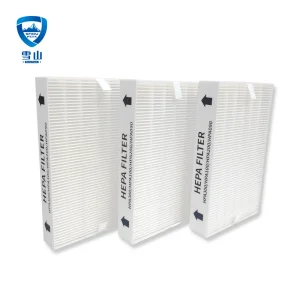
High-Efficiency Air Filtration Products (Series I)
Explore our top-tier OEM/ODM air filtration products engineered with precision media, rigid framing, and certified performance standard compliance.



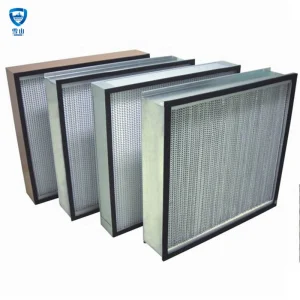
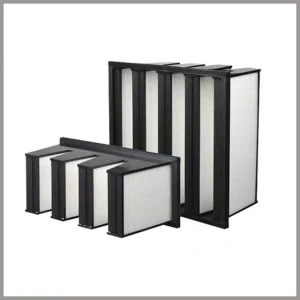
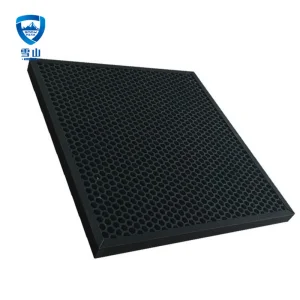
Engineering Standardizations of CE Certified Aluminum Pre Filters
An in-depth industrial whitepaper on material metallurgy, airflow kinetics, compliance, and thermal stability in multi-layer metallic filtration matrixes.
In industrial ventilation, commercial air handling units (AHUs), and heavy-duty grease management systems, primary pre-filtration dictates the operational lifespan and maintenance overhead of downstream secondary HEPA, ULPA, and gaseous filtration units. Aluminum Pre Filters serve as the first critical line of defense. Engineered with multi-layered corrugated or expanded aluminum mesh matrixes housed within anodized aluminum frames, these filters capture large airborne particulates (PM10 and larger), lint, grease droplets, and thermal sparks while maintaining ultra-low initial pressure drop.
CE & EU Directive Compliance
Our CE-marked aluminum pre-filters are tested and certified according to European safety and health directives. They meet rigorous structural integrity, non-toxic material emission standards, and mechanical safety benchmarks essential for EU and international trade compliance.
DIN 53438 Flame Retardancy
Engineered using 100% non-combustible aluminum alloy layers, these filters comply with DIN 53438 Class F1 fire resistance guidelines. They act as natural flame arrestors, preventing spark ingress into ventilation ductwork.
Lifecycle Cost Optimization
Unlike single-use synthetic pre-filters, high-grade aluminum pre-filters can be washed via high-pressure water jets, steam cleaning, or mild detergent wash cycles up to 50+ times without structural degradation, significantly reducing TCO.
Global Commercial & Industrial Engineering Specifications
Understanding material density, pleating geometry, and face velocity parameters across international HVAC specifications.
| Performance Metric | Standard Aluminum Pre-Filter | Heavy-Duty Grease Mesh Filter | High-Temp Industrial Variant |
|---|---|---|---|
| Filter Efficiency Class | EN 779 G2 - G4 / ISO Coarse 30%-60% | EN 779 G3 - G4 / ISO Coarse 45% | EN 779 G2 / ISO Coarse 30% |
| Media Construction | 3 to 9 layers layered expanded aluminum mesh | Baffle & dense woven metallic wire mesh | Multi-layer stainless/aluminum woven grid |
| Frame Materials | Anodized Aluminum Alloy 6063-T5 (10-50mm) | Extruded Aluminum / Stainless Steel 304 | Galvanized Steel / Aluminum High-Temp Frame |
| Nominal Face Velocity | 1.5 m/s – 2.5 m/s | 1.0 m/s – 2.0 m/s | 2.0 m/s – 3.0 m/s |
| Initial Resistance (@ 1.5m/s) | 15 Pa – 30 Pa | 25 Pa – 45 Pa | 12 Pa – 22 Pa |
| Recommended Final Resistance | 100 Pa – 150 Pa | 150 Pa – 200 Pa | 100 Pa – 120 Pa |
| Thermal Operating Limit | Up to 150°C (302°F) | Up to 250°C (482°F) | Up to 300°C (572°F) continuous |
| Drainage / Maintenance Features | Optional bottom drain holes & frame handles | Integrated grease trough & handles | Vibration dampening spring retention clips |
MAT-01Expanded Mesh Layering
By alternating expanded mesh pattern sizes (slits ranging from 2mm to 8mm), the media pack forms a progressive density gradient. Larger particles are caught in the upstream layers, while finer lint is captured deep within the core, maximizing dust holding capacity (DHC).
MAT-02Structural Rigidity
Cross-pattern internal support grids or double-sided aluminum wire mesh retainers ensure zero pleating deformation under high static pressure or pulsating airflow conditions typical in heavy manufacturing plants and variable air volume (VAV) systems.
MAT-03Surface Treatment Options
Available with electro-polished finishes, anodized protective coatings, or chemical conversion coatings to prevent oxidation, pitting corrosion, and chemical degradation when exposed to coastal salt air or aggressive washdown detergents.
Localized Application Scenarios & Field Engineering
Real-world deployment strategies tailored to extreme environments, stringent hygiene mandates, and demanding industrial conditions.
Commercial Kitchen Exhaust & Hoods
In commercial dining, fast-food franchises, and hotel kitchens, aluminum pre-filters capture airborne grease droplets before they enter ductwork. This mitigates severe fire hazards, maintains exhaust fan balance, and streamlines daily washdown protocols.
Automotive Paint Spray Booths
Serving as intake or exhaust pre-filtration panels, aluminum metallic mesh traps heavy paint overspray mist, varnish droplets, and coarse environmental dust. Their rigid construction prevents blowout even during high CFM paint cycle fluctuations.
Offshore Platforms & Marine HVAC
Coated marine-grade aluminum pre-filters protect fresh air intake openings on ships and drilling rigs from heavy ocean spray, salt mist, and atmospheric humidity. They prevent saltwater droplets from corroding downstream HVAC heat exchangers.
Semiconductor Cleanroom Pre-Treatment
Cleanroom makeup air units (MAUs) utilize metal pre-filters to catch outdoor particulate spikes (leaves, insects, airborne debris) before passing air to fine synthetic pockets and ULPA final filters, drastically reducing cleanroom operating costs.
Gas Turbine & Compressor Intakes
Heavy-duty power plants demand robust intake filtration. Aluminum pre-filters serve as moisture separators and coarse debris arrestors, safeguarding expensive turbo-machinery blades against physical impact damage and rapid fouling.
Commercial Office Buildings & Malls
Installed inside central AHUs, metallic washable pre-filters offer property management companies a sustainable alternative to disposable G4 fiberglass filters, reducing landfill waste and maintenance operational budgets.
China Manufacturing Supply Chain Resilience & Efficiency
Leveraging the Pearl River Delta industrial ecosystem for high-precision CNC stamping, scale economics, and rapid global delivery.
Vertical Raw Material Integration
Our facilities in Shenzhen maintain direct procurement channels with top-tier aluminum alloy extruders. By controlling ingot quality, alloy composition (Al-Mg-Si 6063-T5), and mesh tensioning in-house, we secure stable material costs and eliminate supply delays.
Automated CNC Stamping & Assembly
Equipped with automated metal slitters, CNC frame benders, ultrasonic mesh washing lines, and robotic corner riveters, our factories produce up to 15,000 custom aluminum pre-filter panels daily with millimeter-perfect dimensional tolerance.
Rigorous 4-Stage Quality Control
Every shipment undergoes IQC (Raw Material Inspection), IPQC (Automated Mesh Layer & Frame Assembly Audit), FQC (Airflow & Pressure Drop Sampling), and OQC (Packaging & Pallet Integrity Verification) before container loading.
Technical Roadmap & Next-Generation Filtration Outlook
Pioneering advancements in smart mesh functionalization, nano-surface coatings, and circular economy integration.
Super-Hydrophobic & Oleophobic Nano-Coatings
Integrating fluoropolymer plasma nano-coatings onto aluminum mesh strands to accelerate grease coalescing and water droplet runoff, reducing cleaning frequency by 40% in commercial range hood applications.
Smart Frame Sensor Embedding
Developing aluminum filter frame housings with embedded micro-RFID and differential pressure micro-transmitters that communicate real-time dust loading data directly to Smart Building Management Systems (BMS).
TiO2 / Silver-Ion Functionalized Pre-Filters
Incorporating nanostructured Titanium Dioxide (TiO2) coatings activated by ambient UV light onto the front aluminum mesh layer to bio-inactivate trapped bacteria and decompose volatile organic compounds (VOCs).
100% Closed-Loop Recycled Alloy Program
Transitioning manufacturing lines to certified 100% post-industrial recycled aluminum alloys, utilizing solar-powered automated smelting to reduce embodied carbon per filter unit by over 65%.
Localization Support & Global OEM/ODM Services
Tailored engineering support, private-label branding, and international trade compliance for importers across North America, Europe, Asia-Pacific, and the Middle East.
Custom Dimensioning & CAD Support
Our engineering team generates 2D/3D CAD drawings (STEP, DWG) within 24 hours for custom equipment dimensions, frame thicknesses, handle locations, or specialized latch mechanisms.
Flexible International Freight Logistics
Located within 45 minutes of Shenzhen and Guangzhou deep-water seaports (Yantian, Shekou), we offer optimized ocean container loading (FCL/LCL), air express, and DDP/FOB/CIF international shipping terms.
Private Label & OEM Packaging
Complete custom private labeling options including laser-etched frame logos, barcoded retail cartons, custom corner protectors, and palletized shrink-wrapping compliant with Amazon FBA or B2B distributor requirements.
Frequently Asked Questions on Aluminum Pre-Filters
Detailed technical answers to common questions regarding specifications, washing procedures, certifications, and procurement logistics.
What is the efficiency rating of an Aluminum Pre Filter?
Aluminum Pre Filters typically fall under EN 779 efficiency classes G2, G3, and G4 (equivalent to ISO 16890 ISO Coarse 30% to 60%, or MERV 2 to MERV 6 under ASHRAE 52.2). They are specifically engineered to capture large airborne particles (>10 µm) such as coarse dust, lint, pollen, insects, and aerosolized grease droplets.
How are aluminum pre-filters properly cleaned and maintained?
Aluminum pre-filters can be cleaned using warm water spray, high-pressure air jets, or immersion in hot water mixed with mild alkaline degreasing agents. Avoid highly acidic or strong caustic solutions (pH > 11) as they may cause aluminum surface oxidation. Allow the filter to air dry completely before reinstalling into the air handling unit.
Why is CE Certification essential for aluminum pre-filters?
CE Certification confirms that the filters comply with relevant European Economic Area (EEA) health, safety, and environmental protection standards. It guarantees mechanical durability, non-toxic material sourcing, flame retardancy compliance, and structural safety under high operational pressure drops.
Can aluminum pre-filters withstand high operating temperatures?
Yes. Standard aluminum pre-filters operate safely up to 150°C (302°F). Custom high-temperature variants utilizing all-aluminum or aluminum-stainless steel hybrid matrices with high-temp sealing gaskets can operate in environments up to 300°C (572°F) continuous exposure.
What standard frame thicknesses and sizes are available?
Common standard thicknesses include 10mm, 21mm, 25mm, 45mm, and 50mm. Standard panel dimensions include 595x595mm, 295x595mm, 495x495mm, and 395x495mm. Custom dimensions down to the millimeter can be manufactured upon request with zero tooling fees for standard extrusion profiles.
What is the typical production lead time for bulk OEM orders?
Sample prototypes are dispatched within 3 business days. Bulk orders ranging from 1,000 to 10,000 units are completed within 12 to 15 calendar days. Accelerated production lines are available for urgent project schedules.
High-Efficiency Air Filtration Products (Series II)
Complete your supply chain requirements with our extended catalog of replacement, pocket, honeycomb, and synthetic air filter media products.