
Featured Certified Filtration Solutions (Part I)
Explore our CE-certified replacement filters, industrial HVAC media rolls, and specialized carbon air purification assemblies engineered for maximum molecular adsorption and zero bypass.







1. Macro-Industrial Status: Global IAQ Demands & CE Compliance Ecosystem
In the era of heightened environmental consciousness, global indoor air quality (IAQ) regulations have transformed from rudimentary dust-abatement guidelines into stringent chemical safety and particulate control mandates. Modern industrial facilities, commercial real estate, biopharmaceutical laboratories, and residential developments across the European Union, North America, and the Asia-Pacific region are subject to aggressive air purification protocols. Within this regulatory ecosystem, CE Certification for Carbon Filter Air Purifier Manufacturers & Exporters serves as the definitive gold standard, validating compliance with health, safety, and environmental protection frameworks across the European Economic Area (EEA).
Volatile Organic Compounds (VOCs), hazardous air pollutants (HAPs), nitrogen dioxide ($NO_2$), sulfur dioxide ($SO_2$), and airborne odors generated by manufacturing processes pose severe occupational hazards and product contamination risks. Standard particulate HEPA filtration, while effective against airborne particulates down to 0.3 microns, is fundamentally incapable of capturing gaseous pollutant molecules. Activated carbon technology—utilizing the principles of physical adsorption and chemisorption—is the necessary companion to mechanical particulate filters.
Global commercial air handling unit (AHU) integrators and OEM air purifier brands face a double-edged challenge: maintaining low static pressure drop across filter banks while maximizing gaseous capture efficiency and ensuring long operational lifespans. Achieving CE marking is not merely a label placement; it represents rigorous third-party verification of the electrical safety (Low Voltage Directive 2014/35/EU), electromagnetic compatibility (EMC Directive 2014/30/EU), and material non-toxicity (RoHS & REACH Compliance) of the finished air purification assembly.
2. Technical Deep-Dive: Activated Carbon Physics, Impregnation & Pore Kinetics
To provide maximum Information Gain for mechanical engineers, IAQ consultants, and industrial buyers, it is essential to understand the molecular chemistry behind premium activated carbon filter media. Not all activated carbon filters are created equal. The efficacy of gaseous pollutant removal relies on micro-porous structure engineering and chemical surface functionalization.
Virgin coconut shell activated carbon provides the highest density of micropores (<2 nm diameter), creating a Brunauer-Emmett-Teller (BET) surface area exceeding 1,100 to 1,500 m²/g. Coal-based carbon offers mesopores (2–50 nm) suitable for larger organic molecules, while wood-based carbon provides macropores (>50 nm) optimal for fast transport diffusion.
The CTC value measures the adsorption capacity for non-polar organic vapors. Standard filters typically utilize 40–50% CTC carbon. Enterprise-grade carbon filters supplied by certified Chinese exporters feature 60% to 90% CTC ratings, providing dramatically higher VOC retention per gram of media.
To capture low-molecular-weight reactive gases such as formaldehyde ($HCHO$), hydrogen sulfide ($H_2S$), ammonia ($NH_3$), and ethylene, carbon is chemically impregnated. Potassium Hydroxide ($KOH$) neutralizes acid gases, Citric Acid adsorbs basic compounds, and Potassium Permanganate ($KMnO_4$) oxidizes formaldehyde into inert carbon dioxide and water.
Multi-Layer Composite Filtration Architecture
Modern high-efficiency air purifiers integrate a multi-stage sequential design: (1) Coarse Pre-Filter (G3/G4) captures gross hair and dust -> (2) Catalytic Chemisorption Carbon Layer destroys volatile gases and odors -> (3) Antimicrobial True HEPA (H13/H14) traps 99.97% to 99.995% of micro-particulates down to MPPS (Most Penetrating Particle Size). This architectural harmony prevents pre-mature carbon blinding and minimizes system static pressure loss.
| Filter Parameter | Standard Commercial Grade | Industrial Premium Grade (Snow Peak) | Testing & Compliance Benchmark |
|---|---|---|---|
| Raw Carbon Base | Recycled / Coal Carbon | 100% Virgin Coconut Shell Carbon | ASTM D2854 Pore Density |
| Iodine Value | 600 – 800 mg/g | > 1,050 – 1,200 mg/g | ASTM D4607 Standard Test Method |
| CTC Vapor Adsorption | 40% – 50% CTC | 60% – 90% CTC | ASTM D3467 Carbon Activity |
| Formaldehyde CADR | 100 – 180 m³/h | 350 – 500+ m³/h (Impregnated) | GB/T 18801-2022 / EN 13779 |
| Frame Options | Cardboard / Recycled Plastic | Anodized Aluminum / Galvanized Steel / ABS | ISO 16890 / EN 779 Structural Duty |
| CE Directives | Basic LVD Declaration | Full LVD, EMC, RoHS, REACH, CE Testing | TÜV Rheinland / SGS Certified |
3. CE Certification & Global Legal Compliance Guarantee
For enterprise importers, OEM brand owners, and industrial distributors, sourcing air purifiers and replacement filter banks from international suppliers carries non-negotiable legal responsibilities. Importing non-compliant air purification equipment into the European Union or surrounding international markets risks customs impoundment, severe financial fines, and product liability exposure.
Our manufacturing operations maintain full compliance with key European Directives and International Standards:
Ensures that motorized carbon filter air purification units operate safely within voltage limits of 50 to 1,000 V AC and 75 to 1,500 V DC. Insulation, thermal overload protection, and ground resistance are rigorously stress-tested.
Guarantees that smart carbon air purifiers equipped with digital VOC sensors, wireless connectivity, and EC blowers do not generate harmful electromagnetic interference, nor succumb to external industrial RF fluctuations.
Mandates that all filter frames, potting adhesives, gasketing materials, and carbon media are free from restricted heavy metals (Lead, Cadmium, Mercury), polybrominated biphenyls (PBBs), and Substances of Very High Concern (SVHC).
4. Vertical Industry Solutions & Localized Application Scenarios
As premier manufacturers and exporters, we customize CE-certified carbon air filtration systems across diverse global industrial and commercial verticals:
Integrated V-Bank carbon filter modules installed in central AHUs mitigate outdoor city smog, vehicle exhaust ($NO_x$), and indoor off-gassing from building materials, keeping commercial real estate compliant with LEED and WELL building standards.
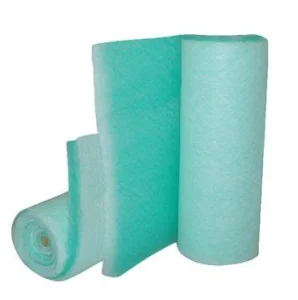
Specialized G2/G4 glass fiber paint-stop media paired with heavy-duty activated carbon banks trap paint overspray droplets while rapidly adsorbing aromatic solvent vapors (Xylene, Toluene, Acetone) prior to atmospheric discharge.
Impregnated antibacterial HEPA and carbon composite filters eradicate airborne pathogens, organic solvents, and sterilization odors, maintaining ISO Class 5 cleanroom conditions under stringent GMP audit protocols.
Corrosive gases like hydrogen sulfide cause micro-fretting corrosion on server circuit boards. High-efficiency gas-phase carbon filtration protects critical IT infrastructure against costly unplanned downtime.
5. OEM/ODM Engineering Customization & Global Export Infrastructure
Shenzhen Snow Peak Clean Technology Co., Ltd. operates state-of-the-art cleanroom manufacturing plants in Shenzhen, China. As a national high-tech enterprise, we specialize in complete contract manufacturing, turnkey ODM customization, and white-label replacement filter production for internationally recognized brands such as Honeywell, Coway, Blueair, Levoit, and Germ Guardian.
Customization Capabilities Range:
- Dimensional Engineering: Custom CAD/CAM aluminum extrusions, pleated depths from 15mm to 300mm, V-bank configurations, mini-pleat panels, and round cylindrical cartridges.
- Media Tailoring: Carbon loading weights ($100g/m²$ to $1200g/m²$), non-woven honeycomb substrates, polyurethane foam carbon matrices, and cold catalyst composite laminates.
- Private Label & Packaging: Retail-ready barcoded packaging, moisture-barrier poly-bagging, customized drop-test drop-proven export cartons, and multilingual compliance manuals.
- Export Shipping Logistics: Proximity to Yantian and Shekou ports in Shenzhen enables optimized FCL/LCL ocean freight, air express forwarding, and complete customs documentation (Form E, CO, CE DoC).
6. Technology Roadmap & Future Trends (2025–2030)
The future of industrial and residential air filtration resides in intelligent molecular catalytic technologies and low-carbon sustainable manufacturing:
Integrating transition metal oxides onto carbon matrices enables continuous decomposition of formaldehyde ($HCHO \rightarrow H_2O + CO_2$) without requiring high heat or UV light, preventing carbon saturation.
Graphene oxide functionalization dramatically increases adsorption kinetics for ultra-low concentration VOCs, extending operational filter life by up to 300% compared to standard active carbon.
Embedded RFID chips and optical gas sensors monitor real-time filter differential pressure ($\Delta P$) and chemical saturation thresholds, notifying facility managers when replacement is required.
7. Frequently Asked Questions (FAQ) for Global Buyers & Procurement
Technical and commercial answers to assist quality assurance teams, sourcing directors, and HVAC project engineers.
What does CE Certification specifically cover for a carbon filter air purifier?
How do I choose between coconut shell carbon and coal-based carbon for VOC control?
What is the typical lifespan of an industrial carbon air filter bank?
Can Snow Peak supply aftermarket replacement filters compatible with major retail brands?
What are your minimum order quantities (MOQ) and lead times for OEM projects?
How does chemical impregnation improve formaldehyde CADR?
Featured Certified Filtration Solutions (Part II)
Complete your procurement evaluation with our top-rated OEM replacement sets, high-temperature HEPA filters, and industrial V-Bank ventilation units.




