
Featured Industrial & Replacement Air Filters (Part I)
Explore our CE-certified HVAC pre-filters, replacement HEPA cartridges, and media solutions engineered for maximum dust holding capacity and minimal differential pressure.





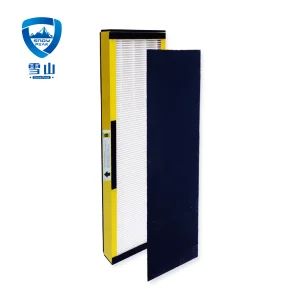


Demystifying G4 to F7 Air Filtration & CE Compliance Architectures
An engineering analysis of filtration efficiency metrics, aerodynamic resistance curves, regulatory frameworks under EU directives, and structural media configurations.
G4 Coarse Pre-Filtration Engineering
G4 grade air filters (classified under EN 779:2012, equivalent to ISO Coarse > 90% under ISO 16890) represent the foundational line of defense in modern heating, ventilation, and air conditioning (HVAC) systems. Formulated primarily from thermo-bonded synthetic polyester fibers or progressive-density non-woven media, G4 filters are engineered to capture particulate matter larger than 10 microns with an average arrestance exceeding 90%.
Their primary thermodynamic purpose is to protect downstream heat exchangers, cooling coils, and high-efficiency secondary filters (such as F7 or H13 HEPA units) from heavy dust loading. By maintaining low initial pressure drops (typically between 30 Pa and 50 Pa at standard face velocities of 2.5 m/s), G4 filters optimize overall fan energy usage while preventing systemic bio-fouling in municipal, commercial, and industrial ventilation units.
F7 Fine Filtration Mechanics & PM2.5 Abatement
Operating at the upper spectrum of fine particulate interception, F7 grade filters (classified under EN 779:2012, corresponding to ISO ePM1 50%-65% or ePM2.5 65%-80% per ISO 16890) serve as high-efficiency filtration barriers. Constructed using advanced electrostatically charged meltblown polypropylene or micro-glass fiber media, F7 filters capture sub-micron respirable pollutants, atmospheric soot, pollen, fungal spores, and industrial aerosols.
In cleanroom supply lines, pharmaceutical processing facilities, and high-tier commercial office towers, F7 pocket (bag) and mini-pleated filters ensure sub-micron air purity. The structural alignment of gradient density fibers traps fine particles progressively across the depth of the medium, preventing premature surface clogging and delivering an extended service life under rigorous volumetric flow rates.
Technical Information Gain: Under ISO 16890 testing protocols, filters are evaluated based on particle size distribution across ePM1 (0.3–1.0 μm), ePM2.5 (0.3–2.5 μm), and ePM10 (0.3–10 μm). F7 class filters certified to CE standards must undergo isopropyl alcohol (IPA) vapor conditioning to measure uncharged mechanical efficiency, ensuring continuous compliance even after electrostatic charge dissipation in high-humidity environments.
EN 779 vs. ISO 16890 Classification Matrix for G4–F7 Filters
| EN 779 Rating | ISO 16890 Equivalent | Target Particle Size | Average Arrestance / Efficiency | Typical Initial ΔP (Pa) | Primary Sector Application |
|---|---|---|---|---|---|
| G4 | ISO Coarse > 90% | > 10 μm | Arrestance > 90% | 30 – 50 Pa | AHU Pre-filtration, HVAC Coil Protection |
| M5 | ISO ePM10 50% | 10 μm / coarse dust | Efficiency 40 – 60% (0.4 μm) | 45 – 65 Pa | Commercial Ventilation, Food Processing |
| M6 | ISO ePM10 60%-70% | 2.5 – 10 μm | Efficiency 60 – 80% (0.4 μm) | 50 – 80 Pa | Automotive Paint Booths, Electronics |
| F7 | ISO ePM1 50%-65% | 0.3 – 2.5 μm (PM2.5) | Efficiency 80 – 90% (0.4 μm) | 75 – 110 Pa | Pharma Cleanrooms, Hospitals, Data Centers |
CE Certification & Regulatory Auditing for Exporting Factories
Navigating the rigorous legal, safety, and performance validation standards required for air filtration products imported into the European Economic Area (EEA).
CE Conformity Directives
To earn CE marking authorization, G4 to F7 filter manufacturers must comply with key EU harmonization directives. When integrated into motorized air handling units or standalone filtration housings, products must conform to the General Product Safety Directive (GPSD 2001/95/EC) and the Machinery Directive 2006/42/EC. Compliance verifies structural integrity under positive pressure, flame resistance, and total absence of hazardous fiber shedding.
EN 13501-1 Fire Behavior
Fire safety is a critical compliance vector for HVAC installations in public and industrial structures. CE-certified G4 and F7 filter media undergo rigorous testing in accordance with EN 13501-1 (Class F1 / K1 according to DIN 53438). Certified media are self-extinguishing, release non-toxic smoke during thermal degradation, and resist ignition up to specified temperature thresholds, mitigating fire propagation risks in air ducts.
REACH & RoHS Material Safety
Modern OEM buyers require strict chemical safety assurances. Certified Chinese manufacturers like Shenzhen Snow Peak adhere to REACH (EC 1907/2006) standards, ensuring filter media, hot-melt glues, polyurethane gaskets, and frames are free from Substances of Very High Concern (SVHC). Additionally, full RoHS 3 (2015/863) compliance guarantees zero heavy metal contamination in components.
The Next Generation of G4 Of F7 Air Filter Innovations
Discover how advanced material physics, nanofiber lamination, and automated ultrasonic bonding are shaping the future of industrial air cleaning technology.
Electroactive Nanofiber Lamination
Integrating electrospun polyamide nanofibers (diameter < 100 nm) onto robust G4 non-woven substrates creates a hybrid medium. This configuration allows F7 efficiency levels to be achieved with up to 35% lower initial air resistance compared to standard meltblown composites.
Progressive Density Matrixing
By layering micro-fibers with dynamically expanding pore structures from coarse upstream to hyper-fine downstream layers, new media designs maximize volumetric dust holding capacity (DHC), reducing total filter replacement cycles by 40%.
Zero-VOC Hot-Melt Separators
Traditional corrugated aluminum separators in deep-pleated F7 units are increasingly replaced by continuous, automated hot-melt glue beads. This eliminates pleat friction, reduces assembly weight, and guarantees zero outgassing in sensitive environments.
Biodegradable PLA Synthetic Media
To satisfy stringent European circular economy directives, manufacturers are pioneering bio-based polylactic acid (PLA) meltblown media. PLA offers identical G4–F7 efficiency while maintaining full industrial compostability upon filter disposal.
Industrial Application Matrix: Tailored Filtration Solutions
Different industrial environments impose unique aerodynamic, thermal, and chemical burdens on air filtration hardware. Here is how G4 to F7 configurations deliver process safety.
Commercial HVAC & Facility Air Handling
In multi-story corporate towers, shopping complexes, and educational institutions, multi-stage filtration setups combine G4 panel filters at the fresh air intake with downstream F7 multi-pocket bag filters. This layout mitigates urban PM2.5 ingress, maintains high VDI 6022 hygiene compliance inside duct networks, and lowers fan motor electrical consumption.
Pharmaceutical & Bio-Cleanrooms
Cleanroom environments operating under ISO Class 5 to Class 8 rules depend on F7 mini-pleated filters as indispensable pre-stage barriers before terminal HEPA/ULPA units. F7 filters capture up to 90% of sub-micron particulate carriers, preventing rapid loading of expensive H14 HEPA filters and ensuring continuous air-exchange velocity across sterile fill suites.
Automotive Surface Finishing & Spray Booths
Automotive finishing lines require completely dust-free air to eliminate surface paint flaws. Progressive-density G4 fiberglass paint-stop ceiling media work in tandem with F7 fine pocket filters in supply air towers to ensure uniform, laminar air delivery devoid of micro-fibers, airborne dirt, or silicone contaminants.
Hyperscale Data Center Cooling Systems
High-density server farms require massive air throughput to cool processing racks. Using low-resistance M6 and F7 synthetic pleated filters prevents micro-particulate buildup on circuit boards and reduces static discharge risks, safeguarding uptime while lowering total mechanical cooling PUE (Power Usage Effectiveness).
Gas Turbine & Heavy Power Generation
Combustion turbines consume vast volumes of ambient air. Industrial pulse-jet cylindrical cartridges and multi-v-bank G4/F7 filter combinations protect high-speed compressor blades from erosion, fouling, and salt-particle corrosion in demanding coastal or desert installations.
Shenzhen Snow Peak Manufacturing Ecosystem & Supply Chain Agility
Leveraging high-precision automated pleating lines, cleanroom assembly workshops, and Shenzhen’s global logistics infrastructure for high-tier OEM fulfillment.
High-Precision Factory Automation
Located in Guanlan, Longhua District, Shenzhen, Shenzhen Snow Peak Clean Technology Co., Ltd. operates state-of-the-art production facilities spanning standardized heavy industrial workshops and dedicated ISO-class cleanroom filter assembly suites.
Our production lines feature fully automated high-speed blade and rotary pleating machines, continuous hot-melt dispense robots, and ultrasonic seam-welding lines for multi-pocket bag filters. By automating media pleating, frame bonding, and gasket dispensing, we eliminate human assembly variance, achieving tight dimensional tolerances (±0.5 mm) and perfect seal integrity across every batch.
Rigorous Four-Stage QC Framework
Quality assurance at Snow Peak is built upon a continuous, audited 4-Stage Quality Control Protocol:
- IQC (Incoming Quality Control): Verification of raw meltblown, glass fiber, and synthetic media using TSI 8130 automated filter testers for efficiency and pressure drop.
- IPQC (In-Process Quality Control): Real-time automated inspection of pleat height, hot-melt alignment, and seam strength during continuous production runs.
- FQC (Finished Quality Control): Dimensional verification, leak checking, and frame stability analysis prior to secondary packaging.
- OQC (Outgoing Quality Control): Container loading inspections, pallet shrink-wrapping integrity checks, and export certificate verification.
Strategic Logistics & Global Export Advantage
Leveraging Shenzhen's proximity to major deep-water seaports (Yantian, Shekou) and Hong Kong International Airport, Snow Peak offers global enterprise buyers unparalleled supply chain velocity. Our consolidated raw material stocking program guarantees fast turnarounds for custom OEM sample requests within 48 to 72 hours, with full container lead times optimized to 12-15 days.
Enterprise Sourcing & Total Cost of Ownership (TCO) Optimization
How procurement directors and HVAC engineers evaluate long-term financial, operational, and energy expenditure across G4 to F7 filter lifecycle investments.
Direct Energy Cost Reduction
Up to 70% of an HVAC air filter’s total lifecycle cost is consumed by the electrical energy required for fan motors to push air through media resistance. By specifying low-pressure-drop F7 bag filters (utilizing engineered meltblown media with low initial ΔP), facility operators save thousands of kilowatt-hours annually per air handling unit.
OEM & ODM Customization Scope
Enterprise buyers benefit from tailored OEM/ODM engineering programs. Snow Peak manufactures custom frame dimensions (galvanized steel, extruded aluminum alloy, rigid ABS plastic, cardboard), customized pleat density ratios, specialty antimicrobial treatments, and custom private-label packaging tailored to distributor networks.
Audit-Ready Documentation
Smooth international trade requires flawless documentation. Snow Peak provides comprehensive export clearance dossiers with every batch, including CE Declaration of Conformity (DoC), EN 779 / ISO 16890 test reports issued by independent laboratories, RoHS compliance certificates, and full bill-of-materials traceability.
Featured Industrial & Replacement Air Filters (Part II)
Discover specialized air filter media, pocket rolls, cleanroom gel-seal HEPA units, and cylindrical dust collector elements from our manufacturing line.
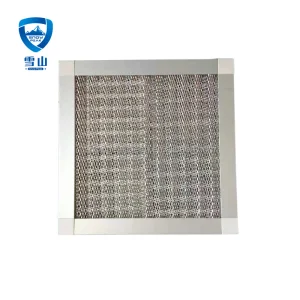




Frequently Asked Questions by Industrial Buyers
Detailed technical answers regarding filter selection, testing standards, factory audits, and OEM customization capabilities.