
High-Efficiency Cleanroom & HVAC Filter Solutions
Explore our export-certified HEPA, ULPA, and specialized filtration components engineered for critical air purity requirements.
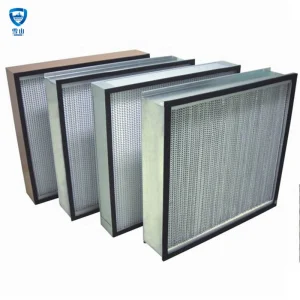
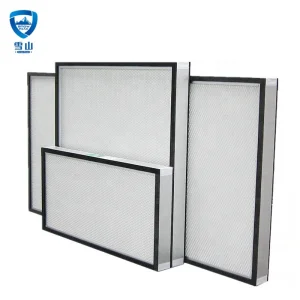



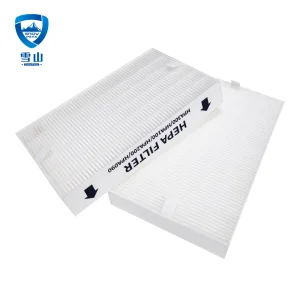
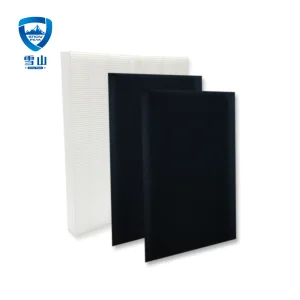
Microglass Fiber Matrix: Technical Foundation of HEPA Air Filtration
Understanding why borosilicate glass microfiber remains the gold standard in critical industrial contamination control compared to synthetic alternatives.
Microglass Particle Capture Mechanisms
Unlike simple sieve filtration, High-Efficiency Particulate Air (HEPA) filters constructed from glass microfiber utilize four primary physical mechanisms to capture sub-micron airborne contaminants:
- Interception: Particles following air streamlines pass within one particle radius of a fiber and adhere to it.
- Impaction: Larger particles (>0.5 µm) possess inertia causing them to deviate from air streamlines and collide directly with glass fibers.
- Diffusion: Ultra-fine sub-micron particles (<0.1 µm) exhibit Brownian movement, randomly wandering through the air web until striking a fiber.
- Electrostatic Attraction: Treated microglass media leverages surface charges to attract localized polar aerosols.
Glass Microfiber vs. Polypropylene Synthetic Media
While synthetic polypropylene meltblown media is widely used in residential purifiers, industrial cleanrooms strictly mandate Borosilicate Fiberglass due to structural superiorities:
- Zero Charge Degradation: Glass fiber relies purely on physical matrix geometry, ensuring zero filtration efficiency loss over time, unlike synthetic electret media.
- Thermal & Chemical Resistance: Operating limits reach up to 250°C–500°C for specialized stainless steel frames without structural sagging.
- Rigid Pleat Stability: High tensile strength under high differential pressure (up to 600 Pa bursting pressure).
Engineering Insight: Most Penetrating Particle Size (MPPS)
In accordance with ISO 29463 and EN 1822 test standards, the MPPS for glass fiber HEPA media typically falls between 0.12 µm and 0.25 µm. Filters designed with fiberglass exhibit minimum efficiency at this exact point—ensuring efficiency rates exceed 99.97% (H13) or 99.995% (H14) across all larger and smaller particle diameters.
| Filter Grade (EN 1822) | Overall Efficiency @ MPPS | Local Efficiency @ MPPS | Typical Initial Resistance (Pa @ 0.45 m/s) | Primary Industrial Applications |
|---|---|---|---|---|
| E11 (EPA) | ≥ 95.0% | — | 90 - 110 Pa | Commercial HVAC, General Pre-filtration, Paint Booths |
| E12 (EPA) | ≥ 99.5% | — | 110 - 130 Pa | Hospital Operating Rooms, Food Processing Clean Zones |
| H13 (HEPA) | ≥ 99.95% | ≥ 99.75% | 130 - 160 Pa | Pharmaceutical Manufacturing, Semiconductor ISO Class 5 |
| H14 (HEPA) | ≥ 99.995% | ≥ 99.975% | 150 - 190 Pa | Bio-Containment (BSL-3/BSL-4), Microelectronics ISO Class 3 |
| U15 (ULPA) | ≥ 99.9995% | ≥ 99.9975% | 200 - 240 Pa | Nanotechnology Labs, Wafer Fabrication Photolithography |
CE Certification Architecture & Quality Verification Protocols
A detailed breakdown of global compliance mandates governing HEPA fiberglass filter manufacturing, exporting, and installation.
Machinery Directive 2006/42/EC & LVD
For motorized HEPA filtration assemblies (e.g., Fan Filter Units - FFUs, Clean Benches, and Mobile Containment Scrubbers), CE compliance requires strict adherence to European electrical and mechanical safety rules:
- EN 60220-1 Electrical Safety: Dielectric strength testing, earthing continuity, and insulation resistance.
- EMC Compliance (2014/30/EU): Electromagnetic interference suppression for sensitive semiconductor environments.
- Structural Integrity Testing: Housing deformation limits under maximum pressure gradients.
ISO 16890 & EN 1822 Certification Testing
Quality assurance for export-grade fiberglass HEPA filters involves rigorous laboratory verification before dispatch:
- Oil Aerosol Photometry (PAO / DEHS): Scanning 100% of the filter face to detect micro-leaks in pleat folds and frame potting.
- Resistance vs. Airflow Curve: Ensuring low initial pressure drop to minimize HVAC fan power consumption.
- Outgassing Test (ISO 14644-8): Organic volatile (VOC) emission screening for siloxanes and phthalates in sealant hot-melts.
RoHS & REACH Material Directives
Exporters must guarantee that all chemical compositions used in filter fabrication comply with EU environmental legislation:
- Frame Materials: Anodized aluminum alloys, 304/316 stainless steel, and flame-retardant ABS.
- Polyurethane Potting Resins: Zero halogenated flame retardants, lead, mercury, or cadmium content.
- Separator Foils: High-purity corrugated aluminum foil or thermoplastic hot-melt beads.
Localized Industrial Application Scenarios
From bio-pharmaceutical isolation to semiconductor cleanrooms—how engineered HEPA fiberglass filters adapt to unique localized site demands.
1. Semiconductor & Photolithography Wafer Fabs
Challenge: Airborne molecular contamination (AMC) and micro-particles as small as 0.1 µm can ruin semiconductor yields during silicon wafer photolithography.
Engineered Solution: Installation of H14 and U15 Ultra-Low Penetration Air (ULPA) mini-pleated fiberglass filters framed in anodized extruded aluminum with low-outgassing polyurethane gel-seal gaskets. Integrated into cleanroom ceiling grids (FFUs) to maintain ISO Class 3 environment standards.
2. Bio-Pharmaceutical Isolators & BIBO Containment
Challenge: Handling hazardous active pharmaceutical ingredients (APIs), viruses, and bacterial cultures requires absolute exhaust isolation without exposing maintenance personnel during filter replacement.
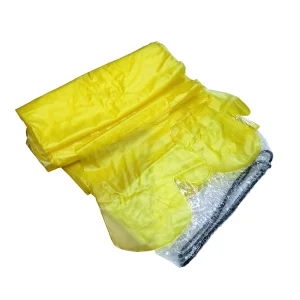
Engineered Solution: Bag-In/Bag-Out (BIBO) housing systems paired with heavy-duty deep-pleat fiberglass HEPA filters. Custom PVC change bags enable contactless filter removal, ensuring ZERO biological escape in Grade A sterile suites.
3. Gas Turbine Air Intake & Heavy Industrial Power Plants
Challenge: High ambient moisture, salt haze, and abrasive dust loads in coastal or desert power installations cause compressor blade erosion and fouling.
Engineered Solution: Hydrophobic wet-laid fiberglass pleated media rated at E12/H13 efficiency. The hydrophobic coating repels liquid water droplets while maintaining high dust holding capacity (DHC) under violent pulse-jet cleaning cycles.
4. Automotive Paint Spray Booths & Surface Finishing
Challenge: Paint mist overspray and airborne dirt particles create craters, fish-eyes, and surface flaws on high-end vehicle bodies.
Engineered Solution: Multi-stage ceiling filter cotton (G4/M5) combined with high-temperature fiberglass final HEPA filters capable of withstanding 250°C continuous baking cycles in drying tunnels.
China Factory OEM/ODM Supply Chain Resilience & Scale
How state-of-the-art automated production facilities in Shenzhen deliver unmatched cost-to-performance ratios and rapid global shipping elasticity.
Vertical Raw Material Integration
By controlling the supply chain from raw borosilicate glass melting to wet-laid paper slurry formation, high-speed pleating, and robotic polyurethane dispensing, Chinese manufacturing clusters eliminate middleman Markups and guarantee raw material traceabilities.
Automated Pleating & Scan Testing
Utilizing high-speed computer-controlled pleating lines capable of adjusting pleat depth from 15mm to 150mm with ultra-precise glue-bead spacing. Every single filter undergoes automated robotic aerosol photometer scanning, replacing manual sampling with 100% quality verification.
Export Logistics & Agile Lead Times
Direct proximity to Shenzhen and Yantian ports allows standard order turnarounds within 10 to 15 days. Flexible OEM packaging options (drop-test verified heavy-duty cartons, wooden crate reinforcement, private labeling) ensure seamless global distribution.
HEPA Filtration Technology Roadmap & Next-Gen Innovations
A strategic technological outlook into low-energy microglass formulations, smart differential pressure tracking, and circular material recovery.
Nanofiber-Microglass Composites
Blending ultra-fine electrospun nanofibers with traditional glass fiber matrix to reduce initial air resistance by up to 25% while boosting MPPS retention rates to U16 levels.
IoT Smart Filter Modules
Embedding micro-RFID chips and wireless differential pressure sensors directly into the aluminum extrusion frame for continuous digital monitoring of dust loading and remaining service life.
Photocatalytic Glass Fibers
Impregnating TiO2 / Nano-Silver catalysts onto microglass fiber webs to degrade VOCs, formaldehydes, and airborne pathogens directly upon contact under ambient light conditions.
Fully Recyclable Filter Architecture
Developing bio-based polyolefin potting adhesives and modular snap-in frames to allow 100% mechanical separation of metal frames and glass fiber media for zero-landfill processing.
Customized Engineering Support & On-Site Compliance Verification
Tailored framing options, non-standard dimensional specs, and validation support built for overseas HVAC integrators and OEMs.
Custom Framing & Dimensional Flexibility
We manufacture custom HEPA filters tailored to non-standard plenum depths and retrofits:
- Frame Options: Extruded Anodized Aluminum, 304/316 Stainless Steel, Galvanized Sheet Metal, or MDF/Plywood.
- Gasket Types: Continuous Seamless Polyurethane Foam Gasket, EPDM Neoprene, or Fluid Gel-Seal Channel.
- Faceguards: Single or double-sided painted expanded steel mesh or aluminum grilles.
Validation & ISO 14644 Compliance Support
To assist cleanroom engineering teams in passing local regulatory audits (FDA, EMA, WHO):
- Individual Test Reports: Every H13, H14, and U15 filter ships with its unique factory leak scan certificate indicating tested MPPS resistance and efficiency.
- Traceable Batch Codes: Laser-etched serial numbers on frame surfaces for full supply chain quality tracking.
- Engineering Drawings: Free 3D STEP and CAD CAD model files provided for client HVAC plenum design integration.
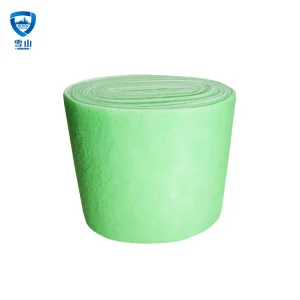
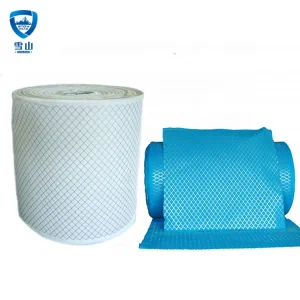
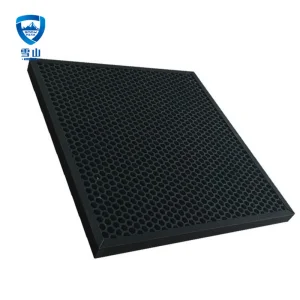
Synthetic Media Rolls, Pre-Filters & Carbon Solutions
Explore raw filter roll materials, activated carbon composite media, and replacement air filter elements.


Frequently Asked Questions by Industrial Exporters & B2B Buyers
In-depth technical answers regarding specifications, CE verification, custom manufacturing, and global shipping policies.