
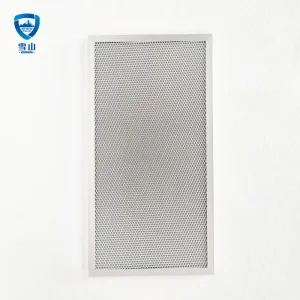
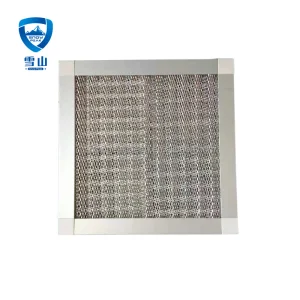
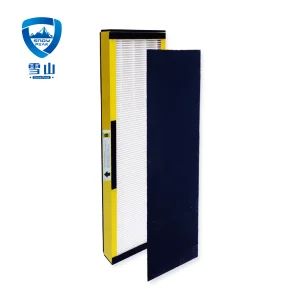
Featured CE-Certified HEPA & Carbon Products
Explore our certified air filtration solutions designed for maximum particulate retention and gas-phase pollutant control.





Global Commercial & Industrial Landscape (2025–2030)
An in-depth whitepaper on the convergence of mechanical filtration and chemical gas-phase adsorption in modern environmental engineering.
Expanding Market Dynamics
The global market for HEPA filters combined with activated carbon media is experiencing unprecedented growth, projected to expand at a compound annual growth rate (CAGR) of 7.8% through 2030. Driven by rigorous ambient air quality regulations, microelectronics scaling, and biopharmaceutical compliance, dual-stage filtration has shifted from an optional enhancement to a core industrial mandate.
Regulatory Framework & Compliance
European CE Marking (Conformité Européenne) under EU Directives enforces strict compliance standards for structural safety, flame retardancy, and environmental impact (REACH and RoHS). Coupled with EN 1822:2019 and ISO 29463 standards for filtration efficiency, CE-certified HEPA-Carbon systems guarantee verified volumetric flow performance, zero off-gassing, and validated leak integrity.
Strict Industrial Demand Drivers
Modern semiconductor fabrication cleanrooms, containment laboratories (BSL-3/BSL-4), and commercial HVAC setups demand simultaneous removal of sub-micron particulate matter (PM0.1–PM2.5) and volatile organic compounds (VOCs). Dual-engine filtration prevents molecular contamination of sensitive wafers while ensuring occupant health.
Synergistic Dual-Stage Filtration Engineering
Technical breakdown of sub-micron particle capture coupled with pore-structure-optimized gaseous sorption.
Information Gain Insight: Standard air filters solve only half of the indoor environmental quality equation. While HEPA media traps solid and liquid aerosols via physical mechanical capture, it remains transparent to molecular gas phase toxins (such as Formaldehyde, Benzene, and H2S). Integrating virgin coconut-shell activated carbon matrix provides a dual-action defense system that eliminates both physical and chemical contaminants without causing structural pressure drop collapse.
1. HEPA Particulate Interception Mechanics
High-Efficiency Particulate Air (HEPA) filters operate through a non-woven matrix of ultra-fine glass microfibers or expanded Polytetrafluoroethylene (ePTFE) membranes. Capture does not rely on simple sieving; rather, it uses three primary physical mechanisms:
- Interception: Occurs when a particle following the laminar airflow stream comes within one particle radius of a fiber and adheres to it.
- Impaction: Heavy, high-velocity particles (>1.0 µm) possess inertial momentum that prevents them from negotiating the tortuous air path around fibers, causing direct impact.
- Diffusion: Sub-micron particles (<0.1 µm) experience erratic Brownian motion due to collision with gas molecules, vastly increasing their probability of contacting fibers.
2. Activated Carbon Adsorption Dynamics
Activated carbon functions through physical adsorption (Van der Waals forces) within an intricate internal micro-pore network. The performance of the gas-phase filter stage is determined by strict chemical parameters:
- BET Surface Area: High-grade coconut shell carbon provides an internal surface area exceeding 1,000 to 1,200 m²/g.
- Pore Size Distribution: Micropores (<2 nm) capture low molecular weight VOCs, while Mesopores (2–50 nm) accommodate larger organic vapors.
- Chemical Impregnation: Carbon media can be chemically impregnated with KI, KOH, or Phosphoric Acid to neutralize specific acid gases, Ammonia, and Formaldehyde via chemisorption.
Technical Performance Specifications Matrix
| Filter Grade / Media Type | Efficiency Rating | Test Standard | Target Pollutants | Nominal Initial Resistance |
|---|---|---|---|---|
| H13 True HEPA (Borosilicate) | ≥ 99.97% at 0.3 µm / MPPS | EN 1822 / IEST-RP-CC001 | Fine PM2.5, Bacteria, Mold Spores, Combustion Smoke | 160 - 220 Pa (at rated airflow) |
| H14 Ultra-HEPA (ePTFE) | ≥ 99.995% at MPPS | EN 1822 / ISO 29463 | Sub-micron viruses, cleanroom micro-dust, toxic aerosols | 120 - 180 Pa (Low energy option) |
| Virgin Coconut Shell Carbon | Iodine No. ≥ 1050 mg/g | ASTM D4607 | Benzene, Toluene, Xylene, Gasoline Vapors, Odors | 35 - 75 Pa (Honeycomb layout) |
| Impregnated Catalytic Carbon | CTC Adsorption ≥ 60% | ASTM D3467 | Formaldehyde (HCHO), Ammonia (NH3), H2S, Acid Gases | 45 - 90 Pa (Granular/Matrix) |
Localized Application Scenarios & Macro Solutions
Tailored engineering configurations designed for critical commercial and industrial environments.
Biopharmaceutical & Laboratories
Controlled cleanroom suites and Biosafety Cabinets require zero-leakage containment. Gel-sealed H13/H14 HEPA units combined with carbon stages ensure that hazardous microbiological agents are contained while off-gassing reagents and sterilizing chemical vapors (like vaporized Hydrogen Peroxide) are completely neutralized.
Semiconductor & Electronics Fab
Micro-fabrication yields suffer drastically from Airborne Molecular Contamination (AMC). Mini-pleated HEPA filters infused with specialized acid-base activated carbon matrices eliminate airborne siloxanes, dopants, and corrosive acidic gases that cause wafer defectivity in photolithography tracks.
Commercial HVAC & Healthcare Facilities
Hospitals, airborne infection isolation rooms (AIIR), and premium office towers utilize modular HEPA-Carbon filter banks in Air Handling Units (AHUs). This macro-level integration removes outdoor smog, traffic fumes, pathogens, and interior off-gassing from furniture and building materials.
Manufacturing Rigor & CE Compliance Verification
Ensuring structural safety, environmental standard compliance, and batch-to-batch repeatability.
CE Certification Protocol
Our CE-marked HEPA and activated carbon products undergo extensive testing to conform to European health, safety, and environmental protection legislation. Key verification phases include:
- EN 60335 Compliance: Electrical and structural safety testing for integrated air cleaning appliances and motorized filter units.
- REACH & RoHS Compliance: Certification that filter hot-melt adhesives, frames, polyurethane gaskets, and carbon media are free from hazardous SVHC chemicals, heavy metals, and polybrominated diphenyl ethers.
- ISO 16890 / EN 1822 Validation: Full factory scan testing using Discrete Particle Counters (DPC) and DEHS aerosol challenge to certify zero pinhole leaks.
Advanced Quality Control System
Every production batch manufactured in our ISO-certified cleanroom facility passes through a strict 4-stage quality gate:
- IQC (Incoming Quality Control): Testing media uniform mass, tensile strength, micro-glass fiber diameter, and carbon iodine adsorption value.
- IPQC (In-Process QC): Automatic laser scanning of pleat pitch consistency, glue bead dispensation, and structural frame squaring.
- FQC (Finished Quality Control): 100% individual pressure drop testing and aerosol leak scanning for HEPA modules.
- OQC (Out-going QC): Drop-test verified export packaging, humidity-sealed anti-static wrapping, and lot traceability serialization.
Technology Roadmap & Future Outlook (2025–2035)
Next-generation innovations shaping the future of advanced particulate and molecular filtration systems.
Nanofiber Composite Media
Transitioning to ultra-thin electrospun nanofibers deposited onto HEPA substrates. Reduces air resistance by 30% while retaining H14 efficiency, drastically lowering fan power consumption in industrial HVAC systems.
Catalytic Carbon Matrices
Replacing traditional passive adsorption carbon with self-regenerating room-temperature cold catalyst structures that continuously decompose Formaldehyde and Ozone into H2O and CO2 without reaching saturation limits.
IoT-Enabled Smart Filters
Integrating ultra-thin RFID tags and differential pressure micro-sensors directly into filter frames to transmit real-time dust loading and chemical saturation metrics to cloud-based Building Management Systems (BMS).
Sustainable & Circular Materials
Development of fully biodegradable bio-based filter frames and solvent-free waterborne bonding agents to assist industrial clients in meeting Scope 3 carbon reduction and ESG metrics.
Frequently Asked Questions (Technical & Procurement FAQ)
Expert insights on specification, maintenance, certification, and custom OEM ordering of HEPA-Carbon filter systems.
Additional Specialized Industrial & Replacement Filters
Explore our complete catalog of industrial bag-in bag-out filters, gel-seal cleanroom HEPA units, and specialized media.





