
Featured OEM Air Filtration Products & Replacement Solutions
Explore our factory-direct engineered air filter media, replacement cartridges, and HVAC carbon assemblies manufactured under ISO cleanroom standards.








Engineering Principles of 20x20 Charcoal Air Filters in China
An in-depth analysis of activated carbon pore dynamics, iodine absorption benchmarks, and structural substrate innovations driving global commercial HVAC standards.
Molecular Adsorption & Pore Geometry
The fundamental performance of a 20x20 charcoal filter relies on physical adsorption via Van der Waals forces within high-density micro-pores. Leading Chinese filter factories utilize virgin coconut shell and premium anthracite coal precursor materials. Through controlled high-temperature steam activation, carbon matrices develop internal surface areas exceeding 1,050 m²/g.
For nominal 20x20x1 inch, 20x20x2 inch, and 20x20x4 inch air filter formats, optimizing Carbon Tetrachloride (CTC) values—typically ranging from 45% to 80%—ensures rapid gaseous phase capture of Volatile Organic Compounds (VOCs), formaldehyde, nitrogen dioxide (NO2), and urban combustion gases without incurring unsustainable initial static pressure penalties.
Hybrid Particulate + Gas Filtration Mechanics
Modern B2B procurement demands dual-functionality. Chinese manufacturing centers combine electrostatic meltblown non-woven synthetic fibers with fine-mesh activated carbon powders (100–300 mesh) or impregnated carbon granules. This dual-layer architecture captures fine particulate matter (PM2.5) while neutralizing chemical vapors simultaneously.
By integrating hot-melt web lamination and binderless carbon deposition technology, Chinese exporters eliminate chemical off-gassing and reduce media air resistance by up to 28% compared to traditional solvent-bound carbon pads.
The 20x20 inch (508x508 mm) nominal dimension represents the most widely deployed geometric standard across North American and European residential furnaces, commercial Air Handling Units (AHUs), rooftop units (RTUs), and ductless ventilation housings. Standard actual dimensions (e.g., 19.5 x 19.5 x 0.75 inches for 1-inch filters) require precision die-cutting and rigid beverage board or extruded aluminum framing to prevent perimeter bypass under high-velocity airflow (300 to 500 FPM).
Strategic Competitive Advantages of Chinese 20x20 Charcoal Filter OEM Factories
How fully integrated supply chains, automated high-speed pleating, and continuous R&D offer global brand partners superior quality-to-cost ratios.
End-to-End Vertical Supply Chain
From raw synthetic polymer spinning, meltblown web production, and thermal carbon impregnation to automated CNC frame forming, top-tier Chinese manufacturers operate complete internal production cycles. This vertical structure eliminates middleman margins, securing stable raw material pricing and rapid prototype iteration.
Automated High-Speed Manufacturing
Equipped with state-of-the-art rotary blade pleaters, ultrasonic edge sealing machinery, and robotic glue dispensing systems, modern Chinese facilities maintain daily production outputs of up to 50,000 units of standard 20x20 carbon filters while keeping pleat-spacing variance within ±0.3 mm.
Multi-Stage Quality Auditing Matrix
Certified under ISO 9001 and ISO 14001, top export factories enforce a rigid 4-stage quality control system: IQC (Incoming Raw Media Verification), IPQC (Real-time Pleat & Frame Assembly Inspection), FQC (Finished Goods Airflow & Delta-P Testing), and OQC (Pre-shipment Container Load Checks).
Macro Industry Trends Shaping Activated Carbon Filtration Demand
Navigating global IAQ regulations, energy efficiency benchmarks, and advanced composite materials in the global HVAC market.
1. Escalating Global IAQ Mandates & ASHRAE 62.1 Standards
Regulatory bodies worldwide are raising baseline requirements for indoor air quality in public buildings, educational facilities, and commercial workplaces. Standard mechanical particulate filtration (MERV 8) is no longer sufficient to comply with municipal IAQ guidelines that restrict ozone, VOCs, and traffic emissions (benzene, toluene). 20x20 carbon combination filters provide a drop-in retrofit solution for existing AHUs without requiring costly ductwork modifications.
2. Low static pressure composite carbon media development
Energy cost optimization remains a primary concern for facility managers. Legacy carbon tray systems often cause excessive pressure drops (>150 Pa), forcing HVAC blowers to consume more electricity. Contemporary Chinese manufacturers leverage corrugated honeycomb structures and open-cell polyurethane foam infused with micro-pelletized activated carbon, maintaining initial pressure drops as low as 35-50 Pa at 300 FPM airflow velocity.
3. Catalytic Chemisorption for Targeted Gas Decomposition
Physical carbon adsorption reaches thermal equilibrium and desorption under high humidity or temperature spikes. Next-generation 20x20 charcoal filters utilize chemical impregnants—such as Potassium Permanganate (KMnO4), Copper Oxide (CuO), and cold catalyst coatings—to chemically neutralize low-molecular-weight aldehydes, Hydrogen Sulfide (H2S), and Ammonia (NH3) into harmless byproducts.
4. Circular Economy & Sustainable Frame Architectures
Environmental ESG initiatives are driving the adoption of bio-based, recyclable frame substrates. Leading Chinese filter exporters offer high-wet-strength recycled kraft paperboard, compostable PLA frames, and reusable aluminum slide-in cassette frames, allowing commercial buyers to replace only the internal pleated carbon media roll, reducing landfill waste by up to 65%.
Standard 20x20 Charcoal Filter Technical Specifications
Comparative data for OEM procurement managers evaluating media variants, carbon loading density, and filtration efficiencies.
| Filter Variant / Specification | Nominal Size (in) | Carbon Substrate Type | Carbon Loading (g/m²) | MERV Rating | Initial Resistance (Pa @ 2.5m/s) | Target Pollutants |
|---|---|---|---|---|---|---|
| Pleated Carbon Non-Woven | 20 x 20 x 1 | Impregnated Synthetic Fiber | 150 – 250 g/m² | MERV 8 / MERV 11 | 42 Pa | Dust, Pet Odors, Organic Smog |
| Honeycomb Carbon Panel | 20 x 20 x 2 | Aluminum / Paper Honeycomb | 400 – 600 g/m² | G4 Pre-filter + Odor Stage | 55 Pa | VOCs, Benzene, Formaldehyde |
| V-Bank Carbon Filter | 20 x 20 x 12 | Granulated Coconut Shell Carbon | 1200 – 1800 g/m² | F7 / MERV 13 Combo | 85 Pa | Heavy Industrial Gas, Exhaust, Smoke |
| Catalytic Impregnated Media | 20 x 20 x 1 | KMnO4 Chemisorptive Fiber | 200 – 300 g/m² | MERV 11 | 48 Pa | Acid Gases, H2S, Formaldehyde |
| Foam Carbon Pad | 20 x 20 x 0.5 | Reticulated Polyurethane Sponge | 100 – 180 g/m² | G3 / G4 Coarse Dust | 28 Pa | Coarse Dust, Basic Kitchen Odors |
Localized Application Scenarios & Engineering Solutions
Tailored filtration configurations engineered to meet environmental challenges across diverse sectors.
Commercial Office Towers & Municipal HVAC
High-density urban office centers experience continuous intake of vehicle exhaust fumes and industrial ozone. Installing 20x20x2 inch MERV 11 carbon pleated filters in primary air handlers reduces indoor VOC levels below WHO threshold limits while extending downstream HEPA filter lifespan by preventing organic film accumulation on sensitive coils.
Residential Furnace & Clean Home Systems
Modern residences with tight building envelopes require effective odor management for cooking fumes, pet dander, and wild-fire smoke. Custom 20x20x1 carbon replacement filters engineered by Chinese factories fit directly into standard residential return air grilles, capturing airborne allergens while removing domestic odors without straining residential HVAC blowers.
Horticulture & Commercial Odor Exhaust
Indoor botanical growth facilities and commercial food processing plants require total elimination of volatile aromatic organic compounds. Customized high-density 20x20x4 honeycomb activated carbon packs deliver high residence times (contact times > 0.1s), ensuring 99.2% odor extraction efficiency even under continuous 80% relative humidity.
Complementary Industrial & OEM Filter Media Solutions
Explore our specialized filtration media rolls, humidifier wicks, photocatalytic inserts, and heavy-duty dust collector elements.



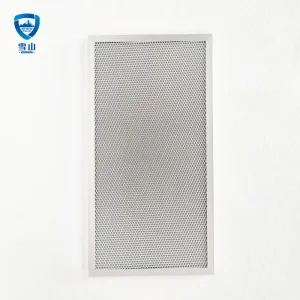

Global B2B Procurement Demands & Factory Audit Protocols
Key criteria global sourcing directors must evaluate when selecting a qualified 20x20 charcoal filter exporter in China.
1. International Test Certification & Compliance
Enterprise buyers should mandate independent lab test reports according to ISO 16890 (ePM1, ePM2.5, ePM10 ratings) and ASHRAE 52.2 (MERV ratings). Furthermore, charcoal media must be tested for REACH and RoHS compliance to ensure heavy metals, binder solvents, or toxic phthalates do not contaminate supply chains entering North American and European markets.
2. Packaging Integrity & Container Moisture Control
Activated carbon is intrinsically moisture-hygroscopic and gas-adsorptive. Premium Chinese exporters pack 20x20 charcoal filters in heavy-duty polyethylene (PE) vacuum-sealed polybags, surrounded by desiccants and reinforced 5-ply double-wall corrugated master cartons. This prevents premature atmospheric carbon saturation during multi-week ocean transit.
3. Custom Private Labeling & Barcode Integration
For retail distributors and OEM purifier brands, flexible printing capabilities are crucial. Leading Chinese factories provide custom edge-frame stamping, private-label box printing, Amazon FBA palletizing, and serialized GS1 barcode application directly at the assembly line to facilitate seamless logisitical fulfillment.
4. Frame Rigidity & Gasket Sealing Tolerances
Filter frame bypass destroys filtration efficiency. Professional suppliers ensure frame squareness within ±1.0 mm diagonal tolerances and apply high-rebound closed-cell EVA or neoprene perimeter gaskets. This creates an airtight seal against filter housing slide channels under continuous HVAC air velocity.
Frequently Asked Questions (FAQ) for OEM Sourcing
Expert answers to common engineering, logistics, and manufacturing inquiries from global wholesale buyers.
Q1. What is the standard service lifespan of a 20x20 charcoal air filter?
The operational lifespan depends heavily on atmospheric gas concentrations and particulate loads. In standard commercial office settings, a nominal 20x20x1 or 20x20x2 inch charcoal filter maintains effective odor adsorption for 3 to 6 months. High-density 4-inch honeycomb or V-bank carbon variants last between 9 to 12 months before requiring media replacement.
Q2. How do Chinese factories measure carbon quality and loading density?
Quality factories measure carbon performance using ASTM standards. Key parameters include Iodine Number (mg/g), Carbon Tetrachloride (CTC %) activity, and Apparent Density (g/mL). Carbon loading density (grams of active carbon per square meter of media) is continuously verified during the lamination process using inline digital weight sensors.
Q3. Can 20x20 charcoal filters be washed and reused?
Standard pleated non-woven carbon media and beverage-board framed filters are single-use disposable products. Water immersion fills the carbon micro-pores with mineral deposits and collapses the electrostatic charge of the synthetic fibers. Only specialized extruded plastic-frame foam carbon pads are gently washable, though water washing does not reactivate saturated internal carbon pores.
Q4. What is the Minimum Order Quantity (MOQ) for custom OEM 20x20 carbon filters?
Standard factory MOQs for custom-branded 20x20 inch pleated filters typically range from 500 to 1,000 units depending on frame customization and packaging print requirements. For trial orders or standard non-printed specifications, lower MOQs starting at 200 units are often supported to facilitate market testing.
Q5. What frame material options are available for export orders?
Suppliers offer moisture-resistant heavy-duty die-cut beverage board, galvanized steel, extruded aluminum alloy, rigid ABS plastic, and recyclable Kraft paper. Beverage board is ideal for high-volume cost-sensitive residential furnace markets, while aluminum and steel frames are preferred for industrial HVAC units.
Q6. How does carbon pleating affect airflow resistance compared to flat carbon pads?
Pleating multiplies the total effective filtration surface area by 300% to 500% compared to a flat pad of the same face dimension. This expanded media surface reduces face velocity across the carbon substrate, resulting in significantly lower initial pressure drop and significantly higher total gas holding capacity.