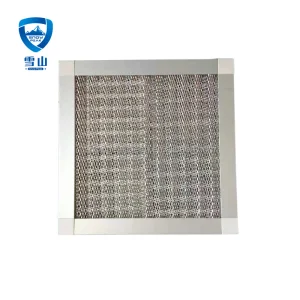
High-Performance HVAC & Cleanroom Filtration Products
Factory-direct custom and standard replacement solutions engineered to stringent ISO 16890 and ASHRAE 52.2 quality parameters.







1. Global Market Landscape & Micro-Geometries of 18x20x1 AC Filters
Understanding dimensional precision, volumetric airflow behavior, and the structural physics of 1-inch dimensional HVAC filtration.
The 18x20x1 AC filter represents one of the most widely specified standardized form factors across residential split systems, commercial Fan Coil Units (FCUs), and air handling units (AHUs) worldwide. While nominally designated as 18" x 20" x 1", precise manufacturing standards dictate actual dimensions of 17.5" x 19.5" x 0.75" (445 mm x 495 mm x 19 mm). In modern indoor air quality (IAQ) engineering, maintaining exact dimensional tolerances within ±1.5 mm is critical to prevent air bypass—a phenomenon where unfiltered air bypasses the perimeter gasket, severely degrading overall System Effective Filtration Efficiency (SEFE).
Global demand for 18x20x1 AC filters has seen a structural shift driven by stringent decarbonization targets and post-pandemic ventilation requirements. In North America and Europe, retrofitting older HVAC infrastructures with low-pressure-drop MERV 13 media allows facilities to achieve sub-micron particulate reduction without exceeding the static pressure limits of legacy centrifugal blowers. Concurrently, rapid urban industrial expansion across the Asia-Pacific region has elevated demand for multi-stage filtration solutions where 18x20x1 pleated pre-filters serve as protective primary stages for high-cost terminal HEPA/ULPA systems.
SEO & Technical Information Gain Note: Air bypass of just 1 mm around an 18x20x1 filter frame can degrade a MERV 13 system to an effective MERV 8 performance in real-world operating conditions. Advanced Chinese manufacturing facilities now utilize automated polyurethane robot seam-sealing and high-rigidity moisture-resistant beverage board frames to eliminate frame flex under high static pressures.
Aerodynamic Resistance & Pleat Geometry Optimization
The performance of a standard 1-inch filter is constrained by its shallow depth profile. Achieving a balance between Dust Holding Capacity (DHC) and Initial Pressure Drop ($\Delta P$) requires rigorous computational fluid dynamics (CFD) optimization of pleat count, pleat height (typically 0.70 inches), and hot-melt separator bead placement. Increasing pleat density increases total filtration surface area—expanding media area from 2.2 sq. ft. in flat-panel configurations up to 7.8 sq. ft. in high-density pleated designs. This geometry reduces face velocity at the media surface, resulting in exponential declines in aerodynamic resistance and extended service life cycle.
2. Technical Architecture & Fiber Matrix Engineering
Dissecting the mechanical and electrostatic capture mechanisms within Chinese manufacturing lines.
Electrostatic Meltblown Non-Wovens
Utilizing high-voltage corona charging to imbue polypropylene microfibers (1-5 $\mu m$) with permanent electret fields, capturing sub-micron viral and PM2.5 particulates via electrostatic attraction without restricting airflow.
Thermally Bonded Synthetic Blends
Multi-denier gradient density media structured so coarse dust is trapped in the outer depth layers while fine particles are captured deep within, maximizing Dust Holding Capacity (DHC).
Expanded Metal Mesh Reinforcement
High-tensile galvanized steel or aluminum wire backing bonded directly to the pleated media, maintaining structural pleat integrity under face velocities exceeding 500 FPM (feet per minute).
Technical Matrix: Comparative Performance of 18x20x1 Filter Media Specifications
The selection of an optimal 18x20x1 filter configuration requires analyzing initial resistance against filtration efficiency. Below is an engineering comparison of standard OEM options produced by specialized Chinese manufacturers:
| Filter Efficiency Grade | Target Particle Size ($\mu m$) | Initial Resistance (@ 490 FPM) | Recommended Application | Media Composition |
|---|---|---|---|---|
| MERV 8 / G4 | 3.0 – 10.0 $\mu m$ (>70%) | 0.14 in.w.g. (35 Pa) | Basic Residential / Pre-filtration | Coarse Synthetic Polyester |
| MERV 11 / M5 | 1.0 – 3.0 $\mu m$ (>65%) | 0.21 in.w.g. (52 Pa) | Commercial Offices & Schools | Charged Synthetic Composite |
| MERV 13 / F7 | 0.3 – 1.0 $\mu m$ (>50%) | 0.28 in.w.g. (70 Pa) | LEED Buildings / Hospitals | Electret Meltblown Non-woven |
| MERV 16 / F9 | 0.3 – 1.0 $\mu m$ (>95%) | 0.38 in.w.g. (95 Pa) | Cleanroom Pre-stage / Surgery Units | Micro-glass / Nano-fiber Composite |
| Active Carbon Hybrid | Gaseous VOCs & Odors | 0.24 in.w.g. (60 Pa) | Residential Smoke / Industrial VOC | Carbon-Impregnated Non-woven |
3. China Manufacturing Ecosystem & OEM/ODM OEM Superiority
Why leading global filtration brands source custom 18x20x1 products from Guangdong and Shenzhen hubs.
China's air filtration manufacturing ecosystem has evolved from high-volume standardized assembly into an advanced industrial hub powered by automated pleating robotics, laser particle counter testing, and chemical compound synthesis. Chinese factories specializing in 18x20x1 AC filters provide global importers with significant competitive advantages across three key dimensions:
Fully Automated High-Speed Lines
Modern production facilities run continuous rotary blade and knife-pleating systems capable of producing over 350 pleats per minute with real-time laser gap verification, lowering unit labor costs while ensuring absolute structural uniformity.
Rigorously Certified Quality Assurance
Every production batch undergoes 4-stage Quality Control (IQC, IPQC, FQC, OQC). Filters are tested on specialized TSI 3160 test rigs to verify compliance with ASHRAE 52.2 and EN 779 / ISO 16890 standards.
Custom Private Label Packaging
From custom retail-ready multi-packs (2-pack, 4-pack, 12-pack bundles) with barcode printing to white-label branding on frame edges, Chinese suppliers offer seamless drop-shipping and Amazon FBA packaging specs.
Supply Chain Security Note: Leading manufacturers leverage proximity to major deep-water shipping ports in Shenzhen, Guangzhou, and Ningbo, enabling standard production lead times of 10-15 business days for full container loads (FCL), drastically cutting inventory holding costs for international distributors.
4. Multi-Sector Application Scenarios & Macro Solutions
Tailored 18x20x1 filtration configurations engineered for unique indoor environment requirements.
Scenario A: Smart Residential Buildings & Multi-Family Units
In modern high-density residential complexes, central HVAC split units require 18x20x1 MERV 11 to MERV 13 filters that balance pet dander, pollen, and wildfire smoke capture without triggering high-static-pressure system shutoffs. OEM multi-layer composite media provides multi-pollutant mitigation in a single frame replacement.
Scenario B: Commercial Office Towers & Outpatient Healthcare
Commercial facilities striving for WELL Building Standard or LEED certification require certified MERV 13 filtration. The 18x20x1 format integrated into secondary return grilles serves as a localized shield, capturing bio-aerosols, mold spores, and airborne bacteria prior to duct circulation.
Scenario C: Industrial Electronics & Semiconductor Cleanrooms
As primary pre-filters inside air handling units, 18x20x1 G4/MERV 8 coarse filters intercept large particulates (linter, textile fibers, airborne dust) before air reaches high-cost terminal H14 HEPA or U15 ULPA filters. Regular replacement extends HEPA filter operational life span by 250% to 400%.
Scenario D: Hospitality, Kitchens & Urban Odor Control
Commercial dining facilities and urban apartments suffer from volatile organic compounds (VOCs) and cooking odors. Specialized 18x20x1 active carbon composite filters utilize micro-porous coconut shell carbon beds to adsorb formaldehyde, benzene, and nitrogen oxides alongside particulate trapping.
5. Global Compliance, Flammability Standards & Sustainability
Meeting North American and European building codes, environmental certifications, and zero-carbon targets.
Exporting AC filters into international markets requires strict adherence to global safety and environmental directives. Certified Chinese manufacturers implement rigorous chemical and flammability testing protocol compliance:
- UL 900 Flammability Standard: Frame cardboard, synthetic media, and hot-melt adhesives must comply with UL 900 Class 1 or Class 2 smoke density and flammability requirements, ensuring safety in commercial air ducts.
- RoHS & REACH Compliance: Guaranteeing that zero toxic plasticizers, heavy metals, or hazardous chemical fire retardants are present in filter adhesives or frame laminates.
- Moisture & Mold Resistance: Utilizing high-wet-strength beverage board frames treated with anti-microbial agents to prevent structural collapsing and fungal growth in high-humidity climates (>85% RH).
Sustainable Eco-Design Initiative: Leading manufacturers are introducing recyclable bio-based plastic frames and 100% biodegradable unbleached cardboard frames, supporting corporate ESG compliance and reducing total landfill weight per replaced filter by up to 45%.
6. Technology Roadmap: The Next Generation of 1-Inch AC Filtration
Anticipating industry innovations in electrospun nanofibers, smart sensors, and catalytic gas destruction.
Electrospun Nanofiber Layers
Transitioning from meltblown microfibers to 100-nanometer electrospun fibers. This technology achieves MERV 14+ efficiency in a standard 1-inch frame with 40% lower initial pressure drop than traditional synthetic media.
Embedded Smart RFID & Pressure Sensors
Integrating ultra-thin passive RFID chips and printed pressure-drop indicators into the 18x20x1 frame edge, allowing smart building management systems (BMS) to wirelessly monitor filter loading and optimize maintenance schedules.
Cold Catalyst & VOC Decomposition
Replacing passive carbon adsorption with room-temperature cold catalyst coatings that actively decompose formaldehyde, ozone, and VOCs into water and CO2 without reaching odor saturation limits.
7. Frequently Asked Questions by Global Buyers & Engineers
Addressing critical procurement, specification, and compatibility queries regarding China-manufactured 18x20x1 AC filters.
What is the difference between nominal size and actual size for an 18x20x1 AC filter?
How do I choose between MERV 8, MERV 11, and MERV 13 ratings for 1-inch filters?
- MERV 8: Ideal for standard residential pre-filtration, capturing dust, lint, and pollen with minimum airflow resistance.
- MERV 11: Excellent for homes with pets or commercial spaces needing protection against fine dust, smog, and auto emissions.
- MERV 13: Recommended for LEED-certified facilities, healthcare outpatient centers, and wildfire-prone areas. Captures sub-micron bacteria and virus carriers. Ensure your HVAC fan can overcome the slightly higher static pressure (approx. 0.28 in.w.g.).
Can Chinese factories customize frame materials for high-humidity climates?
What are the standard Minimum Order Quantities (MOQ) and lead times for OEM orders?
Are these AC replacement filters compliant with international fire and chemical safety regulations?
Specialized Media Rolls, Bag Filters & Humidifier Pads
Comprehensive OEM manufacturing components for industrial HVAC fabricators and retail air quality brands.