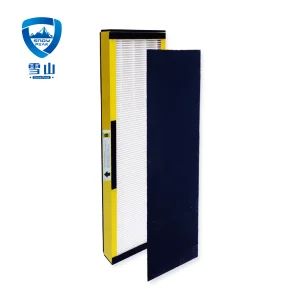
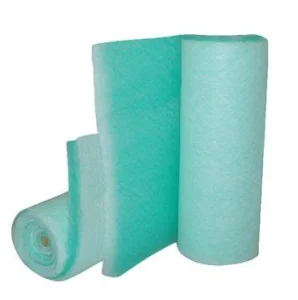
Featured Air Filtration Solutions & Compatible Media
Direct OEM/ODM industrial HVAC filtration components, pre-filter media rolls, and replacement units engineered for high-throughput commercial applications.






Global Landscape of Industrial Gas-Phase HVAC Filtration
Analyzing the shift from mechanical dust interception to chemical molecular adsorption across global HVAC and indoor air quality (IAQ) infrastructure.
Tightened Environmental Regulations
Global regulatory bodies such as the US EPA, EU Ambient Air Quality Directives, and China's GB/T standards have mandated lower indoor thresholds for Total Volatile Organic Compounds (TVOCs), formaldehyde, nitrogen dioxide ($NO_2$), and ozone ($O_3$). HVAC systems are increasingly retrofitted with molecular filtration stages to meet modern healthy building metrics (e.g., WELL Building Standard, LEED v4.1).
Industrial Corrosion & AMC Mitigation
In high-tech manufacturing—such as semiconductor wafer fabs, data centers, and pulp & paper control rooms—airborne molecular contamination (AMC) causes catastrophic micro-corrosion on copper and silver circuit boards. Gas-phase carbon scrubbers are mission-critical safeguards against operational downtime and sub-micron hardware failure.
Commercial IAQ & Odor Control
Modern commercial real estate, international airports, healthcare facilities, and hospitality venues require active odor abatement against jet fuel fumes, kitchen grease emissions, and ambient urban smog. Activated carbon HVAC filters integrated into Air Handling Units (AHUs) represent the default standard for continuous odor scrubbers.
Adsorption Dynamics & Media Engineering Fundamentals
Understanding the micro-porous geometry, chemical impregnation, and aerodynamic physics governing activated carbon effectiveness in HVAC air distribution networks.
1. Physisorption vs. Chemisorption Mechanisms
Activated charcoal relies on two primary mechanics to strip gaseous contaminants from high-velocity air streams:
- Physical Adsorption (Physisorption): Driven by weak Van der Waals forces within internal micropores (< 2 nm). Ideal for non-polar Volatile Organic Compounds (VOCs), benzene, toluene, and long-chain hydrocarbons. Higher specific surface areas (BET surface area > 1,000 m²/g) directly correlate to higher physical VOC holding capacities.
- Chemical Adsorption (Chemisorption): Achieved by impregnating activated carbon matrixes with target chemical reagents (e.g., Potassium Hydroxide KOH, Potassium Permanganate $KMnO_4$, or Phosphoric Acid $H_3PO_4$). Crucial for capturing low-molecular-weight polar gases such as Hydrogen Sulfide ($H_2S$), Ammonia ($NH_3$), Formaldehyde ($HCHO$), and Sulfur Dioxide ($SO_2$) via irreversible chemical neutralization reactions.
2. Key Performance Metrics for HVAC Engineers
When specifying activated charcoal filters for industrial project submittals, HVAC designers must evaluate four core parameters:
- Iodine Number (mg/g): Measures micropore capacity (typically 600 to 1,200 mg/g). Higher values denote superior capture of small gaseous molecules.
- Carbon Tetrachloride (CTC) Activity %: Determines overall pore volume and gas-phase loading efficiency (industrial grade standard range: 60% to 100% CTC).
- Residence Time (Dwell Time): The length of time air spends within the active carbon bed. Optimal contact time for effective gas removal ranges between 0.02 and 0.1 seconds, directly dictated by bed thickness and face velocity (typically 2.5 m/s or 500 FPM).
- Initial & Final Pressure Drop ($\Delta P$): Aerodynamic resistance measured in Pascals (Pa). High carbon mass density must be balanced against fan energy expenditure.
| Filter Substrate Type | Typical Carbon Loading Density | Initial Resistance @ 2.5 m/s | Primary Target Contaminants | Best Architectural Fit |
|---|---|---|---|---|
| Granular Carbon Honeycomb (V-Bank) | 400 – 800 g/m² | 75 – 120 Pa | Heavy VOCs, Industrial Solvents, $H_2S$ | High-load AHUs, Airport Terminals, Fabs |
| Impregnated Non-Woven Pleated Media | 150 – 300 g/m² | 45 – 85 Pa | Moderate Odors, Urban Smog, TVOCs | Commercial Office Buildings, Schools |
| Bonded Carbon Foam Filter Panels | 100 – 200 g/m² | 25 – 50 Pa | Coarse Dust Pre-filtration + Light Odor | Rooftop Packaged Units, FCUs |
| Dual-Layer HEPA + Carbon Matrix | 200 – 500 g/m² | 140 – 220 Pa | PM2.5 / PM0.3 + Gaseous Molecular AMC | Cleanrooms, Hospitals, Isolators |
China Factory Advantages: Efficiency, Scale & Engineering Precision
How Chinese OEM/ODM activated charcoal filter manufacturers deliver world-class cost efficiency, material innovation, and strict international standard compliance.
Upstream Raw Material Integration
China commands direct access to premium virgin coconut shell, anthracite, and synthetic precursor carbon production hubs. Chinese factories source high-density coconut shell carbon with ultra-high CTC ratings directly, minimizing raw material supply volatility and dramatically reducing per-unit material costs for global buyers.
Fully Automated Pleating & Hot-Melt Bonding
Leading Chinese filtration plants feature ultra-modern, automated continuous pleating lines, robotic polyurethane gasket dispensing, and laser-guided edge sealing. Automated thermal bonding eliminates volatile glue emissions from the manufacturing line, preserving the un-spent adsorption capacity of the activated charcoal layers.
Rigorous Quality Management (4-Stage QC)
From IQC (Incoming Quality Control of raw carbon particle distribution) to IPQC (In-Process pleat geometric verification), FQC (Finished Product pressure drop testing per ASHRAE 52.2 / EN779 / ISO 16890), and OQC (Outgoing moisture-seal verification), Chinese factories guarantee export batch consistency.
Strategic OEM/ODM Customization Capabilities
Whether your procurement contract demands custom anodized aluminum extruded frames, flame-retardant plastic housings (UL 900 Class 1), rigid beverage-board frames, or specialized chemical impregnations for localized industrial pollutants, China's agile engineering ecosystem can move from CAD design to working prototype within 5 to 7 business days.
Localized Application Scenarios & Sector-Specific Deployments
Real-world integration protocols for activated charcoal filtration units across diverse commercial and industrial sectors.
1. Commercial Real Estate & High-Rise Office Buildings
In urban central business districts, HVAC intake louvers ingest traffic exhaust, diesel particulates, and localized smog. Compact V-bank activated carbon filters serve as combination gas/particle pre-scrubbers in central AHUs, neutralizing incoming $NO_x$ and VOCs while protecting downstream fine MERV 14 / F8 particulate filters from rapid organic blinding.
2. Healthcare Facilities, IVF Labs & Pharmaceuticals
Hospital operating theaters, In Vitro Fertilization (IVF) laboratories, and compounding pharmacies require absolute control over trace anesthetic gases, disinfectant chemical vapor (glutaraldehyde, isopropyl alcohol), and volatile organics. Impregnated carbon panel banks ensure target chemical scrubbing prior to HEPA terminal filtration.
3. Semiconductor Fabs & Precision Data Centers
Microchip lithography lines and cloud server facilities utilize dedicated chemical recirculating filtration systems. Carbon-infused honeycomb modules capture acidic gases ($SO_2, HCl$) and basic gases ($NH_3$) that induce micro-corrosion on sensitive lead frames and optical lenses, preserving multi-million dollar capital assets.
4. Industrial Waste Treatment & Food Processing
Municipal wastewater treatment facilities, render plants, and commercial food production centers utilize heavy-duty refillable carbon canister systems loaded with caustic-impregnated pellets to strip high-concentration hydrogen sulfide ($H_2S$), mercaptans, and foul organic odors before atmospheric release.
Global Corporate Procurement Strategy & RFQ Structuring
A standardized evaluation framework for procurement heads, HVAC distributors, and OEM buyers seeking to optimize Total Cost of Ownership (TCO).
Phase 1: RFQ Specification Technical Requirements
When issuing a Request for Quotation (RFQ) to Chinese factories, avoid generic descriptors like "activated carbon filter". Specify exact parameters:
- Substrate Format (Carbon Pleated Panel, V-Bank, or Honeycomb Foam)
- Carbon Type & Source (Virgin Coconut Shell vs. Coal-based Granular)
- Iodine Number (mg/g) & CTC Activity Percentage
- Structural Framing Materials (Galvanized Steel, Aluminum, ABS Plastic, Cardboard)
- Nominal & Actual Dimensions (W x H x D in mm)
- Gaskets (Continuous Seamless Polyurethane or EPDM Sponge)
Phase 2: Total Cost of Ownership (TCO) Calculation
Evaluating procurement cost goes beyond the FOB unit price. The lifetime cost of an HVAC gas-phase filter is governed by:
Selecting low-resistance media designs (such as aerodynamic V-bank layouts) significantly reduces fan kilowatt-hour energy expenditure over a 12-to-18-month operational cycle.
Phase 3: Export Packaging & Shelf-Life Protection
Activated charcoal is continuously active; if left exposed to ambient maritime humidity during ocean freight, it will adsorb shipping container moisture and ambient odors prior to installation.
- Requirement: Standard multi-layer hermetically sealed polyethylene (PE) vacuum barrier packaging.
- Desiccant Insertion: Inclusion of silica gel packs inside primary packaging bags.
- Carton Reinforcement: Heavy-duty 5-ply double-wall corrugated cartons with corner guards to prevent pleat crushing during palletization.
Emerging Trends & Next-Generation Carbon Technologies
Innovations reshaping gas-phase filtration performance, sustainability, and smart building connectivity.
1. Catalytic Photo-Decomposition & Self-Regenerating Media
Transitioning from passive storage media to active destruction. Novel composite filters combine activated charcoal with Titanium Dioxide ($TiO_2$) or Cold Catalyst layers. Under ambient humidity or low-energy UV-A LED irradiation, adsorbed formaldehyde and TVOCs are catalytic oxidized into harmless water ($H_2O$) and carbon dioxide ($CO_2$), extending filter lifespans by up to 300%.
2. Low-Carbon Footprint & Sustainable Bio-Matrix Substrates
Global ESG compliance is driving demand for non-fossil carbon sources. Manufacturers are replacing coal-derived carbons with rapidly renewable agricultural by-products (coconut shells, bamboo charcoal, nut shells) combined with polylactic acid (PLA) bio-plastic frames to create 100% incinerable or compostable filter assemblies.
3. Smart Sensor Embedded RFID Filter Monitoring
Next-generation industrial carbon filters incorporate passive RFID tags and embedded VOC mass-sensors. Real-time data streams to Building Management Systems (BMS), tracking chemical breakthrough curves and differential pressure spikes to trigger replacement orders exactly when carbon saturation occurs, eliminating premature filter replacement waste.
4. Electrostatic Non-Woven Carbon Composites
Engineered dual-action media integrates electrostatically charged meltblown synthetic fibers directly over micro-fine coconut shell carbon particles. This achieves simultaneous MERV 13 to MERV 15 particulate capture alongside high-efficiency gas adsorption within a low-profile 1-inch or 2-inch frame thickness.
Frequently Asked Questions (Technical Procurement Q&A)
Comprehensive expert answers to critical operational, technical, and purchasing questions regarding activated charcoal HVAC filters.
Industrial Pre-Filters, HEPA Replacements & Roll Media
Complete supply range for cleanroom maintenance, HVAC system retrofits, and brand replacement programs.