
Featured Industrial & OEM Air Filtration Products (Part 1)

China Customized top side Gel Seal liquid tank mini pleated compact Hepa Filter for Clean Room Manufacturer, Products
View Details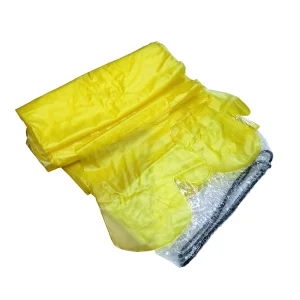
Custom China PVC BIBO Filter Replacement Bags - Factory Supplier for Safe and Easy Filter Changes Suppliers, Service
View Details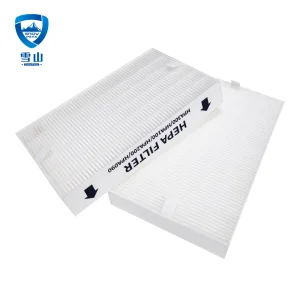
Custom Honeywell HRF-ARVP200 HEPA R Filter & Carbon Prefilter Set for HPA200 Air Purifiers | China Suppliers & Factory Manufacturers, Factories
View Details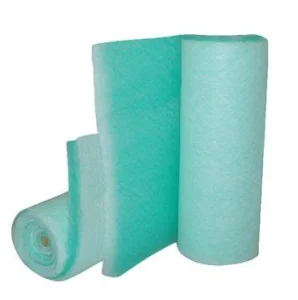
Wholesale G2 G3 G4 pre fiberglass media paint stop floor air filter roll spray booth filter Suppliers, Factory
View Details
Custom China Metal Washable Metallic Mesh Air Filter - Stainless Steel Pre-Filter from Reliable Suppliers & Factory Suppliers, Factory
View Details


Custom High absorbent non-woven wet curtain customized humidifier filter media pad Supplier, Companies
View Details1. Executive Summary & Global Market Engineering Context
An engineering perspective on the imperative transition from simple particulate air filtration to complex, multi-stage gas-phase adsorption systems.
The Shift to Molecular Gas-Phase Filtration
In modern HVAC engineering and industrial environmental compliance, particulate management via mechanical HEPA media accounts for only half of the purification challenge. Volatile Organic Compounds (VOCs), hazardous air pollutants (HAPs), toxic chemical vapors, and nuisance odors present severe operational risks to human health, semiconductor manufacturing yields, and urban indoor air quality (IAQ).
Activated Charcoal For Air applications represent the gold standard for gas-phase molecular contamination control. By leveraging massive specific surface areas ($800\text{ m}^2/\text{g}$ to over $1500\text{ m}^2/\text{g}$) and tailored micro-pore networks, industrial activated carbon media captures airborne molecules ranging from sub-nanometer volatile hydrocarbons to heavy industrial solvent emissions.
China's Manufacturing Supremacy in Carbon Ecosystems
China has established an unassailable global advantage in activated charcoal air filter manufacturing through complete vertical integration. From primary carbon synthesis (coal, coconut shell, and wood activation) to high-speed automated non-woven lamination, mini-pleating, and frame fabrication, Chinese manufacturing hubs provide:
- Unmatched scale and material consistency under ISO 9001 and ISO 16890 frameworks.
- Custom chemical impregnation capabilities (KOH, KI, Phosphoric Acid) for targeted gas capture.
- Rapid prototyping cycles reduced from months to under 10 business days.
- Unrivaled cost-to-performance efficiency for B2B global supply chains.
2. Technical Deep-Dive: Adsorption Physics & Pore Tailoring
Understanding the physical and chemical parameters that govern activated carbon performance in air stream purification.
Pore Kinetics & Distribution
Activated carbon efficiency depends directly on pore size distribution categorizations:
- Micropores (< 2 nm): Primary locus for physical adsorption of small VOC molecules (benzene, toluene, formaldehyde).
- Mesopores (2 - 50 nm): Transport channels that facilitate rapid gas diffusion into deep micropore networks.
- Macropores (> 50 nm): Entry gateways preventing surface blinding in heavy particulate loads.
Chemical Impregnation Chemisorption
For low-molecular-weight gases where Van der Waals physical adsorption is insufficient, specialized chemical impregnants are added to trigger chemisorption:
- Potassium Hydroxide (KOH): Neutralizes acidic gases ($H_2S, SO_2, HCl$).
- Phosphoric Acid ($H_3PO_4$): Targets alkaline gases ($NH_3$, amines).
- Potassium Permanganate ($KMnO_4$): Oxidizes formaldehyde and ethylene.
- Metal Oxides ($Cu, Zn$): Complex with HCN and arsine gases.
Media Form Factors & Geometries
Selecting the correct physical configuration balances adsorption capacity against pressure drop ($\Delta P$):
- Extruded Pellets (4mm/3mm): High bed depth, maximum capacity for industrial scrubbers.
- Honeycomb Carbon Cells: Ultra-low pressure drop for high CFM HVAC systems.
- Laminated Carbon Fabrics: Granules sandwiched between non-wovens for pleatable compact filters.
| Raw Material Origin | Iodine No. (mg/g) | CTC Rating (%) | Hardness (%) | Primary Target Contaminants | Best Application Scenario |
|---|---|---|---|---|---|
| Coconut Shell | 1000 - 1400 | 60 - 90 | > 98% | Low MW VOCs, Odors, Trace Solvents | Cleanrooms, Residential HEPA Combos, Semiconductor |
| Bituminous Coal | 800 - 1000 | 45 - 60 | > 92% | Broad Spectrum VOCs, Hydrocarbons | Industrial Air Scrubbers, Municipal Wastewater |
| Wood Base | 900 - 1200 | 50 - 70 | > 85% | High Molecular Weight Pigments, Large VOCs | Decolorization Exhaust, Food & Beverage Processing |
| Chemically Impregnated | 850 - 1100 | 55 - 75 | > 95% | Acid Gases ($H_2S$), Ammonia ($NH_3$), $HCHO$ | Biogas Plants, Chemical Labs, Funeral Homes |
3. Localized Industrial Application Scenarios
How specialized Chinese carbon manufacturing aligns with strict sector-specific compliance globally.
Scenario A: Automotive Spray Booths & Paint Exhaust
Automotive finishing lines emit high concentrations of aromatic solvents (xylene, toluene, ethylbenzene). Engineering Solution: Multi-stage filtration combining synthetic G4 pre-filter rolls, ceiling diffusion media, and heavy-bed extruded coal-based carbon V-bank modules. This design guarantees breakthrough times exceeding 12 months under continuous 2,000 CFM operation, maintaining full compliance with EPA and EU VOC emission directives.
Scenario B: Semiconductor FABs & Cleanroom Airborne Molecular Contamination (AMC)
In sub-nanometer microelectronics fabrication, trace gaseous acids ($SO_x, NO_x$) cause yield-killing wafer corrosion. Engineering Solution: Gel-seal liquid tank mini-pleat HEPA filters integrated with high-purity coconut shell carbon media treated with low-outgassing binders. This prevents organosiloxane and phthalate cross-contamination in ISO Class 3 to Class 5 cleanrooms.
Scenario C: Commercial HVAC & Urban Smart Buildings
High-density commercial towers located adjacent to transit hubs suffer from diesel exhaust, particulate matter ($PM_{2.5}$), and ozone infiltration. Engineering Solution: Compact MERV 13 to MERV 16 pleated filters laminated with electrostatically charged meltblown media and a sandwich layer of activated carbon granules, providing simultaneous gas and particle control without requiring fan motor upgrades.
Scenario D: Hazardous Containment & BIBO Safe-Change Systems
Pharmaceutical synthesis and BSL-3/BSL-4 laboratories handling highly potent compounds or radiological gases. Engineering Solution: Heavy-duty PVC Bag-In/Bag-Out (BIBO) housings equipped with stainless steel high-temperature HEPA units and gas-tight impregnated carbon cells for 99.999% destruction/retention of dangerous fumes during filter replacement cycles.
4. China Factory Supply Chain Resilience & Efficiency
How modern Chinese filtration facilities deliver risk mitigation, rapid scalability, and strict quality assurance for global OEM procurement.
Vertical Raw Material Control
Leading factories in industrial hubs like Shenzhen, Jiangsu, and Shandong maintain direct joint-ventures with raw carbon activation kilns. This secures immediate access to premium coconut shell and coal reserves, shielding international buyers from global raw material price spikes and supply disruptions.
Automated Assembly & Quality Control
Production lines feature robotic hot-melt dispensing, automated pleat spacing, laser-guided dimension checks, and computer-controlled ultrasonic sealing. Every air filter undergoes a rigorous four-stage quality gate:
- IQC: Testing carbon iodine numbers and media basis weights.
- IPQC: In-line monitoring of pleat geometry and glue line consistency.
- FQC: Resistance and aerosol efficiency particle testing.
- OQC: Drop-testing for export packaging and humidity sealing checks.
Logistics & Port Proximity
Proximity to major deep-water ports (Shenzhen, Yantian, Yiwu, Ningbo, Shanghai) provides seamless container consolidation, reduced drayage times, and direct shipping routes to North America, Europe, Southeast Asia, and the Middle East, reducing order-to-delivery lead times by up to 30%.
5. Technology Roadmap & Future Engineering Outlook
Next-generation innovations shaping the future of gas-phase adsorption and carbon composite media.
Cold Catalyst & Carbon Hybrids
Traditional activated carbon suffers from finite adsorption capacity and eventual gas saturation. Modern Chinese research focuses heavily on coupling activated charcoal with ambient-temperature Cold Catalyst and nano-titanium dioxide ($TiO_2$) layers.
These hybrid media continuously break down captured formaldehyde, volatile organics, and ozone into trace carbon dioxide ($CO_2$) and water ($H_2O$) via room-temperature catalytic cleavage, effectively regenerating adsorption sites and extending active service life up to three-fold.
Nanocomposite Fibers & Sustainable Carbon
The future lies in reducing structural pressure drops while maximizing contact kinetics. Emerging technologies include:
- Electrospun Carbon Nanofibers: Extremely thin media profiles offering minimal airflow resistance for smart residential air purifiers.
- Sustainable Bio-Based Activation: Utilizing agricultural residues (bamboo, nut shells) to produce carbon media with zero net carbon footprints.
- Smart Saturation Sensors: Embedded RFID and colorimetric chemical indicator strips that alert facilities teams prior to VOC breakthrough events.
6. Compliance, Testing Standards & B2B Localized Support
Rigorous international certification alignment guaranteeing seamless importation and localized regional distribution.
Global Industry Compliance
Export-grade Chinese activated charcoal filters comply with all primary Western testing frameworks:
- ISO 16890 / EN 779: Coarse, ePM10, ePM2.5, and ePM1 efficiency grading.
- ASHRAE 52.2: MERV 8 through MERV 16 ratings.
- GB/T 18801-2022: Clean Air Delivery Rate (CADR) and Cumulative Clean Mass (CCM) testing for formaldehyde and VOCs.
- REACH & RoHS: Ensuring zero toxic heavy metals or SVHC chemicals in frames or glues.
Custom OEM & Private Labeling
Top manufacturers offer full OEM engineering customization for global brand owners:
- Custom dimensional tolerances down to $\pm 1.0\text{ mm}$.
- Private-label retail carton printing, barcode integration, and drop-ship packaging.
- Tailored frame selection: Beverage board, extruded aluminum, stainless steel, plastic ABS, or galvanized steel.
- Customized carbon loading weights ($100\text{ g/m}^2$ to $1000+\text{ g/m}^2$).
Localized Engineering Support
Dedicated engineering teams assist international procurement officers with:
- Breakthrough curve analysis for specific industrial gas mixtures.
- Airflow vs. Differential Pressure computational fluid dynamics (CFD) modeling.
- Consignment stock management and Just-In-Time (JIT) delivery scheduling.
Featured Industrial & OEM Air Filtration Products (Part 2)

Custom High Efficiency High-Temperature HEPA Air Filter with Stainless Steel Frame - China Suppliers Factory Output Factories, Product
View Details
China Honeywell HRF-ARVP200 Replacement HEPA R Filter & Carbon Prefilter Set for HPA200, HPA250, HPA5200 Air Purifiers | HRF-ARVP200 Factory, Service
View Details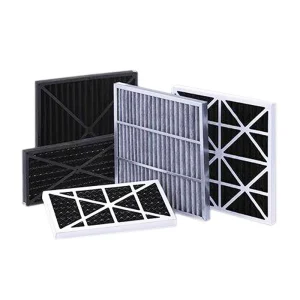
Custom VOCs removal carbon air filter laminated with wire mesh with cardboard frame Manufacturer, Companies
View Details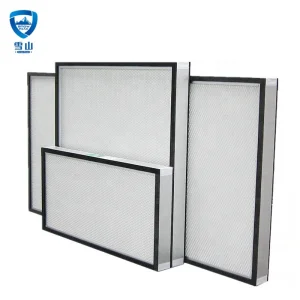
ODM High Efficiency Mini-Pleated HEPA Air Filter - Custom Sizes from Leading China Suppliers and Factory Products, Service
View Details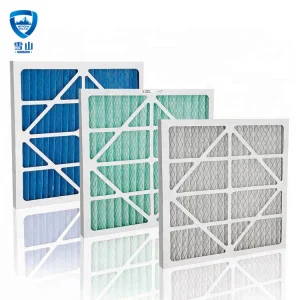
Wholesale Factory Price customized size G4 MERV 8 11 13 14 16 Cardboard Frame Pleated AC Furnace Air Filter for HVAC Systems Manufacturer, Exporter
View Details
Wholesale Painting room filters 600G ceiling filter cotton G4 M5 pre medium efficiency air filter material Exporter, Company
View Details
ODM China Suppliers - Efficient Sandwich Activated Carbon Fabric Air Filters from Factory for Odor and Particle Removal Suppliers, Products
View Details
OEM China Suppliers Factory G2 G3 G4 Pre Fiberglass Media Paint Stop Floor Air Filter Roll for Spray Booth Filtration Factory, Product
View Details7. Technical & Procurement Q&A (FAQ)
Direct expert answers to critical questions faced by international procurement managers and HVAC design engineers.
How do I determine whether my application requires physical adsorption carbon or chemically impregnated carbon?
Physical adsorption relies on Van der Waals forces within the carbon's micropores and is ideal for volatile organic compounds (VOCs) with boiling points above 50°C (such as benzene, xylene, toluene, and heavy hydrocarbons). However, for low-molecular-weight or highly polar gases (such as hydrogen sulfide $H_2S$, ammonia $NH_3$, formaldehyde $HCHO$, or sulfur dioxide $SO_2$), physical adsorption is weak.
In these cases, chemically impregnated carbon (treated with KOH, $H_3PO_4$, or $KMnO_4$) is required. The impregnant chemically reacts with the target gas (chemisorption), converting it into a harmless salt or neutral compound trapped within the matrix.
What is Carbon Tetrachloride (CTC) value, and why is it superior to Iodine Number for air filter specification?
While Iodine Number measures the absorption of iodine from a liquid solution (primarily correlating to pores sized 1.0 to 2.0 nm), Carbon Tetrachloride (CTC) value measures the adsorption of gas-phase carbon vapors at saturation. Because air filtration is strictly a gas-phase process, CTC provides a far more accurate representation of a carbon filter's capacity for gaseous organic contaminants.
Standard coal-based carbons offer a CTC of 40%–50%, whereas high-grade coconut shell carbons manufactured in China achieve CTC ratings of 60% to 90%, offering significantly higher gas retention per gram of carbon.
How do Chinese manufacturers minimize pressure drop ($\Delta P$) in high-CFM air handling units (AHUs)?
Pressure drop is optimized through media geometry innovation. Instead of traditional deep loose-fill carbon beds that restrict airflow, manufacturers utilize Honeycomb Carbon Matrices or Laminated Carbon Fabrics (Sandwich Media).
By bonding high-CTC carbon micro-granules between low-resistance, electrostatically charged non-woven synthetic layers and mini-pleating them into rigid frames, we achieve high surface area contact with pressure drops under $30\text{-}50\text{ Pa}$ at standard face velocities ($2.5\text{ m/s}$), drastically reducing fan energy consumption.
What are the typical lead times for custom OEM activated carbon air filter orders from China?
For standard replacement filter designs or common HVAC dimensions, initial engineering sample lead times are typically 3 to 5 business days. Mass production runs for 20ft or 40ft High Cube container loads average 15 to 20 calendar days.
Custom tooling for specialized injection-molded plastic frames or liquid tank gel-seal extrusions may add 10 to 14 days for initial mold fabrication.
How is carbon shedding (black dust migration) prevented in cleanroom or residential HEPA filter assemblies?
Carbon shedding is controlled through advanced post-processing. High-quality factories execute dust vacuuming and thermal calendering on all carbon non-woven laminates. Furthermore, carbon layers are always downstream-backed by a fine meltblown or spunbond synthetic cover stock (such as a G4 or H13 HEPA layer), ensuring zero carbon particulate escape into downstream air ducts or cleanroom environments.
What quality documentation accompanies export shipments of industrial air filters?
Every commercial export batch is supplied with a comprehensive Certificate of Analysis (COA) detailing: media basis weight, initial pressure drop, particle efficiency rating (per ISO 16890 or ASHRAE 52.2), CTC/Iodine verification for the activated carbon batch, dimensional tolerance audit reports, and RoHS/REACH material safety compliance sheets.