
Primary Technical Filter Media & System Replacements
Explore our core engineering roll media, pocket filtration fabrics, and certified HEPA replacement components manufactured directly in our high-precision Chinese facilities.



The Landscape of Air Filter Cloth Material Manufacturing in China
In-depth whitepaper analysis of synthetic nonwoven polymer dynamics, electret hydro-charging advancements, and global supply chain integration.
The global air filtration industry has undergone a radical transformation over the past decade, driven by stringent environmental regulations, heightened public awareness of indoor air quality (IAQ), and the exponential expansion of high-tech manufacturing sectors such as semiconductor fabrication, biopharmaceuticals, and electric vehicle battery gigafactories. At the epicenter of this technological shift are China’s specialized air filter cloth material factories. Evolving beyond low-cost, bulk nonwoven producers, leading Chinese manufacturers have converted into state-of-the-art innovation hubs that engineer synthetic nonwovens, nanofiber composites, and advanced electret meltblown fabrics meeting rigorous global standards such as ISO 16890, EN 779, EN 1822, and ASHRAE 52.2.
1. Technological Milestones in Synthetic Nonwovens & Micro-Fiber Engineering
Air filter cloth material—often referred to as filter media or nonwoven filtration fabric—serves as the functional heart of any air purification system. The mechanical and electrostatic properties of the media directly determine particle capture efficiency, initial pressure drop, dust holding capacity (DHC), and operational lifespan. Modern Chinese air filter cloth factories utilize four core technological pillars:
- Thermal-Bonded & Needle-Punched Polyester (PET/PBT): Designed primarily for coarse (G1–G4) pre-filtration. These fabrics utilize graded fiber density structures where coarse fibers on the air-upstream side capture larger particulates (pollen, hair, sand), while finer sub-micron fibers on the downstream side retain finer dust. This gradient distribution prevents surface blinding and maximizes volumetric dust capacity.
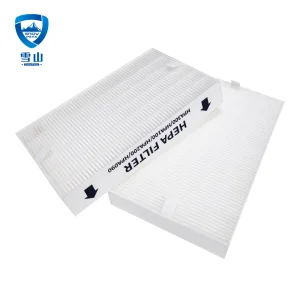
- High-Efficiency Hydro-Charged Meltblown Polypropylene (PP): The foundation of fine dust (M5–F9) and high-efficiency particulate air (HEPA H10–U17) media. Chinese factories employ advanced water-jet corona hydro-charging systems that inject ultra-stable electrostatic charges into sub-micron PP fibers. This allows for exceptional trapping of sub-micron aerosols (PM0.3) via electrostatic attraction without increasing physical flow resistance.
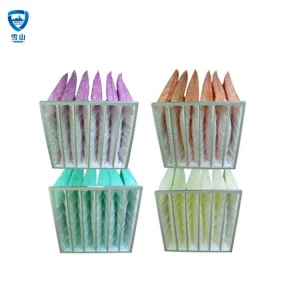
- Meltblown & Synthetic Composite Pocket Fabrics: Multi-layer ultrasonic laminated nonwovens explicitly structured for HVAC pocket (bag) filters. These materials feature a protective spunbond outer layer, an electret meltblown middle layer, and a rigid nonwoven structural backing that maintains open pocket geometry under fluctuating airflow velocities.
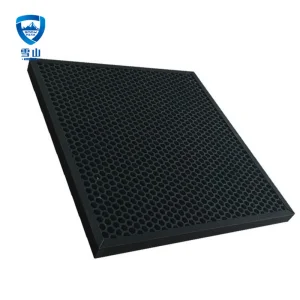
- Functional Gas-Phase & Odor Composite Media: Utilizing "sandwich" technology or impregnated carbon nonwovens where coconut-shell activated carbon, modified alumina, or cold-catalyst micro-particles are thermally bonded between nonwoven scrims. This enables simultaneous particle capture and gaseous volatile organic compound (VOC) adsorption.
Polymer & Fiber Precision
Upstream integration with raw polypropylene and polyester resin suppliers allows precise melt-flow index (MFI) control, yielding uniform fiber diameters down to 0.5 microns.
Hydro-Charge Electret Stability
Next-generation water electret treatment ensures electrostatic charge retention over extended shelf lives and under extreme humidity conditions (up to 95% RH).
Ultrasonic Lamination
Stitchless, solvent-free ultrasonic bonding prevents pinhole leaks and structural delamination, maintaining peak efficiency in high-velocity HVAC systems.
Air Filter Cloth Technical Classification & Performance Matrix
Comprehensive engineering specifications comparing international filter classes, constituent polymer materials, structural weight (GSM), and pressure drop parameters.
| Filter Class (EN779 / ISO 16890) | Primary Material Structure | Gram Weight (GSM) | Target Particle Efficiency | Initial Resistance @ 0.9m/s | Primary Industrial Applications |
|---|---|---|---|---|---|
| G2 – G4 (Coarse) ISO Coarse 30%–70% |
Graded Polyester (PET) Synthetic Fibers, Thermal-Bonded | 100 – 350 g/m² | >90% coarse dust (>10 µm) | 15 – 45 Pa | AHU Pre-filtration, Spray Booths, Train & Transit Ventilation |
| M5 – M6 (Medium) ISO ePM10 50%–70% |
Needle-Punched PET / Meltblown Composite Fabric | 140 – 220 g/m² | 50% – 80% (0.4 µm / PM10) | 35 – 65 Pa | Commercial HVAC Bags, Gas Turbine Air Intakes, Cleanroom Pre-stage |
| F7 – F9 (Fine) ISO ePM1 50%–85% |
Electret Polypropylene Meltblown + Spunbond Scrim | 70 – 160 g/m² | 65% – 95% (ePM1 0.3–1.0 µm) | 55 – 110 Pa | Hospitals, Semiconductor Cleanrooms, High-End Office HVAC |
| E10 – H14 (HEPA) EN 1822 Standard |
Sub-micron PP Meltblown / Wet-laid Micro-Glass Fiber | 50 – 120 g/m² | 99.95% – 99.997% @ MPPS (0.3 µm) | 80 – 220 Pa | Pharma Cleanrooms, Operating Theaters, Consumer Air Purifiers |
| Carbon Composite Gas-Phase Filter Cloth |
Activated Carbon Granules + PET Nonwoven Sandwich | 250 – 600 g/m² | Dual: PM2.5 + VOC/Odor Removal | 40 – 90 Pa | Automotive Cabin Filters, Industrial Odor Control, Smart Appliances |
China's Manufacturing Moats & Global Supply Chain Integration
Why leading global HVAC brands, cleanroom contractors, and OEM purifier companies source air filter cloth material directly from specialized Chinese industrial ecosystems.
1. Vertical Integration & Raw Material Clusters
China’s nonwoven filtration industry benefits from unparalleled cluster concentration in provinces like Guangdong, Zhejiang, and Jiangsu. Upstream petrochemical facilities produce high-melt-index polypropylene resins, specialty polyester staple fibers, and functional masterbatches within immediate geographical proximity to nonwoven slitting and converting plants.
This proximity drastically cuts supply chain latency and allows Chinese manufacturers to offer customized fiber formulations—such as flame-retardant (DIN 53438 F1), moisture-resistant, or anti-bacterial coated media—with minimal lead times and highly competitive minimum order quantities (MOQs).
2. Advanced Quality Assurance & Automated Testing
Leading Chinese air filter material factories have invested heavily in automated German and American testing instrumentation. In-house laboratories are regularly equipped with TSI 8130A / 8130 Automated Filter Testers, Palas particle generators, and laser spectrometer systems to continuously measure fractional efficiency and resistance profiles across roll batches.
Every production lot undergoes rigorous inspection for tensile strength, bursting pressure, thickness uniformity, and electrostatic charge retention, ensuring that downstream converting lines (pleating, sewing, frame sealing) operate at maximum speed without media tear or efficiency drop.
Localized Application Scenarios & Industrial Solutions
Engineered nonwovens tailored for specific operational environments—from high-humidity tropical HVAC systems to ultra-clean semiconductor cleanrooms and bio-containment bags.
HVAC & Building Ventilation
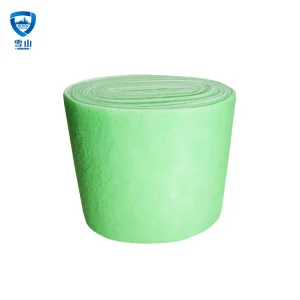
High-capacity G4 pre-filter media rolls and M5-F9 pocket filter fabrics engineered for Air Handling Units (AHUs) in commercial skyscrapers, airports, shopping malls, and public transit networks.
Semiconductor & Pharma Cleanrooms
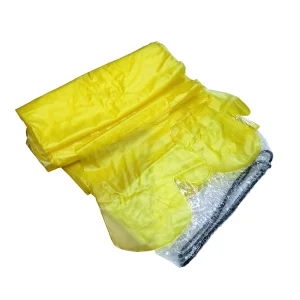
Ultra-low resistance H13-U15 sub-micron filter media and BIBO (Bag-In/Bag-Out) PVC change bags for toxic, biological, or radio-active hazardous exhaust handling in cleanroom environments.
Consumer Purifiers & Smart Home
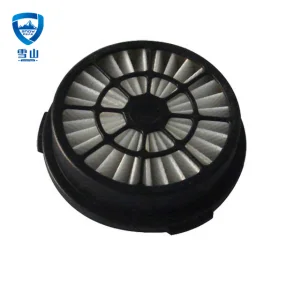
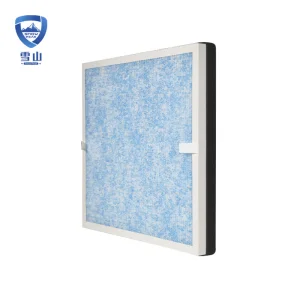
Precision mini-pleated HEPA substrates, round replacement filters, antibacterial nonwovens, and high-absorbent humidifier filter media pads for household air purifiers and vacuum cleaners.
Global Industry Trends & Technology Roadmap
Key technological transformations shaping the next decade of air filtration cloth production and sustainable procurement.
As decarbonization goals (Scope 1, 2, and 3 emissions) sweep across global manufacturing, the air filter cloth industry is undergoing a paradigm shift. End-users no longer evaluate filter media purely on unit price; total cost of ownership (TCO)—driven largely by fan energy consumption—and environmental footprint now dominate enterprise procurement decisions.
1. Nanofiber Electrospinning Composites
By depositing a thin surface web of electrospun nanofibers (50–200 nm diameter) onto spunbond or meltblown substrates, Chinese factories create true surface-loading filtration media. Particles are captured entirely on the upstream surface rather than deep inside the media matrix, enabling dramatically lower pressure drop buildup and easier pulse-jet cleaning in industrial dust collectors.
2. Bio-Based & Recyclable Nonwoven Polymers
In response to European Union sustainability mandates, leading Chinese factories are pioneering PLA (Polylactic Acid) biodegradable nonwovens and 100% rPET (recycled polyester) filter cloth rolls. These materials offer thermal stability and structural performance comparable to virgin synthetic polymers while significantly reducing embedded product carbon footprints.
Global Enterprise Procurement Guide: Specifying Filter Cloth
Key technical parameters international sourcing managers must define when requesting quotes from Chinese filter media manufacturers.
1. Air Permeability & Resistance
Always specify test velocity (e.g., L/m²/s at 200 Pa or mm/s at 50 Pa). Air permeability dictates fan energy requirements in AHU units.
2. Fractional Efficiency & Discharge
State whether electrostatically charged media must meet discharged efficiency requirements (ISO 16890 IPA treatment) to prevent unexpected efficiency drops during field operation.
3. Slitting Width & Roll Dimensions
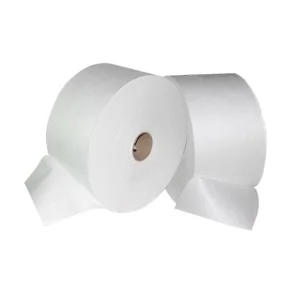
Specify roll slit widths, core inner diameters (e.g., 3-inch or 76mm), max outer roll diameter, and protective shrink-wrap packaging to optimize shipping container load factors.
OEM Specialty Filters & Advanced Material Directory
Explore specialized activated carbon composites, pocket filter assemblies, and antibacterial HEPA media from our China manufacturing inventory.


Frequently Asked Questions (Technical & Procurement FAQ)
Expert engineering answers regarding air filter cloth material selection, OEM customization, compliance testing, and global shipping logistics.