
Featured OEM/ODM Air Purifiers & Specialized Filtration Modules

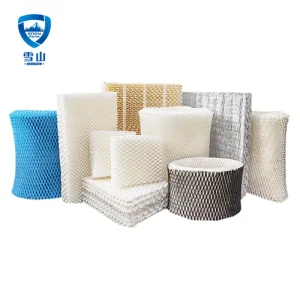
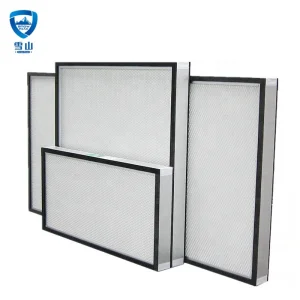

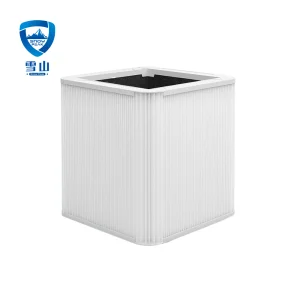
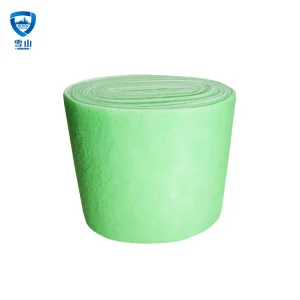

Executive Summary & Technical Architecture of Carbon-Infused Air Purification
As global air quality standards tighten across residential, commercial, and industrial sectors, the demand for dual-action purification systems—capable of simultaneously intercepting microscopic particulate matter (PM2.5, PM0.1) and capturing volatile organic compounds (VOCs)—has escalated. Modern air purifiers equipped with activated carbon filters represent the benchmark in gas-phase and particulate remediation.
Molecular Adsorption Mechanics
Activated carbon functions primarily through physical adsorption driven by van der Waals forces across an immense internal surface area. High-grade coconut shell activated carbon processed in leading Chinese manufacturing hubs offers surface areas ranging from 1,000 to 1,500 m²/g.
- Iodine Number: Exceeding 1050 mg/g for maximum micropore density.
- CTC (Carbon Tetrachloride) Adsorption: Rated between 60% and 85%.
- Pore Distribution: Micro-porous structure optimized for low molecular weight VOCs.
Synergistic Carbon-HEPA Hybrid Design
Combining True HEPA (H13–H14 efficiency under EN1822) with gas-phase carbon media prevents premature pore clogging. The HEPA membrane removes 99.97% of airborne particles down to 0.3 microns, allowing the downstream carbon matrix to adsorb gas molecules without particulate fouling.
- Sandwich Carbon Fabric: Micro-encapsulated carbon granules bonded between non-woven layers.
- Low Air Resistance: Engineered pleat geometry minimizes fan static pressure losses.
- Zero Carbon Dusting: Polymer thermal bonding eliminates downstream particle shedding.
Chemical Functionalization & Catalysis
Standard physical adsorption has limitations against small polar molecules such as formaldehyde ($HCHO$), hydrogen sulfide ($H_2S$), and ammonia ($NH_3$). Modern Chinese exporters utilize chemical impregnation (e.g., $KMnO_4$, potassium iodide, or metal oxide cold catalysts) to chemically break down contaminants.
- Catalytic Decomposition: Transforms formaldehyde into harmless $H_2O$ and $CO_2$.
- Extended Service Life: Prevents premature desorption and odor back-misting.
- Multi-Gas Target Capability: Custom chemical coatings tuned for specific pollutants.
Information Gain Insight: The efficacy of an OEM carbon filter is not determined solely by carbon weight, but by the ratio of active pore volume to airflow resistance. Chinese precision engineering allows for ultra-thin sandwich carbon fabrics that achieve a 95%+ initial TVOC single-pass removal rate while keeping initial pressure drop under 25 Pa at 1.5 m/s face velocity.
Localized Application Scenarios & Engineering Implementations
Air purifiers with carbon filters are deployed across drastically different environments, each imposing unique physical, chemical, and regulatory demands on the filtration architecture.
1. High-Density Residential & Smart Home Purification
In residential urban environments, indoor air pollution stems from off-gassing furniture (formaldehyde), cooking fumes (grease and acrolein), pet dander, and outdoor traffic emissions ($NO_x$, $SO_2$).
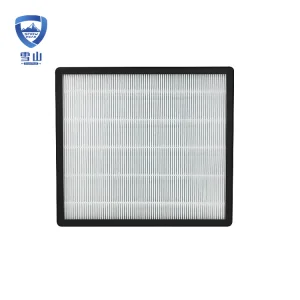
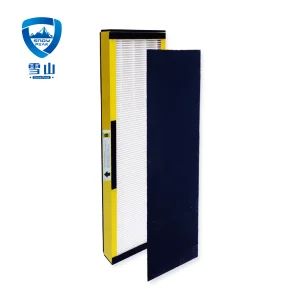
OEM Solution Architecture: Compact cylindrical or flat composite filters featuring a pre-filter layer, an H13 electrostatically charged meltblown HEPA layer, and an inner core of pelletized activated carbon. Designed for high Clean Air Delivery Rate (CADR up to 600 m³/h) and quiet operation (< 32 dB(A) in sleep mode).
2. Commercial Real Estate & Central HVAC Integration
Offices, shopping malls, and educational institutions rely on central Air Handling Units (AHUs) where structural modifications are costly. High fan resistance increases building energy consumption.
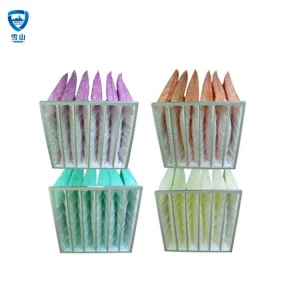
OEM Solution Architecture: V-bank or pleated pocket carbon filters designed to fit standard EN15805 frames. Synthetic meltblown bags infused with activated carbon granules provide high dust-holding capacity (DHC) alongside VOC removal, certified under ISO 16890 (ePM1 60%).
3. Semiconductor & Precision Cleanroom Operations
Gaseous Molecular Contamination (AMC) can ruin semiconductor wafers and optical sensors. Airborne acids, bases, and condensables must be maintained below parts-per-billion (ppb) levels.
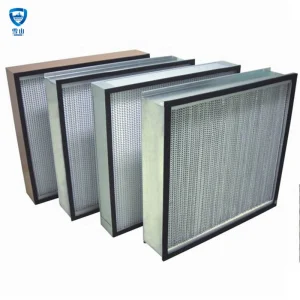
OEM Solution Architecture: Gel-seal and aluminum-framed deep-pleat chemical filters using custom acidized or alkalized activated carbon media. Integrated with H14/U15 ULPA filters to ensure zero outgassing and Class 1 to Class 100 cleanroom compliance.
4. Medical Facilities, Dental Clinics & Isolation Wards
Healthcare settings require rapid removal of anesthetic gases, sterilizing chemical vapors (glutaraldehyde), odors, and airborne pathogens.
OEM Solution Architecture: Multi-stage sealed air purifiers incorporating copper-silver ion antimicrobial pre-filters, H13/H14 HEPA filters, and heavy-duty 4-inch deep carbon beds infused with active catalysts for complete viral destruction and toxic gas elimination.
Technology Roadmap & Future Outlook in Gas-Phase Filtration
The evolution of air filtration is moving beyond simple physical trapping toward intelligent, regenerative, and highly selective catalytic transformation systems.
Impregnated & Thermally Bonded Carbon
Transitioning from loose granule trays to structured foam and sandwich fabric media. Focuses on minimizing dust generation, reducing pressure drop by 35%, and maximizing carbon utilization efficiency across OEM purifier platforms.
Room-Temperature Catalytic Decomposition
Widespread integration of nano-precious metal catalysts (gold, platinum, manganese oxide) onto carbon substrates. Enables continuous breakdown of dangerous volatile organic compounds ($HCHO \rightarrow H_2O + CO_2$) without requiring replacement or thermal regeneration.
MOFs & Smart IoT Sensing Integration
Metal-Organic Frameworks (MOFs) offering tailored pore geometries alongside onboard solid-state gas sensors. Smart algorithms estimate remaining carbon saturation levels based on cumulative VOC exposure, replacing arbitrary timer-based replacement indicators.
China Factory Supply Chain Resilience & Manufacturing Efficiency
China produces over 70% of the world's commercial and residential air filtration hardware. Importers and OEM brand owners benefit from an unparalleled ecosystem combining raw material access, automation, and speed to market.
Vertical Integration & Raw Material Proximity
Leading manufacturing centers in Guangdong (Shenzhen, Dongguan) and Yangtze River Delta maintain direct access to synthetic non-woven suppliers, meltblown extrusion plants, active carbon kilns, and plastic injection molding facilities within a 50 km radius.
Automated High-Speed Production Lines
Automated pleating machines, robotic glue application systems, ultrasonic cutting, and automated filter frame assembly ensure tight tolerances (±0.5 mm) and high production capacity, handling orders from 500 to 100,000 units per month seamlessly.
Agile OEM Customization & Tooling Development
Rapid prototyping capability allows sample delivery within 3 to 7 business days. Custom mold creation for proprietary filter housings, specialized frames, and private-label eco-friendly packaging allows global brands to launch products rapidly.
Global Commercial Standards & Regulatory Compliance
Exporting air purifiers and carbon filters globally demands strict adherence to regional environmental, health, and aerodynamic efficiency metrics.
International Testing Standards Matrix
- ISO 16890: Standard for general ventilation filters, classifying filters into ePM1, ePM2.5, and ePM10 categories.
- EN 1822 / ISO 29463: Governs High-Efficiency Particulate Air (HEPA) testing, determining Most Penetrating Particle Size (MPPS) capture.
- GB/T 18801-2022: The revised Chinese National Standard for consumer air purifiers, establishing clear guidelines for CADR, Cumulative Clean Mass (CCM for dust and formaldehyde), and sound power levels.
- ASHRAE 52.2: Standard for MERV ratings widely referenced across North American commercial HVAC procurement.
Chemical & Material Safety Compliance
- RoHS Directive (2011/65/EU): Verifies absence of hazardous substances in electronic components, frame plastics, and adhesive sealants.
- REACH Regulation (EC 1907/2006): Screening for Substances of Very High Concern (SVHC) in carbon matrices and synthetic binders.
- UL 900 Flammability Standard: Guarantees fire-retardant performance for filters installed in commercial buildings and air handling systems.
- California Air Resources Board (CARB): Verifies ozone emissions from powered air purifiers remain safely below 0.050 ppm.
High-Efficiency Industrial Filters & Replacement Components


Frequently Asked Questions for B2B Sourcing & OEM Manufacturing
Clear, technical answers to common queries raised by international distributors, brand owners, and HVAC engineers when sourcing air purifiers and carbon filters from China.