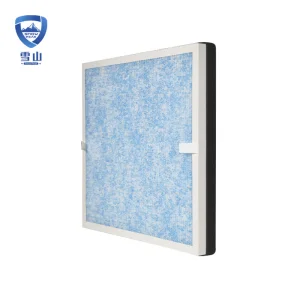
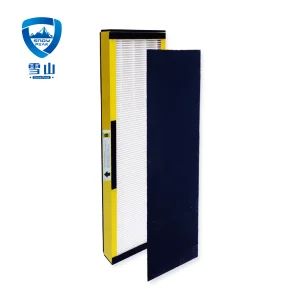
Featured OEM Air Vent & Filtration Products (Part I)
Precision-engineered air filters manufactured under strict ISO 9001 and ISO 16890 standards. Designed for high dust-holding capacity, optimal carbon adsorption kinetics, and minimal static pressure loss across HVAC units and residential air handlers.








1. Executive Overview: Global Macro Demand for Air Vent Carbon Filters
The global gas-phase air filtration market is undergoing a structural paradigm shift driven by stringent indoor air quality (IAQ) regulations, industrial decarbonization imperatives, and heightened consumer awareness regarding airborne volatile organic compounds (VOCs), nitrogen dioxide ($\text{NO}_2$), ground-level ozone ($\text{O}_3$), and persistent ambient odors. As building management systems (BMS) evolve toward energy-efficient recirculating ventilation, mechanical filtration alone (such as standard glass fiber or synthetic particulate filters) fails to mitigate molecular-level gaseous pollutants.
An Air Vent Carbon Filter serves as the critical gas-phase purification barrier installed within supply diffusers, return air grilles, ductwork assemblies, and decentralized air purifiers. By integrating high-surface-area activated carbon matrices into air vent architectures, industrial facilities, commercial real estate, semiconductor cleanrooms, and residential spaces can selectively capture gaseous toxins, hazardous air pollutants (HAPs), and offensive odors without compromising overall HVAC airflow equilibrium.
According to global environmental compliance metrics, facilities deploying integrated honeycomb or granular activated carbon vent filters report a 92% to 98% reduction in volatile organic compound breakthrough, directly aiding adherence to LEED v4.1 IAQ credit requirements, ASHRAE Standard 62.1, and EN 16798 standards. Navigating the selection of an optimal manufacturer requires deep technical evaluation of carbon activation methods, pore diameter distribution, structural frame integrity, and chemical impregnation parameters.
2. Engineering Mechanics: Molecular Adsorption & Pore Architecture
To understand why high-gain activated carbon vent filters outperform standard air media, engineers must evaluate the dual physics of Physical Adsorption (Physisorption) via Van der Waals forces and Chemical Adsorption (Chemisorption) via chemical bonding with impregnated surface agents.
Microporous Structure (< 2 nm)
Micropores account for over 90% of the total internal surface area in high-grade virgin coconut shell carbon. This dense pore network provides the ideal thermodynamic trap for low-molecular-weight VOCs like benzene, toluene, xylene, and light alkanes.
Mesoporous & Macroporous Channels
Ranging from 2 nm to 50 nm+, mesopores act as fast-diffusion expressways. They allow high-velocity duct airflow to penetrate deep into the core carbon granule matrix, preventing surface saturation and maintaining low flow resistance.
Chemical Impregnation (Chemisorption)
For non-adsorbable light gases such as ammonia ($\text{NH}_3$), hydrogen sulfide ($\text{H}_2\text{S}$), and formaldehyde ($\text{HCHO}$), carbon media is chemically impregnated with potassium hydroxide ($\text{KOH}$), potassium permanganate ($\text{KMnO}_4$), or phosphoric acid ($\text{H}_3\text{PO}_4$) to neutralize molecules on contact.
Air Vent Carbon Media Specification Comparison
| Filter Structural Type | Base Material Substrate | CTC Value (%) | Avg Pressure Drop ($\Delta P$) | Primary Target Contaminants |
|---|---|---|---|---|
| Honeycomb Carbon Grid | Aluminum / Polypropylene Honeycomb | 60% - 95% | 15 - 35 Pa @ 1.5 m/s | HVAC Duct Odors, TVOC, Large Volume Ventilation |
| Carbon Impregnated Non-Woven | Synthetic Polyester Matrix | 45% - 70% | 25 - 55 Pa @ 1.5 m/s | Dual Dust & Odor Removal, Residential Vents |
| Granular Bonded Carbon Panel | Extruded Coal / Coconut Shell Carbon | 70% - 105% | 40 - 85 Pa @ 1.5 m/s | Industrial HAPs, Solvent Exhaust, Commercial Kitchens |
| HEPA + Carbon Composite | Meltblown Polypropylene + Carbon Net | 50% - 80% | 60 - 120 Pa @ 1.5 m/s | Sub-micron Particles (PM2.5) + Acid Gas/Odor Combo |
3. Strategic Supply Chain: Why China Dominates Air Vent Filter Manufacturing
Global procurement managers evaluating air purification supply chains consistently partner with leading Chinese OEM/ODM factories due to four decisive structural advantages: raw material integration, advanced automation, continuous technical R&D, and unparalleled cost-to-performance ratios.
Vertical Coal & Coconut Shell Carbon Sourcing
China hosts the world's most concentrated ecosystem for precursor carbonization and chemical activation. Direct access to premium coconut shell substrates and synthetic non-woven backing layers guarantees uninterrupted raw material availability, mitigating global supply chain bottlenecks.
Automated Carbon Impregnation & Pleating Lines
Modern Chinese facilities employ high-speed ultrasonic bonding, automated hot-melt carbon slurry distribution, and robot-assisted frame sealing. Automated quality monitoring systems inspect carbon weight distribution ($\text{g/m}^2$) in real time to ensure batch-to-batch uniformity.
Rigorous ISO Cleanroom Manufacturing
High-end air vent filters—especially those deployed in medical devices, semiconductor transport ducts, and ISO Class 5 cleanrooms—are assembled inside controlled Class 10,000 cleanrooms to eliminate pre-installation particulate contamination.
Flexible OEM/ODM Customization & Prototyping
From non-standard vent frame dimensions (extruded aluminum, plastic injection, rigid cardboard, or flexible sponge borders) to custom catalytic formulas, Chinese engineering teams offer rapid 3D CAD modeling and prototype turnaround within 5 to 7 working days.
4. Application Matrix: Engineering Deployment Across Critical Industries
Air vent carbon filters are not one-size-fits-all components. Distinct operating environments require optimized carbon blends, mechanical frames, and air velocity profiles.
Commercial HVAC & Office Buildings
Integrated into ceiling supply diffusers and AHUs to remove outdoor traffic fumes ($\text{NO}_x$, diesel exhaust) and office equipment emissions (ozone, TVOCs), preserving tenant health and achieving green building certifications.
Semiconductor Fabs & Cleanrooms
Airborne Molecular Contamination (AMC) can destroy microchip wafer yields. Specialized acid/base gas-phase carbon filters mounted at cleanroom air vents eliminate trace siloxanes, acid vapors, and dopant gases.
Hospitality & Commercial Kitchen Venting
Grease smoke, volatile fatty acids, and intense cooking odors are scrubbed using heavy-duty honeycomb activated carbon vent filters installed directly in exhaust hoods and duct discharge outlets.
Automotive & Rail Cabin Air Vents
Compact, pleated carbon filters fitted into electric vehicle (EV) HVAC vents and high-speed train fresh-air intakes protect passengers against tunnel odors, pollen, and roadside emissions.
Bio-Pharma & Isolation Wards
Combination filters pairing True HEPA (H13/H14) with chemical carbon layers capture both aerosolized biological pathogens and harsh disinfectant vapors ($\text{H}_2\text{O}_2$, chlorine dioxide).
Smart Residential Purifiers & Vents
Private-label aftermarket replacement filters designed for major consumer brands (Honeywell, Coway, Levoit, Germ Guardian) ensuring exact structural fit and superior odor removal efficiency.
5. Industry Evolution: Next-Gen Carbon Nanotechnology & Catalytic Media
The traditional reliance on simple physical adsorption activated carbon is rapidly evolving toward zero-saturation catalytic technology and nano-composite media structures.
1. Room-Temperature Cold Catalyst (De-Formaldehyde)
Unlike physical carbon which can desorb captured formaldehyde back into the airstream when room temperature rises, next-generation cold catalyst filters continuously decompose $\text{HCHO}$ into harmless carbon dioxide ($\text{CO}_2$) and water ($\text{H}_2\text{O}$) at ambient temperatures without thermal regeneration.
2. Low-Pressure Drop Micro-Honeycomb Formulations
Modern HVAC systems prioritize energy reduction. Advanced carbon slurry bonding techniques allow manufacturers to coat ultrathin ceramic or aluminum honeycomb walls with activated carbon, cutting pressure drop by over 40% compared to traditional loose-fill carbon beds.
3. Antibacterial & Anti-Fungal Impregnation
High humidity in air conditioning vents can foster mold growth on accumulated dust. Modern carbon vent media incorporates silver ion ($\text{Ag}^+$) or zinc pyrithione treatments to prevent bacterial proliferation inside the filter core.
4. Eco-Friendly Circular Carbon Frameworks
Leading Chinese exporters are transitioning toward bio-based carbon sources (such as agricultural waste husk and sustainably harvested bamboo carbon) paired with fully recyclable ABS or biodegradable PLA filter frames.
6. Global Enterprise Sourcing & Quality Verification Protocol
When contracting a China-based OEM air vent carbon filter supplier, procurement teams must institute rigorous audit protocols to verify material specifications and structural performance.
Step 1: Raw Material Verification
Demand third-party laboratory test reports validating the Carbon CTC (Carbon Tetrachloride) value ($\ge 60\%$), Iodine number ($\ge 1000 \text{ mg/g}$), and hardness index ($\ge 95\%$) to prevent premature dusting and attrition during shipping.
Step 2: Airflow & Pressure Drop Testing
Verify differential pressure vs velocity curves in accordance with ISO 16890 or ASHRAE 52.2 standards. High initial resistance will cause HVAC blower motor strain and elevated energy consumption.
Step 3: Quality Control & Traceability
Ensure the supplier enforces a comprehensive 4-stage quality management framework: IQC (Incoming Quality Control), IPQC (In-Process Quality Control), FQC (Final Quality Control), and OQC (Outgoing Quality Control).
7. Industrial Technical Q&A (Frequently Asked Questions)
Direct technical insights from our senior cleanroom filtration engineers addressing common specification, installation, and procurement inquiries.
Featured OEM Air Vent & Filtration Products (Part II)
Explore our complete catalog of evaporative cooling pads, mini-pleated HEPA filters, activated carbon fabric media rolls, and aftermarket replacement kits manufactured for global export.