Featured Activated Carbon & HEPA Filtration Solutions (Part I)
Explore high-efficiency carbon media assemblies, custom HVAC pre-filters, and replacement units engineered in China's premier filtration manufacturing hubs.

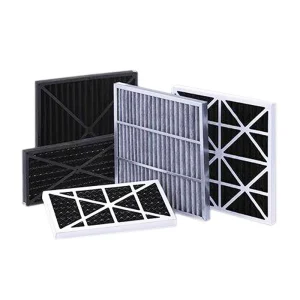
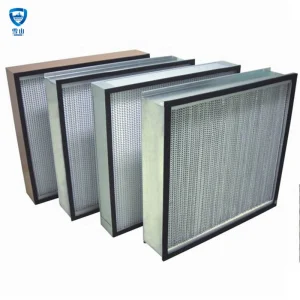
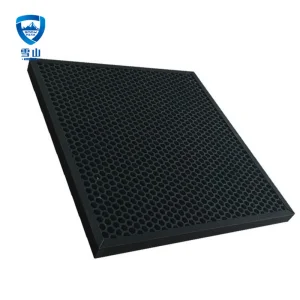
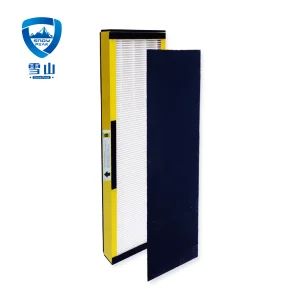


China Carbon Charcoal Air Filter Exporters: Supply Chain Advantage & Industrial Synergy
The global demand for high-performance gas-phase air filtration has shifted dramatically toward Chinese manufacturing hubs. Over the past two decades, China has evolved from a basic component producer into the central nexus of advanced activated carbon synthesis, chemical impregnation technology, and automated composite filter assembly. International original equipment manufacturers (OEMs), engineering procurement contractors (EPCs), and commercial HVAC distributors rely heavily on Chinese exporters to secure scalable, cost-competitive, and highly specialized molecular air filtration media.
China commands over 65% of the world's activated carbon processing capacity, seamlessly integrating raw coconut shell procurement, steam thermal activation, specialized chemical impregnation, and automated filter element converting within tight geographical industrial clusters in Guangdong, Zhejiang, and Jiangsu provinces.
1. Vertical Integration of Raw Carbon Feedstock
The core structural advantage of top-tier Chinese charcoal air filter companies lies in direct upstream access to diverse raw carbon substrates. Depending on the target molecular contaminant (e.g., volatile organic compounds, acid gases, formaldehydes, or alkaline fumes), Chinese exporters utilize three distinct carbon bases:
- Virgin Coconut Shell Activated Carbon: Harvested from Southeast Asian coconut plantations and converted locally under strict high-temperature steam thermal conditions. Coconut shell carbon offers a superior micro-porous structure (<2 nm pore diameter), high Iodine Numbers (>1050 mg/g), and exceptional mechanical hardness (>98% ball-pan hardness rating), making it the gold standard for residential air purifier filters and cleanroom AMC abatement.
- Wood-Based Activated Carbon: Engineered via chemical activation (phosphoric acid method), yielding a high density of meso-pores (2 to 50 nm). Wood carbon is uniquely suited for adsorbing larger molecular weight pollutants, high-viscosity organics, and heavy odor complexes.
- Anthracite Coal-Based Carbon: Utilizing China's vast premium anthracite coal reserves, this material provides a balanced pore distribution (macro-, meso-, and micro-pores) at exceptional bulk economic efficiency, ideal for heavy industrial exhaust treatment and commercial building HVAC bank filters.
2. Advanced Manufacturing & Automation Infrastructure
Leading Chinese exporters have transitioned from manual labor assembly to state-of-the-art automated manufacturing lines. Key technological milestones in modern Chinese filter factories include:
Ultrasonic Non-Woven Laminating
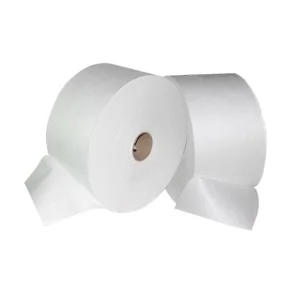
Continuous meltblown non-woven media thermo-bonded with micro-granule carbon, creating a sandwich composite with low air resistance and zero carbon powder shedding.
Extruded Honeycomb Filling
High-precision robotic filling of ceramic or paper honeycomb matrices with spherical activated carbon, maximizing contact surface area while minimizing pressure drop across HVAC systems.
Automated Polyurethane Gasket Sealing
Automated CNC dispensing of seamless polyurethane gaskets and hot-melt edge sealing ensures zero bypass air leakage in deep-pleat industrial carbon boxes.
Gas-Phase Adsorption Physics, Pore Kinetics, and Impregnation Engineering
Understanding the performance dynamics of activated carbon filters requires evaluating the fundamental physical and chemical mechanisms governing molecular adsorption: van der Waals forces, capillary condensation, and chemical reaction chemisorption.
Adsorption Isotherms & Key Technical Specifications
When specifying carbon air filters from Chinese manufacturers, global engineering teams must evaluate standardized physical parameters to ensure performance alignment under ASHRAE 145.2 and ISO 10121 testing methodologies:
| Specification Parameter | Standard Range / Benchmark | Testing Method | Engineering Impact on Air Filtration |
|---|---|---|---|
| Iodine Value (mg/g) | 800 - 1150 mg/g | ASTM D4607 | Directly correlates to micropore volume available for small VOC molecules (<2 nm, e.g., Benzene, Toluene). |
| Carbon Tetrachloride (CTC) Activity | 45% - 90% | ASTM D3467 | Measures overall pore volume for solvent vapors. Higher CTC values indicate greater lifetime holding capacity. |
| BET Specific Surface Area | 900 - 1500 m²/g | N2 Adsorption Isotherm | Total internal contact surface available for physical molecular adsorption. |
| Hardness / Abrasion Resistance | 95% - 99% | ASTM D3802 | Prevents carbon granule fragmentation, dust generation, and channel creation under high air velocities. |
| Apparent Bulk Density | 0.42 - 0.55 g/cm³ | ASTM D2854 | Determines bed weight, volumetric filling mass, and total pressure drop calculations. |
Targeted Chemical Impregnation (Chemisorption)
Physical adsorption alone is ineffective against low-molecular-weight or highly polar gases (such as Ammonia, Hydrogen Sulfide, Formaldehyde, and Nitrogen Dioxide). Advanced Chinese manufacturers employ specialized chemical impregnants that react chemically with incoming toxic compounds, permanently converting them into non-volatile inert salts or bound complexes within the carbon pore matrix:
Acid-Gas Impregnated Carbon (KOH / K2CO3)
Doped with potassium hydroxide or potassium carbonate (3% - 10% weight concentration). Highly reactive against acidic contaminants such as Hydrogen Sulfide (H2S), Sulfur Dioxide (SO2), Chlorine (Cl2), and Hydrogen Fluoride (HF). Widely utilized in wastewater treatment plant odor control and paper mill electrical control rooms.
Alkaline-Gas Impregnated Carbon (H3PO4 / Citric Acid)
Treated with phosphoric acid or organic acids to capture alkaline emissions, primarily Ammonia (NH3) and volatile amines. Essential for agricultural processing facilities, fertilizer plants, and animal research laboratories.
Formaldehyde & Aldehyde Targeted Carbon
Impregnated with organic chemical reagents (e.g., Acetoacetamide or Polyethyleneimine). Rapidly degrades indoor formaldehyde (HCHO) into harmless poly-condensates, achieving long-term compliance with WHO indoor air quality standards.
Mercury & Radioisotope Carbon (Sulfur / KI)
Sulfur-doped carbon or Potassium Iodide (KI) impregnated formulations engineered for power generation stack gases, nuclear facility ventilation, and specialized chemical plant emission abatement.
Next-Generation Technological Trends in China's Air Filtration Industry
Driven by global carbon-neutrality directives (ESG), stricter cleanroom standards, and consumer demand for quiet, energy-efficient appliances, Chinese air filter factories are pioneering several major technological innovations:
Ultra-Low Pressure Drop Honeycomb Media
Traditional granular carbon bed filters suffer from high initial static pressure drops (often exceeding 150 Pa at 2.5 m/s air velocity). Advanced Chinese exporters now produce extruded structural ceramic and aluminum honeycomb filters where carbon granules are immobilized within aerodynamic channels. This achieves equal VOC adsorption with up to 60% reduction in air resistance, significantly lowering HVAC fan power consumption.
Multi-Functional Composite Layers
Rather than installing separate pre-filters, carbon beds, and HEPA media, Chinese manufacturers lead the market in co-pleated composite filters. By integrating synthetic electrospun nanofiber meltblown media with a micro-encapsulated carbon layer and antibacterial cold-catalyst coating, a single filter element captures PM2.5 particulates (H13 HEPA efficiency), removes toxic VOCs, and decomposes indoor ozone simultaneously.
Regenerative & Photocatalytic Composites
To solve the issue of carbon saturation and secondary off-gassing, innovative factories are laminating Titanium Dioxide (TiO2) and Nano-Silver photocatalytic coatings onto porous carbon foam. When exposed to ambient UV LED light inside modern purifiers, captured organic compounds are continuously photo-oxidized into water and carbon dioxide, effectively extending filter operational lifespan by 300%.
Sector-Specific Engineering Implementations & Deployment Scenarios
Industrial and commercial applications demand customized carbon filter geometries, frame rigidity, and adsorption kinetics tailored to specific gas concentrations and volumetric flow rates.
Airborne Molecular Contamination (AMC) Abatement
In modern wafer fabrication facilities, sub-nanometer acid gases, organic vapors, and dopants (such as Boron and Phosphorus) can degrade photolithography optics and cause wafer defects. Chinese carbon filter suppliers provide stainless-steel and anodized aluminum frame Chemical Filters packed with ultra-high CTC (90%) coconut shell carbon, engineered for zero outgassing of organic siloxanes or phthalates.
High-Flow V-Bank & Pleated Panel Filters
Commercial buildings in urban centers and airport terminals must treat incoming jet fuel exhaust, Ozone (O3), Nitrogen Oxides (NOx), and diesel fumes. Chinese exporters design rigid ABS frame V-Bank carbon filters and compact pleated panels (MERV 13 to MERV 15 rated) capable of handling air velocities up to 2.5 m/s (500 FPM) with minimal static resistance.
Heavy Grease & Odor Canister Systems
Restaurant exhaust air contains complex cooking oils, smoke, and strong organic odor compounds. Exporters produce galvanized steel or stainless-steel cylindrical carbon canisters filled with 4mm pelletized activated carbon. These canisters fit standard mounting plates, offering easy maintenance and high dynamic adsorption capacity.
Compatible Replacement Filter Kits
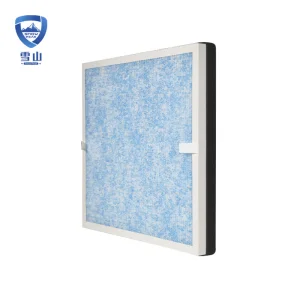
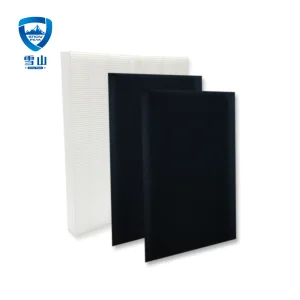
For brand owners and e-commerce retailers, Chinese factories offer fully compatible OEM replacement filter assemblies (matching brands such as Coway, Honeywell, Levoit, GermGuardian, and Blueair). These filters feature custom injection-molded plastic or cardboard frames, high-grade H13 True HEPA media, and dense foam-encapsulated carbon grids, backed by retail-ready private labeling and custom packaging.
Global B2B Procurement Framework & Compliance Standards
To verify product compliance and mitigate sourcing risks, international purchasing directors must demand rigorous factory audits and third-party laboratory certifications from Chinese exporters.
ISO 10121-1 / -2
Global standard for testing the gas-phase air cleaning media and devices in general ventilation systems.
ASHRAE 145.2
Laboratory test method for assessing the performance of gas-phase air cleaning devices.
UL 900 Fire Safety
Ensures air filter units meet strict flame resistance and smoke production limits for commercial building codes.
REACH & RoHS
Guarantees filter frames, adhesives, and carbon media are free from SVHCs, heavy metals, and toxic chemical off-gassing.
- IQC (Incoming Quality Control): Testing raw carbon lots for Iodine Number, moisture content (<3%), bulk density, and particle size distribution. Testing meltblown fabrics for filtration efficiency and basis weight consistency.
- IPQC (In-Process Quality Control): Real-time automated sensor verification of pleat height, hot-melt adhesive dispensing weight, ultrasonic seal integrity, and frame dimensional tolerances.
- FQC (Finished Quality Control): 100% visual inspection and batch testing for initial pressure drop, seal leak integrity, and carbon dust cleanliness under cleanroom blowdown tests.
- OQC (Outgoing Quality Control): Hermetic moisture-barrier packaging check, pallet stability, carton drop testing, and full container loading audit before customs export release.
Frequently Asked Questions for Sourcing & Procurement Managers
Featured Activated Carbon & HEPA Filtration Solutions (Part II)
Discover industrial-grade heat resistant frames, antibacterial composite filters, and specialized raw meltblown media supplied directly from verified Chinese factories.