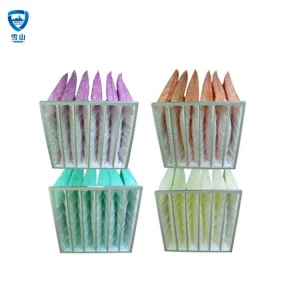
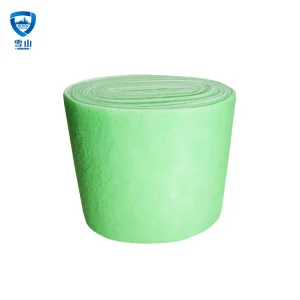
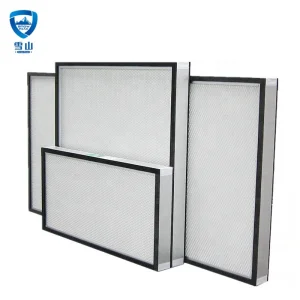
Featured OEM Air Filtration Products
Direct supply from precision-engineered Chinese manufacturing facilities compliant with global ISO and CE standards.

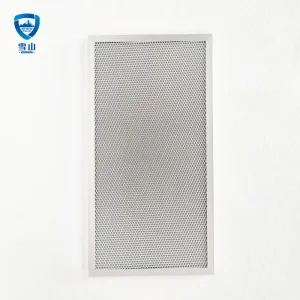


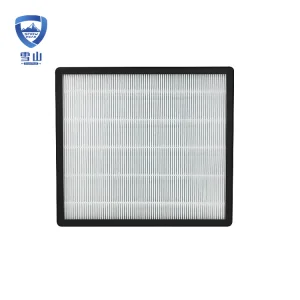


Executive Summary: The Molecular Filtration Evolution
Understanding the transition from basic particulate capture to advanced, chemical-grade gas-phase adsorption in modern supply chains.
The Science of Charcoal Adsorption
Activated carbon/charcoal air filtration functions via Van der Waals physical adsorption and targeted chemisorption. By creating a vast internal network of micropores (under 2nm), mesopores (2-50nm), and macropores (over 50nm), engineered charcoal media yields surface areas exceeding 1,000 to 1,500 m²/g. This ultra-high surface area captures volatile organic compounds (VOCs), hazardous air pollutants (HAPs), and ambient odors with microscopic efficiency.
Critical Technical Metrics (CTC & Iodine)
Evaluating China charcoal filtration exporters requires analyzing rigorous chemical indices. The key parameter for organic gas removal is Carbon Tetrachloride (CTC) Activity, typically specified from 40% to 105%. Complementing CTC is the Iodine Number (mg/g), measuring micropore volume. Premier Chinese exporters leverage high-activity virgin coconut shell carbon and coal-based carbon modified to balance low airflow resistance with high residence-time gas capture.
Composite Hybrid Architecture
Modern HVAC and commercial air purifiers demand single-stage media capable of removing both particulate matter (PM2.5, PM0.3) and gaseous pollutants simultaneously. China’s filtration industry leads in composite carbon media engineering—integrating electrostatic meltblown non-woven fibers, particulate HEPA substrates (H13/H14), and carbon honeycomb matrices into unified, low-pressure-drop filters.
Information Gain: Adsorption Breakthrough Curves & Residence Time
When specifying charcoal filters, static adsorption ratings are insufficient. Premier Chinese factories utilize dynamic dynamic gas-challenge testing (ISO 10121-2) to plot Breakthrough Curves for specific target gases like Benzene, Formaldehyde, and Hydrogen Sulfide. Ensuring a minimum residence time of 0.1 to 0.3 seconds across the filter bed prevents premature gas breakthrough, doubling effective filter operational lifespan.
Strategic Manufacturing & Export Advantages in China
How Chinese charcoal air filter exporters deliver cost efficiency, structural innovation, and global supply chain resilience.
1. Fully Integrated Supply Chain Clusters
China hosts complete vertical integration—from raw material carbonization plants in mineral-rich provinces to precision automated pleating, ultrasonic bonding, and frame injection moulding in industrial hubs like Guangdong and Zhejiang. This geographic density eliminates supply bottlenecks and significantly minimizes lead times for global buyers.
2. Advanced Chemical Impregnation
Un-impregnated charcoal cannot capture light polar gases effectively. Leading Chinese exporters utilize proprietary chemical impregnation lines, doping activated carbon with Potassium Hydroxide (KOH), Phosphoric Acid ($H_3PO_4$), or Potassium Permanganate ($KMnO_4$). This enables target-specific chemical neutralization of acidic gases, alkaline gases ($NH_3$), and formaldehyde.
3. Rigorous Quality & Automation
Equipped with automated continuous carbon-filling lines, ultrasonic perimeter sealing, and automated dust-free shaking tables, top exporters eliminate loose carbon powder shedding (carbon dust leakage). Full compliance with ISO 9001 quality management ensures unit-to-unit consistency across high-volume OEM production runs.
| Charcoal Substrate Type | Base Structure | Typical CTC Range | Pressure Drop ($\Delta P$) | Primary Industrial Applications |
|---|---|---|---|---|
| Extruded Honeycomb Carbon | Ceramic / Activated Carbon Matrix | 50% - 80% | Ultra-Low (< 25 Pa) | Smart Home Purifiers, HVAC Return Air, Kitchen Odor Control |
| Impregnated Granular Carbon | Virgin Coconut Shell / Coal Base | 60% - 105% | Medium (50 - 120 Pa) | Industrial Gas Scrubbers, Chemical Cleanrooms, Acid Gas Exhaust |
| Carbon-Impregnated Non-Woven | Synthetic Polyurethane / Polyester Fiber | 35% - 55% | Very Low (< 30 Pa) | Automotive Cabin Filters, Pre-filtration, Commercial AC Panels |
| Pleated HEPA-Carbon Composite | Meltblown Glass Fiber + Carbon Powder | 45% - 70% | Medium-High (100 - 180 Pa) | All-in-One Residential Refills, Medical Rooms, PM2.5 + VOC Air Units |
Future Trends in Charcoal Air Filtration (2025–2030)
Key technological breakthroughs driving the next decade of air purification engineering.
1. Ambient Cold Catalytic Composites
Traditional physical carbon suffers from desorption when saturated. Chinese R&D labs are combining activated charcoal substrates with nano-cold catalyst coatings ($TiO_2$, Manganese Dioxide). These composites continuously break down adsorbed formaldehyde and VOCs into $H_2O$ and $CO_2$ at ambient temperatures without requiring UV activation, preventing secondary pollution.
2. Low-Resistance Honeycomb Carbon
To reduce fan power consumption in modern green buildings, standard loose-fill carbon trays are being replaced by extruded activated carbon honeycombs. These structures offer straight-through air channels, decreasing initial pressure drop by up to 60% while preserving high volatile gas adsorption rates.
3. Sustainable Bio-Based Carbon
Aligned with global Net-Zero carbon mandates, top exporters are replacing coal-derived carbon with 100% renewable agricultural waste carbon substrates (coconut shells, bamboo, wood chips). Steam activation without toxic chemical additives yields eco-friendly, REACH-compliant air filter media.
4. IoT-Integrated RFID Filter Lifetime
OEM filter assemblies exported from China now feature embedded microchips, RFID tags, or color-changing chemical indicator strips. These smart systems communicate with air purifiers and HVAC automation systems to accurately signal carbon saturation based on cumulative gas load rather than simple countdown timers.
Localized Application Scenarios & Macro Solutions
Custom chemical and structural configurations tailored for global commercial, residential, and industrial environments.
Commercial HVAC & Office Buildings
Heavy urban pollution introduces ozone ($O_3$), $NO_x$, $SO_2$, and traffic fumes into central air handlers. Chinese exporters manufacture custom-sized pleated V-bank carbon filters and cardboard/metal frame panels rated up to MERV 13 to MERV 16 (ISO 16890 ePM1 80%), delivering odor-free indoor air while complying with LEED building standards.
Semiconductor Cleanrooms & AMC
In microelectronics and wafer fabrication, Airborne Molecular Contamination (AMC) even at parts-per-billion (ppb) levels ruins wafer yields. China high-tech exporters supply ultra-clean, low-outgassing activated carbon filters impregnated specifically to scrub organic siloxanes, acid vapors, and dopant gases from cleanroom recirculating systems.
Consumer OEM Air Purifier Refills
Servicing international aftermarket distributors, Chinese factories produce precise replacement filters compatible with leading brands (Honeywell, Coway, Blueair, Levoit). Utilizing high-precision plastic injection, rubber gaskets, and True H13 HEPA laminated with active carbon, these aftermarket products meet or exceed OEM specifications at factory-direct pricing.
Quality Control Protocols & International Compliance
Mitigating procurement risk through strict engineering standards and certified testing validation.
Testing & ASTM Standard Compliance
Reputable Chinese exporters test every batch of raw and converted carbon media. Key physical tests include ASTM D2854 for Apparent Density, ASTM D3802 for Ball-Pan Hardness (ensuring high mechanical strength to prevent attrition dust during transport), and ASTM D3467 for CTC activity validation. Filter assemblies undergo differential pressure vs. flow rate testing in wind-tunnel apparatuses matching EN ISO 16890 and EN 1822 protocols.
Global Certification Framework
Exporting to North America, Europe, and Asia-Pacific requires strict chemical safety. Export-grade charcoal filters strictly adhere to:
• RoHS & REACH (SVHC): Certified free from heavy metals, phthalates, and banned chemical agents.
• UL900 Fire Retardancy: Flame-retardant synthetic frames and self-extinguishing carbon matrices.
• CE & ISO 9001:2015: Documented quality management across raw material receipt (IQC), line assembly (IPQC), final inspection (FQC), and outbound shipping (OQC).
B2B Procurement & Sourcing FAQ
Addressing key technical, logistical, and commercial inquiries for international buyers and procurement directors.
Additional Industrial & Replacement Air Filters
Explore our complete catalog of industrial bag filters, cylindrical collectors, and specialized filter media rolls.