
High-Efficiency Carbon & HEPA Filter Solutions
Precision-engineered filtration assemblies manufactured under ISO 9001 quality systems for global industrial, commercial, and residential OEM requirements.
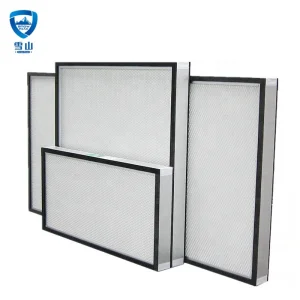



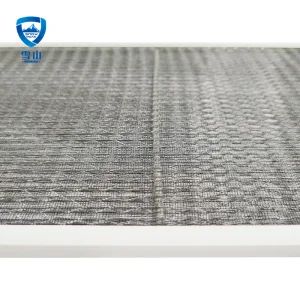
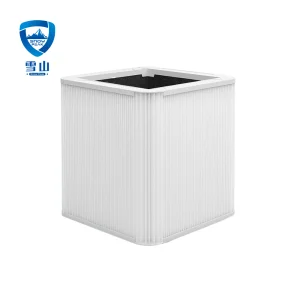

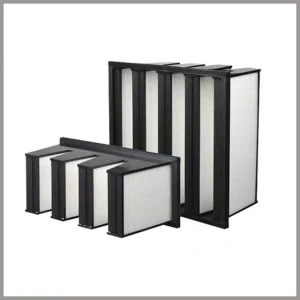
1. Executive Summary & Core Technological Foundations
In modern industrial manufacturing, indoor air quality (IAQ) engineering, and advanced HVAC environmental controls, the demand for dual-action air filtration systems has expanded rapidly. Standalone Mechanical HEPA (High-Efficiency Particulate Air) media, while exceptionally proficient at trapping sub-micron aerosols and particulate matter (PM2.5, PM0.3), remains inherently incapable of neutralizing molecular-level gas pollutants, volatile organic compounds (VOCs), toxic fumes, or biological odors. Conversely, standard chemical adsorption media lacks the mechanical sieve structure required to capture fine suspended particles.
As a premier China HEPA air filter with activated carbon manufacturer and company, Shenzhen Snow Peak Clean Technology Co., Ltd. addresses this technical challenge by designing integrated multi-stage composite filters. By combining high-density electrostatically charged meltblown polypropylene or sub-micron glass microfibers with high-activity carbon matrices (derived from premium coconut shells, coal, or synthetic polymers), engineered composite filters deliver simultaneous particulate capture and chemical adsorption within a single compact footprint.
Information Gain Metric: Traditional multi-layer filter setups often suffer from excessive air flow resistance (high initial pressure drop), leading to inflated fan power requirements. Advanced thermal-lamination and co-pleating technologies reduce initial pressure drop by up to 28% while extending gaseous breakthrough time by 45% compared to legacy dual-frame configurations.
1.1 Mechanical Particle Capture Physics in True HEPA Layers
HEPA media operating under EN 1822 and ISO 29463 standards relies on four key physical mechanisms to intercept airborne particles across the aerodynamic diameter spectrum:
- Impulses & Direct Impaction: Heavy particles exceeding 1.0 µm, unable to navigate fluid streamlines around microfibers, collide directly with fiber walls due to inertia.
- Interception: Medium-sized particles (0.3 µm to 1.0 µm) following air streamlines pass within one particle radius of a fiber and are captured via Van der Waals forces.
- Brownian Diffusion: Ultrafine particles below 0.1 µm undergo continuous random motion caused by gas molecule collision, drastically increasing their path length and probability of fiber contact.
- Electrostatic Attraction: Electret-treated synthetic media impart long-term electrostatic charges to fiber matrices, attracting polarized particles without restricting physical inter-fiber porosity.
1.2 Gaseous Adsorption Dynamics & Carbon Matrix Functionalization
Activated carbon functions through physical adsorption (physisorption) supported by an intricate network of micropores (<2 nm), mesopores (2–50 nm), and macropores (>50 nm). To maximize VOC capacity and target specific lightweight molecules such as Formaldehyde (HCHO), Ammonia (NH3), and Hydrogen Sulfide (H2S), raw carbon media undergoes chemical impregnation:
| Carbon Matrix Type | Substrate Base | Internal Surface Area (BET) | Target Pollutant Class | Typical Applications |
|---|---|---|---|---|
| Standard Virgin Granular | Coconut Shell | 1000 - 1250 m²/g | High-MW VOCs, Benzene, Toluene, Smog | Residential & Commercial HVAC |
| Amine-Impregnated Matrix | Coal / Catalytic Polymeric | 850 - 1050 m²/g | Formaldehyde (HCHO), Low-MW Aldehydes | New Office Fit-outs, Automotive Cabins |
| Acid/Alkali Functionalized | Pelletized Coal Carbon | 900 - 1100 m²/g | Acidic gases (SO2, NO2) & Basic gases (NH3) | Semiconductor Fab Cleanrooms, Chemical Labs |
| Cold Catalyst Composite | Non-woven Polymeric Carrier | N/A (Heterogeneous Catalyst) | Room-temperature HCHO breakdown to H2O/CO2 | Smart Home Purifiers, Medical Facilities |
Advanced Manufacturing Capabilities & Technical Innovations
Combining cleanroom automation, tight dimensional tolerances, and high-performance materials to deliver custom OEM solutions.
Co-Pleated Composite Media
By thermally bonding electrostatically charged meltblown melt media directly with carbon-impregnated non-wovens, our automated pleating lines ensure zero media flutter and equalized pleat spacing for optimal airflow.
Zero-Bypass Sealing Technology
Utilizing seamless polyurethane (PU) foaming gasket beads and continuous hot-melt adhesive edge potting, our filter elements prevent unfiltered air bypass under elevated pressure conditions.
Ultra-Low Pressure Drop Engineering
Custom-formulated mini-pleat geometries with hot-melt thread separators maintain uniform channel openings, cutting energy consumption in commercial AHUs while retaining high CADR output.
2. Global Enterprise Procurement & Sourcing Dynamics
Procurement directors and OEM product managers face multifaceted challenges when sourcing HEPA and carbon air filters internationally. Beyond unit pricing, enterprise sourcing evaluations focus on total cost of ownership (TCO), batch-to-batch consistency, compliance with regional environmental mandates, and supply chain resiliency.
2.1 Key Parameters for B2B Filter Specifications
To ensure high compliance across global supply channels, engineering procurement teams must evaluate manufacturers using standardized metrics:
- Clean Air Delivery Rate (CADR): Determined per GB/T 18801-2022 and AHAM AC-1 standards, measuring cubic feet or cubic meters per minute of purified air for specific contaminants (Smoke, Dust, Pollen, HCHO).
- Dust Holding Capacity (DHC): Total mass of synthetic dust captured before pressure drop reaches terminal cutoff, directly determining field replacement intervals.
- Carbon CTC (Carbon Tetrachloride Value): Quantifies microporosity. High-grade coconut shell carbon used in Snow Peak filters typically exhibits a CTC rating of 60% to 80%.
- Outgassing & Odor Migration: Ensuring low-grade adhesives or unwashed carbon media do not emit volatile organic compounds (e.g., secondary odor issues) during initial fan operation.
3. Industrial & Commercial Macro Application Scenarios
Engineered HEPA and activated carbon composite solutions serve critical functions across diverse global sectors:
3.1 Precision Electronics & Semiconductor Cleanrooms
Microchip fabrication plants and SMT assembly lines require airborne molecular contamination (AMC) control alongside ISO Class 3 to Class 5 particle cleanliness. Airborne siloxanes, acid vapors, and organic outgassing can ruin silicon wafers. Custom V-bank and deep-pleat aluminum separator HEPA filters with activated carbon matrices neutralize chemical outgassing while maintaining 99.99% efficiency at 0.3 µm.
3.2 Commercial HVAC & Smart Building Ventilation
Modern office towers, data centers, and educational institutions are increasingly adopting MERV 13 to MERV 16 (ISO ePM1 85%) multi-stage filtration to fulfill LEED certification requirements and mitigate urban air pollution. Low-resistance synthetic pocket filters combined with carbon panel inserts keep system fan power low while capturing fine particulates and traffic fumes.
3.3 Rail Transit & Automotive Cabin Air Quality
Subway passenger cars and high-speed trains face severe space limitations, rapid air exchange requirements, and high ambient vibration. Compact mini-pleat composite filters with rigid ABS or aluminum frames deliver high dust capacity, vibration stability, and rapid odor removal during intense operational schedules.
3.4 Consumer Appliance OEM Refills
Aftermarket purifier brands (such as replacement filters compatible with Honeywell, Blueair, Coway, and Levoit) rely on precision dimensional tolerances. As an established factory exporter, Snow Peak delivers customized replacement filters matching exact OEM dimensions, frame rigidity, and private-label retail packaging requirements.
4. Quality Assurance, International Compliance, & Localization Support
Operating out of Shenzhen, China's advanced manufacturing hub, Shenzhen Snow Peak Clean Technology Co., Ltd. implements a multi-tier Quality Assurance methodology spanning the entire production cycle:
IQC (Incoming Quality Control)
Verification of meltblown fiber uniformity, glass micro-fiber grammage, carbon CTC iodine values, and non-woven tensile strength prior to assembly approval.
IPQC (In-Process Quality Control)
Continuous automated laser particle counting during pleating and automated hot-melt distribution checks across all active lines.
FQC & OQC Final Inspections
100% leak testing for critical HEPA grades (H13–U15) per EN 1822 oil mist standards, box drop testing, and humidity endurance verification before export packing.
Products conform with international regulatory frameworks including EU RoHS Directive 2011/65/EU, REACH (EC) No 1907/2006 chemical compliance, UL 900 flammability classifications, and ISO 16890 / EN 779 HVAC testing standards.
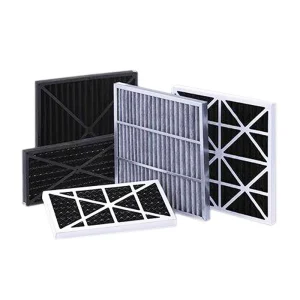
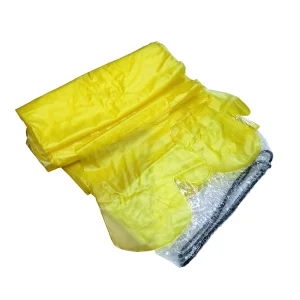
Specialized Filter Media & Heavy-Duty Units
From raw media rolls to heavy-duty V-bank and high-temperature separators, explore our full spectrum of air filtration manufacturing.





5. Technology Roadmap & Future Industry Horizons
The global air purification landscape is evolving rapidly. Next-generation HVAC and residential air quality standards emphasize zero-ozone operation, continuous catalytic degradation, smart sensor integration, and sustainable bio-based media substrates.
5.1 Room-Temperature Catalytic Decomposition (Cold Catalyst)
Traditional activated carbon acts solely as a sponge, holding gas molecules until saturation occurs. Once saturated, un-replaced filters can re-release adsorbed VOCs back into the air stream under temperature variations. Snow Peak's R&D team focuses heavily on heterogeneous cold-catalyst composites. By dispersing nano-scale transition metal oxides onto active carbon surfaces, Formaldehyde and volatile organic pollutants are continuously split into water ($H_2O$) and carbon dioxide ($CO_2$) at ambient room temperatures without UV light activation.
5.2 Revision Standards: Transition to GB/T 18801-2022 & ISO 16890
Global regulatory oversight has raised testing precision for purifiers and filtration media. The implementation of GB/T 18801-2022 introduces refined testing methods for cumulative clean mass (CCM), energy efficiency ratios, and long-term odor decay factors. Concurrently, ISO 16890 shifts standard HVAC testing from static particle sizing to real-world ambient particle spectra (ePM1, ePM2.5, ePM10), requiring filter manufacturers to optimize media electrostatics and mechanical fiber diameter distributions for target environments.
Frequently Asked Questions
Clear, authoritative answers to common engineering, OEM customization, and sourcing questions.