Featured Industrial HEPA & OEM Filtration Products
Engineered for lead dust extraction, air scrubbers, cleanrooms, and high-efficiency vacuum containment systems.


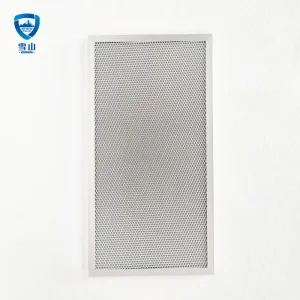
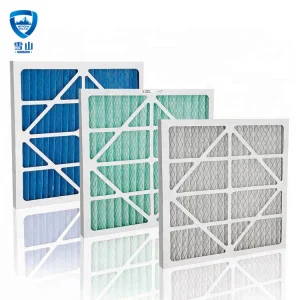

Executive Summary & Macro Industrial Overview
Understanding lead dust particulate behavior, regulatory mandates, and critical HEPA engineering requirements.
The Critical Challenge of Toxic Lead Dust Control
Lead dust ($Pb$) represents one of the most persistent and hazardous industrial particulate contaminants globally. Emitted during battery manufacturing, electronic soldering, lead-based paint abatement, metallurgical refining, and indoor shooting range operation, lead particulate ranges in size from sub-micron fumes (0.05 μm to 0.5 μm) to larger mechanical dusts (1.0 μm to 10 μm).
Due to its biological toxicity and tendency to settle into fine ambient dust, international health agencies including OSHA (20 CFR 1910.1025), the US EPA (Lead RRP Rule), and European REACH/RoHS frameworks mandate zero-bypass containment solutions. Industrial procurement managers seeking lead dust HEPA filters require specialized non-woven borosilicate micro-fiber or ePTFE membranes capable of achieving a minimum efficiency of 99.97% at 0.3 micrometers (H13) or 99.995% (H14).
Sub-Micron Particulate Capture Dynamics
Unlike standard HVAC dust, lead dust possesses high specific gravity and electrostatic surface charges. When extracted via negative pressure ventilation or industrial HEPA vacuums, lead dust particles can easily penetrate sub-standard filter media via mechanical tearing or seal leakage.
Information Gain Insight: MPPS Dynamics
The Most Penetrating Particle Size (MPPS) for lead fume typically occurs between 0.12 μm and 0.25 μm. Standard MERV 8-16 filters capture less than 75% of this fraction. True H13/H14 HEPA filters engineered with hot-melt polyolefin pleat separators ensure stable airflow without mechanical media compression under high lead dust load.
Global Procurement Demands & Industry Verticals
Analysis of international industrial sectors requiring specialized China-manufactured lead dust HEPA solutions.
Lead-Acid Battery Recycling & Production
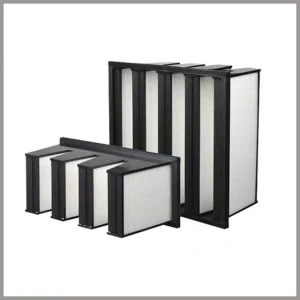
Industrial smelting and plate casting generate dense lead oxide fumes. Facilities require continuous air scrubbers equipped with deep-pleat V-bank HEPA units to prevent workplace lead exposure above Permissible Exposure Limits (PEL 50 μg/m³).
Commercial Lead Abatement & Demolition
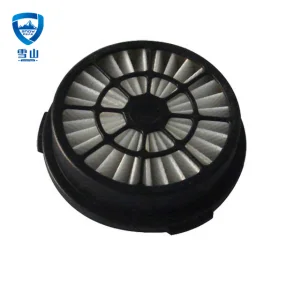
Renovation, Repair, and Painting (RRP) contractors rely on portable HEPA air scrubbers and RRP-compliant HEPA vacuums. Rigid cylindrical and box-type OEM replacement filters ensure total particulate containment during lead paint scraping.
Electronics Manufacturing & Soldering
Wave soldering and hand assembly stations vent lead-bearing flux fumes. OEM multi-stage HEPA filters combined with activated carbon media absorb both toxic heavy metal particulates and corrosive organic acid gases.
Technical Specification & Engineering Matrix
Comparing filtration grades, structural gaskets, and sealing mechanics for heavy metal dust containment.
| Filter Class (EN1822 / ISO 29463) | Lead Dust Efficiency (@ MPPS 0.3μm) | Primary Media Structure | Typical Frame / Gasket System | Industrial Application Scenario |
|---|---|---|---|---|
| MERV 16 (ASHRAE 52.2) | 95.0% – 98.0% | Synthetic Meltblown non-woven | Cardboard / Galvanized Steel | Pre-filtration in battery plant HVAC |
| HEPA H13 (EN 1822) | ≥ 99.97% | Sub-micron Glass Fiber / ePTFE | Continuous PU Gasket / Anodized Alum | RRP Abatement Vacuums & Air Scrubbers |
| HEPA H14 (EN 1822) | ≥ 99.995% | Borosilicate Micro-glass fiber | Fluid Gel Seal / Stainless Steel 304 | Cleanroom Exhaust & Lead Smelting BIBO |
| ULPA U15 (EN 1822) | ≥ 99.9995% | High-density PTFE Nanofiber | Gel-Seal Channel Frame | Nuclear & High-Purity Metallurgy |
Gel-Seal vs. Neoprene Gasket Integrity
In lead dust mitigation, air bypass around the filter frame is the primary cause of containment failure. China manufacturers like Snow Peak implement dual sealing technology:
- Seamless Polyurethane (PU) Gasket: Machine-poured continuous foam gasket ensuring zero corner gaps.
- Fluid Gel-Seal Channel: Thermoplastic gel channel that encapsulates the knife-edge housing grid, creating a 100% leak-proof barrier under vibration.
Bag-In/Bag-Out (BIBO) Safe-Change Systems
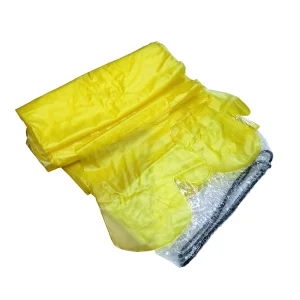
To protect maintenance technicians from toxic lead exposure during filter replacement, industrial housings utilize PVC containment bags fitted with heavy-duty elastic cords. Technicians swap contaminated lead HEPA filters inside a sealed bag environment without contacting hazardous dust.
China Manufacturing Excellence & Quality Control Architecture
How lead HEPA filter companies in China maintain strict ISO Class 5-7 cleanroom standards and automated quality testing.
Automated Pleating & Hot-Melt Dispensing
Computer-controlled pleating lines ensure precise pleat pitch and uniform air passage. Micro-glass fiber media is protected from micro-fractures during high-speed folding.
PAO / DOP Photometer Leak Testing
100% of industrial H13/H14 HEPA filters undergo Polyalphaolefin (PAO) or DOP aerosol photometer scan testing (EN 1822-4) to verify zero pinhole leakage before packaging.
Cleanroom Assembly ISO Class 5-7
Final frame sealing, potting, gel pouring, and shrink-wrapping are executed in dust-free controlled environments to eliminate pre-installation contamination.
Facility-Wide Lead Dust Engineering Solutions
Multi-stage filtration strategy to maximize operational life and minimize HEPA replacement costs.
Stage 1: Coarse Pre-Filter
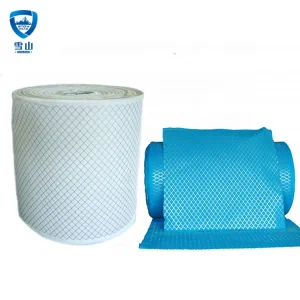
G4 synthetic wire-mesh laminated roll or MERV 8 pleated filter catches coarse debris and paint chips (>10 μm).
Stage 2: Medium Secondary
F7 to F9 pocket bag filters or MERV 14 mini-pleats capture fine airborne dust (1.0 μm to 5.0 μm).
Stage 3: Gas / VOC Layer
Activated carbon impregnated non-woven media adsorbs toxic lead soldering flux fumes and acid gases.
Stage 4: Primary HEPA Stage
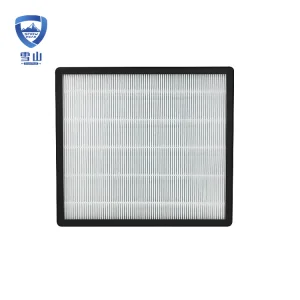
True H13/H14 HEPA filter captures 99.97%+ of sub-micron heavy metal aerosols at 0.3 μm.
Stage 5: Exhaust BIBO Unit
Gel-sealed terminal HEPA with BIBO change bag prevents toxic discharge back into ambient environment.
Technological Roadmap & Future Outlook
Innovations shaping next-generation industrial lead particulate control systems.
1. ePTFE Nanofiber vs. Micro-Glass Media
Traditional lead HEPA filters utilize borosilicate micro-glass fiber. Advanced Chinese manufacturers are transitioning to expanded PTFE (ePTFE) membranes. ePTFE delivers higher mechanical durability, zero fiber shedding, lower initial pressure drop (up to 40% energy reduction), and superior resistance to corrosive acidic fumes generated during lead-acid battery formation.
2. Smart Differential Pressure & IoT Monitoring
Next-generation heavy metal air scrubbers feature integrated RFID tags and micro-differential pressure sensors. Real-time pressure drop tracking alerts plant managers when dust loading approaches saturation, preventing filter rupture and ensuring strict compliance with OSHA lead monitoring protocols.
Global Regulatory Compliance & OEM Customization
Supporting international buyers with customized specs, regulatory documentation, and localized logistics.
Regulatory Compliance
Fully tested according to EN 1822-4/5, ISO 29463, and IEST-RP-CC001.5. Products assist facility operators in complying with OSHA Lead Standard 1910.1025 and EPA Lead RRP guidelines.
OEM & ODM Private Labeling
Custom frame dimensions (galvanized steel, extruded aluminum, stainless steel 304/316, ABS plastics), customized gasket materials, high-temperature silicone seals, and private-label retail or industrial packaging.
Logistics & Quality Traceability
Direct sea and air freight shipping from Shenzhen export hubs. Every filter unit features a unique serial bar code linked to factory PAO test reports for auditing compliance.
Frequently Asked Questions (FAQ)
Technical and procurement answers for industrial air filtration buyers and OEM clients.
Industrial Filter Media & Specialty Replacement Filters
Bulk filter rolls, activated carbon media, and custom replacement elements for global export.