
Featured High Efficiency Products & OEM Replacements (Part I)
Engineered to exact OEM specifications, featuring precision-pleated microfiber glass, high-absorbency activated carbon, and heat-resistant structural frames.






Macro Industry Landscape & Global Procurement Trends
Navigating international regulatory shifts, ESG compliance standards, and advanced supply chain integration in high-efficiency filtration manufacturing.
Global buyers must navigate overlapping testing standards including EN 1822:2019, ISO 29463, and ASHRAE 52.2. Strategic Chinese manufacturers have aligned automated production lines with European and American test protocols, ensuring that cleanroom and HVAC filter units deliver certified performance, verified by automated laser particle counting systems prior to dispatch.
Energy consumption accounts for nearly 80% of total lifecycle costs in commercial HVAC and industrial cleanroom filtration systems. Modern procurement focuses heavily on Initial Pressure Drop ($\Delta P$). By deploying mini-pleat geometric configurations and non-woven nanofiber composite media, modern filters achieve higher dust-holding capacities while drastically reducing fan energy consumption.
To hedge against regional supply disruptions, multinational corporations are engaging direct-to-factory partnerships in China. Direct engineering integration allows for rapid prototyping, specialized frame customization (e.g., anodized extruded aluminum, heat-resistant stainless steel, liquid tank gel seals), and private-label packaging with full regulatory traceability.
Technical Deep-Dive: Material Science & Particle Capture Mechanics
An authoritative analysis of filtration physics, media structural integrity, and pressure differential efficiency kinetics.
Occurs when a particle following an airflow streamline comes within a distance equal to its radius from a filter fiber. The particle touches the fiber and becomes attached due to van der Waals forces. Predominant for particles in the range of 0.1 to 1.0 microns.
Heavy particles possessing high inertia cannot negotiate the rapid direction changes of the air stream around a micro-fiber. The particle continues on its straight trajectory, colliding directly with the fiber surface. Critical for particles larger than 1.0 micron.
Sub-micron particles (under 0.1 microns) collide continuously with gas molecules, causing them to move in an erratic, random motion. This erratic path increases the probability that particles will make contact with fibers and stick. Highly effective at MPPS levels.
Electro-statically charged fibers (often used in meltblown synthetic media) attract oppositely charged or polarized particles, dramatically increasing initial efficiency without artificially elevating initial airflow resistance.
| Media Type | Standard Grade Range | Temperature Limit | Chemical Resistance | Primary Application |
|---|---|---|---|---|
| Borosilicate Micro-Glass Fiber | H13 to U17 (EN 1822) | Up to 500°C (Special Frame) | High (Acids, Organic Solvents) | Semiconductor Cleanrooms, Sterile Pharma, Hospitals |
| ePTFE Membrane | H14 to U17 | Up to 260°C | Exceptional (Hydrophobic, Inert) | Micro-electronics, Ultra-pure gas streams, Corrosive HVAC |
| Electrostatic Meltblown Non-woven | G4 to F9, MERV 8 - MERV 16 | 80°C - 100°C | Moderate | Commercial HVAC Pre-filtration, Air Purifier Inserts |
| Honeycomb Activated Carbon Composite | Gas-phase adsorption | 60°C | N/A (Adsorbs VOCs, Formaldehyde) | Odor Control, VOC Abatement, Smart Home OEMs |
Macro Industry Solutions & Sector-Specific Integration
Customized architectural engineering approaches designed for stringent industrial, commercial, and residential applications.
Modern micro-electronics fabrication plants require ISO Class 1 through ISO Class 5 cleanroom conditions. We supply customized gel-seal (liquid tank gasket) mini-pleated HEPA and ULPA filters. The polyurethane or silicone gel sealant creates an airtight, zero-bypass seal against the ceiling grid, eliminating edge-leakage risk and protecting wafer yield from airborne particulate contamination.
Operating under strict cGMP guidelines, bio-pharma processes require robust, sterilizable filtration equipment. Our high-temperature, stainless-steel-framed HEPA filters utilize ceramic adhesives and corrugated aluminum separators capable of withstanding continuous thermal sterilization cycles (up to 250°C - 350°C) without compromising gasket seal integrity or structural rigidity.
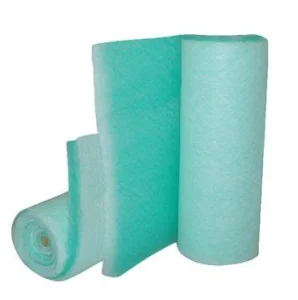
Heavy-duty commercial ventilation systems and industrial automotive spray booths require multi-stage filtration to manage high air volumes and heavy dust loading. We supply progressive-density fiberglass floor rolls (paint-stop filters) along with G2-G4 pre-filters and M5-F9 synthetic pocket bag filters to extend main HEPA stage lifespans.
For global consumer brands, e-commerce distributors, and aftermarket retailers, we manufacture 100% compatible replacement filter cartridges for flagship air purifier lines (including Honeywell, Blueair, Coway, and Levoit). Our multi-stage composite filters combine True H13 HEPA pleats with honeycomb activated carbon layers and cold catalyst coatings.
Quality Assurance, Testing Protocols & Certification Frameworks
Rigorous quality verification protocols guaranteeing total filter reliability, dimensional precision, and zero-defect performance.
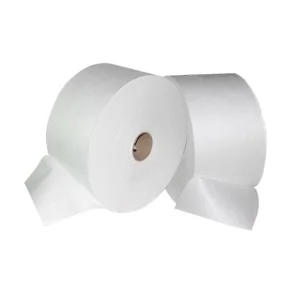
Raw non-woven rolls, micro-glass papers, and aluminum frame extrusions are sampled for tensile strength, thickness, basis weight ($g/m^2$), and pore size distribution. Media pressure drop profiles are validated using TSI 8130A automated filter testers.
During pleating, frame assembly, and polyurethane potting, automated visual sensors monitor pleat alignment, hot-melt bead spacing, and frame squareness. Polyurethane foam seals are inspected for cure uniformity and elasticity.
Every single HEPA/ULPA filter undergoes mandatory scan testing. Automated probe scanners utilizing DEHS or PSL aerosols verify particle retention efficiencies at the Most Penetrating Particle Size (MPPS) according to EN 1822-4 standards.
Carton strength tests, anti-static polybag vacuum sealing, corner protector installations, and container load optimization inspections ensure filters arrive at overseas ports without frame warping or media damage.
| Filter Class (EN 1822) | Overall Efficiency (%) @ MPPS | Local Efficiency (%) @ MPPS | Typical Particulate Target |
|---|---|---|---|
| E10 | ≥ 85% | - | Coarse dust, Pollen, Large spores |
| E11 | ≥ 95% | - | Fine dust, Bacteria, PM2.5 |
| E12 | ≥ 99.5% | - | Sub-micron dust, Smoke, Molds |
| H13 | ≥ 99.95% | ≥ 99.75% | Viruses, Fine aerosol particulates, Toxic dusts |
| H14 | ≥ 99.995% | ≥ 99.975% | Cleanroom ISO Class 3 - 5, Pharmaceutical process |
| U15 | ≥ 99.9995% | ≥ 99.9975% | Semiconductor Fab, Micro-lithography clean zones |
Technology Roadmap & Future Industry Outlook (2025–2030)
Next-generation innovations in smart filtration media, sustainable bio-polymers, and ultra-low-resistance nanofiber membranes.
Future cleanroom and commercial air filter units are incorporating embedded RFID tags and printed differential pressure micro-sensors. These smart components transmit real-time filter clogging state, airflow velocity, and estimated remaining service life directly to Building Management Systems (BMS), optimizing maintenance schedules and eliminating premature filter changes.
In response to global carbon reduction mandates, R&D is shifting toward fully biodegradable PLA (Polylactic Acid) synthetic fibers and recycled PET substrates. These next-generation bio-based filter media match traditional petroleum-based polypropylene performance while significantly reducing carbon footprints during incinerated disposal.
By depositing ultra-thin electrospun nanofiber layers (fiber diameters ranging from 100 to 300 nanometers) onto standard substrates, engineers achieve surface loading filtration rather than depth loading. This allows dust to be easily purged or held without causing exponential pressure drops, reducing operational fan power by up to 30%.
Localization Support, Supply Chain Resilience & OEM Services
Partnering with Chinese OEM factories to streamline custom engineering, packaging localization, and international freight integrity.
Our engineering department supports rapid turnaround on custom structural frames, non-standard gasket alignments, and targeted pleat counts. From 3D CAD modeling to physical sample evaluation, custom prototypes can be fabricated and performance-tested within 7 to 10 business days.
We provide fully customized private-label packaging, including retail-ready multi-color boxes, barcoded master cartons, drop-shipping inserts, and compliance labeling (CE, RoHS, REACH, UL 900 fire retardancy ratings) tailored to your target geographic market.
Air filter media can degrade if exposed to high relative humidity during long ocean transit. Our export packaging protocol includes heavy-duty moisture barrier vacuum bagging, desiccant pack integration, reinforced corner posts, and ocean-freight palletization designed to prevent frame warping.
High Efficiency Products & Specialized Filtration Media (Part II)
Explore our complete range of raw meltblown fabrics, specialized synthetic filter rolls, paint-stop floor media, and OEM replacement assemblies.






Frequently Asked Questions (FAQ) & Engineering Reference
Clear technical and commercial answers addressing common procurement queries for global B2B air filtration sourcing.