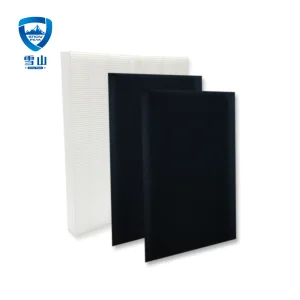
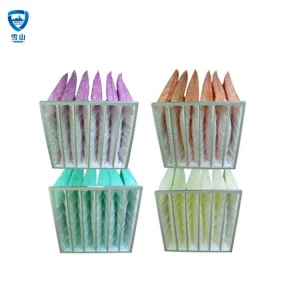
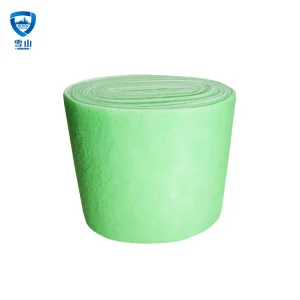
High-Efficiency Industrial Air Filtration Products
Direct from China's premier OEM/ODM manufacturing facility. Select products engineered for heavy-duty gas adsorption, sub-micron particle containment, and industrial HVAC applications.
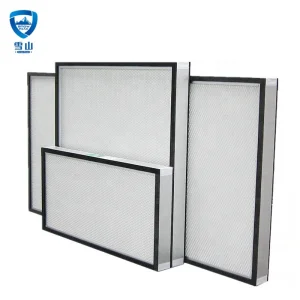






Executive Whitepaper: Industrial Activated Carbon Air Filtration Engineering in Modern Manufacturing
In contemporary industrial manufacturing, controlling Airborne Molecular Contamination (AMC), Volatile Organic Compounds (VOCs), hazardous air pollutants (HAPs), and corrosive gaseous emissions is critical to operational integrity, environmental compliance, and workplace safety. While mechanical particulate filters (HEPA/ULPA) capture solid aerosols, gas-phase contamination demands advanced physical adsorption and chemical sorption mechanisms provided by specialized industrial activated carbon air filters.
Pore Structure & Micro-Kinetics
Industrial activated carbon filter media utilize a complex network of micropores (<2nm), mesopores (2-50nm), and macropores (>50nm). High-grade virgin coconut shell media achieves specific surface areas exceeding 1,050 to 1,300 m²/g, offering unmatched internal surface area per volume unit.
Chemisorption & Impregnation
To eliminate light molecular weight or polar gas contaminants—such as Hydrogen Sulfide (H₂S), Ammonia (NH₃), Sulfur Dioxide (SO₂), and Formaldehyde—virgin carbon is chemically treated with KOH, KI, or Phosphoric Acid to induce targeted chemical reactions.
Compliance & Testing Standards
Leading Chinese carbon air filter manufacturers adhere strictly to international testing benchmarks, including ISO 10121-1/2, ASHRAE 145.1/145.2, and EN 779/ISO 16890, validating precise residence times and breakthrough dynamics.
Strategic Manufacturing Advantages of Industrial Carbon Filters in China
China has transformed from a low-cost production hub into an advanced, automated precision-engineering powerhouse for molecular filtration media and filter element assembly. Sourcing industrial carbon air filters directly from accredited Chinese OEMs offers multi-tiered competitive advantages for global enterprise procurement teams.
Upstream Raw Material Integration
China controls a major share of world coconut-shell charcoal activation processing and specialized coal carbon reserves (e.g., Ningxia and Shanxi basins). Direct proximity to high-iodine activation kilns reduces material freight costs and guarantees consistent carbon pore geometry.
Automated Pleating & Impregnation
Modern Chinese factories utilize computer-controlled thermal bonding line processes that fix pulverized activated carbon (PAC) between non-woven synthetic matrix layers. This eliminates bypass dusting while maintaining low pressure drop metrics across high face velocities.
Mass OEM Customization Flexibility
From custom anodized aluminum frame extrusion designs to fire-retardant header frames and bespoke carbon matrix compositions, China’s industrial ecosystem enables high-mix low-volume (HMLV) and high-volume prototyping with rapid tooling turnarounds.
Activated Carbon Filter Media Formats & Sorption Mechanics
Selecting the optimal molecular filter structure requires matching the targeted gas species with the correct physical media configuration. Below is a engineering evaluation of primary carbon filter formats deployed in industrial HVAC and process exhaust systems.
| Filter Media Format | Structural Configuration | Primary Adsorption Mechanism | Key Target Contaminants | Typical Application Fields |
|---|---|---|---|---|
| Bonded Carbon Honeycomb | Extruded ceramic or synthetic channels loaded with PAC powder. | High-velocity physical adsorption; ultra-low pressure drop. | VOCs, Benzene, Toluene, Odor compounds. | Commercial HVAC, Airport Terminals, Cleanroom Recirculation. |
| Loose Granular Carbon Bed | Packed virgin or impregnated carbon pellets (2mm - 4mm extruded). | Deep-bed residence mass transfer (Contact time > 0.1s). | Acid gases (H₂S, SO₂), Alkaline gases (NH₃), Chlorine. | Petrochemical Refineries, Sewage Treatment, Paper Mills. |
| Impregnated Carbon Non-Woven | Micro-fine carbon particles embedded in synthetic fiber matrix. | Combined particulate (MERV 13-15) & light molecular gas removal. | Formaldehyde, Low-level VOCs, Urban Air Pollution (NOx/SOx). | Pharma Processing, Hospital Isolation Wards, Smart Buildings. |
| Activated Carbon Felt / Cloth | 100% woven or non-woven activated carbon fibers (ACF). | Rapid surface reaction kinetics; immediate micropore accessibility. | High-concentration organic solvents, trace AMC contaminants. | Semiconductor Fabs, Microelectronics Photolithography. |
Emerging Industry Trends in Gas-Phase Air Purification
Driven by strict global Net-Zero initiatives, ESG mandates, and tightening cleanroom AMC tolerances in semiconductor sub-nanometer nodes, industrial carbon filter technology is rapidly evolving.
Dual-Stage Particle/Gas Combination Filters
Eliminating separate filter housings by co-pleating H13/H14 HEPA media with impregnated carbon layers. Reduces system static pressure, total housing footprint, and retrofit costs in commercial air handlers.
Energy-Optimized Low Pressure Drop Media
Aerodynamically designed pleat profiles and synthetic media matrices cut fan energy consumption by up to 25% while maintaining extended gas breakthrough capacity.
Sustainable Bio-Based Regenerative Carbon
Shift toward sustainably sourced timber and agricultural byproduct activated carbons with low lifecycle carbon footprints, compatible with thermal reactivations to minimize landfill disposal.
Macro Sector Engineering & Application Scenarios
Industrial carbon filters perform critical functions across diverse economic sectors. Understanding application-specific requirements ensures optimal filter selection and system longevity.
1. Semiconductor & Cleanroom Fabs
Photolithography processes and wafer fabrication require absolute control over Airborne Molecular Contaminants (AMCs) such as organosiloxanes, phthalates, and acid gases. Specially treated granular carbon cassettes eliminate ppt-level gas phase contaminants to prevent optics fogging and wafer yield loss.
2. Automotive Paint & Coating Booths
Solvent-based industrial paint lines generate heavy Volatile Organic Compounds (VOCs) including Xylene, Toluene, and Ethylbenzene. High-capacity V-bank carbon filter modules capture solvent vapors before exhaust discharge, meeting rigorous regional environmental VOC limits.
3. Chemical Processing & Wastewater Treatment
Pumping stations, sludge dewatering rooms, and chemical synthesis plants release corrosive H₂S and foul-smelling mercaptans. Alkali-impregnated activated carbon beds neutralize acidic sulfur compounds through chemical conversion, preventing corrosion of sensitive electronics.
4. Commercial HVAC & Airport IAQ Systems
Airports and urban commercial towers face high outdoor Jet-A fuel exhaust, diesel particulate matter, and NOx concentrations. Carbon-impregnated pleated panel filters clean makeup air, improving Indoor Air Quality (IAQ) and compliance with WELL/LEED building standards.
Global Enterprise Procurement & Quality Verification Guide
When auditing China-based industrial carbon filter manufacturers, engineering and procurement managers must evaluate key technical specifications beyond basic outer dimensions. Follow this verified technical audit checklist during supplier evaluation.
1. Carbon Quality Metrics Audit
Insist on certified laboratory test reports for Carbon Tetrachloride (CTC) value (minimum 60% for VOCs), Iodine Number (minimum 1,000 mg/g), and hard particle abrasion resistance (>95% hardness) to prevent carbon breakdown during transport and operation.
2. Housing Integrity & Bypass Prevention
Industrial molecular filters fail primarily due to air bypass. Check for continuous seamless polyurethane gaskets, rigid frame construction (galvanized steel, aluminum, or ABS), and vibration-proof potting media surrounding the filter pack.
3. Dynamic Test Data Validation
Require supplier gas-phase breakthrough curves generated in accordance with ISO 10121-2. Test reports should confirm initial removal efficiency, dynamic retention capacity, and pressure drop across varying face velocities (e.g., 1.5 m/s to 2.5 m/s).
Frequently Asked Questions (FAQ)
Expert engineering answers to common technical queries surrounding industrial activated carbon filter selection, installation, and performance maintenance.
OEM Replacement & Specialized Industrial Air Filters
Explore our extended series of direct-replacement, custom-fit, and specialized media filtration solutions for global distribution and commercial cleanroom projects.