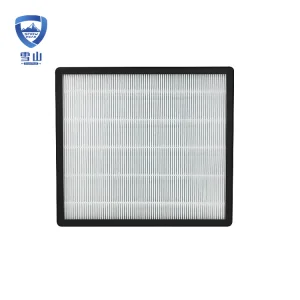
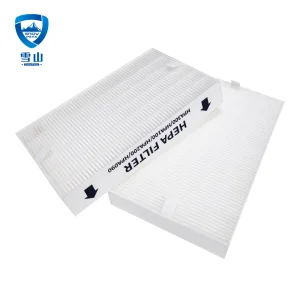
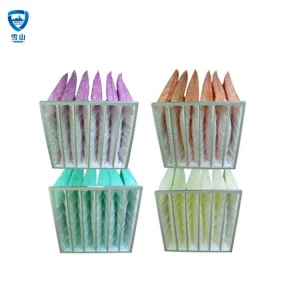
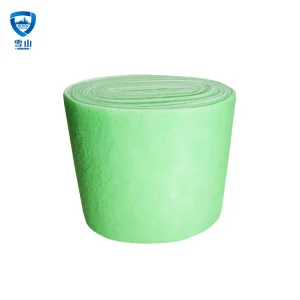
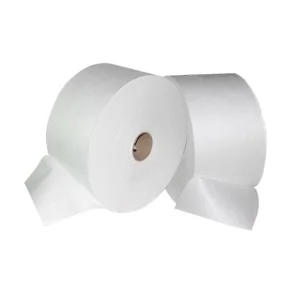
High-Performance Air Filtration Catalog (Part I)
Direct factory supply for commercial HVAC systems, cleanrooms, and OEM replacement filters exported worldwide.



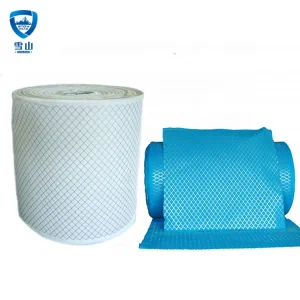
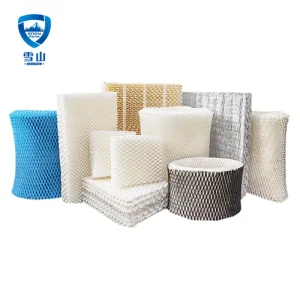
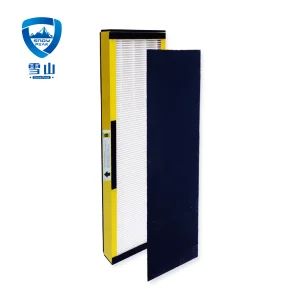

The Engineering Mechanics of MERV 13 Charcoal Filters
Combining electrostatic particulate capture with vapor-phase molecular adsorption to achieve dual-action IAQ remediation.
In modern HVAC architecture and indoor air quality (IAQ) engineering, the MERV 13 Charcoal Filter represents the nexus of mechanical aerosol filtration and chemical gaseous purification. Standard dust filters operate purely on mechanical straining and electrostatic interception. However, contemporary commercial buildings, clean manufacturing hubs, and smart residential environments demand simultaneous protection against fine sub-micron particulate matter (PM2.5, bio-aerosols) and volatile organic compounds (VOCs, combustion exhaust, formaldehyde, and ozone).
Chinese air filter manufacturers have spearheaded a technological shift by thermal-bonding high-capacity activated carbon matrices directly into electrostatically charged polypropylene meltblown synthetic media. This hybrid architecture satisfies the stringent requirements of ASHRAE Standard 52.2-2017 (MERV 13 rating) and ISO 16890 (ePM1 50-65% / ePM2.5 65-80%), while eliminating the severe static pressure penalties historically associated with heavy packed-carbon bed filters.
| Filtration Performance Parameter | Standard MERV 8 Pleated | Standard MERV 11 Pleated | MERV 13 Charcoal Composite (China OEM) | H13 HEPA Grade (Cleanroom) |
|---|---|---|---|---|
| Particle Removal Efficiency (0.3 - 1.0 µm) | < 20% | 20% - 49% | 50% - 75% | 99.97% |
| Particle Removal Efficiency (1.0 - 3.0 µm) | 20% - 34% | 65% - 79% | 85% - 90%+ | 99.99% |
| VOC & Odor Gas Adsorption Capacity | Negligible (0%) | Negligible (0%) | High (CTC 60%-90% Carbon) | Requires Carbon Layer |
| Initial Pressure Drop @ 500 FPM (2-Inch) | 0.15 in. w.g. (37 Pa) | 0.22 in. w.g. (55 Pa) | 0.24 in. w.g. (60 Pa) | 1.00 in. w.g. (250 Pa) |
| Ozone ($O_3$) Decomposition Rate | 0% | < 5% | 60% - 85% Initial Reduction | 0% |
Information Gain: Advanced Carbon Impregnation Techniques in Chinese Factories
Unlike traditional glued-on carbon powder methods that blind micro-pores and restrict airflow, top-tier China exporters utilize slurry-dipped carbon foam and ultrasonic carbon-cloth lamination. By specifying coconut shell activated carbon with Carbon Tetrachloride (CTC) values between 60% and 90%, these filters achieve high breakthrough capacity for benzene, toluene, and indoor formaldehyde without shedding carbon dust into downstream ventilation ducts.
Why Sourcing MERV 13 Carbon Filters from China Advantageous
The industrial ecosystem in China combines raw material polymer synthesis, automated precision machinery, and rigorous quality assurance.
Vertical Raw Material Integration
Chinese filtration clusters control the entire production chain—from polypropylene (PP) resin sourcing, meltblown fabric extrusion, and corona electret charging, to coconut shell carbon activation. This eliminates multi-tier middleman markups and yields unmatched cost-efficiency for international buyers.
Fully Automated Pleating & Assembly
High-speed ultrasonic pleating lines with continuous hot-melt spacer application ensure precise pleat geometry and uniform airflow distribution. Automated robotic frames (beverage board, extruded aluminum, plastic ABS) eliminate glue gaps and bypass leaks.
Four-Tier ISO Quality Framework
Leading Shenzhen factories implement strict Quality Management Systems: IQC (raw media permeability & CTC carbon tests), IPQC (pleat count & dimensional tolerance checks), FQC (leakage & pressure drop validation on TSI 8130 test rigs), and OQC (moisture-barrier packaging inspection).
Next-Generation Air Filtration Evolution (2025-2030)
Addressing global decarbonization mandates, energy conservation in commercial HVAC systems, and cleanroom air purification dynamics.
1. The Energy Efficiency Challenge: Decarbonizing Commercial HVAC Systems
Buildings consume roughly 40% of global primary energy, with HVAC fan systems representing a massive portion of electrical load. Upgrading from standard low-efficiency pre-filters to MERV 13 rated filters historically increased fan brake horsepower requirements due to higher static resistance. However, Chinese air filtration engineers have overcome this bottleneck by developing graded-density nanofiber composite media. By leveraging low-denier meltblown fibers combined with low-resistance carbon netting, modern MERV 13 charcoal filters achieve an initial pressure drop below 60 Pascals at standard face velocities (500 FPM / 2.5 m/s). This allows commercial real estate developers to fulfill LEED v4.1 Indoor Air Assessment credits and WELL Building Standards without exceeding annual building energy budgets.
2. Cold Catalyst & Multi-Phase Reactive Carbon Layers
Standard physical adsorption onto activated carbon eventually reaches a saturation threshold, leading to chemical breakthrough. The latest industry trend from top China exporters involves integrating Cold Catalyst (Low-Temperature Decomposition) technology alongside activated carbon. Cold catalyst media utilizes multi-component transition metal oxides to breakdown gaseous formaldehyde, ammonia, and sulfur compounds into harmless water ($H_2O$) and carbon dioxide ($CO_2$) at room temperature without requiring UV light activation. This extends filter operating lifespan by 200% compared to traditional non-catalyzed carbon filters.
Global Logistics & Transport
Filters built for high-speed rail HVAC, automotive cabs, and subway ventilation, capable of enduring high mechanical vibration while filtering brake dust and diesel exhaust.
Data Center Server Protection
Protecting hyperscale server blades and PCB copper traces against corrosive airborne gases ($H_2S$, $SO_2$) to eliminate micro-bridging electrical failures.
Healthcare & Lab HVAC
Multi-stage pre-filtration downstream of HEPA units, intercepting organic vapors, sterilant odors, and fine airborne pathogens in medical clean zones.
Smart Home OEM Purifiers
Custom form-factor drop-in replacements for Honeywell, Coway, Levoit, Blueair, and GermGuardian purifiers with private-label retail packaging.
Engineering Specifications & Sourcing Considerations
Essential selection criteria for procurement officers, HVAC distributors, and OEM brand buyers.
When evaluating China MERV 13 Charcoal Filter factories and exporters, international procurement teams must analyze key physical and chemical metrics to avoid sub-standard suppliers. Key considerations include:
- Electrostatic Charge Stability (Isopropanol Vapor Test): Synthetic meltblown media relies on electrostatic charges to capture 0.3 - 1.0 micron particles. Qualified China factories test media under EN 779 / ISO 16890 IPA discharge protocols to guarantee that efficiency does not drop catastrophically once electrostatic charge dissipates in high-humidity environments.
- Carbon CTC & Dust Holding Capacity (DHC): Verify whether the supplier uses virgin coconut shell carbon with high CTC adsorption (CTC 60-90) or low-grade recycled coal carbon. Granular carbon must be firmly bound using thermosetting adhesive webs to prevent carbon dust shedding under high airflow velocity.
- Frame Integrity & Flammability Compliance: Ensure frames meet UL 900 Class 2 or Class 1 flammability standards. Frame options include high-wet-strength moisture-resistant beverage board, extruded anodized aluminum, ABS plastic, or galvanized steel.
- Gasket & Sealing Tech: Perimeter continuous seamless polyurethane foam gaskets or flat Neoprene sealing strips must be applied to prevent air bypass in AHU holding frames.
Engineering Knowledge Spotlight: Shenzhen Snow Peak Clean Technology Co., Ltd.
With over 15 years of air purification expertise, Shenzhen Snow Peak Clean Technology Co., Ltd. stands as a national high-tech enterprise operating standardized manufacturing facilities and cleanroom filter workshops. Snow Peak serves over 700 clients across 50+ countries, offering specialized OEM/ODM services for replacement filter cartridges (Honeywell, Coway, Blueair, Levoit), industrial HVAC pocket/pleated filters, and meltblown media rolls under comprehensive ISO/CE compliance.
Frequently Asked Questions by Global Buyers
Comprehensive answers addressing technical capabilities, testing standards, OEM customization, and order logistics.
What is the main difference between a standard MERV 13 filter and a MERV 13 Charcoal Filter?
A standard MERV 13 filter uses purely synthetic or fiberglass media designed to capture fine airborne particulate matter (PM2.5, pollen, dust, bacteria down to 0.3-1.0 microns). A MERV 13 Charcoal Filter incorporates an activated carbon layer or carbon-impregnated matrix, enabling it to capture particulates and adsorb volatile organic compounds (VOCs), odors, chemical gases, and ozone simultaneously.
How do China factories maintain low pressure drop in MERV 13 charcoal filters?
China factories utilize advanced electrostatically charged meltblown media combined with ultra-thin slurry-coated carbon foam or hot-melt carbon cloth lamination. This open-pore design maintains high gas adsorption surface area while keeping initial static pressure drop under 60 Pa (0.24 in. w.g.) at standard HVAC flow rates.
What testing standards do China filter exporters adhere to for international orders?
Reputable China manufacturers test products against ASHRAE 52.2 (for MERV ratings), ISO 16890 (for ePM classifications), EN 1822 / IEST-RP-CC001 (for HEPA grades), UL 900 (for flammability), and RoHS/REACH directives for eco-compliance and heavy metal limits.
Can Chinese manufacturers produce custom OEM sizes and private-label packaging?
Yes. OEM/ODM customization is a primary strength of Chinese factories. Buyers can specify non-standard outer dimensions, depth (1", 2", 4", V-bank), frame materials (beverage board, metal, plastic), carbon loading weights, and full private-label retail color box packaging with barcodes.
How is electrostatic charge dissipation managed during ocean transit?
High-quality manufacturers utilize specialized electret additives (such as organic dipoles) during polypropylene meltblowing and store rolls in controlled environments. Finished filters are vacuum-sealed in heavy-duty polyethylene bags with desiccant to block ambient humidity and ambient discharge during sea transport.
What is the typical lifespan of a MERV 13 charcoal filter in commercial buildings?
Under standard urban indoor air conditions, the particle filtration layer lasts 3 to 6 months. The activated carbon odor/VOC layer remains effective for 3 to 4 months depending on pollutant concentrations. Filters incorporating cold catalyst layers can extend chemical breakdown effectiveness up to 6-12 months.
High-Performance Air Filtration Catalog (Part II)
Explore replacement filter media rolls, ceiling filter cotton, evaporative wicks, and industrial pocket bag filters.