
High-Efficiency MERV 14 & Activated Carbon Solutions
Explore our export-ready spectrum of air filtration media, pleated HVAC combinations, and OEM replacement components manufactured under strict ISO quality control protocols.
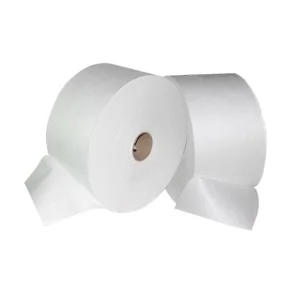






1. Executive Summary: The Global Rise of Dual-Stage MERV 14 Carbon Filtration
In modern HVAC engineering and indoor air quality (IAQ) architecture, the demand for dual-action filtration systems has grown exponentially across North America, Europe, the Middle East, and Asia-Pacific. Modern commercial facilities—ranging from LEED-certified high-rise office towers to advanced semiconductor cleanrooms, healthcare isolation wards, and industrial processing centers—face a complex, compound atmospheric challenge: the simultaneous presence of fine sub-micron particulate matter (PM2.5, PM1.0, bio-aerosols) and hazardous gas-phase molecular contaminants (Volatile Organic Compounds [VOCs], formaldehyde, ozone, nitrogen dioxide, and industrial odors).
Historically, building engineers were forced to specify separate pre-filter panels, high-efficiency particulate air (HEPA/MERV) filters, and bulk carbon tray systems. This multi-frame approach imposed severe engineering constraints, including massive pressure drop penalties, excessive physical unit depth, increased fan power consumption, and complicated routine maintenance schedules. The emergence of China MERV 14 Carbon Filter Exporters and Manufacturers has revolutionized the market by delivering co-pleated, composite dual-stage filter elements that integrate sub-micron particulate capture and gas-phase adsorption into a single, low-resistance compact frame.
According to ASHRAE Standard 52.2 test metrics, a MERV 14 air filter must achieve between 75% and 84% E1 efficiency (particles sized 0.3 to 1.0 microns) and greater than 90% E2 and E3 efficiency (particles sized 1.0 to 10.0 microns). Under the international standard ISO 16890, MERV 14 roughly correlates to an ePM1 70% to 85% or ePM2.5 > 80% classification. When engineered with micro-encapsulated or media-laminated virgin coconut shell activated carbon, these filters act as both a robust physical barrier and a chemical sink, making them indispensable components in modern air handling units (AHUs).
Key Engineering Gain: Co-pleated MERV 14 Carbon filters provide up to 85% E1 sub-micron particle arrestance while eliminating gaseous VOC concentrations below toxic threshold limits—all within a standard 2-inch or 4-inch deep box frame without requiring expensive HVAC system retrofits.
2. Technical Deep-Dive: Physics, Chemistry & Engineering Specifications
Understanding the performance parameters of MERV 14 carbon media requires analyzing two distinct physical mechanisms operating simultaneously within the pleated matrix: electrostatic mechanical particulate interception and molecular gas-phase adsorption isotherms.
A. Electrostatic Non-Woven Synthetic Media Substrate
The foundation of a high-performance MERV 14 particulate layer relies on advanced meltblown polypropylene (PP) or composite synthetic non-woven polymer webs. Through continuous thermal extrusion, micro-fibers with diameters ranging from 1 to 5 micrometers are deposited in a random matrix. These fibers are subsequently subjected to a high-voltage corona discharge process, imparting a permanent electrostatic charge (electret properties) to the fibers.
This electrostatic field significantly enhances particle capture mechanisms—specifically impingement, interception, and diffusion—allowing tiny sub-micron aerosols (0.3–1.0 µm) to be attracted to fiber surfaces without requiring overly dense fiber packing that would otherwise create catastrophic initial pressure drops (ΔP).
B. Gas-Phase Activated Carbon Adsorption Dynamics
Integrated adjacent to or within the electrostatic synthetic web is a layer of highly porous activated carbon media. China's leading exporters utilize premium coconut-shell carbon or bituminous coal-based carbon pulverized into micro-granules (typically 20x50 mesh size) or bonded into a honeycomb matrix.
- BET Specific Surface Area: High-grade carbon media exhibits internal surface areas ranging from 900 m²/g to over 1,400 m²/g, providing vast microscopic pore volumes (micro-pores <2 nm, meso-pores 2–50 nm).
- Carbon Tetrachloride (CTC) Rating: Premium MERV 14 carbon filters specify CTC values of 60% to 90%, ensuring exceptional adsorption capacity for heavy VOCs such as benzene, toluene, xylene, and chlorinated solvents.
- Chemical Impregnation: For specialized applications targeting acid gases (SO2, H2S) or alkaline compounds (NH3), China exporters offer chemically modified media impregnated with potassium permanganate (KMnO4), citric acid, or caustic compounds to trigger irreversible chemisorption.
| Performance Parameter | Standard MERV 14 Carbon Filter | Premium Heavy-Duty OEM Grade | ISO 16890 Equivalent |
|---|---|---|---|
| E1 Efficiency (0.3 - 1.0 µm) | 75.0% - 84.9% | 82.0% - 88.0% | ePM1 75% - 85% |
| E2 Efficiency (1.0 - 3.0 µm) | > 90.0% | > 95.0% | ePM2.5 > 85% |
| E3 Efficiency (3.0 - 10.0 µm) | > 95.0% | > 99.0% | ePM10 > 95% |
| Initial Resistance @ 500 FPM | 0.32 in. w.g. (80 Pa) | 0.26 in. w.g. (65 Pa) | Initial ΔP Class 1 |
| Carbon Loading Rate | 150 g/m² - 250 g/m² | 300 g/m² - 500 g/m² | Custom Grammage Available |
| Frame Material Options | Moisture-Resistant Beverage Board | Extruded Anodized Aluminum / Galvanized Steel | UL 900 Class 1 or Class 2 |
3. Commercial & Industrial Application Matrix
The versatility of MERV 14 carbon filters makes them an essential asset across multiple macroeconomic sectors. Sourcing directly from certified Chinese OEM exporters allows global system integrators to deploy these solutions in distinct operating environments:
LEED Commercial High-Rises
Improves indoor environmental quality (IEQ) credits under LEED v4.1 by capturing fine outdoor traffic pollution (PM2.5) while stripping out interior office emissions such as off-gassing carpets, furniture adhesives, and cleaning chemical vapors.
Semiconductor Cleanroom AHUs
Serves as crucial pre-filtration upstream of ULPA/HEPA terminal modules. Protects expensive final stage micro-glass filters from particulate blinding while removing airborne molecular contamination (AMC) like siloxanes and acid fumes.
Healthcare & Life Sciences
Installed in hospital waiting areas, outpatient clinics, and pharmaceutical laboratories to capture bacteria, virus-laden droplets, and surgical smoke odors while maintaining moderate fan static pressures.
Automotive Spray Booth Exhauster
Protects downstream exhaust ducts and neighborhood air sheds by intercepting fine overspray paint mist and absorbing volatile solvent odors (MEK, Acetone, Xylene) generated during commercial painting operations.
Data Center Scrubbing Systems
Prevents micro-corrosion on sensitive server logic boards and copper connectors by filtering ambient dust and removing trace hydrogen sulfide (H2S) and sulfur dioxide (SO2) gases (ISA-71.04 Severity Level G1 compliance).
Air Purifier OEM Replacement Market
Enables aftermarket retail brand owners to market high-performance replacement filter sets for major brands (Honeywell, Blueair, Coway, Levoit), delivering true OEM performance at competitive wholesale margins.
4. Sourcing Architecture: Why Partner with China Exporters & Manufacturers?
China has firmly established itself as the global epicenter for air filtration R&D, media production, and automated assembly line technology. Sourcing MERV 14 carbon filters from direct Chinese factories provides international buyers with unparalleled strategic advantages:
1. Vertical Supply Chain Integration
Leading Chinese manufacturers maintain end-to-end control over the production supply chain. From the internal synthesis of polymer raw materials for electrostatic meltblown extrusion, to carbon activation kilns and automated pleating lines, vertical integration eliminates middleman markups and ensures consistent quality control from raw roll media to finished filter cartridges.
2. Rigorous Four-Stage Quality Assurance (QA) Protocols
Top-tier exporters implement comprehensive quality management systems accredited to ISO 9001:2015 standards. Every production lot undergoes rigorous inspection phases:
- IQC (Incoming Quality Control): Testing media roll weights (g/m²), pore size distribution, electro-charge stability, carbon CTC values, and cardboard frame moisture resistance.
- IPQC (In-Process Quality Control): Continuous inline automated laser particle counting to verify pleat pitch uniformity, hot-melt adhesive bead consistency, and zero bypass leakage.
- FQC (Finished Quality Control): Sample testing on ASHRAE 52.2 and ISO 16890 test rigs to verify burst pressure, initial differential pressure (ΔP), and total Dust Holding Capacity (DHC).
- OQC (Outgoing Quality Control): Rigorous drop testing, edge-seal inspection, and protective moisture-proof polybag seal audits prior to pallet loading.
3. OEM/ODM Customization Capabilities
Whether you require custom dimensional footprints (e.g., non-standard 24x24x2" or 20x25x4" sizes), specialized header flanges (single-header, double-header, plastic frame), private-label retail packaging, or specialized carbon loading weights (150g to 500g/m²), China manufacturers possess the tooling flexibility to execute custom orders with rapid turnaround times.
5. Technical Roadmap & Future Innovations (2025–2030)
The air filtration industry is undergoing rapid technical evolution driven by stringent global decarbonization mandates and increased awareness of bio-aerosol mitigation. China's leading R&D laboratories are currently pioneering several next-generation filter technologies:
A. Electrospun Nanofiber Coated MERV 14 Media
By applying a microscopic electrospun polymer nanofiber layer (fiber diameter < 100 nm) onto the surface of meltblown substrates, engineers are achieving MERV 14 and MERV 15 efficiency purely through surface mechanical sieving rather than relying solely on electrostatic charge. This eliminates the drop in efficiency over time caused by electret charge dissipation in humid environment, while lowering initial air resistance by up to 30%—delivering significant fan energy savings for commercial facility managers.
B. Cold Catalyst & Photocatalytic Composite Carbon
Traditional activated carbon acts as a sponge, eventually reaching chemical saturation and requiring complete replacement. Next-generation MERV 14 carbon filters incorporate cold-catalyst nano-coatings (titanium dioxide / noble metal oxides). These catalysts actively decompose adsorbed formaldehyde, VOCs, and ozone into harmless H2O and CO2 molecules at room temperature, dramatically extending the effective service life of the gas-phase media layer.
C. IoT-Enabled RFID & Differential Pressure Smart Filters
As smart building management systems (BMS) become standard, exported filter units are increasingly equipped with integrated passive RFID chips and dynamic visual loading indicators. This enables automated facility management systems to track filter operating hours, real-time pressure drops (ΔP), and gas saturation points, optimizing maintenance schedules and preventing premature filter replacement.
Frequently Asked Questions (FAQ)
Detailed engineering answers to the most common questions asked by B2B buyers, HVAC procurement managers, and OEM partners Sourcing MERV 14 carbon filters from China.
What makes a MERV 14 Carbon filter superior to a standard MERV 8 or MERV 11 filter?
How often should MERV 14 combination carbon filters be replaced in commercial HVAC units?
What is the difference between ASHRAE 52.2 MERV ratings and ISO 16890 standards for carbon-pleated media?
How does activated carbon weight (g/m²) impact VOC removal efficiency and filter pressure drop?
Can China MERV 14 carbon filter exporters provide custom sizes and OEM private-label packaging?
How do you prevent carbon dust shedding from co-pleated gas-phase filters into clean air streams?
Complete Commercial & OEM Filter Replacement Series
Browse through our additional range of specialized pre-filters, cylindrical industrial collectors, and OEM replacement filter cartridges engineered for high-demand filtration environments.





