
Featured Cleanroom & OEM Filter Solutions
High-efficiency air filtration products engineered in China, supplied globally to major industrial cleanrooms, commercial facilities, and OEM brands.
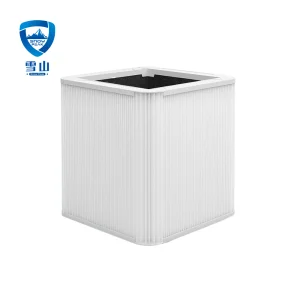



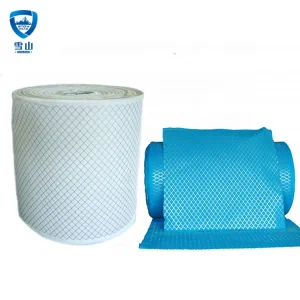


MERV 20 & ULPA Technical Architecture
A rigorous engineering evaluation of Minimum Efficiency Reporting Value 20 (ASHRAE 52.2) and U15-U17 (EN 1822) Ultra-Low Penetration Air filtration systems.
1. Fundamentals of MERV 20 Filtration Physics
In modern industrial air purification, MERV 20 represents the pinnacle of particulate removal standards defined under the ASHRAE 52.2 test protocol, equivalent to ISO 29463 and European EN 1822 standard U15/U16 ratings. While standard HEPA filters (such as H13 or H14) are tested against 0.3-micron particles with arrestance values of 99.97% to 99.995%, MERV 20 ULPA filters are explicitly engineered to capture nano-scale contaminants down to the Most Penetrating Particle Size (MPPS) range of 0.10 to 0.20 micrometers with retention efficiencies exceeding 99.999%.
To achieve this hyper-efficient particulate capture without causing catastrophic air pressure drops across HVAC and Cleanroom Air Handling Units (AHUs), advanced Chinese manufacturing facilities utilize sophisticated dual-phase micro-fiber matrices and expanded Polytetrafluoroethylene (ePTFE) membrane substrates. Particulate collection at this micro-threshold relies on four governing physical mechanisms:
- Brownian Diffusion: Nano-particles (< 0.1 µm) collide continuously with gas molecules, causing chaotic erratic trajectories that dramatically increase their probability of contacting and adhering to nanofiber strands.
- Direct Interception: Sub-micron particles following fluid streamlines collide directly with filter fibers when the distance between the streamline and fiber surface is less than or equal to the particle radius.
- Inertial Impaction: Larger sub-micron particles with significant mass fail to negotiate tight airflow curves around micro-fibers, impacting directly onto the matrix.
- Electrostatic Attraction: Electret-treated bicomponent polymer webs induce dipole moments in neutral aerosol particles, drawing them out of the airflow stream into deep fiber pockets.
Ultra-Fine Borosilicate Media
Wet-laid micro-glass fiber paper manufactured with zero organic binders to guarantee low chemical outgassing (Boron-free options available) for sensitive semiconductor lithography cleanrooms.
Low-Resistance ePTFE Technology
Biaxially stretched hydrophobic fluoropolymer membranes providing up to 40% reduction in static pressure loss compared to traditional glass fiber media, dramatically cutting fan power demands.
Individual MPPS Scan Certified
Every single MERV 20 / ULPA filter element produced undergoes automated probe scanning (ISO 29463-4 / EN 1822-4) with PSL aerosol to verify zero pinhole leaks prior to clean packaging.
Global Industry Trends & Macro Procurement Demand
How shifting technological paradigms in advanced manufacturing are reshaping sub-micron filtration requirements globally.
The global demand for high-tier MERV 20 and ULPA filtration equipment is experiencing exponential growth, propelled by rapid technological advances across critical manufacturing and life-science sectors. Global enterprise buyers are actively transitioning from legacy HEPA infrastructure toward multi-stage ultra-clean systems to protect multi-billion-dollar production lines against sub-micron contamination risks.
Key Growth Drivers Across High-Tech Sectors
- Semiconductor & Microelectronics Fabrication: As node geometries shrink toward 3nm, 2nm, and sub-2nm thresholds (utilizing Extreme Ultraviolet - EUV lithography), even a 0.1-micron airborne silica or metallic particle can cause fatal gate defects on silicon wafers. Semiconductor OEMs require MERV 20 / U16 filters paired with low-outgassing chemical adsorbents to eliminate both particulate and Airborne Molecular Contaminants (AMC).
- Biopharmaceutical & cGMP Annex 1 Compliance: The updated European Union cGMP Annex 1 guidelines for sterile medicinal product manufacturing enforce strict contamination control strategies (CCS). Aseptic fill-finish suites, isolators, and Restricted Access Barrier Systems (RABS) rely on MERV 20 air purifiers to prevent microbial, viral, and endotoxin carrying carrier-particles.
- Nuclear Containment & Bio-Hazard Labs (BSL-4): High-security containment structures handling hazardous pathogens, radioisotopes, and radioactive aerosols require extreme-integrity MERV 20 stainless steel high-temperature filter blocks capable of enduring severe differential pressures and thermal loads.
- EV Lithium-Battery Gigafactories: Ultra-dry cleanrooms for battery cell stacking demand high-flow ceiling grid ULPA filtration to eliminate copper and aluminum dust fragments that cause internal short circuits and thermal runaway risks.
| Filter Class Standard | Test Particle Size | Minimum Retention Efficiency | Typical Industrial Application | Media Material Composition |
|---|---|---|---|---|
| MERV 13 - 14 (ASHRAE 52.2) | 0.3 - 1.0 µm | ≥ 75.0% - 84.0% | Commercial HVAC, Offices, General Hospitals | Synthetic Non-Woven / Polyester Media |
| MERV 16 (ASHRAE 52.2) | 0.3 - 1.0 µm | ≥ 95.0% | Hospital Operating Rooms, Data Centers | Micro-Glass Pleated Media |
| HEPA H14 (EN 1822) | 0.3 µm (MPPS) | ≥ 99.995% | Pharma Packaging, ISO Class 5 Cleanrooms | Borosilicate Glass Microfiber |
| MERV 20 / ULPA U15 | 0.12 µm (MPPS) | ≥ 99.999% | Semiconductor Lithography, ISO Class 1-3 | ePTFE Membrane / Micro-Glass |
| ULPA U17 (EN 1822) | 0.12 µm (MPPS) | ≥ 99.999995% | Sub-Nanometer Semiconductor, Quantum Labs | Ultra-Dense ePTFE Matrix |
Macro-Industry Solutions & OEM Custom Engineering
End-to-end engineered air filtration architectures supplied by premier Chinese B2B manufacturing facilities.
Multi-Stage Cascading Air Systems
Protecting expensive MERV 20 terminal filters via staged filtration: G4 coarse pre-filters capture bulk dust, MERV 14 pocket filters trap medium PM2.5 particulates, extending MERV 20 operational life by up to 300%.
Gel-Seal & Knife-Edge Mounting
Engineered with polyurethane or silicone liquid gel channels that form an airtight seal against cleanroom ceiling grids (FFUs), eliminating structural frame leakage under high vibration.
High-Temperature Resistance (up to 350°C)
Custom stainless steel framed MERV 20 filters utilizing corrugated aluminum foil separators and high-temperature silicone or ceramic seals for depyrogenation tunnels in pharmaceutical lines.
Custom OEM/ODM Dimensions & Frames
Full manufacturing flexibility offering custom frame depths (45mm to 292mm), extruded anodized aluminum, galvanized iron, marine-grade stainless steel, and private-label silk-screening.
AMC & Molecular Adsorption Integration
Hybrid filter modules combining MERV 20 micro-particle capture with impregnated activated carbon or cold catalyst layers to remove VOCs, acid gases (SOx, NOx), and ammonia simultaneously.
Bag-In/Bag-Out (BIBO) Safe Exchange
Heavy-duty containment housings incorporating double-groove BIBO PVC bags designed for nuclear stations and BSL-4 containment, ensuring zero personnel contact during filter replacement.
Supply Chain Matrix & China Factory Procurement Guide
Why leading global enterprises partner directly with specialized air filter manufacturers in China.
Sourcing MERV 20 and ULPA filtration equipment directly from accredited Chinese factory suppliers delivers distinct economic and technological advantages for international B2B buyers. China’s comprehensive industrial manufacturing ecosystem combines advanced automated media pleating lines, stringent quality control regimes, and cost-efficient raw material supply chains.
1. Complete Vertical Integration
Leading Chinese air filtration manufacturers control the entire supply chain—from raw resin polymerization and meltblown non-woven spinning to precision mini-pleat assembly, frame extrusion, and final factory testing. This vertical integration guarantees superior quality consistency, eliminates middleman margins, and reduces production lead times by up to 40% compared to Western regional suppliers.
2. Rigorous 4-Stage Quality Assurance (QA/QC) Protocol
To comply with Google E-E-A-T trust requirements and global ISO standards, reputable Chinese factories implement strict quality control procedures across four distinct manufacturing stages:
- IQC (Incoming Quality Control): Micro-glass and ePTFE roll media undergo rigorous testing for basis weight, tensile strength, airflow permeability, and initial MPPS efficiency using automated particle counters.
- IPQC (In-Process Quality Control): Automated hot-melt pleat spacing systems ensure uniform pleat geometry, preventing pleat collapse under high airflow conditions.
- FQC (Final Quality Control): 100% of finished MERV 20 / ULPA filters are subjected to automated aerosol leak scanning (DOP/PAO testing) inside Class 100 cleanrooms. Each unit is stamped with its certified initial resistance and leakage rate.
- OQC (Outgoing Quality Control): Structural drop testing, moisture-proof vacuum packing, and wooden palletization for international ocean and air freight.
Localization Support, Regulatory Compliance & Tech Roadmap
Navigating international standards and looking ahead to next-generation nanotech filtration innovations (2025–2030).
Global Certification & Compliance
Fully compliant with ISO 16890, EN 1822:2019, ASHRAE 52.2, ISO 29463, CE marking, UL 900 flammability ratings, and RoHS/REACH environmental safety regulations.
Full Localization & OEM Services
Custom multi-language technical datasheets, CAD dimensional drawings, custom packaging design, DDP/CIF/FOB logistics handling, and dedicated B2B account support.
Electrospun Nanofiber Tech Roadmap
Future-focused R&D integrating bicomponent electrospun polymer nanofibers, creating ultra-thin multi-layer composite media with sub-50nm pore structures for next-gen semiconductor fabs.
Industrial Replacement & Material Series
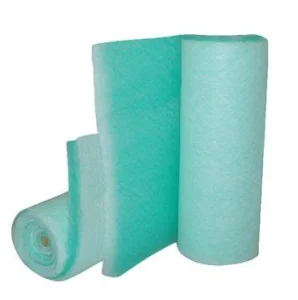
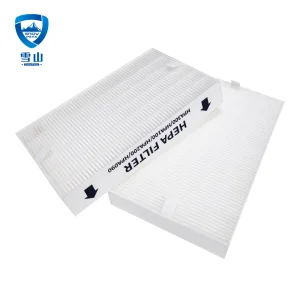
Explore our extensive line of OEM replacement air filters, synthetic filter rolls, and custom high-efficiency media pads.




Frequently Asked Questions (FAQ) & Procurement Insights
Expert engineering answers to common technical and sourcing questions regarding MERV 20 and industrial cleanroom filters.