
Featured Industrial Air Filtration Solutions
Explore our core OEM/ODM product series manufactured in high-precision facilities in China, certified under international quality and safety compliance standards.




1. Photochemical Mechanism & Advanced Engineering of Photocatalyst Filters
As global indoor air quality (IAQ) regulations tighten and industrial VOC emission thresholds become strictly enforced, traditional physical absorption methods (such as activated carbon) are reaching their thermodynamic limits due to rapid saturation, desorption risks, and secondary pollution. Photocatalytic Oxidation (PCO) technology represents a paradigm shift from passive molecular trapping to active catalytic decomposition at ambient room temperatures.
At the structural core of a high-performance photocatalyst filter manufactured in China lies nano-crystalline Titanium Dioxide (TiO₂), predominantly engineered in the Anatase crystal structure or a synergistic Anatase-Rutile phase mixture (such as Degussa P25 benchmark standards). When the semiconductor TiO₂ nano-particles are irradiated by light photons possessing energy equal to or greater than its bandgap energy ($E_g \approx 3.2 \text{ eV}$ for pure anatase), electrons ($e^-$) are promoted from the valence band (VB) to the conduction band (CB), simultaneously leaving positive photo-generated holes ($h^+$) in the valence band.
Hydroxyl Radical (·OH) Generation
The highly oxidative valence band holes ($h^+$) react with adsorbed surface moisture ($H_2O$) and hydroxide ions ($OH^-$) to yield hydroxyl radicals (·OH). Possessing a standard oxidation potential of +2.80V, hydroxyl radicals non-selectively break C-C, C-H, C-O, and C-N chemical bonds within organic airborne pollutants.
Superoxide Anion Radical (·O₂⁻) Formation
Conduction band electrons ($e^-$) reduce molecular oxygen ($O_2$) present in the airflow, producing superoxide anion radicals (·O₂⁻). These reactive oxygen species (ROS) work in tandem with ·OH radicals to mineralize complex volatile organic compounds (VOCs), formaldehyde (HCHO), benzene, toluene, and biological pathogens into benign $CO_2$ and $H_2O$.
Formaldehyde (HCHO) Decomposition Formula:
$\text{HCHO} + \cdot\text{OH} \rightarrow \text{HCO} + \text{H}_2\text{O}$
$\text{HCO} + \text{O}_2 \rightarrow \text{HCO}_3 \rightarrow \text{CO}_2 + \text{H}_2\text{O}$
Unlike activated carbon filters that act as temporary sponge media, a specialized Chinese photocatalyst filter acts as a zero-consumption kinetic catalyst, providing indefinite chemical lifetime as long as structural coating integrity and light excitation are maintained.
2. Key Advantages of Sourcing Photocatalyst Filters from China Factories
China has established an uncontested competitive advantage in the global manufacturing of air filtration components, particularly in advanced functional media requiring chemical synthesis, surface modification, and precision substrate engineering.
1. Upstream Precursor Integration
China hosts the world's largest industrial clusters for titanium ore processing and precursor synthesis (such as titanium tetrachloride and titanium sulfate). Chinese manufacturers source high-purity nanometer-scale TiO₂ powders ($<20\text{ nm}$ grain size) directly from domestic refining hubs in Sichuan and Shandong, maintaining drastic cost control and batch-to-batch chemical uniformity.
2. Advanced Sol-Gel & Dip-Coating Lines
Leading Chinese photocatalyst OEMs employ automated sol-gel synthesis and controlled dip-coating / vacuum-assisted spray-coating lines. Thin-film coating thickness is controlled within $100\text{ nm} - 300\text{ nm}$, preventing catalyst peeling (flaking) while maintaining optimal porous surface areas and high quantum yield.
3. Multi-Substrate Manufacturing Flexibility
Chinese suppliers offer high versatility in structural support media: Aluminum Honeycomb (for low air resistance in HVAC), Nickel Foam (for high turbulent contact efficiency), Ceramic Foam (for high-temperature/corrosive industrial exhaust), and Fiberglass Mesh (for compact air purifiers).
| Substrate Material | Airflow Resistance ($\Delta P$) | Surface Area Ratio | Mechanical Strength | Primary Target Application |
|---|---|---|---|---|
| Aluminum Honeycomb | Ultra-Low (< 15 Pa at 1.5 m/s) | High ($1200 - 2500 \text{ m}^2/\text{m}^3$) | Very High (Structural Rigid) | Commercial HVAC, AHU Systems, Airport Air Cleaning |
| Nickel/3D Metal Foam | Medium (25 - 45 Pa at 1.5 m/s) | Ultra-High ($3000+ \text{ m}^2/\text{m}^3$) | High (Flexible / Machinable) | High-End Residential Air Purifiers, Automotive HVAC |
| Ceramic Porous Foam | Medium-High (30 - 60 Pa) | High (Porous Tortuous Path) | Extreme (Heat & Acid Resistant) | Industrial VOC Scrubber, Chemical Factory Exhaust |
| Fiberglass/Expanded Mesh | Low (< 20 Pa) | Moderate ($800 - 1500 \text{ m}^2/\text{m}^3$) | Moderate (Lightweight) | Cost-effective OEM Replacement Filters, Mini Purifiers |
3. Global Industry Trends & Technological Evolution (2025–2030)
The global photocatalytic oxidation sector is undergoing rapid technological transformation. Pioneering Chinese factories are moving beyond basic UV-C/TiO₂ combinations to address conventional limitations such as narrow bandgap utilization, ozone byproduct risks, and high electrical power requirements.
A. Transition to Visible Light & UV-A LED Response
Traditional pure Anatase TiO₂ requires ultraviolet light ($\lambda < 387\text{ nm}$) to trigger photocatalysis, necessitating energy-intensive mercury lamps. Chinese R&D institutes have commercialized Element-Doped Nano-TiO₂ Coatings:
- Nitrogen & Carbon Doping (N-TiO₂ / C-TiO₂): Shifts the absorption bandgap into the visible light spectrum ($400\text{ nm} - 520\text{ nm}$), enabling high photocatalytic rate under ambient indoor LED lighting.
- Noble Metal Deposition (Ag-TiO₂ / Pt-TiO₂): Acts as electron traps to suppress electron-hole recombination, boosting quantum efficiency by up to 300%.
B. Cold Catalyst & Composite Hybrid Filters
To overcome periods without light excitation, Chinese factories are co-formulating Cold Catalyst (Non-Light Required Catalyst) materials with TiO₂. By integrating transition metal oxides (Manganese Dioxide $MnO_2$, Cobalt Oxide $Co_3O_4$), the filter continuously decomposes formaldehyde at ambient room temperature while utilizing light exposure for self-regeneration and deep VOC destruction.
C. Zero-Ozone & Low Pressure-Drop Engineering
Global environmental regulatory bodies (such as California Air Resources Board - CARB) strictly enforce zero-ozone emission compliance ($< 0.05 \text{ ppm}$). Chinese engineering standards have pioneered safe $365\text{ nm} - 395\text{ nm}$ UVA-LED coupled photocatalytic modules that guarantee zero ozone generation while achieving virus and bacteria inactivation rates exceeding $99.99\%$.
PCO Technology Lifecycle Roadmap
- Gen 1 (Legacy): Lamp UV-C (254nm) + TiO2 Dip Mesh $\rightarrow$ High Power, Ozone Risk, Coating Flaking.
- Gen 2 (Current): UVA (365nm) LED + Nano-Sol Honeycomb $\rightarrow$ Safe, Long Lifespan, Low Delta-P.
- Gen 3 (Next-Gen): Doped Visible Light Catalyst + Multi-Stage Composite Media $\rightarrow$ Ambient Light Driven, Zero Secondary Pollutants.
4. Macro-Industry Solutions & Localized Application Scenarios
Photocatalyst filters produced by specialized Chinese manufacturing plants are engineered to integrate seamlessly into diverse industrial, commercial, and residential air handling architecture.
1. Commercial HVAC & Building AHU Systems
Integrated into centralized Air Handling Units (AHU) of airports, office skyscrapers, and shopping malls. Aluminum honeycomb photocatalyst filters eliminate Sick Building Syndrome (SBS) by destroying off-gassed VOCs from synthetic carpets, furniture adhesives, and cleaning chemicals without imposing airflow drag on ventilation blowers.
2. Paint Booths & Industrial VOC Exhaust
Deployed in automotive spray painting facilities, print houses, and chemical processing plants. Ceramic foam PCO filters act as high-efficiency catalytic pre-scrubbers, breaking down aromatic hydrocarbons (Xylene, Ethylbenzene, Styrene) prior to final carbon polishing or thermal oxidation exhaust systems.
3. Healthcare & Infection Control
In hospital waiting rooms, isolation wards, and dental clinics, photocatalytic filters paired with UVA light sources deliver continuous pathogen inactivation. The generated hydroxyl radicals destroy bacterial cell membranes (e.g., Staphylococcus aureus, E. coli) and viral protein capsids.
4. Automotive In-Cabin Air Purification
OEM integration into Electric Vehicle (EV) climate control systems. Compact nickel foam PCO elements cleanse recirculated interior air from occupant-generated CO₂, leather off-gassing, and external traffic exhaust smog.
5. Smart Consumer Air Purifiers
Custom OEM multi-stage replacement filter cartridges combining HEPA particulate capture, active carbon odor adsorption, and an outer TiO₂ coated photocatalytic layer for long-term household air purification.
6. Cold Chain Logistics & Food Storage
Photocatalysts destroy Ethylene gas ($C_2H_4$) emitted by ripening fruits during trans-oceanic shipping, dramatically extending the shelf-life of agricultural commodities.
5. Global Enterprise Procurement Guidelines & Quality Audit Checklist
When selecting a Chinese photocatalyst filter supplier, procurement directors and engineering leads must evaluate critical structural and chemical parameters to avoid low-quality suppliers using non-reactive pigment-grade TiO₂ or unstable adhesives.
Essential Factory Evaluation Criteria
- Nano-Coating Adhesion (Cross-Hatch Tape Test): Ensure the supplier complies with ASTM D3359 standards. Coating must not peel or generate aerosol particulate under high velocity airflows ($> 5\text{ m/s}$).
- XRD (X-Ray Diffraction) Phase Verification: Request test reports verifying that the TiO₂ crystal structure is pure Anatase phase or optimized Anatase/Rutile mixture, rather than inert Rutile pigment.
- BET Surface Area Analysis: Confirm active catalyst porous surface area ($> 50 \text{ m}^2/\text{g}$ for nano-powder sol).
- VOC Removal Rate Certification: Verify third-party CNAS/SGS test reports under national standards (such as GB/T 18801-2022 or AHAM AC-1) documenting 1-hour removal efficiencies for Formaldehyde, Benzene, and TVOC.
Total Cost of Ownership (TCO) Advantages
By specifying Chinese custom engineered photocatalyst filters, international B2B buyers gain substantial total lifecycle savings:
- Zero Maintenance Consumable Cost: PCO media does not require frequent replacement like carbon filter packs, drastically reducing field service callouts.
- Energy Efficiency (Low System Pressure Drop): High-porosity aluminum honeycomb design reduces fan energy draw by up to 18% compared to heavy particulate carbon beds.
- Custom Mold & Frame OEM Versatility: Rapid tooling capabilities for custom aluminum extrusion, ABS plastic, or galvanized steel frame dimensions.
High-Efficiency Replacement & OEM Filter Series
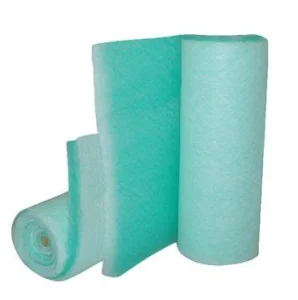
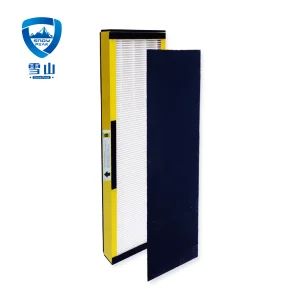
Direct export supply of compatible replacement HEPA filters, activated carbon modules, and industrial filter media rolls from China factory lines.







6. Frequently Asked Questions (FAQ) for B2B Sourcing & Engineering
Unlike physical adsorption filters like activated carbon that saturate in 3 to 6 months, a high-quality TiO₂ photocatalyst filter acts as a non-consumed catalyst. Under standard operating conditions with proper particulate pre-filtration (G4/MERV8), the physical nano-coating can maintain catalytic activity for 3 to 5 years without degradation. Periodic cleaning with compressed air or light water rinsing restores optimal surface exposure.
When paired with correct excitation light sources (such as UVA LEDs emitting at 365nm to 395nm wavelength), photocatalytic oxidation generates ZERO ozone. Ozone generation occurs only when utilizing shortwave UV-C light below 200nm (e.g., 185nm vacuum UV). Chinese manufacturers supply complete PCO filter modules engineered specifically to eliminate secondary harmful byproducts, achieving CE, RoHS, and CARB zero-ozone certification compliance.
Aluminum Honeycomb is optimal for high-volume HVAC systems where minimizing pressure drop (<15 Pa) and maximizing structural rigidity are mandatory. Nickel Foam is ideal for compact residential air purifiers requiring high turbulent contact efficiency at lower flow rates. Porous Ceramic Foam is specified for high-temperature or corrosive chemical exhaust gas scrubber systems.
Yes. Factories offer end-to-end OEM/ODM customization services including custom CAD dimensional tailoring, extruded aluminum frames, stainless steel edge banding, flame-retardant ABS plastic housings, custom foam sealing gaskets, and private-label client logo screen printing and retail packaging.
Leading Chinese OEM suppliers provide pre-shipment sample testing that includes: 1) Cross-hatch tape adhesion test (ASTM D3359), 2) SEM (Scanning Electron Microscopy) coating thickness imaging, and 3) Methylene Blue photo-degradation reaction rate analysis. Third-party testing through SGS, TÜV, or CNAS accredited laboratories can be arranged prior to bulk production release.