
High-Demand Air Filtration & Replacement Products (Top Series)
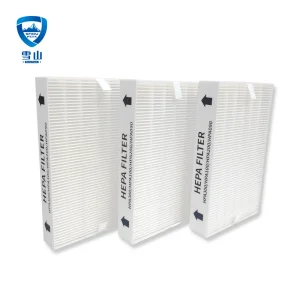
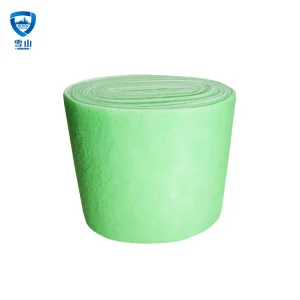
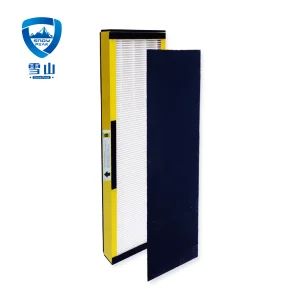
Browse our precision-manufactured replacement filters, pre-filters, and media rolls engineered for global commercial HVAC, cleanroom, and brand-name purifier compatibility.




Technical Architecture: Fundamentals of Heterogeneous Photocatalysis
In modern industrial indoor air quality (IAQ) architecture, volatile organic compounds (VOCs), gaseous toxics, and airborne biological pathogens represent a fundamental challenge that conventional physical barrier filters (such as mechanical HEPA filters) cannot completely mitigate. While HEPA media excels at intercepting particulate matter down to 0.3 microns with efficiencies reaching 99.97% and higher, it acts purely as a physical entrapment mechanism—leaving gaseous pollutants like Formaldehyde (HCHO), Benzene, Toluene, Xylene, and Total Volatile Organic Compounds (TVOCs) untreated.
As a premiere China Photocatalyst Filters Factory and Original Equipment Manufacturer (OEM), Shenzhen Snow Peak Clean Technology Co., Ltd. bridges this critical performance gap by engineering advanced Photocatalytic Oxidation (PCO) Filter Substrates based on nano-scale Titanium Dioxide ($\text{TiO}_2$).
Band-Gap Excitation & ROS
When irradiated by ultraviolet light (UV-A at 365 nm wavelength or emerging high-efficiency UV-C/LED arrays), nano-$\text{TiO}_2$ absorbs photons with energy equal to or exceeding its bandgap energy ($E_g \approx 3.2\text{ eV}$ for anatase phase). This promotes electrons ($e^-$) from the valence band to the conduction band, leaving electron holes ($h^+$) behind.
Hydroxyl Radical Generation
The highly reactive valence holes oxidize surface-adsorbed water molecules ($\text{H}_2\text{O}$) or hydroxyl ions ($\text{OH}^-$) to generate Hydroxyl Radicals ($\cdot\text{OH}$)—one of the strongest chemical oxidants known ($E^\circ = 2.80\text{ V}$ vs. SHE). Simultaneously, conduction band electrons reduce ambient oxygen ($\text{O}_2$) to form Superoxide Radical Anions ($\cdot\text{O}_2^-$).
Mineralization of Organic Pollutants
Unlike activated carbon, which acts as a passive sponge reaching physical saturation over time, photocatalytic oxidation breaks down complex organic carbon bonds ($\text{C-H, C-C, C-O}$) directly into non-toxic, eco-safe end products: carbon dioxide ($\text{CO}_2$) and water ($\text{H}_2\text{O}$), ensuring continuous, maintenance-free gas purification without secondary pollution.
Technology Comparison: Photocatalyst Filters vs. Alternative Media
| Filtration Technology | Primary Target | VOC Removal Efficiency | Pathogen Inactivation | Lifespan & Maintenance | Secondary Contamination Risk |
|---|---|---|---|---|---|
| Photocatalyst (Nano-TiO₂ + UV) | Gaseous VOCs, Bacteria, Odors | High (90-99% Mineralization) | Ultra-High (Cell Membrane Lysis) | Multi-Year (Catalytic Reusability) | Zero (Complete Decomposition) |
| Activated Carbon Granules | VOCs, High Molecular Odors | High (Physical Adsorption) | None (Passive Entrapment) | Short (3-6 Months Saturation) | High (Desorption at High Temp) |
| Cold Catalyst Filters | Formaldehyde, Ammonia | Moderate to High | Low | 12-18 Months | Low |
| Standard HEPA (H13/H14) | PM0.3, Dust, Pollen, Smoke | Negligible (Gases Pass Through) | Traps Only (No Killing Effect) | 6-12 Months Replacement | Moderate (Bacterial Growth on Media) |
Global Procurement Landscape: B2B Sourcing Demands across Key Industries
As global air filtration standards evolve from simple particulate reduction toward total indoor chemical and biological security, international procurement executives, HVAC OEMs, and cleanroom system designers are actively re-evaluating their filter supply chains. China has emerged as the premier manufacturing hub for advanced photocatalytic components due to its complete chemical manufacturing vertical integration, precision substrate production, and cost-scalable nano-coating operations.
Commercial HVAC & Building Automation
Large enterprise buildings, medical centers, and airport terminals are upgrading traditional ductwork with modular PCO photocatalytic frames. Global buyers require low pressure-drop ($\Delta P < 15\text{ Pa}$ at $1.5\text{ m/s}$) substrates that can be integrated directly into Air Handling Units (AHUs) without overloading fan energy consumption.
Smart Home Appliance OEMs
Leading global brands (compatible replacement markets for Honeywell, Coway, Levoit, Blueair, Germ Guardian) are moving beyond 2-in-1 HEPA + Carbon combos. By adding a nano-photocatalyst mesh behind the HEPA stage, home purifiers can achieve 99.9% formaldehyde removal CADR ratings under strict national standards like China's GB/T 18801-2022.
Automotive Cabin Air Purification
Electric Vehicle (EV) manufacturers and Tier-1 automotive suppliers are installing compact honeycomb photocatalyst filters illuminated by mini UV LED strips inside vehicle HVAC units to eliminate cabin leather odors, plastic outgassing, and bacterial growth on evaporator coils.
Substrate Engineering & Deposition Roadmap
The operational efficiency of a photocatalyst filter depends heavily on its structural carrier (substrate) and the coating adhesion process of nano-$\text{TiO}_2$. At Snow Peak Clean Technology, our R&D team utilizes four primary structural carriers customized to industrial air speed, humidity, and physical frame requirements.
Aluminum Honeycomb Substrate
Provides optimal structural rigidity, extremely low airflow resistance, and maximum surface area exposure per cubic meter. Ideal for high-velocity HVAC ducts and commercial purifiers.
Nickel / Metal Foam Matrix
Features a 3D open-cell porous structure with chaotic micro-channels that increase photon-scattering events and photon collision probability, boosting catalytic yield.
Synthetic Woven / Non-Woven Mesh
Flexible lightweight substrates engineered for compact consumer purifiers. Can be easily folded, pleated, or combined with pre-filter frames for low-cost mass production.
Ceramic Honeycomb Substrate
Resistant to high operating temperatures, harsh chemical vapors, and acidic exhaust. Specified for industrial exhaust gas treatment in manufacturing plants.
Snow Peak Nano-Coating Technology: Dip-Coating vs. Thermal Sputtering
To eliminate common industry defects like nano-powder shedding or film cracking, Snow Peak employs a multi-step Sol-Gel Hydrothermal Dip-Coating Method followed by high-temperature sintering. By doping anatase $\text{TiO}_2$ with trace transition metal ions (such as $\text{Fe}^{3+}$ or $\text{Ag}^+$) and non-metal elements ($\text{N}$-doping), we narrow the semiconductor bandgap, allowing catalytic activation under both 365 nm UV-A light and visible ambient room light (400-500 nm).
Macro Industry Solutions & OEM/ODM Customization Workflow
As a full-service factory based in Shenzhen, China, Snow Peak Clean Technology delivers tailor-made OEM/ODM product design services for international buyers. Whether you need private-label consumer replacement filters or heavy-duty industrial HVAC frames, our engineering department provides end-to-end technical support.
1. Dimensional & Substrate Customization
We produce filters ranging from micro-size (50mm x 50mm for automotive/portable units) up to large AHU panels (1200mm x 600mm). Substrate thickness, honeycomb cell mesh density (10 PPI to 60 PPI), and frame materials (Aluminum Alloy, Galvanized Steel, ABS Plastic, Cardboard) are specified to your drawing.
2. Integrated Multi-Stage Combination Modules
Maximize purification efficiency in small device footprints by combining our nano-photocatalyst coated media directly with HEPA pleated paper, antimicrobial non-wovens, or cold catalyst layers in a single composite frame.
3. Private Label & Export Logistics
Complete private labeling solutions including custom barcode printing, eco-friendly retail packaging boxes, multi-language instruction manuals, and direct FBA Amazon shipping or CIF/FOB sea transport via Shenzhen/Hong Kong ports.
Quality Assurance, Testing Standards & Regulatory Compliance
Snow Peak operates under a stringent Four-Stage Quality Control System (IQC → IPQC → FQC → OQC) ensuring every batch of photocatalyst filters meets international environmental and safety standards.
ISO 9001:2015 & Cleanroom Manufacturing
Our standardized production facility includes a dedicated cleanroom filter workshop for sterile products. Air cleanliness, humidity, and chemical dust are tightly monitored during coating application.
RoHS & REACH Environmental Safety
All nano-$\text{TiO}_2$ chemical slurries, aluminum frames, and adhesives are 100% compliant with EU RoHS and REACH regulations, guaranteed free of hazardous heavy metals, lead, or SVHC substances.
Zero Ozone Generation Guarantee
Unlike electronic plasma or ionizer purifiers, pure photocatalytic oxidation ($\text{TiO}_2 + \text{UV-A}$) does not generate toxic ozone ($\text{O}_3$), keeping indoor ozone levels well below FDA/EPA indoor thresholds (< 0.005 ppm).
In-House 30m³ CADR Testing Chamber
Every customized photocatalyst batch undergoes CADR verification testing for HCHO, TVOC, and toluene decay rate tracking according to GB/T 18801-2022 and ASHRAE 52.2 standards.
Frequently Asked Questions (Sourcing & Engineering FAQ)
Common questions from B2B procurement managers, buyers, and HVAC engineers seeking china photocatalyst filter suppliers.
What is the functional lifespan of a Snow Peak photocatalyst filter?
Because $\text{TiO}_2$ acts strictly as a catalyst during photocatalytic oxidation, it is not consumed during the reaction. Under normal operating conditions with pre-filtration protecting the surface from heavy dust accumulation, the catalyst coating maintains high catalytic performance for 2 to 5 years. Regular light cleaning of surface dust is recommended.
Does the photocatalyst filter require a specific UV light source to work?
Standard anatase nano-$\text{TiO}_2$ is activated by UV light with wavelengths between 365 nm and 385 nm (UV-A). However, Snow Peak also produces metal-doped visible-light photocatalyst filters that can be activated by standard LED room lighting or natural sunlight (400 nm - 450 nm wavelength range).
Can Snow Peak manufacture custom replacement filters compatible with Honeywell, Coway, or Levoit?
Yes. Snow Peak specializes in direct-fit OEM/ODM compatible replacement filters for all major retail air purifier brands. Note: Brand names and model numbers are used strictly for compatibility reference; all replacement filters produced are independent aftermarket products manufactured to OEM quality specifications.
What is the typical Minimum Order Quantity (MOQ) for custom OEM orders?
We support growing businesses with flexible trial order quantities. Standard catalog models have low MOQs starting from 100-500 pieces, while customized sizes, frames, and private-label packaging generally require an MOQ of 500 to 1,000 units depending on raw material specifications.
How does Snow Peak ensure the nano-coating does not peel off over time?
We utilize an advanced Sol-Gel dipping process followed by high-temperature thermal calcination. This creates chemical bonding between the nano-$\text{TiO}_2$ particles and the metallic substrate (aluminum/nickel), guaranteeing high adhesion strength that withstands airflow speeds up to 10 m/s without shedding particle dust.
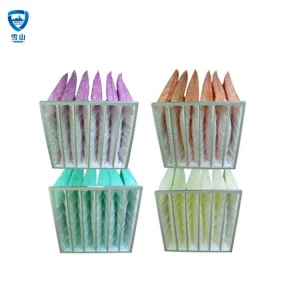
Additional Industrial, Media & Specialized Filter Products (Bottom Series)
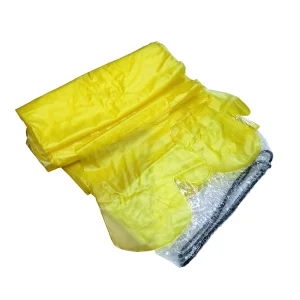
Explore our complete catalog of industrial bag filters, sandwich carbon non-wovens, cooling pads, and bio-hazard protection accessories.




Partner with China's Premier Photocatalyst Filter Supplier
Request technical datasheets, sample kits, or customized factory pricing for your air purification brand or industrial HVAC project today.