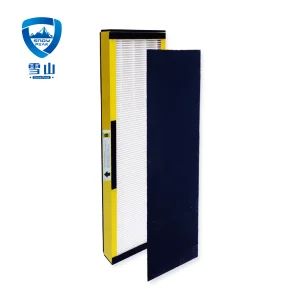
High-Performance Active Air Filtration Products
Engineered for precise VOC adsorption, gas-phase contaminant removal, and multi-stage HVAC integration.


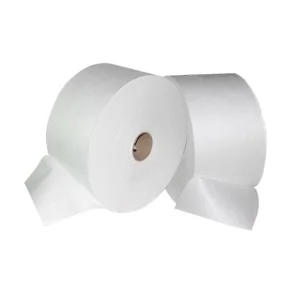





The Science of Active Air Carbon Filtration Architecture
Understanding adsorption thermodynamics, Carbon Tetrachloride (CTC) saturation limits, and surface chemistry customization for targeted gaseous contaminant control.
Pore Structure & Micro-Surface Area
Active air carbon media engineered by our facility undergoes controlled steam activation to yield BET surface areas exceeding 1,100 m²/g to 1,500 m²/g. The pore distribution is specifically tuned across micropores (<2nm), mesopores (2–50nm), and macropores (>50nm) to maximize kinetic diffusion rates for low-molecular-weight Volatile Organic Compounds (VOCs).
CTC & Iodine Adsorption Metrics
We grade active carbon beds using strict Carbon Tetrachloride (CTC) benchmarks (CTC 50, 60, 80, and up to CTC 100). High CTC value correlates directly with high volatile solvent loading capacity, enabling custom air filters to maintain extended operational lifespans under continuous exposure to hazardous hydrocarbons, benzene, and toluene.
Chemical Impregnation for Reactive Gases
Standard physical adsorption struggles with light inorganic gases. Our proprietary chemical impregnation processes load active carbon matrices with targeted compounds: Potassium Permanganate ($KMnO_4$) for formaldehyde breakdown, Phosphoric Acid ($H_3PO_4$) for ammonia ($NH_3$) neutralization, and Sodium Hydroxide ($NaOH$) for acid gases ($H_2S, SO_x$).
Engineering Dwell Time & Airflow Velocity Equilibrium
Molecular adsorption is non-instantaneous; it requires adequate contact time (residence time) between airborne contaminant molecules and the activated carbon granules. Industrial clean air systems must maintain a minimum residence time of 0.1 to 0.5 seconds. The mathematical relationship governing filter bed volume ($V_b$) and air volume flow rate ($Q$) is defined as:
Where $A$ represents effective face area and $d$ signifies carbon bed depth. Balancing face velocity below 2.5 m/s minimizes pressure drop while ensuring maximum single-pass adsorption efficiency.
Active Carbon Filter Media Structural Comparison
| Filter Configuration Format | Carbon Loading Density | Initial Resistance (at 2.5 m/s) | Target Pollutant Spectrum | Primary Industrial Application |
|---|---|---|---|---|
| Pelletized / Granular Carbon Bed (GAC) | 400 g/m² – 1200 g/m² | 85 Pa – 180 Pa | Heavy VOCs, Solvents, Hydrocarbons | Industrial Exhaust, Chemical Plants |
| Honeycomb / Rigid Cell Carbon | 250 g/m² – 600 g/m² | 35 Pa – 75 Pa | Formaldehyde, TVOCs, Light Odors | Commercial HVAC, AHU Recirculation |
| Activated Carbon Non-Woven Fabric | 100 g/m² – 300 g/m² | 20 Pa – 45 Pa | Nuisance Odors, Kitchen Smells, Pet Odors | Smart Purifiers, Air Conditioners |
| Composite HEPA + Active Carbon Matrix | 150 g/m² – 450 g/m² | 45 Pa – 95 Pa | Particulate PM2.5 + Gaseous VOCs | Biomedical, Cleanroom AMC, Residential |
Custom OEM/ODM Filter Engineering Capabilities
From prototyping to automated mass production, Shenzhen Snow Peak Clean Technology tailors active carbon solutions to exact OEM dimensions and airflow specs.
Custom Frame Architecture
We manufacture custom frame enclosures using extruded anodized aluminum alloy, galvanized sheet steel, ABS injection-molded plastics, and moisture-resistant heavy-duty beverage board paper frames tailored for extreme temperature and humidity environments.
Pleat Geometry & Hot-Melt Spacing
Utilizing high-speed computerized pleating lines, we customize pleat depth from 10mm to 292mm. Uniform hot-melt bead spacing ensures zero pleat collapse under high dynamic air velocities, reducing static pressure drops by up to 30%.
Multi-Layer Composite Integration
Engineers can combine G4 pre-filtration synthetic non-wovens, meltblown H13/H14 HEPA media, and active carbon fabric layers into a seamless unified composite filter element, simplifying air purifier assembly and maintenance cycles.
Localization Support, Standards Compliance & Testing Guarantee
Navigating international regulatory frameworks requires complete material transparency and certified testing verification for every export destination.
REACH & RoHS Compliance
All active carbon materials, adhesive resins, gaskets, and filter frames supplied by Snow Peak comply fully with EU REACH (Substances of Very High Concern) regulation and RoHS Directive 2011/65/EU (and amendment 2015/863), ensuring smooth customs clearance across European markets.
ISO 16890 & EN 779 Benchmark Testing
Filter media efficiency is strictly measured according to ISO 16890 (ePM1, ePM2.5, ePM10 classification) and EN 779 (G3 to F9 ratings). Fractional efficiency curves are generated via laser particle spectrometry and gas-phase mass spectrometry within certified laboratory conditions.
CARB & UL Flammability Certification
For North American market entry, active carbon filter products adhere to California Air Resources Board (CARB) emission guidelines and achieve UL 900 Class 2 fire performance ratings, protecting commercial buildings against flame propagation hazards in duct lines.
China Factory Supply Chain & Manufacturing Synergies
Leveraging Shenzhen’s world-class high-tech manufacturing hub to deliver cost stability, rapid prototyping, and scalable mass production.
Virgin Coconut Shell Raw Material Integration
Our direct access to high-grade virgin coconut shell carbon raw materials guarantees high hardness ratings (>98%) and minimal dust generation. Unlike coal-based carbons, coconut-derived active carbon offers superior microporosity, lower ash content, and enhanced re-activation stability.
Automated Cleanroom Manufacturing
Our standardized production workshop and specialized cleanroom filter assembly lines incorporate automated potting machines, edge-sealing robotics, and digital airflow resistance test benches to prevent off-gassing, bypass leaks, and dimension variation.
4-Stage Quality Assurance System
Quality control operates under a rigorous four-stage protocol: IQC (Incoming Quality Control of raw carbon & frames) $\rightarrow$ IPQC (In-Process Quality Control during pleating) $\rightarrow$ FQC (Finished Quality Control for dimension & sealing) $\rightarrow$ OQC (Outgoing Quality Control before export loading).
Industry Trends & Next-Generation Carbon Filtration Technologies
Exploring catalytic carbon advancements, low pressure drop nanofiber hybrids, and sustainable carbon regeneration practices.
Cold Catalyst & Carbon Synergies
Modern air filtration systems combine active carbon beds with room-temperature cold catalyst coatings. While active carbon traps VOCs physically, the cold catalyst continuously decomposes formaldehyde, ammonia, and benzene into harmless water ($H_2O$) and carbon dioxide ($CO_2$), preventing media saturation.
Low-Resistance Nanofiber-Carbon Matrices
By electrospinning ultra-thin synthetic nanofibers over activated carbon micro-granules, engineers create high-porosity matrix structures. This lowers initial pressure drop by 25–40% compared to traditional extruded carbon blocks, delivering substantial fan energy savings in HVAC units.
Circular Economy & Carbon Reactivation
Environmental sustainability demands low carbon footprints. We are expanding thermal carbon reactivation compatibility, enabling industrial clients to return saturated carbon beds for high-temperature thermal reactivation, reducing landfill waste and lifetime operating costs.
Localized Application Scenarios & Engineering Case Matrix
Custom active air carbon filters optimized for distinct operational challenges across commercial, industrial, and residential sectors.
Commercial HVAC & Office IAQ
Deployed within Air Handling Units (AHUs) in corporate headquarters, commercial airports, and shopping centers to eliminate urban smog, jet engine fumes, vehicle exhaust gases ($NO_x, SO_x$), and indoor off-gassing from furniture adhesives.
Semiconductor Cleanroom AMC Control
Airborne Molecular Contaminants (AMC) ruin silicon wafer yields. Our ultra-pure active carbon chemical filters adsorb volatile organic silicones, phthalates, and acid vapors inside ISO Class 3 to ISO Class 5 cleanrooms.
Controlled Environment Agriculture & Odor Abatement
High-density virgin coconut carbon canisters installed in greenhouse exhaust ducts adsorb organic terpenes, plant odors, and gaseous VOCs, ensuring 100% odor containment and regulatory compliance for indoor farming installations.
Hospital & Pharmaceutical Isolation
In medical isolation wards and pharmaceutical manufacturing labs, active carbon stages work alongside HEPA filters to capture anesthetic gases, disinfectant fumes (isopropanol, glutaraldehyde), and specialized solvent odors.
Smart Home OEM Purifier Replacements
Precision aftermarket compatible replacement filters for major consumer brands (Honeywell, Coway, GermGuardian, Levoit, Blueair), supplying e-commerce sellers and brand owners with premium carbon replacement cartridges.
Industrial VOC Exhaust & Spray Booths
High-capacity carbon panel filters integrated downline from paint arrestor fiberglass mats in automotive spray booths, adsorbing paint solvents (xylene, ethylbenzene) prior to stack dispersion into the atmosphere.
Frequently Asked Questions (FAQ) & Engineering Q&A
In-depth technical answers regarding carbon selection, lifetime estimation, bypass prevention, and OEM re-engineering.
Formula: $M_c = \frac{Q \times C_{in} \times \eta \times t}{W_e \times 10^6}$
Our engineering team assists OEM partners in running system simulations to ensure optimal carbon mass loading without over-specifying filter weight or resistance.
OEM & Aftermarket Air Filtration Solutions
Explore our specialized replacement filters, industrial panel units, and bulk filter media rolls engineered for global export.