
Custom Air Purifier HEPA Carbon Filter Manufacturer & OEM/ODM Engineering
Precision Medical-Grade HEPA Filtration, Optimized Gas-Phase Catalytic Carbon Adsorption, and Scalable Industrial B2B Supply Solutions.
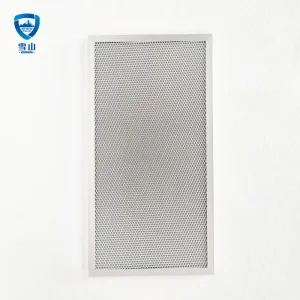
High-Efficiency HVAC & Air Purification Units
Explore our core engineered air filtration modules, customized V-bank frames, and catalytic media configurations manufactured under ISO 9001 and ISO 16890 standards.







Macro Dynamics Driving Custom HEPA & Carbon Filter Sourcing
Understanding shifting B2B procurement benchmarks, indoor air quality (IAQ) compliance, and supply chain strategies for international OEMs.
The global demand for high-efficiency air purification components has evolved from standard off-the-shelf replacements into highly tailored, multi-stage engineered filtration systems. As international regulatory bodies such as the European Union (EN 1822:2019 / ISO 29463) and US Environmental Protection Agency (EPA) enforce stricter indoor particle and chemical emission limits, global B2B buyers—ranging from commercial HVAC system integrators to consumer appliance OEM brands—require custom air purifier HEPA and carbon filter manufacturers capable of delivering verifiable performance, micro-tolerance manufacturing, and transparent supply chain resilience.
Modern air filtration strategy no longer evaluates particulate filtration in isolation. High-performance units require integrated gas-phase adsorption capable of trapping Volatile Organic Compounds (VOCs), formaldehyde, nitrogen dioxide (NO2), and industrial odors without causing excessive pressure drop that overburdens fan motors. Consequently, sourcing executives must evaluate prospective manufacturing partners on their material science capabilities, automated pleating precision, adhesive dispersion uniformity, and rigorous Quality Assurance (QA) protocols.
Deep-Dive Engineering Roadmap: HEPA, Carbon & Composites
Dissecting the physics of particle capture mechanics, pore distribution dynamics, and catalytic substrate development.
True HEPA & ULPA Media Mechanics
Utilizing ultra-fine borosilicate glass microfibers or meltblown polypropylene (ePTFE/electrostatic polymers), our HEPA matrices capture 99.97% to 99.999% of particles down to the Most Penetrating Particle Size (MPPS, typically 0.1–0.3 µm). Mechanics rely on a balanced interplay of Brownian Diffusion, Interception, and Inertial Impaction.
Gas-Phase Activated Carbon Adsorption
Engineered from premium virgin coconut shell carbon with high Iodine Numbers (>1000 mg/g) and CTC (Carbon Tetrachloride) ratings exceeding 60-80%. Micro-porous structure optimized for gaseous contaminants, TVOCs, and offensive odors, available in pelletized, bonded honeycomb, or laminated media formats.
Cold Catalyst & Photocatalytic Layers
Impregnated titanium dioxide (TiO2) and nano-catalysts decompose low-molecular-weight airborne pollutants like Formaldehyde (HCHO), Benzene, and Ammonia into harmless H2O and CO2 at ambient room temperature without thermal energy input or rapid medium saturation.
Advanced Pleating Dynamics & Aerodynamic Optimization
Airflow resistance directly impacts noise levels and power consumption in residential and commercial purifiers. Our manufacturing processes incorporate computer-controlled mini-pleat technology with precise hot-melt bead separation. This maintains uniform pleat spacing, prevents pleat collapse under high static pressure, and optimizes face velocity distribution.
Pleat Depth Customization
Depths from 8mm (ultra-slim purifiers) to 292mm (deep-pleat high-flow HVAC cells).
Low Initial Delta P (ΔP)
Engineered media structures yield 15–25% lower resistance than industry averages.
Edge-Sealing Technologies
Cardboard, injection-molded ABS/PP plastic, extruded aluminum, and EVA foam frames.
Anti-Microbial Coatings
Zinc pyrithione and silane quaternary ammonium treatments prevent bacterial growth.
HEPA & Media Grade Engineering Specifications
Comparative structural matrix detailing efficiency ratings, particle capture thresholds, and primary industrial applications.
| Filter Grade | Efficiency Benchmark | Test Standard | Target Particle Size | Primary Industrial / Commercial Scope |
|---|---|---|---|---|
| Coarse / Pre-Filter (G2–G4) | 60% – 90% Gravimetric Arrestance | EN 779 / ISO 16890 Coarse | > 10 μm (Pollen, Dust, Hair) | HVAC Primary Defense, Dehumidifiers, Air Purifier Stage 1 |
| Medium / Fine (M5–F9) | 40% – 95% Spot Efficiency | EN 779 / ISO 16890 ePM1/ePM2.5 | 1.0 μm – 10 μm (Combustion Smoke) | Commercial AHU, V-Bank Ventilation, Spray Booths |
| Sub-HEPA (E10–E12) | 85% – 99.5% Efficiency | EN 1822:2019 / ISO 29463 | 0.3 μm (Fine Aerosols, Bacteria) | Residential Air Purifiers, Vacuum Cleaners, Automotive Cabin |
| True HEPA (H13–H14) | 99.97% – 99.995% at MPPS | EN 1822:2019 / IEST-RP-CC001.5 | 0.1 – 0.3 μm (Viruses, Combustion Particulates) | Medical Cleanrooms, Bio-Safety Cabinets, Premium Purifiers |
| ULPA (U15–U17) | 99.9995% – 99.999995% at MPPS | EN 1822:2019 / ISO 29463 | 0.1 μm – 0.2 μm (Sub-micron Contaminants) | Semiconductor Fabrication, Microelectronics, Wafer Foundries |
Tailored Solutions for Diverse B2B Market Segments
Deploying specialized filter geometry, flame-retardant media, and customized gaskets across global sectors.
Smart Consumer Electronics & Appliances
Custom cylindrical, barrel, rectangular, and multi-sided replacement filters matching private-label specifications for top global brands (Honeywell, Coway, Blueair, Levoit, GermGuardian compatible lines). Equipped with RFID integration chips and leak-proof foam seals.
Healthcare & Pharmaceutical Cleanrooms
High-integrity H13/H14 HEPA units designed for positive/negative pressure isolation wards, surgical suites, and Bag-In/Bag-Out (BIBO) hazardous containment systems. Polyurethane seamless gasket pourings eliminate perimeter bypass.
Commercial Building HVAC & Data Centers
Low-pressure-drop MERV 8 to MERV 16 pleated filters, V-Bank compact cells, and synthetic pocket bag filters for large-scale Air Handling Units (AHUs). Lowers operational energy costs while safeguarding sensitive server electronics from corrosive gases and dust.
Automotive Cabin & Industrial Paint Booths
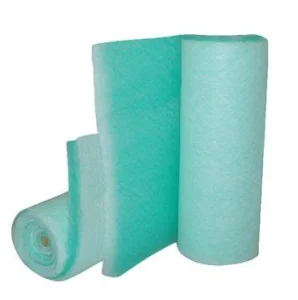
Progressive-density fiberglass paint-stop floor rolls and combined carbon-HEPA auto cabin filters engineered to trap chemical overspray, brake dust, allergens, and exhaust fumes under extreme moisture and temperature fluctuations.
Strict Regulatory Compliance & Factory Testing Standards
Ensuring every filter lot meets stringent international environmental, safety, and operational standards.
A primary bottleneck for global air filter importers is inconsistency in manufacturing quality—specifically frame warping, media pinhole leaks, and adhesive off-gassing. Our manufacturing facilities utilize a comprehensive four-stage quality assurance framework (IQC, IPQC, FQC, OQC) paired with fully automated testing rigs.
DOP / PAO Leak Testing
Every cleanroom HEPA filter undergoes individual scan testing using Dispersed Oil Particulate (DOP) or PolyAlphaOlefin (PAO) aerosols to detect micro-pinholes in the pleat pack and frame seal, ensuring 100% leak-free integrity prior to packaging.
AHAM AC-1 CADR Certification
Custom filters engineered for consumer purifiers are evaluated for Clean Air Delivery Rate (CADR) across Tobacco Smoke, Dust, and Pollen metrics according to AHAM standards, optimizing airflow velocity versus filtration efficiency.
Environmental & Safety Compliance
All filter materials—including hot-melt glues, polyurethane gaskets, carbon media, and plastic housings—fully comply with RoHS 3.0, REACH SVHC, CARB (California Air Resources Board), and UL 900 flammability classifications.
Next-Generation Air Filtration Innovations (2025–2030)
Pioneering advanced nanomaterials, smart dynamic sensing, and sustainable biodegradable filter substrates.
As the global air filtration sector moves toward greater energy efficiency and carbon neutrality, our R&D engineering team is actively advancing three core technological frontiers:
- Electrospun Nanofiber Substrates: Integrating electrospun polymer layers onto standard synthetic media to create ultra-thin, low-resistance filters capable of capturing sub-0.1 micron viral particles purely through mechanical interception without relying heavily on electrostatic charge decay over time.
- Metal-Organic Frameworks (MOFs) & Bio-Based Carbon: Transitioning from conventional carbon granules to engineered MOFs and high-surface-area bio-char materials designed for selective catalytic removal of specific toxic gases such as NO2, SO2, and Formaldehyde with up to 300% higher loading capacity.
- IoT-Enabled "Smart Filter" Architectures: Developing integrated differential pressure transducers and optical sensing strips embedded directly within custom filter frames. This allows real-time filter saturation tracking, predicting accurate replacement lifecycles based on local air pollution intensity rather than static timer intervals.
Specialized Replacement Modules & Media Roll Supplies
Direct factory sourcing options for replacement filter sets, humidifier pads, and industrial filter media rolls.




Frequently Asked Questions (B2B Procurement FAQ)
Addressing engineering specifications, customization parameters, order MOQs, and production lead times.