
Featured VOC Removal & Air Filtration Products
Explore our high-performance replacement filter cartridges, specialized carbon roll media, and custom HEPA solutions engineered for industrial and OEM compliance.

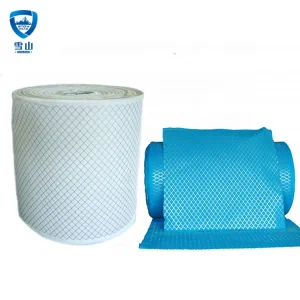
Wholesale Pocket air filter media G4 M5 M6 F7 F8 F9 bag air filter roll media
View Product Details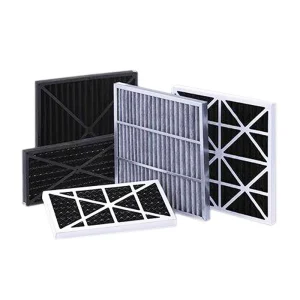
CE Certified Carbon Air Filter Cardboard Frame Wire Mesh for VOC Removal
View Product Details
High Absorbent Non-Woven Humidifier Filter Media Pad - Efficient Cooling
View Product Details
Customized Cylindrical HEPA Dust Filter Collector High Performance
View Product Details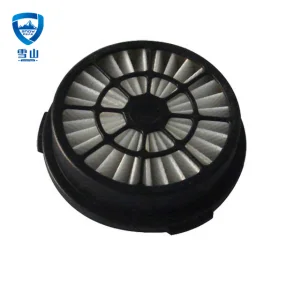
High Efficiency Round HEPA Air Filter for Vacuum Cleaners & Purifiers
View Product Details
Custom Honeywell HPA100 HEPA Replacement Filter (True H13 HRF-AP100)
View Product Details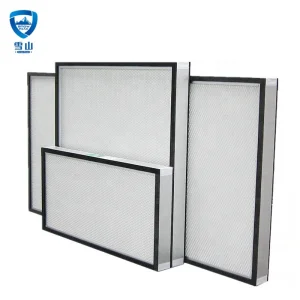
CE Certified Mini-Pleated High Efficiency HEPA Air Filter Customized Size
View Product DetailsIndustrial VOC Mitigation: Technical Whitepaper & Engineering Benchmark
Optimizing Gas-Phase Adsorption Efficiency, Carbon Matrices, and Pressure Dynamics in Enterprise HVAC and OEM Filtration
Volatile Organic Compounds (VOCs)—including benzene, toluene, xylene, formaldehyde, and complex alkanes—represent a critical hazard across modern manufacturing environments, cleanroom installations, and indoor commercial spaces. Unlike particulate pollutants captured via mechanical interception, VOCs exist in the gas phase and require sophisticated molecular adsorption mechanisms. As global air quality mandates tighten under standards such as ISO 16890, EN779, and regional EPA regulations, selecting the right custom carbon filter OEM manufacturer is vital to maintaining operational compliance and health safeguards.
Information Gain Highlight: Conventional carbon filters often suffer from premature saturation, excessive static pressure drops, and structural bypass. Custom carbon filter VOC removal factories now utilize engineered micro-porous carbon impregnated with catalytic additives (such as KOH, KI, or metal oxides) to deliver dual-action physical adsorption and chemical chemisorption.
1000+
Iodine Number (mg/g)
98.5%
Initial VOC Adsorption
<45 Pa
Low Pressure Drop Design
50+
Global Export Markets
Custom carbon manufacturing goes beyond simple charcoal fill. It requires precise control over carbon pore distribution (micropores < 2nm for light VOCs, mesopores 2-50nm for larger organic molecules), bonding media binder ratios, and structural framing. OEM procurement managers must analyze carbon activation levels (measured via Iodine number or CTC - Carbon Tetrachloride capacity) against air volume requirements (CFM) to maximize residence time without overburdening fan energy consumption.
Pore Structure Engineering: Physisorption vs. Chemisorption
Understanding the material science behind custom activated carbon formulations for targeted chemical capture.
Microporous Carbon (Virgin Coconut Shell)
Characterized by pore diameters under 2 nanometers. Highly effective for lightweight, low-molecular-weight VOCs such as benzene, ethanol, and acetone under high residence velocity conditions.
Mesoporous Impregnated Matrices
Pore ranges between 2nm and 50nm optimized for synthetic organic compounds, heavy oil vapors, and complex industrial solvents. Ideal for paint spray booths and chemical process exhausts.
Catalytic Chemisorption Blends
Chemically treated with potassium permanganate ($KMnO_4$), metal catalysts, or alkaline salts to neutralize acidic gases, formaldehyde, hydrogen sulfide ($H_2S$), and ammonia ($NH_3$) via oxidation.
| Filter Media Type | Target Pollutants | Typical CTC Rating | Air Resistance (Pa @ 0.5m/s) | Primary Industrial Application |
|---|---|---|---|---|
| Virgin Granular Activated Carbon (GAC) | Benzene, Toluene, Xylene, Gasoline Fumes | 60% - 80% | 35 - 55 Pa | Commercial HVAC & Return Air Modules |
| Honeycomb Carbon Matrix | High-Volume VOCs, Formaldehyde, Odors | 50% - 70% | 20 - 35 Pa | Fresh Air Systems & Data Center Intake |
| Impregnated Catalytic Carbon | $H_2S$, $SO_2$, $NO_x$, Formaldehyde | 55% - 75% | 40 - 65 Pa | Chemical Laboratories & Cleanrooms |
| Synthetic Carbon Non-Woven Composite | Light VOCs, Micro-Particles (Dual Action) | 40% - 60% | 15 - 30 Pa | Automotive Cabin & OEM Air Purifiers |
China OEM/ODM Supply Chain Ecosystem: Cost, Scale & Speed
Leveraging Shenzhen’s Advanced Manufacturing Infrastructure for Global Bulk Air Filter Sourcing
When sourcing custom carbon VOC filters at enterprise scale, procurement leaders encounter significant trade-offs between raw material customization, lead times, and unit cost efficiency. China’s filtration manufacturing ecosystem—centered in technological hubs like Shenzhen—offers unparalleled integration across the entire production chain. From raw coconut shell activation and meltblown synthesis to automated pleating and injection frame molding, Chinese factories eliminate middleman markups while enforcing international ISO quality standards.
1. Vertical Material Integration
Direct sourcing of high-grade raw carbon, non-woven backing substrates, and extruded frame materials enables rapid modification of carbon basis weight ($g/m^2$) to meet client-specific VOC capture targets.
2. Rapid OEM/ODM Prototyping
In-house CNC mold production and automated mini-pleat line reconfiguration allow sample delivery in as little as 3 to 7 days, cutting time-to-market for replacement filter brands.
3. Stringent Quality Control (IQC to OQC)
Every production batch undergoes strict four-stage verification: Incoming Quality Control on carbon CTC values, In-Process QC on seal integrity, Finished QC for pressure drop, and Outgoing QC for packaging protection.
Global Compliance & Environmental Standards Assurance
Ensuring your imported filtration media meets European, North American, and Asian environmental directives.
Cross-border procurement requires strict adherence to international environmental compliance. Custom carbon filter manufacturers must guarantee that carbon binding agents and synthetic frames do not off-gas secondary chemical pollutants. Our production facilities maintain rigorous compliance frameworks to support seamless customs clearance and environmental auditing:
REACH Compliance
Zero Registration, Evaluation, Authorization and Restriction of Chemicals violations; chemical binders are free of SVHCs (Substances of Very High Concern).
RoHS Certification
Strict prohibition of lead, cadmium, mercury, and hexavalent chromium in plastic frames, wire meshes, and synthetic media layers.
ISO 16890 / EN779
Standardized particle filtration efficiency classifications verified alongside gas-phase removal efficacy testing.
UL 900 Fire Retardancy
Fire-retardant structural treatments on synthetic filter rolls and cardboard frames to prevent combustion in high-temperature HVAC loops.
Localized Application Scenarios & Engineering Implementations
Tailored carbon filtration architectures designed for specialized industrial, commercial, and OEM demands.
Semiconductor Cleanrooms
Airborne Molecular Contamination (AMC) control requires specialized chemical filters to eliminate trace siloxanes, acid vapors, and organic vapors that damage silicon wafer fabrication.
Automotive Spray Paint Booths
High-volume solvent concentrations (toluene, ethylbenzene, xylene) demand multi-stage pre-filtration combined with heavy-bed carbon banks to meet local environmental exhaust limits.
Pharmaceutical Processing
Sterile processing plants deploy dual-function carbon-HEPA combinations to prevent cross-contamination of active pharmaceutical ingredients (APIs) and adsorb process odors.
Commercial HVAC Systems
Office towers, airport terminals, and shopping centers install low-resistance pleated carbon panels into Air Handling Units (AHUs) to improve indoor air quality (IAQ) for LEED credits.
OEM Aftermarket Air Purifiers
Custom compatible replacement filters engineered with exact dimensional tolerances for brands like Honeywell, Blueair, Coway, and Levoit, matching original CADR metrics.
Industrial Gas Exhaust & Scrubbers
Heavy-duty cylindrical and V-bank carbon collectors designed for extreme chemical loads, thermal stability, and continuous 24/7 operation.
Future Industry Trends: The Next Generation of Chemical Filtration (2025-2030)
Key innovations driving performance enhancements and sustainability in custom carbon media manufacturing.
The global air purification market is shifting rapidly from passive particulate trapping toward intelligent chemical neutralization. Five core technology vectors are shaping the future of custom carbon filter manufacturing:
- Nanoporous Synthetic Carbon Matrices: Moving beyond traditional coconut charcoal to engineered carbon spheres that double surface area density ($m^2/g$) while reducing filter weight by 35%.
- Self-Regenerating & Photocatalytic Composites: Integration of titanium dioxide ($TiO_2$) and nano-catalysts that leverage UV light exposure to continuously break down trapped VOC molecules, dramatically extending service life.
- IoT-Linked VOC Saturation Sensing: Smart filter frames equipped with embedded RFID tags and micro-gas sensors that communicate real-time carbon saturation levels to building management systems (BMS).
- Circular Economy Carbon Recycling: Factory-level thermal reactivation programs that allow spent industrial carbon filter beds to be safely desorbed and reused, lowering carbon footprints.
- Low-Bypass Zero-VOC Sealants: Introduction of polyurethane gaskets and cold-melt adhesives that release zero VOC off-gassing during high-temperature operation.
Complete OEM Filtration & Media Catalog
Browse our extended product lines, including meltblown rolls, V-bank HEPA systems, and compatible replacement filters for global distributors.
Wholesale Honeywell HRF-AP100 True H13 HEPA Replacement Filter for HPA100
View Product Details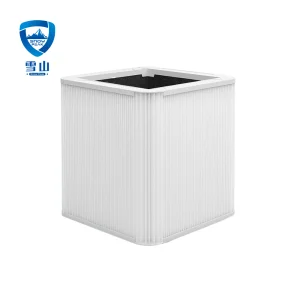
Foldable Activated Carbon & H13 HEPA Filter for Blueair Blue Pure 211+
View Product Details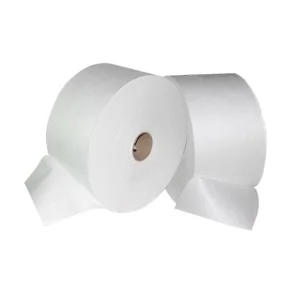
CE Certified High Efficiency Low Resistance Meltblown MB Fabric Media
View Product Details
OEM HEPA Filter Mini-Pleated for VOC Removal High-Efficiency Carbon Fabric
View Product Details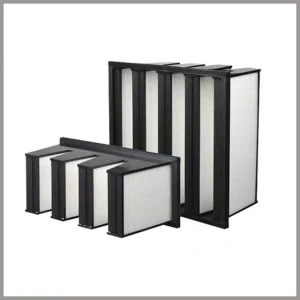
High Efficiency HEPA Filter V-Shape Plastic Frame for Commercial HVAC
View Product Details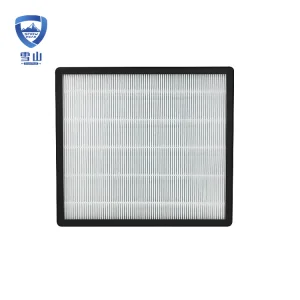
ODM Customized High Efficiency HEPA Filter for Air Purifiers & Vacuums
View Product Details
CE Certified G4 M5 Pre Medium Efficiency Air Filter Cotton for Painting Room
View Product Details
Industrial Pre G3 G4 Cardboard Metal Frame Pleated Panel Air Filter
View Product DetailsFrequently Asked Questions: Technical Engineering & Procurement Guide
Addressing critical technical, manufacturing, and sourcing inquiries for industrial buyers.
How do custom carbon filters remove Volatile Organic Compounds (VOCs) compared to standard HEPA filters?
HEPA filters operate mechanically to capture solid suspended particles (such as PM2.5, dust, and pollen) through interception, impaction, and diffusion. However, VOCs exist as gaseous molecules smaller than 0.001 microns, which pass straight through mechanical HEPA fibers. Custom carbon filters utilize physical adsorption (physisorption) inside a vast network of sub-nanometer carbon pores, held together by van der Waals forces. When chemically impregnated, carbon media also undergoes chemisorption, neutralizing gaseous VOCs into stable chemical compounds.
What key specifications should procurement managers evaluate when sourcing custom carbon filters?
Engineers and buyers should examine five vital metrics: (1) Carbon Activity Level: Carbon Tetrachloride (CTC) capacity (50%-80%) or Iodine Number (>1000 mg/g); (2) Carbon Loading Weight: Measured in $g/m^2$, determining total gas retention capacity; (3) Initial Static Pressure Drop: Measured in Pascals at specified face velocity to ensure HVAC fan compatibility; (4) Structural Framing & Bypass Sealing: Frame rigidity (aluminum, galvanized steel, plastic, or water-resistant cardboard) paired with continuous closed-cell foam gaskets; (5) Desorption Resistance: Ensuring spent carbon does not re-release VOCs when ambient temperature or humidity shifts.
Can custom carbon filters be designed to remove specific target chemicals like formaldehyde or hydrogen sulfide?
Yes. Virgin activated carbon has limited physical adsorption for very light gases such as formaldehyde ($CH_2O$), ammonia ($NH_3$), and hydrogen sulfide ($H_2S$). Factories solve this by impregnating virgin carbon with specialized chemical reagents. For example, potassium hydroxide (KOH) impregnation targets acidic gases ($H_2S, SO_2$), while phosphoric acid ($H_3PO_4$) targets alkaline gases like ammonia. Tailored metal oxide coatings oxidatively degrade formaldehyde into harmless water vapor and carbon dioxide.
What OEM/ODM customization options are available for air purifier brand replacement filters?
As a direct manufacturer, we offer end-to-end OEM customization: exact outer dimensions (length, width, depth, radius), custom pleat count and pleat height, custom carbon layer configuration (honeycomb carbon, carbon-coated non-woven, or carbon granule filling), custom frame materials (ABS injection, extruded plastic, cardboard, aluminum), pull-tab positioning, custom edge seals, private label brand printing, and individual retail box packaging compliant with Amazon/e-commerce drop-test requirements.
How does factory direct sourcing from China improve procurement cost efficiency and supply chain security?
Sourcing directly from integrated Chinese factories eliminates distributor markups and grants buyers direct engineering control over material specs. China’s centralized filtration supply chains provide raw carbon, non-woven media, meltblown fabrics, and tooling facilities within localized industrial clusters. This proximity reduces raw material transport times, lowers production costs by 20%-40% compared to Western assembly plants, and guarantees predictable production schedules with container-level shipping access via major maritime hubs like Shenzhen and Guangzhou.
What is the typical operational lifespan of a VOC carbon filter, and when should it be replaced?
Filter lifespan depends on ambient VOC concentrations, operating hours, and total carbon weight. In standard commercial HVAC installations, custom carbon panel filters typically last 6 to 12 months. In heavy industrial environments (such as spray booths or chemical labs), carbon beds may require replacement every 3 to 6 months. Key replacement indicators include: breakthrough of characteristic odors, measurable pressure drop spikes across the filter bank, or reaching maximum calculated adsorption weight gain during routine maintenance audits.