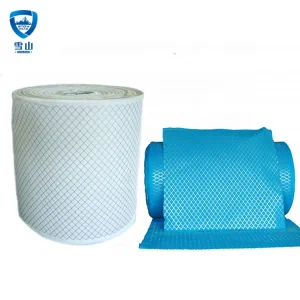
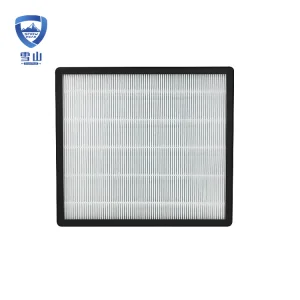
Featured Industrial & Commercial Filter Lineup
Explore high-performance charcoal-impregnated substrates, primary mesh filters, and high-temperature HEPA matrices tailored for commercial HVAC, industrial VOC control, and OEM purification systems.

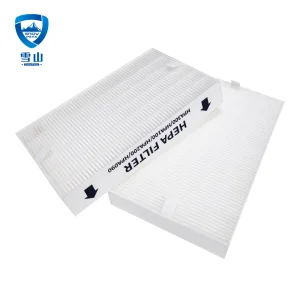
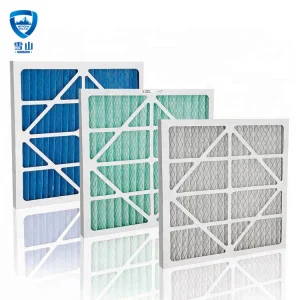



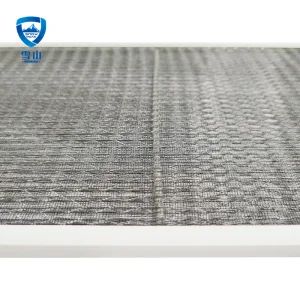
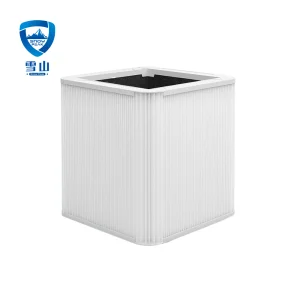
1. Science & Engineering of Charcoal Air Filter Materials
A comprehensive analysis of physical physisorption, pore size distribution, catalytic impregnation, and dynamic pressure differential optimization in modern gas-phase filtration.
Pore Architecture & Surface Area
Activated charcoal relies on micro-pore (<2nm), meso-pore (2-50nm), and macro-pore (>50nm) networks. High-grade coconut shell activated carbon provides BET specific surface areas exceeding 1,000 to 1,400 m²/g, maximizing van der Waals attraction forces for low-molecular-weight Volatile Organic Compounds (VOCs).
Chemisorption & Catalytic Impregnation
Standard physical adsorption fails against polar or light gaseous contaminants like Hydrogen Sulfide (H₂S), Ammonia (NH₃), and Formaldehyde (CH₂O). Chemical impregnation using Potassium Permanganate (KMnO₄), Potassium Hydroxide (KOH), or Phosphoric Acid chemically converts toxic gases into stable non-volatile salts inside the carbon pore matrix.
Substrate Bonding & Low ΔP Geometry
Modern carbon substrates utilize non-woven synthetic fibers, polyurethane open-cell foams, or expanded wire mesh backing. Advanced hot-melt adhesive distribution ensures high Carbon CTC (Carbon Tetrachloride) adsorption values (ranging from 45% to 90%) while retaining ultra-low airflow resistance (Initial ΔP < 25 Pa at 1.0 m/s face velocity).
| Charcoal Substrate Type | Carbon Loading Density (g/m²) | Primary Target Contaminants | Airflow Resistance (ΔP) | Ideal Application Scenario |
|---|---|---|---|---|
| Non-Woven Carbon Impregnated Media | 150 - 450 g/m² | Toluene, Benzene, General Odors, Pet Dander | Low (15 - 35 Pa) | Residential Air Purifiers & HVAC Pre-filters |
| Reticulated Polyurethane Carbon Foam | 200 - 600 g/m² | Coarse Dust, Moderate VOCs, Cooking Smoke | Ultra-Low (10 - 25 Pa) | Automotive Cabin Filters & Electronics Enclosures |
| Honeycomb Carbon Granule Board | 800 - 1800 g/m² | Formaldehyde, Industrial Acid Gases, H₂S, NH₃ | Medium (40 - 80 Pa) | Heavy-Duty Commercial Scrubber & Cleanrooms |
| Mini-Pleated Carbon Composite Media | 300 - 700 g/m² | Sub-micron Particulate (PM2.5) + Organic Vapors | Medium-Low (30 - 50 Pa) | Dual-Action Medical & Semiconductor Air Handlers |
2. Global Enterprise Procurement Criteria & China Manufacturing Superiority
Why Tier-1 HVAC OEMs and global filtration distributors partner with China's top-tier technical non-woven and activated carbon manufacturers.
China's Vertical Supply Chain Integration
China hosts the world's most concentrated ecosystem for raw coconut shell procurement, anthracite carbon thermal activation kilns, synthetic fiber needle-punching, meltblown spinning, and automated filter assembly. By maintaining vertical control from raw carbon granules to final custom-die-cut media rolls, Chinese suppliers eliminate intermediary markups, delivering up to 30-40% Cost-of-Goods Savings compared to European or North American converters.
Total Cost of Ownership (TCO) & Reliability
Procurement directors must look beyond initial FOB per-meter costs. Key evaluation criteria include dust holding capacity (DHC), gas adsorption breakthrough curves, dust-shedding resistance, and shipping volume density. Advanced roll-compression technology and automated mini-pleating lines dramatically lower container shipping footprint while eliminating particulate outgassing during high-velocity HVAC operations.
Information Gain Insight for B2B Procurement: When specifying custom charcoal air filter material, always request standardized ISO 10121-2 testing (for gas-phase air cleaning equipment) alongside conventional ISO 16890 / ASHRAE 52.2 particulate reports. Dynamic single-pass efficiency curves for Toluene and Ozone provide true operational lifecycle metrics that static CTC numbers cannot capture.
3. Global Compliance, Fire Safety & Environmental Certification Standards
Navigating rigorous international frameworks for chemical safety, fire retardancy, and cleanroom outgassing.
REACH & RoHS Chemical Safety
Full compliance with European Union REACH Regulations (EC 1907/2006) regarding Substances of Very High Concern (SVHC). All carbon media binders and hot-melt laminates are certified free of heavy metals, polybrominated biphenyls (PBBs), and volatile phthalates, guaranteeing safe residential and hospital deployment.
UL 900 & DIN 53438 Flammability
Safety regulations for building codes require HVAC materials to prevent flame propagation. Custom charcoal filter matrices undergo flame-retardant chemical dipping or utilize naturally self-extinguishing modacrylic/glass carrier webs to achieve UL Class 1 / Class 2 ratings and DIN 53438 F1/K1 compliance.
ISO 16890 & ASHRAE 52.2 Test Norms
Our custom media options are rigorously benchmarked under ISO 16890 (ePM1, ePM2.5, ePM10 classifications) and ASHRAE 52.2 (MERV 8 to MERV 16 equivalents). This ensures seamless integration into engineering submittals for green building accreditations such as LEED v4 and WELL Building Standards.
4. Industrial & Commercial Application Architecture
Custom charcoal air filter media designed specifically for demanding operating environments across key industry sectors.
Commercial Buildings & Hospital IAQ
High-occupancy facilities require multi-stage air handling unit (AHU) protection. Custom carbon roll media serves as an effective secondary stage, removing city smog, diesel exhaust emissions (NOx, SOx), and office equipment ozone before air enters final HEPA filters.
Industrial VOC Abatement & Paint Spray Booths
Manufacturing facilities, automotive paint lines, and solvent extraction plants release high concentrations of toluene, xylene, and ketones. Heavy-duty activated carbon pleat matrices provide robust gas retention, protecting exhaust stacks and compliant with municipal EPA emission thresholds.
Semiconductor Cleanrooms & AMC Mitigation
Airborne Molecular Contamination (AMC) can destroy photolithography yields. Specialized acid-, base-, and organic-impregnated media scrub siloxanes, organophosphates, and corrosive vapors down to parts-per-billion (ppb) levels in cleanroom recirculating systems.
OEM Residential Purifier & Aftermarket Refills
Custom dimensions, color-coded backing meshes, and private-label edge-banding allow global air purifier brands to supply exact-fit replacement carbon cartridges (compatible with Honeywell, Blueair, Coway, Levoit, and more) with zero bypass leakages.
5. Next-Generation Carbon Filter Technology Trends
Key technological breakthroughs shaping the future of gas-phase adsorption and indoor air purification.
Nanofiber-Carbon Hybrids
Electrospun nanofiber webs laminated directly onto activated carbon layers create a dual-action media capable of capturing 0.3-micron sub-micron viruses (HEPA grade) while maintaining peak volatile organic gas adsorption in a single ultra-thin composite layer.
Room-Temperature Cold Catalytic Carbon
Traditional carbon acts purely as a sponge that can saturate and re-emit odors under high humidity. Emerging cold-catalyst nano-coatings continuously decompose adsorbed formaldehyde into water (H₂O) and carbon dioxide (CO₂) at ambient temperatures, extending media service life up to 300%.
Low-Resistance Gradient Micro-Pellets
Replacing traditional irregular carbon powders with spherical micro-pellets fixed in a structured honeycomb framework drastically decreases air turbulence. This innovation allows HVAC fans to run at lower RPMs, directly reducing energy consumption in green buildings.
6. Frequently Asked Questions (FAQ) for Sourcing Managers
In-depth technical answers addressing common design, manufacturing, and procurement inquiries.
How do I choose between activated carbon non-woven media vs. reticulated carbon foam vs. carbon honeycomb?
The selection depends primarily on pressure drop constraints and target contaminant volume. Non-woven media is best for thin, pleated filters requiring dual dust/odor removal. Reticulated foam offers maximum airflow with low resistance, ideal for pre-filters and high-velocity vents. Carbon honeycomb boards carry the highest carbon density per square meter, making them superior for heavy chemical, formaldehyde, and industrial gas abatement.
What custom parameters can your factory tailor for OEM custom charcoal filter orders?
We customize media roll widths (10mm to 2000mm), overall basis weight (GSM), carbon loading density (g/m²), iodine adsorption value (600 - 1200 mg/g), substrate stiffness, flame retardancy (UL 900), frame materials (cardboard, plastic, aluminum, stainless steel), and private-label retail packaging.
How does your factory prevent carbon powder shedding and outgassing in high-vibration systems?
We utilize a proprietary dual-sided thermal bonding composite technique. Carbon granules are embedded within a non-woven matrix and sealed with ultrathin synthetic cover layers. This zero-shedding architecture ensures no carbon dust escapes into downstream cleanrooms or indoor environments.
What is the typical production lead time and Minimum Order Quantity (MOQ) for custom rolls or finished filters?
Standard trial order samples are dispatched within 3 to 5 business days. Mass production lead times range from 12 to 20 days depending on raw material customization. MOQs are flexible: standard carbon media rolls start at 1,000 square meters, while finished OEM filter assemblies start at 500 units.
Complete OEM Charcoal Filtration Media & Cartridges
Explore raw filter media rolls, wire-mesh laminated synthetic substrates, and high-efficiency replacement elements engineered for global distribution.