

Featured Product Line
High-Performance Air & Gas Filtration Products
Explore our precision-engineered air filtration units, pre-filter roll media, and high-efficiency particulate and activated carbon replacement systems.

Wholesale Customized Gel Seal HEPA Filter Mini Pleated Compact Liquid Tank for Clean Room
View Specifications
Mini-Pleated Carbon Fabric for Efficient VOC Removal & PM2.5 Filtration System
View Specifications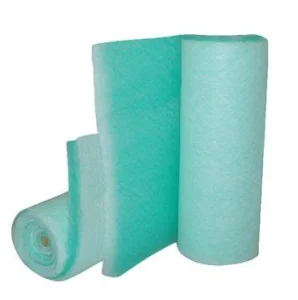
G2 G3 G4 Pre Fiberglass Media Paint Stop Floor Air Filter Roll for Spray Booth Filtration
View Specifications
China Coway AP-1512HH Replacement HEPA Filter: H13 MERV13 + Activated Carbon
View Specifications
China Honeywell HRF-AP100 True H13 HEPA Replacement Filter for HPA100 Series
View Specifications
CE Certified G4 M5 Pre Medium Efficiency Air Filter Cotton for Painting Room 600G
View Specifications
CE Certification High Efficiency HEPA Air Filter Mini-Pleated Customized Size
View Specifications
Technical Whitepaper Focus
1. Fundamental Adsorption Mechanics & Gas-Phase Purification Science
A comprehensive analysis of carbon surface chemistry, pore structure physics, and dynamic breakthrough dynamics in ventilation systems.
Physical Adsorption (Physisorption) vs. Chemisorption
Industrial charcoal filtration operates primarily through van der Waals forces (Physisorption) within an extensive internal pore network. High-grade coconut shell activated carbon provides surface area metrics ranging from 1,000 to 1,400 m²/g. When dealing with highly volatile, low-molecular-weight compounds (such as formaldehyde, hydrogen sulfide, ammonia, or acid gases), physical adsorption reaches equilibrium too rapidly. In these situations, chemical impregnation (Chemisorption) is employed. Media is treated with potassium hydroxide (KOH) for acid gas neutralization, potassium permanganate (KMnO₄) for organic oxidation, or phosphoric acid (H₃PO₄) for targeted ammonia capture.
Pore Volume Distribution & Carbon Tetrachloride (CTC) Metrics
The operational longevity of a custom charcoal filter ventilation system depends heavily on pore size distribution. Micropores (< 2 nm) capture small gaseous molecules; Mesopores (2 - 50 nm) facilitate transport and adsorb medium-sized organic vapors; Macropores (> 50 nm) act as structural conduits. The carbon quality standard is governed by Carbon Tetrachloride (CTC) activity testing (ASTM D3467). Standard commercial media yields 50–60% CTC, whereas our high-density virgin coconut shell matrices reach 80% to 105% CTC, providing maximum Volatile Organic Compound (VOC) loading capacity per cubic foot.
Engineering Equation: Dynamic Residence & Breakthrough Time Calculation
To prevent premature breakthrough (where effluent concentration $C_{out}$ exceeds allowable threshold limits $C_{lim}$), ventilation engineers must balance face velocity ($V_f$) and bed contact time ($\tau$).
Residence Time ($\tau$) = Bed Depth ($D$) / Face Velocity ($V_f$) | Target: $\tau \ge 0.1\text{ s}$ (HVAC) to $0.5\text{ s}$ (Industrial Heavy Scrubber)
Operating above a face velocity of 2.5 m/s (500 fpm) without increasing bed thickness severely decreases contact duration, leading to fluidization, bypass, and rapid capacity decline.
| Adsorbent Media Grade | Base Raw Material | CTC Value (%) | BET Surface Area | Target Pollutant Spectrum | Recommended Air Velocity |
|---|---|---|---|---|---|
| Virgin Coconut Shell | Agricultural Husk | 60% – 105% | 1,150 – 1,400 m²/g | High VOCs, Odors, Light Solvents | 0.125 – 1.5 m/s |
| KOH-Impregnated Catalytic | Extruded Coal / Carbon | 55% – 75% | 950 – 1,100 m²/g | H₂S, SO₂, Acidic Mercaptans | 0.10 – 0.75 m/s |
| H₃PO₄-Impregnated Acidic | Coal-Based Pellet | 50% – 70% | 900 – 1,050 m²/g | NH₃ (Ammonia), Basic Amines | 0.10 – 0.75 m/s |
| Synthetic Spherical Carbon | Polymer Resin Core | 90% – 120% | 1,300 – 1,600 m²/g | Ultra-Clean Semiconductor AMC | 0.50 – 2.5 m/s |
System Architecture
2. Custom Carbon Ventilation System Configurations
Engineered hardware designs optimized for low pressure drop, zero air bypass, structural longevity, and easy maintenance.
V-Bank & Compact Carbon Modules
Designed for high airflow commercial HVAC systems. Multiple mini-pleated media panels or packed carbon beds configured in a 'V' geometry offer up to 4000 CFM per bank while minimizing initial pressure drop ($\Delta P \le 120\text{ Pa}$).
- High airflow capacity per footprint
- Available in MERV 13 - MERV 16 hybrid combinations
- Lightweight extruded ABS or stainless frames
Heavy-Duty Cylindrical Canister Trays
Modular stainless steel or galvanized steel cartridges filled with virgin pelletized carbon. Ideal for heavy industrial exhausts, municipal lift stations, and laboratory fume containment where extended residence times are required.
- Refillable, zero-waste shell architecture
- Bespoke bayonet mounting plates for fast swap-outs
- Vibration-proof internal compaction springs
Honeycomb Structural Carbon Monoliths
Extruded honeycomb matrices featuring integrated activated carbon powder. Delivers exceptionally low pressure drop at elevated air speeds ($V_f > 2.0\text{ m/s}$), removing dust shed risks in cleanroom or electronics manufacturing settings.
- Zero carbon particulate shedding
- Ultra-low airflow resistance ($\Delta P < 40\text{ Pa}$)
- Custom depth profiles from 25mm to 150mm
Global Industry Ecosystem
3. Commercial & Industrial Market Demand Analysis
Understanding environmental compliance standards and airborne contaminant management requirements across global markets.
Semiconductor Cleanrooms & Airborne Molecular Contaminants (AMC)
Modern semiconductor fabrication plants operating at sub-3nm nodes require cleanrooms classified down to ISO Class 1. Gaseous contaminants such as volatile organics, organosilicates, and acid gases cause wafer fogging and optics degradation. Custom charcoal filter arrays engineered to ISO 14644-8 specifications prevent microscopic defects, preserving production yields.
Commercial Kitchen Ventilation & Restaurant Odor Control
Densely populated urban centers strictly regulate commercial kitchen emissions. Standard particulate filters cannot capture vaporized grease compounds or cooking odors. Multi-stage filtration systems—combining grease baffles, electrostatic precipitators (ESP), and high-mass custom activated carbon beds—ensure compliance with strict local environmental standards.
Wastewater Treatment & Biogas Scrubbing
Municipal wastewater lift stations, sludge processing bays, and anaerobic digestion plants generate high levels of corrosive Hydrogen Sulfide (H₂S) and organic mercaptans. System failures risk community complaints and severe corrosion of electronics. Custom engineered catalytic chemical-impregnated charcoal scrubbers deliver continuous >99% hydrogen sulfide removal rates.
Data Centers & Control Room ISA 71.04 Corrosion Protection
Severe server rack failures in industrial regions often result from atmospheric sulfur and chlorine species corroding silver and copper circuit boards. Ventilation systems equipped with gas-phase chemical filtration scrub ambient intake air to maintain ISA-71.04 Severity Level G1 (Mild environment, copper reactivity < 300 Å/month).
Localized Implementation
4. Regional Application Scenarios & Engineering Adaptation
Tailoring environmental parameters, chemical media blends, and regulatory compliance standards for key geographic markets worldwide.
North America: EPA Title V & ASHRAE 62.1 Compliance
In North America, commercial building design relies heavily on the ASHRAE 62.1 Indoor Air Quality Procedure (IAQP). By integrating high-efficiency gas-phase carbon scrubbers into recirculating HVAC systems, facility managers can safely reduce outside air intake volumes. This significantly cuts chiller and boiler energy loads while remaining fully compliant with EPA VOC ambient air standards.
Europe: EN 16798-3 Standards & ATEX Explosion Safety
European installations adhere strictly to EN 16798-3 air handling performance requirements (SUP 1 to SUP 5 supply air quality). Systems deployed in volatile chemical manufacturing environments must also meet ATEX Directive 2014/34/EU. Custom filter housings utilize grounding wire clips, anti-static carbon media formulations, and spark-proof stainless steel frames to avoid static discharge risks.
Asia-Pacific: Tropical High-Humidity & Odor Management
Operating gas-phase carbon filters in high humidity zones (Southeast Asia, Southern China, coastal India) introduces a specific challenge: water vapor competes with VOCs for adsorption sites when relative humidity exceeds 60% RH. We utilize hydrophobic virgin coconut charcoal blends paired with integrated condensation reheaters to maintain gas adsorption performance in humid tropical environments.
Middle East: Sandstorm Resistance & Desalination Plant Protection
Industrial operations across GCC countries face heavy ambient dust loads combined with corrosive marine and oil refinery gas emissions. Custom systems feature heavy-duty pre-filter stages (G4/M5 wire-backed synthetic media rolls) protecting secondary deep-bed catalytic carbon scrubbers, preventing dust blinding and ensuring continuous operation in high-ambient-temperature environments.
R&D Horizons
5. Technical Roadmap & Next-Generation Gas-Phase Innovations
Strategic development priorities spanning 2025 to 2035: Smart monitoring, advanced MOF sorbents, and circular economy practices.
IoT-Enabled Smart Filter Beds & Real-Time VOC Sensing
Future ventilation systems integrate embedded optical sensor arrays, differential pressure transducers, and micro-Photoionization Detectors (PID). These systems transmit live pollutant breakthrough metrics directly to building management systems (BMS), switching from fixed maintenance schedules to dynamic predictive replacement.
MOF Hybrid Adsorbents & Synthetic Graphene Media
Integrating Metal-Organic Frameworks (MOFs) with high-density activated carbon bases creates tailored pore architectures with internal surface areas exceeding 3,000 m²/g. This hybrid technology enables high adsorption rates for target compounds like carbon dioxide, ethylene, and low-boiling-point VOCs.
Closed-Loop Circularity & Thermal Reactivation Cycles
To support global carbon reduction goals, we are expanding closed-loop carbon stewardship programs. Used carbon beds are returned for thermal reactivation at 900°C in oxygen-controlled rotary kilns, burning off adsorbed organics and restoring 90–95% of original CTC adsorption capacity.
Supply Chain Competence
6. Chinese Factory Ecosystem & Manufacturing Resilience
Leveraging Shenzhen's advanced industrial cluster to provide rapid customization, rigorous quality control, and competitive direct procurement prices.
Vertical Integration from Raw Media to Complete System
Our Longhua, Shenzhen facility features vertically integrated production capabilities: raw meltblown synthetic spinning, automated activated carbon impregnation, ultrasonic fabric lamination, CNC sheet metal fabrication, and automated polyurethane gasket dispensing. Eliminating third-party media processing keeps quality consistent and minimizes lead times.
Four-Stage Quality Control Protocol (IQC -> IPQC -> FQC -> OQC)
Every manufacturing run undergoes strict multi-stage inspection. Raw carbon lots are checked for CTC activity, moisture content, and dust fines (IQC). Pleat depth and channel spacing are monitored during assembly (IPQC). Finished modules undergo zero-bypass seal checks and pressure drop testing (FQC) before final export packaging (OQC).
Rapid OEM Customization & Agile Prototype Turnaround
Standard OEM sampling is completed within 3 to 5 business days. Utilizing modular die tooling, 3D prototype modeling, and flexible CNC metal forming lines, we accommodate specialized dimensions, custom mounting flanges, and private-label packaging without requiring extended lead times.
Strategic Export Logistics Proximity
Located near Shenzhen's major international port terminals (Yantian and Shekou), our facilities streamline container loading and export documentation (Form E, Certificate of Origin, SDS, REACH/RoHS certificates), reducing ocean shipping prep time for global shipments.
Compliance & Assurance
7. Global Testing Certification & Local Technical Support
Comprehensive regulatory compliance documentation, performance testing metrics, and dedicated technical support for global procurement teams.
Testing Standards & Verification
Our products are fully validated by third-party laboratories according to international standards:
- ISO 10121-1/2: Performance testing for gas-phase air cleaning media and devices
- ASTM D3467: Carbon Tetrachloride (CTC) adsorption capacity testing
- ASHRAE 145.2: Laboratory testing of gas-phase air cleaning systems
- UL 900 & ISO 16890: Standard flammability ratings and coarse/pm1 particle efficiency
Full Regulatory Documentation
We provide complete regulatory verification documentation for commercial import clearance and municipal tenders:
- EU REACH SVHC compliance certification
- RoHS Directive material analysis declarations
- Comprehensive Safety Data Sheets (SDS) for chemical adsorbents
- CE Declarations of Conformity for active ventilation modules
Field Application Engineering
Our dedicated engineering support team assists throughout the system lifecycle:
- Dynamic breakthrough calculation & service life modeling
- Airflow resistance ($\Delta P$) and fan static pressure optimization
- On-site carbon media sampling and residual lifetime analysis
- Custom retrofits for obsolete HVAC filter frames
Complete Catalog Portfolio
Commercial HVAC, Bag Filters & Specialized Media
Explore our complete range of industrial pocket filters, honeycomb carbon inserts, deep-pleated cleanroom elements, and synthetic roll media.

Wholesale G4, M5, M6, F7, F8, F9 Pocket Air Filters for Central Air Conditioning Units
View Specifications
ODM Honeycomb Activated Carbon Filter for High-Efficiency Odor and Gas Removal
View Specifications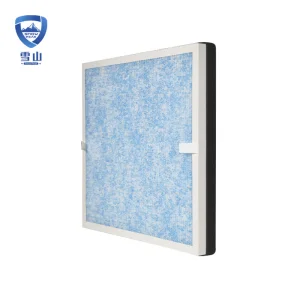
OEM Compound HEPA Filter Replacement for Air Purifier & Vacuum Cleaner (99.97%)
View Specifications
China High Efficiency Fiberglass Deep-Pleat HEPA Filter for Clean Room Applications
View Specifications
OEM Honeycomb Activated Carbon Filter for Harmful Gas & Industrial Odor Removal
View Specifications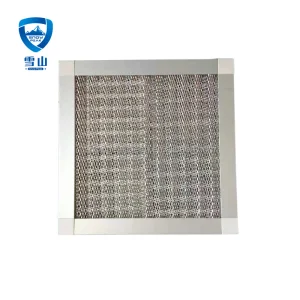
Wholesale Metal Washable Metallic Mesh Primary Stainless Steel Industrial Air Filter
View Specifications
High-Quality Mini-Pleated HEPA Filter with Activated Carbon for VOC & PM2.5 Removal
View Specifications
China Pocket Air Filter Media G4 M5 M6 F7 F8 F9 High-Quality Bag Filter Roll Media
View Specifications
Technical Knowledge Base
Frequently Asked Questions (FAQ)
In-depth engineering insights regarding activated charcoal filter selection, system design parameters, replacement cycles, and chemical impregnation options.
What is the key difference between physical adsorption and chemical impregnation (chemisorption) in custom charcoal filters?
Physical adsorption relies on van der Waals forces to trap non-polar organic vapors (such as toluene, benzene, and general solvent vapors) inside the micropores of virgin activated carbon. However, light, polar, or reactive gases (such as hydrogen sulfide, formaldehyde, ammonia, and sulfur dioxide) are not retained effectively by physical adsorption alone. Chemical impregnation involves uniformly depositing specialized chemical reagents (such as KOH, KMnO₄, H₃PO₄, or KI) onto the internal pore surfaces of the carbon. These chemicals react with target gas molecules via chemisorption, converting toxic or odorous gases into non-volatile stable salts or inert compounds within the carbon matrix.
How do you calculate the required residence time for a charcoal filter ventilation system?
Residence time ($\tau$) represents the duration air stays in contact with the activated carbon bed. It is calculated as:
Residence Time ($\tau$, seconds) = Carbon Bed Volume ($m^3$) / Volumetric Air Flow Rate ($m^3/s$)
For standard commercial HVAC odor control, a residence time of 0.05 to 0.1 seconds is typically sufficient. For heavy industrial VOC treatment, chemical processing exhausts, or municipal wastewater lift stations, residence times between 0.2 and 0.5+ seconds are required to prevent premature breakthrough.
Why is pre-filtration mandatory upstream of a custom activated carbon ventilation bed?
Activated carbon functions as a molecular gas adsorbent. If airborne particulates, dust, or oil mists enter the carbon bed, they quickly blind the microscopic entrance pores (< 2 nm), blocking access to the internal surface area and drastically shortening the filter's service life. Installing pre-filters rated at G4, M5, or F7 (ISO 16890 Coarse 65% to ePM1 55%) upstream captures airborne particulates and aerosolized droplets, preserving the full capacity of the activated carbon for gas-phase molecular adsorption.
How does ambient relative humidity (RH) impact charcoal filter performance?
High relative humidity can significantly reduce physical adsorption efficiency. When relative humidity exceeds 60% RH, water molecules compete directly with organic VOCs for adsorption sites within the carbon's micropores. At 80%+ RH, capillary condensation can occur, filling the pores with liquid water and reducing organic gas capacity by up to 50–70%. To prevent this, systems operating in humid environments should incorporate pre-heating coils, dehumidification stages, or specialized hydrophobic carbon formulations.
What is Carbon Tetrachloride (CTC) activity, and how does it relate to filter quality?
Carbon Tetrachloride (CTC) activity (measured according to ASTM D3467) measures the weight percentage of saturated CTC vapor adsorbed by activated carbon at a standard temperature. It serves as a key benchmark for micropore density and overall quality. Standard coal-based industrial carbon offers 40% to 50% CTC activity. Our premium virgin coconut shell activated carbon achieves 80% to 105% CTC activity, delivering significantly higher VOC loading capacity per pound of media.
When should a custom charcoal ventilation filter be replaced or reactivated?
Unlike particulate HEPA filters—which indicate end-of-life through a measurable increase in static pressure differential ($\Delta P$)—activated carbon beds often maintain steady airflow resistance even after their chemical adsorption sites are completely saturated. Carbon filters should be replaced or reactivated when:
- Downstream VOC or odor breakthrough is detected via PID sensor arrays or chemical indicators.
- The filter reaches its calculated chemical loading capacity limit based on logged operating hours and inlet contaminant concentrations.
- Laboratory weight analysis of a sample tray shows the media has reached its saturation mass limit.
Can custom charcoal filter ventilation systems be designed to meet fire safety and ATEX standards?
Yes. Activated carbon is composed primarily of carbon and can ignite under extreme high-temperature conditions or when exposed to strong oxidizing agents. For hazardous or explosive environments, we manufacture systems using fire-retardant structural frames (galvanized or 316L stainless steel), integrate grounding wire clips to prevent static discharge, and utilize media compliant with UL 900 flammability standards and EU ATEX Directive 2014/34/EU.
What OEM / ODM customization services does Shenzhen Snow Peak Clean Technology provide?
We provide comprehensive OEM and ODM manufacturing services for global partners, including custom frame dimensions, custom carbon fill weights, specialized chemical impregnation formulations (KOH, H₃PO₄, KMnO₄, Catalytic), integrated hybrid HEPA/Carbon combinations, private-label packaging, and custom mounting flanges. Initial prototypes are delivered within 3 to 5 business days, supported by complete testing metrics, REACH/RoHS compliance reports, and SDS documentation.