
Featured Precision Filtration Products & Modules
Explore our flagship, export-ready air filtration units, compound HEPA filter cartridges, and specialized media rolls engineered for high CADR and minimal static pressure drops.
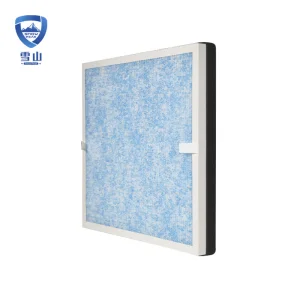




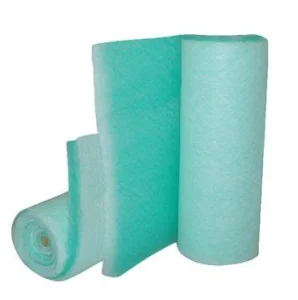

Macro Industry Landscape & Global Procurement Trends for HEPA 14 Systems
The global market for advanced air filtration systems has evolved rapidly from basic particulate abatement to rigorous, multi-pollutant contamination control. Understanding the shifting dynamics enables enterprise buyers to optimize supply chains and achieve regulatory compliance.
Evolution to MPPS ≥99.995%
Traditional H13 HEPA filters (≥99.95% efficiency) are increasingly insufficient for modern ISO Class 3–5 environments. Modern bio-pharmaceutical facilities, semiconductor fab cleanrooms, and advanced medical suites demand HEPA 14 grade filtration, which guarantees an ultra-low penetration rate of ≤0.005% at the Most Penetrating Particle Size (MPPS, typically 0.1 to 0.2 microns).
TCO & Energy Optimization
Procurement intent has shifted from initial purchase price to Total Cost of Ownership (TCO). HEPA 14 filters inherently produce higher initial pressure drops. Enterprise exporters must leverage low-resistance media formulations (such as expanded PTFE membranes or engineered borosilicate micro-fibers) to minimize HVAC fan power consumption and lower lifecycle energy bills.
Custom OEM & Agile Sourcing
Global brands require agile original equipment manufacturing (OEM) partners capable of custom geometry, non-standard dimensional framing (stainless steel, extruded aluminum, anodized alloys), integrated gas-phase carbon beds, and private-label packaging with complete certification traceability.
Technical Benchmark Matrix: HEPA H13 vs. HEPA H14 vs. ULPA U15
| Filter Class (EN 1822 / ISO 29463) | Overall Efficiency @ MPPS | Overall Penetration @ MPPS | Typical Application Target | Pressure Drop Characteristics |
|---|---|---|---|---|
| HEPA H13 | ≥ 99.95% | ≤ 0.05% | Residential Purifiers, Commercial HVAC | Low to Moderate (100 - 140 Pa) |
| HEPA H14 (Custom Target) | ≥ 99.995% | ≤ 0.005% | Medical Isolation, BSL-3/4, Cleanrooms, High-End OEM | Optimized Low-Resistance (150 - 190 Pa) |
| ULPA U15 | ≥ 99.9995% | ≤ 0.0005% | Semiconductor Photolithography, Precision Optics | High Initial Resistance (200 - 260 Pa) |
Macro-Industry Turnkey Filtration Solutions
As an established custom HEPA 14 exporter, we deliver tailored air purification architecture across diverse high-tech manufacturing, medical, and commercial environments.
1. Medical Cleanrooms & Bio-Containment Facilities
Hospital operating theaters, intensive care units (ICUs), and Biosafety Level (BSL) laboratories demand absolute containment of airborne pathogens, bacteria, and viral vectors.
- Zero-Bypass Gasketing: Seamless polyurethane liquid gel seals or continuous closed-cell neoprene gaskets eliminate edge leakage.
- Antimicrobial Coatings: Optional non-degassing antimicrobial treatments prevent bio-growth on filter media pleats.
- Individual Scan Testing: Every custom H14 unit undergoes factory EN 1822-4 leak testing using DEHS/PAO challenge aerosols, accompanied by a serial certificate.
2. Semiconductor & Microelectronics Fabrication
Micro-particle contamination during lithography or wafer deposition results in severe yield loss. Microelectronics demands sub-micron capture with low chemical outgassing.
- ePTFE Membrane Technology: Eliminates boron and organic outgassing present in traditional glass fibers.
- High-Temperature Resistance: Stainless steel frame configurations with aluminum foil separators capable of withstanding operational temperatures up to 250°C.
- Compact Mini-Pleat Designs: High density pleat packs maximizing effective media area per cubic foot of airflow.
3. Commercial Smart Purifiers & Premium Appliances
Leading global home appliance brands require custom-fit replacement filters combining HEPA 14 efficiency with multi-stage gas phase removal.
- Compound Filtration Cartridges: Co-pleated or multi-layer combinations featuring HEPA media, honeycomb activated carbon, and cold catalyst matrices.
- VOC & Formaldehyde Abatement: High CTC (Carbon Tetrachloride) activated carbon layers engineered for high gas adsorption kinetics.
- Custom Form Factors: Cylindrical 360-degree intake cartridges, multi-sided geometric frames, and ultra-thin profiles.
4. Industrial HVAC & Spray Booth Ventilation
Heavy manufacturing, industrial paint booths, and commercial AHU systems require structured multi-stage filtration to protect fine HEPA filters from premature clogging.
- Stage 1 - Pre-Filtration: G2–G4 synthetic media rolls and wire-mesh laminated pleated filters capture heavy particulates.
- Stage 2 - Fine Bag Filters: M5–F9 meltblown synthetic pocket filters hold high dust capacities.
- Stage 3 - Terminal H14 HEPA: Clean room supply terminal housing delivering pristine laminar air flow.
Engineering & Customization Capabilities (OEM / ODM Expertise)
Backing our status as a premier custom HEPA 14 exporter is an engineering infrastructure built on rigorous material science, automated pleating lines, and strict quality control standard operating procedures.
Media Engineering
We source and formulate premium non-woven filtration media, offering choices between wet-laid micro-glass fiber paper and expanded polytetrafluoroethylene (ePTFE). Media selection is calculated according to target CADR, pressure budget, and chemical environment compatibility.
Precision Geometry
Our automated thermo-plastic mini-pleat lines ensure uniform pleat spacing with hot-melt separation beads. This guarantees structural stability under turbulent airflows, prevents pleat collapse, and maintains an even velocity profile across the entire filter face.
Structural Framing Options
Filter housing frames are fully customizable: high-impact ABS plastic, moisture-resistant cardboard, extruded anodized aluminum, galvalume steel, or 304/316 stainless steel with laser-welded corners for high-temperature and corrosive applications.
Global Compliance, Localized Support & Supply Chain Guarantee
Navigating international regulatory frameworks requires comprehensive documentation and quality assurance. As an established global exporter, we provide seamless customs support, testing validation, and compliance verification.
International Regulatory Compliance
Our manufacturing and export workflows adhere to worldwide standardizations:
- EN 1822-1:2019 / ISO 29463: Full factory verification for filter efficiency classification.
- CE Mark & RoHS Compliance: Materials verified free of hazardous heavy metals, PBBs, and PBDEs for EU markets.
- REACH Compliance: Ensuring chemical safety regarding SVHC (Substances of Very High Concern).
- UL 900 Fire Standard: Flame retardant options available for commercial HVAC building safety codes.
Export Logistics & OEM Packaging
We streamline cross-border trade for B2B procurement partners worldwide:
- Durable Export Packaging: Reinforced corrugated cartons, vacuum poly-bagging, and corner-protected palletization to eliminate transit damage.
- Custom Private-Labeling: Barcoding, OEM branding, insertion sheets, and SKU identification printed directly per buyer specifications.
- Port Proximity Logistics: Direct shipping dispatch from major oceanic port hubs (Shenzhen / Guangzhou), enabling competitive freight rates and fast transit times.
Technical Roadmap & Future Outlook of Air Purification
Filtration technology is moving toward smart, sustainable, and hyper-efficient materials. Our R&D engineering roadmap focuses on three next-generation breakthroughs:
1. Nanofiber ePTFE Composites
Transitioning from micro-glass to ultra-thin electrospun nanofibers and ePTFE membranes. This reduces filter thickness by up to 50% while decreasing initial airflow resistance by 30-40%, dramatically reducing fan power consumption in smart buildings and purifiers.
2. Smart IoT Sensor Integration
Incorporating embedded RFID microchips and optical differential pressure sensors directly into the filter frame. This enables real-time monitoring of filter loading, dynamic life predictions, and automated maintenance triggers in smart HVAC setups.
3. Circular & Bio-Based Media
Developing fully recyclable thermoplastic frameworks and bio-based synthetic polymer media. This lowers the lifecycle carbon footprint of replacement filter cartridges without compromising EN 1822 H14 efficiency standards.
Enterprise Procurement FAQ & Technical Insights
Common technical and purchasing questions answered by our chief SEO growth and filtration engineering team.
What mathematically differentiates a HEPA H14 air filter from a HEPA H13 filter?
Under standard EN 1822 testing, HEPA H13 has a minimum efficiency of 99.95% at the Most Penetrating Particle Size (MPPS), allowing up to 0.05% particle penetration. HEPA H14 raises minimum efficiency to 99.995% at MPPS, allowing only 0.005% penetration. This means HEPA H14 reduces particle leakage by a factor of 10 compared to H13, making it mandatory for critical medical and cleanroom environments.
Can you produce custom HEPA 14 replacement filters compatible with third-party purifier brands?
Yes. As an OEM/ODM specialist, we design and manufacture aftermarket replacement filters built to exact dimensional specifications, outer sealing geometry, and CADR performance thresholds compatible with major air purifier manufacturers globally. Brand reference terms are used solely for fit description.
How do you prevent the higher pressure drop associated with H14 media from overloading purifier motors?
We optimize filter design by increasing the active media surface area via high-density mini-pleating technology, reducing pleat pitch, and utilizing advanced low-resistance micro-fiberglass or ePTFE membranes. This maintains a low initial static pressure drop (often ≤180 Pa at rated airflow), protecting blower motors while delivering maximum particulate capture.
What factory quality testing documentation is provided with export shipments?
Every industrial HEPA 14 batch undergoes scan testing (using DEHS or PAO aerosols) according to EN 1822-4. We supply individual scan test reports, certificate of analysis (COA), ISO 9001 quality compliance sheets, and material safety documentation upon request.
What is the typical production lead time and minimum order quantity (MOQ) for custom projects?
Standard lead times for custom tooling and sample creation range from 5 to 7 working days. Mass production lead times typically average 15 to 20 days depending on order volume. We maintain flexible MOQ tiers to accommodate trial orders for enterprise buyers evaluating product quality.
Complete OEM Filtration & Filter Media Catalog
Explore additional customizable replacement filter units, specialized synthetic roll media, and commercial HVAC elements manufactured directly in our facilities.





