
Featured Commercial & Industrial HEPA Solutions
Precision-engineered filtration components designed for high-capacity HVAC units, cleanrooms, and customized replacement ecosystems.



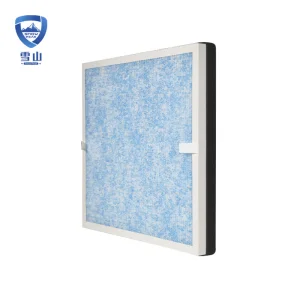


Semantic Architecture of Custom HEPA Systems for HVAC Integration
Navigating Modern Air Filtration Standards (EN 1822, ISO 29463, ASHRAE 52.2) and Aerodynamic Mechanics for Global Industrial & Commercial AHU Manufacturing
High-Efficiency Micro-Particle Capture Physics
In modern heating, ventilation, and air conditioning (HVAC) infrastructure, High-Efficiency Particulate Air (HEPA) systems serve as the ultimate physical barrier against airborne particulate matter (PM1.0, PM2.5, bio-aerosols, and nano-pollutants). A true custom HEPA system for HVAC manufacturers does not merely rely on surface straining; it operates across four distinct physical mechanisms:
- Inertial Impaction: Dominant for larger particles (>1.0 µm) unable to adjust to fluid streamlines around filter fibers.
- Interception: Captures mid-sized particles (0.3 µm to 1.0 µm) following air currents within one particle radius of a fiber.
- Brownian Diffusion: Controls sub-0.1 µm ultrafine particles, driven by random thermal collisions into contact with media microfibers.
- Electrostatic Attraction: Enhanced charging treatments applied to non-woven meltblown matrixes to maximize initial capture velocity.
Most Penetrating Particle Size (MPPS) Optimization
Standardized international protocols—specifically EN 1822:2019 and ISO 29463—define HEPA efficiency based on the MPPS point (typically between 0.12 µm and 0.25 µm), where mechanical filtration mechanisms reach their lowest statistical intersection point.
For custom HVAC suppliers, delivering low-resistance HEPA modules translates directly into operational energy conservation, extending motor blower lifespan and minimizing Total Cost of Ownership (TCO) for end-use facility managers.
Global Commercial & Industrial HVAC Air Filtration Landscape
Evaluating Macro Trends, ESG Compliance, and Industry-Specific Demands Reshaping Air Handling Unit (AHU) Procurement Worldwide
Healthcare & Bio-Pharma
Bio-pharmaceutical cleanrooms (ISO Class 5 to 8) and isolation facilities require Zero-Bypass fluid-gel seal HEPA systems. Stringent FDA cGMP and EU GMP Annex 1 mandates dictate validated viral and bacterial retention, forcing HVAC OEMs to implement high-integrity deep-pleat or mini-pleat HEPA filters with automated continuous leakage monitoring.
Semiconductor & Microelectronics
Sub-nanometer fabrication nodes demand chemical-free, low-outgassing HEPA and ULPA filtration modules. Airborne Molecular Contamination (AMC) combined with sub-0.1 µm dust control requires custom PTFE (Polytetrafluoroethylene) membranes to prevent boron and silicon outgassing during high-wafer yield operations.
Commercial High-Rise & Green Buildings
Adherence to LEED v4.1 and WELL Building Standard v2 has pushed commercial developers to upgrade standard MERV-rated filters to custom mini-pleat HEPA banks. Integrated dynamic airflow dampers and low-pressure composite HEPA media ensure compliance with indoor air quality mandates without redesigning existing fan statics.
Classification & Performance Standards for Custom HVAC HEPA Systems
| Filter Class (EN 1822) | Overall Efficiency @ MPPS | Local Efficiency @ MPPS | Primary Application Profile | Recommended Frame & Seal Type |
|---|---|---|---|---|
| E11 (EPA) | ≥ 95% | - | Pre-filtration for HEPA, Commercial Buildings, Data Centers | Galvanized Steel / Continuous PU Foam |
| E12 (EPA) | ≥ 99.5% | - | High-End Commercial HVAC, Food & Beverage Processing | Extruded Anodized Aluminum / PU Gasket |
| H13 (HEPA) | ≥ 99.95% | ≥ 99.75% | Hospital Operating Rooms, Bio-Pharm ISO 7-8, OEM Purifiers | Aluminum / Seamless Gel-Seal / Dry Gasket |
| H14 (HEPA) | ≥ 99.995% | ≥ 99.975% | ISO Class 5 Cleanrooms, Safety Containment Cabinets, Semiconductor | Stainless Steel / Anodized Aluminum / Gel Seal |
| U15 (ULPA) | ≥ 99.9995% | ≥ 99.9975% | Nanofabrication, Photolithography Clean Benches, Micro-LSI Production | Precision Machined Aluminum / Knife-Edge Gel Seal |
Next-Gen HVAC HEPA Technology Trends
Discover how advanced material science, IoT integration, and composite media are defining the next decade of air handling design.
1. Nanofiber & PTFE Membrane Media
Traditional wet-laid micro-glass fiber media is increasingly being augmented or replaced by ePTFE (expanded Polytetrafluoroethylene) membranes. ePTFE offers exceptional mechanical strength, zero fiber shedding, high resistance to corrosive chemicals (hydrofluoric acid, alkaline vapors), and up to 40% lower pressure drop compared to standard glass fiber, dramatically lowering energy demands in central AHUs.
2. Smart IoT-Integrated Differential Pressure Sensing
Custom HEPA filter frames are now manufactured with embedded RFID tags and integrated micro-differential pressure sensors. These smart filter modules communicate wirelessly via Modbus or BACnet with Building Management Systems (BMS), providing real-time data on dust loading dynamics, predictive loading curves, and precise alerts for filter replacement cycles.
3. Antimicrobial & Cold Catalyst Functional Composites
Modern HVAC HEPA filters do more than trap dust; they neutralize airborne biological threats. Multi-layer composite filters incorporate cold catalyst layers, non-toxic copper-zinc ion technology, and activated carbon matrices. This composite architecture oxidizes Volatile Organic Compounds (VOCs), formaldehyde, and odorous gases while actively destroying captured pathogens on the filter surface.
4. Modular Zero-Bypass Housing & Fluid-Gel Sealing
Air bypass around filter frames is the primary cause of indoor filtration failure in commercial HVAC systems. Advanced custom HEPA designs utilize continuous polyurethane fluid gel channels combined with precision knife-edge housings. This structural design guarantees 100% Zero-Bypass seals across high-vibration rooftop AHU environments and variable airflow systems (VAV).
China Industry 4.0: Supply Chain Resilience & Cost-Efficiency
How Advanced Automation, End-to-End Raw Material Integration, and Dynamic Manufacturing Drive Competitive Advantages for Global B2B Buyers
End-to-End Vertical Integration
China's leading air filtration hubs have transformed traditional OEM manufacturing into an agile, highly automated Industry 4.0 ecosystem. From high-speed meltblown non-woven fabric spinning to automated hot-melt pleating and robotic polyurethane gasket dispensing, vertical integration eliminates intermediate supply chain friction.
100% Quality Assurance & Laser Scan Testing
Quality reliability is the bedrock of industrial cleanroom engineering. Automated testing rigs equipped with high-precision condensation particle counters (CPC) and photometric laser scanners test 100% of manufactured HEPA/ULPA units in cleanroom environments (ISO Class 5 compliant packaging lines). Each custom HEPA system is issued an individual factory certificate detailing measured pressure drop, leak testing results, and verified MPPS efficiency.
The OEM/ODM Customization Matrix
When partnering with a premier Chinese custom HEPA manufacturer, HVAC engineering teams gain access to complete modular customization options:
- Frame Materials: Anodized Extruded Aluminum, Galvanized Steel, 304/316 Stainless Steel, ABS Plastic, Heavy-Duty Cardboard.
- Filter Separator Tech: High-temperature hot-melt bead spacing or corrugated aluminum foil separators for extreme thermal applications (>250°C).
- Gaskets & Seals: Endless Seamless PU Foam, Neoprene Flat Gaskets, Fluid Polyurethane Gel-Seal Channel.
- Media Composites: Meltblown + Micro-Glass, Nanofiber ePTFE, Activated Carbon Honeycomb, Cold Catalyst Functional Coatings.
- Dimensions: Standard sizes (24x24x11.5 inch) to fully custom non-standard depths (25mm to 300mm pleat depths).
Localized Application Scenarios & Industrial Implementation
Examine how custom HEPA solutions adapt to rigorous operational environments across specialized industry verticals.
Bag-In/Bag-Out (BIBO) Containment Systems
Environment: Nuclear facilities, Biosafety Level (BSL-3/BSL-4) labs, toxic pharmaceutical compounding.
Technical Solution: Custom heavy-duty steel-framed HEPA filters equipped with specialized flange gaskets and PVC change bags. Designed for hazardous filter changeouts without exposing maintenance personnel to active pathogens or toxic compounds.
Subway & High-Speed Rail HVAC Modules
Environment: Underground transit systems, high-density passenger rail cars.
Technical Solution: Lightweight aluminum-framed, vibration-resistant pleated HEPA assemblies. Features high dust-holding capacity (DHC) synthetic pre-filters to withstand heavy braking dust, particulate loading, and rapid pressure fluctuations.
Cleanroom Fan Filter Units (FFU)
Environment: Flat-panel display, semiconductor micro-assembly, optical manufacturing lines.
Technical Solution: Ultra-thin mini-pleat HEPA/ULPA filters integrated with backward-curved centrifugal fans. Features uniform airflow velocity profile distributions (0.45 m/s ±20%) and low acoustic noise ratings (<52 dBA).
Frequently Asked Questions (FAQ)
Expert answers to common technical, procurement, and manufacturing questions regarding custom HEPA HVAC integration.
Explore Additional HEPA & HVAC Filter Lines
Discover our complete range of composite HEPA filters, air purifier replacements, pocket filter media rolls, and specialized industrial air filtration products.





