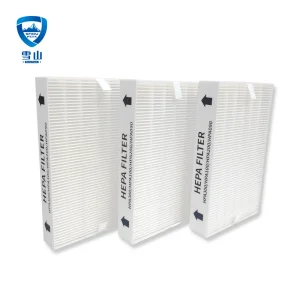
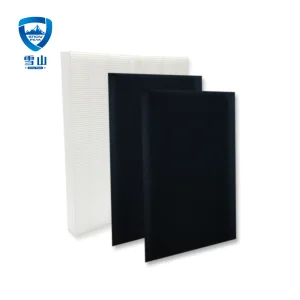
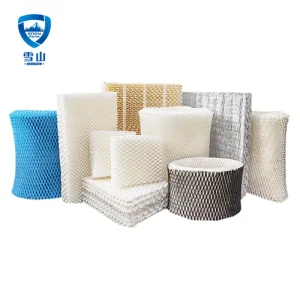
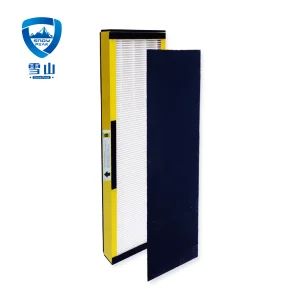
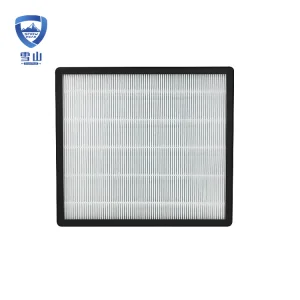
Featured Industrial Air Filtration Solutions
Explore our certified commercial pre-filters, fiberglass paint stop media, mini-pleated HEPA units, and containment bags manufactured directly at our Chinese production center.
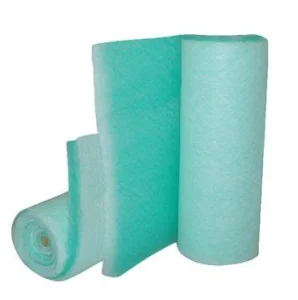


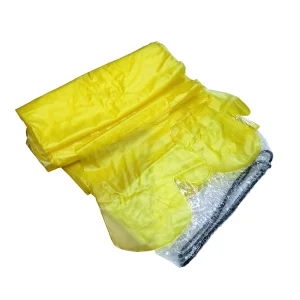
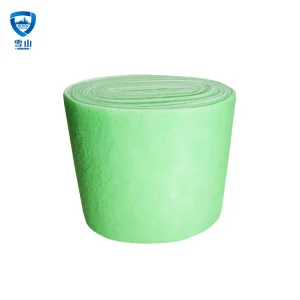

Industrial Gas-Phase Filtration Architecture & Operational White Paper
In modern industrial environments, airborne contamination extends far beyond particulate matter. Volatile Organic Compounds (VOCs), acidic gases, toxic chemical vapours, corrosive airborne molecular contaminants (AMCs), and odor nuisance represent serious threats to manufacturing yields, human safety, and regulatory compliance. Custom industrial charcoal (activated carbon) air filters serve as the primary defensive architecture for gas-phase filtration across semiconductor cleanrooms, pharmaceutical containment suites, chemical processing facilities, high-tier data centers, and industrial automotive spray booths.
Physicochemical Adsorption Mechanics & Media Engineering
The efficacy of an industrial charcoal air filter is governed by the physical structure of the activated carbon matrix and its chemical functionalization. At our advanced Chinese manufacturing complex, we engineer virgin coconut shell, coal-based, and synthetic carbon matrices tailored to specific target gas profiles.
1. Physical Adsorption (Physisorption) & Pore Dynamic Engineering
Physisorption relies on Van der Waals forces to trap gas molecules within the microscopic internal pore network of the charcoal. Pore size distribution is categorized into three critical operational bands:
- Micropores (Radius < 2 nm): Account for over 95% of the total surface area. Essential for capturing low molecular weight VOCs, benzene, toluene, and solvent vapors.
- Mesopores (Radius 2 nm to 50 nm): Serve as transport avenues and adsorb larger organic molecules, hydrocarbon complexes, and high-boiling point compounds.
- Macropores (Radius > 50 nm): Function as primary entry conduits into the carbon granule or extrudate matrix, ensuring rapid diffusion kinetics.
2. Catalytic Chemical Impregnation (Chemisorption)
Un-impregnated activated carbon exhibits limited affinity for light, highly polar, or reactive gases. To overcome this thermodynamic barrier, our factory integrates proprietary chemical impregnation processes:
| Target Gas Family | Common Industrial Contaminants | Impregnation Agent | Reaction Mechanism |
|---|---|---|---|
| Acid Gases | Hydrogen Sulfide (H₂S), Sulfur Dioxide (SO₂), Chlorine (Cl₂), HCl | Potassium Hydroxide (KOH), Sodium Carbonate (Na₂CO₃) | Base-catalyzed neutralization forming stable inorganic salts. |
| Alkaline Gases | Ammonia (NH₃), Amines (Methylamine, Dimethylamine) | Phosphoric Acid (H₃PO₄), Citric Acid | Acid-base salt formation and chemisorption within micropores. |
| Mercury & Metalloids | Elemental Mercury Vapor (Hg), Arsine (AsH₃) | Sulfur (S), Potassium Iodide (KI) | Mercuric sulfide precipitation and catalytic conversion. |
| Formaldehyde & Aldehydes | HCHO, Acetaldehyde, Monomers | Acetoacetamide, Primary Amines | Irreversible covalent chemical binding (Schiff base reaction). |
Strategic Advantage of China Factory Sourcing & OEM Manufacturing
Global procurement directors and HVAC system designers face mounting pressures regarding unit economics, lead times, and customization capabilities. Sourcing industrial charcoal filters directly from a specialized Chinese high-tech manufacturer provides critical competitive edges:
100% Integrated Supply Chain
Direct proximity to premium coconut shell carbon pyrolyzation centers and nonwoven media manufacturing plants lowers raw material procurement costs by 30-40% compared to Western assemblers.
Automated Pleating & Carbon Settling
Utilizing fully automated robotic carbon-filling and ultrasonic sealing lines guarantees uniform bed density, eliminating air bypass and channeling risks under high airflow velocities.
Strict Quality Assurance Protocols
Every industrial production batch undergoes rigorous testing: CTC adsorption capacity (ASTM D3467), pressure drop verification (EN 779 / ISO 16890), and VOC breakthrough curves via Gas Chromatography-Mass Spectrometry (GC-MS).
Localized Application Scenarios & Industrial Solutions
Industrial charcoal air filters are not one-size-fits-all. Different operating environments present unique challenges regarding air velocity, humidity, temperature, and contaminant concentration.
1. Automotive & Industrial Spray Booths
Paint booths generate high volumes of solvent VOCs (Xylene, Toluene, Ethylbenzene) alongside overspray particulates. Our macro solution pairs progressive fiberglass floor paint-stop rolls with deep-bed activated carbon V-bank modules to prevent exhaust duct fouling and achieve environmental VOC discharge compliance.
2. Semiconductor & Microelectronics Cleanrooms
Airborne Molecular Contamination (AMC) can erode wafer micro-architectures. We provide specialized low-outgassing gel-seal HEPA filters combined with chemical carbon fabric beds to capture acidic and organosilicon gases down to parts-per-billion (ppb) levels.
3. Pharmaceutical & Bio-Containment Facilities
Handling active pharmaceutical ingredients (APIs) and hazardous biological agents requires Bag-In/Bag-Out (BIBO) containment housings fitted with custom PVC change-out bags and high-efficiency carbon filters to ensure operator safety during maintenance cycles.
4. Data Center Corrosive Gas Mitigation
Sulfur compounds and acid gases cause micro-crevice corrosion on server circuit boards. Our high-capacity carbon trays neutralize reactive gas elements, ensuring zero downtime for mission-critical IT infrastructure.
Global Corporate Procurement Framework & TCO Optimization
For enterprise procurement managers, evaluating an industrial air filter supplier involves total cost of ownership (TCO) analysis rather than simple initial purchase price comparison. Energy consumption caused by air filter pressure drop often accounts for over 70% of an HVAC system's total operating cost over its lifecycle.
Total Cost = Initial Filter Price + Energy Cost (Airflow × Avg ΔP × Operating Hours / Fan Efficiency) + Maintenance Replacement Labor + Waste Disposal Fees
Our factory engineers optimize carbon pleat spacing and utilize multi-channel honeycombs or low-resistance carbon nonwovens to reduce initial pressure drop ($\Delta P$) by up to 25%, drastically cutting annual fan power usage for industrial facilities.
Future Trends in Industrial Gas-Phase Filtration
As global sustainability mandates tighten and Smart Factory initiatives expand under Industry 4.0, industrial air filtration technology is evolving across several strategic axes:
Nanofiber & Carbon Composites
Combining electrospun nanofibers with fine activated carbon particles creates ultra-thin, low-resistance media capable of simultaneous sub-micron PM2.5 filtration and gas adsorption.
IoT-Enabled Sensor Integration
Smart filter frames equipped with RFID and differential pressure/VOC sensors provide real-time data on carbon saturation levels, moving maintenance from fixed schedules to predictive condition-based servicing.
Circular Carbon Thermal Regeneration
Industrial clients increasingly request recyclable filter frame constructions (stainless steel or anodized aluminum) that allow spend carbon media to undergo high-temperature reactivation, lowering carbon footprints.
Factory OEM/ODM Customization Capabilities
We provide comprehensive OEM and ODM production services tailored to your exact equipment specifications. Our engineering team manages custom development through a disciplined 4-stage technical workflow:
We review your airflow rates (CFM/m³/h), operating temperature, relative humidity, and GC-MS contaminant profiles.
Selection of frame types (Galvanized Steel, Extruded Aluminum, ABS plastic, Stainless Steel) and gasket seals (PU foam, EPDM, Gel seal).
Sample production within 5-7 business days for wind-tunnel pressure testing and fit verification.
High-volume manufacturing under ISO 9001 quality systems with standardized export palletizing and logistics support.
Frequently Asked Questions (Technical Sourcing FAQ)
Additional OEM Replacement & Industrial Filter Products
Browse our secondary catalog of aftermarket replacement elements, composite carbon fabrics, and specialized cleanroom air filter units.