
High-Efficiency Charcoal & Filter Assemblies
Explore our industrial-grade OEM replacement units, deep-pleat carbon beds, and customized molecular filtration media tailored for extreme volume gas adsorption.

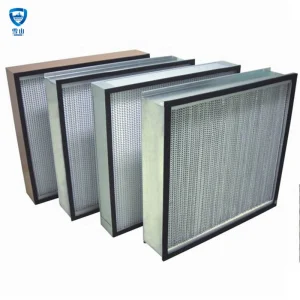
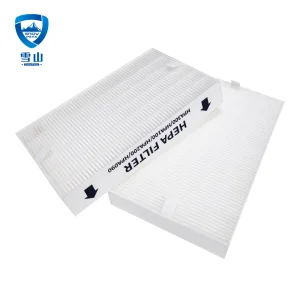

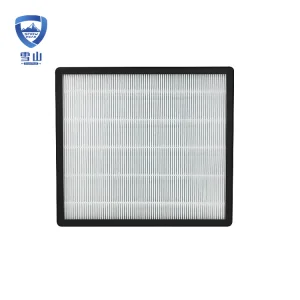
Macro-Industry Solutions & Gas-Phase Contaminant Mitigation
In modern industrial manufacturing, indoor commercial environments, and critical municipal infrastructures, controlling Volatile Organic Compounds (VOCs), corrosive acid gases, hazardous air pollutants (HAPs), and persistent odors represents a major operational and regulatory challenge.
Gas-Phase Adsorption Engineering
Unlike particulate air filters that rely on mechanical straining and interception (such as HEPA media), Custom Large Charcoal Air Filters function through physical adsorption and chemical chemisorption. By engineering high carbon density cells with Carbon Tetrachloride (CTC) activation levels exceeding 60% to 105%, our custom large-format charcoal filters eliminate gaseous contaminants at a molecular scale.
High-CFM System Optimization
Large-scale HVAC systems handling airflows from 1,000 CFM to over 50,000 CFM encounter significant energy penalties when improper filtration media is selected. Our proprietary low-pressure-drop honeycomb media structures, extruded charcoal beds, and deep-pleat carbon non-woven matrices maximize contact residence time ($t_r \ge 0.1\text{ sec}$) while maintaining an exceptionally low initial resistance ($\Delta P \le 65\text{ Pa}$).
Zero-Bypass Structural Integrity
Gas phase bypass degrades system effectiveness exponentially. A bypass rate of just 1% can reduce overall gaseous removal efficiency by over 30%. Our custom large charcoal filter frames are manufactured using heavy-gauge extruded aluminum, galvanized steel, or 304 stainless steel, reinforced with polyurethane seamless gasket seals and internal structural cross-bracing.
Technical Insight: Selecting the optimal activated charcoal substrate requires analyzing specific target contaminants. Coconut shell carbon offers superior microporosity (<2 nm pores) ideal for lightweight VOCs, while coal-based activated carbon provides mesoporous structures (2-50 nm) for heavy molecular weight hydrocarbons and complex organic compounds.
Global Commercial & Industrial Gas Filtration Landscape
Regulatory mandates across North America, Europe, and the Asia-Pacific region are forcing facilities to upgrade from rudimentary dust filters to advanced dual-stage particulate and gas-phase filtration infrastructure.
Semiconductor & Microelectronics AMC
In sub-nanometer semiconductor fabrication plants (Fabs), Airborne Molecular Contamination (AMC) such as organosilicon compounds, dopants, and acid vapors can cause wafer corrosion and pattern defects. Custom large charcoal filter banks serve as the primary defensive barrier in cleanroom Recirculation Air Units (RAU) and Makeup Air Units (MAU).
Healthcare & Pharmaceutical Containment
Hospitals, biopharmaceutical compounding labs, and isolation wards utilize chemisorption-treated charcoal filters to neutralize anesthetic gases, formalin fumes, and hazardous viral/chemical compounds, meeting ISO 16890 and ASHRAE 62.1 indoor air quality mandates.
Commercial Horticulture & Facility Odor Neutralization
Large-scale indoor agricultural facilities, commercial waste-processing plants, and industrial spray coating booths deploy heavy-duty carbon canisters and deep-pleat charcoal filter banks to ensure compliance with localized municipal environmental odor emission laws.
Technical Architecture & Material Engineering
Our custom large charcoal filters are engineered using premium virgin activated carbons, specialized chemical impregnations, and advanced structural framing for long service life and zero gas bypass.
| Filter Series / Parameter | Carbon Substrate Type | Activation Level (CTC) | Target Pollutants | Standard Frame Material | Efficiency Rating |
|---|---|---|---|---|---|
| Series C-VOC (Standard) | Virgin Coconut Shell Granular | 60% - 80% CTC | General VOCs, Benzene, Toluene, Alcohols, Light Odors | Extruded Anodized Aluminum | >95% initial @ 250 FPM |
| Series C-ACD (Acid Gas) | KOH / KI Impregnated Coal Carbon | 70% - 90% CTC | Hydrogen Sulfide ($H_2S$), Sulfur Dioxide ($SO_2$), Chlorine | 304 Stainless Steel / GI | >98% Single-Pass Chemisorption |
| Series C-ALK (Alkaline Gas) | $H_3PO_4$ Acid Impregnated Carbon | 65% - 85% CTC | Ammonia ($NH_3$), Amines, Organic Bases | Galvanized Steel / Stainless Steel | >97% Single-Pass Chemisorption |
| Series C-HYB (Comb. HEPA/Carbon) | Composite Carbon-Loaded Nonwoven + H13 Media | 50% - 70% CTC Equivalent | Dual Action: Sub-micron PM2.5 (99.97%) + Odor/VOCs | Heavy-Duty ABS Plastic / Metal Frame | H13 True HEPA + Gas Phase |
| Series C-HON (High CFM) | Honeycomb Honeycomb Carbon Matrix | 80% - 105% CTC | High CFM Airflow Systems, Low Pressure Drop Demand | Extruded Aluminum Frame | Low Resistance ($\Delta P \le 45\text{ Pa}$) |
Impregnation Technology & Chemisorption
Standard physical adsorption relies on Van der Waals forces, which become less effective for low-molecular-weight polar gases. To overcome this limitation, our engineering facility applies specialized chemical impregnations:
- Potassium Hydroxide (KOH): Neutralizes acidic foul gases such as $H_2S$ and mercaptans via acid-base neutralization.
- Phosphoric Acid ($H_3PO_4$): Targets volatile basic amine compounds and ammonia.
- Potassium Permanganate ($KMnO_4$): Oxidizes ethylene, formaldehyde, and active aldehydes into harmless carbon dioxide and water.
Structural Integrity & Frame Configurations
Large charcoal air filters experience significant weight loads due to heavy carbon mass (ranging from 15 kg up to 60 kg per filter module). Our frames incorporate structural innovations:
- Internal Divider Grids: Prevents charcoal settling and void formation over extended operational cycles.
- Poured Polyurethane Gaskets: Seamless, continuous knife-edge or flat gaskets ensure 100% perimeter seal within holding frames.
- Expanded Metal Face Screens: Dual-side galvanized or stainless mesh faceguards prevent mechanical damage during installation.
Localized Application Scenarios & Engineering Field Notes
Custom large charcoal air filters are deployed across critical commercial and industrial installations worldwide. Below are representative engineering field application notes.
Commercial High-Rise HVAC
Challenge: Urban high-rises situated near dense traffic arterial roads facing high concentrations of diesel exhaust, nitrogen oxides ($NO_x$), and ozone.
Solution: Custom deep-bed V-bank carbon filter modules retrofitted into fresh outdoor air intake handlers, cutting indoor VOC levels by 92%.
Industrial Paint & Solvent Booths
Challenge: Excessive solvent vapors (xylene, toluene, MEK) exceeding local environmental EPA stack release limits.
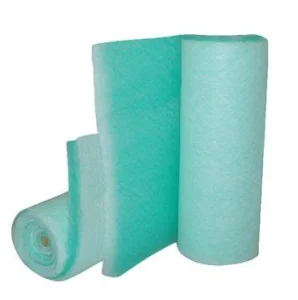
Solution: Dual-stage installation comprising primary fiberglass paint-stop rolls followed by heavy-duty 100% CTC pelletized coal carbon beds.
Wastewater Treatment Facilities
Challenge: Severe hydrogen sulfide ($H_2S$) and organic sulfur odor emissions causing community complaints and equipment corrosion.
Solution: KI-impregnated high-capacity carbon canisters with anti-corrosive stainless steel casings operating continuously under high humidity.
Commercial Agriculture & Horticulture
Challenge: Strict municipal odor zoning restrictions requiring zero terpene emissions from high-airflow greenhouse exhaust fans.
Solution: Custom radial flange charcoal filter units engineered for 2,500+ CFM continuous operation with 99.8% single-pass odor reduction.
Global Certifications, E-E-A-T Principles & Testing Protocols
Snow Peak Clean Technology operates under strict ISO 9001 quality management systems, providing verifiable laboratory test reports for every batch of activated carbon filters.
Raw Material IQC
Every lot of activated carbon undergoes ASTM D2854 (Apparent Density), ASTM D3802 (Ball-Pan Hardness), and ASTM D3574 CTC adsorption validation before assembly.
Precision Pleating & Filling
Automated carbon filling ensures uniform packing density, eliminating voids, channels, or carbon dust migration under turbulent high-velocity airflow conditions.
ISO 10121 Gas Testing
Filters are evaluated according to ISO 10121-1 and 10121-2 standards to measure fractional efficiency and capacity against specific challenge gases (toluene, $SO_2$, $NH_3$).
OQC & Export Logistics
100% final inspection for frame squareness, gasket integrity, and sealed moisture-proof barrier vacuum packaging to ensure infinite shelf storage prior to installation.
Compliance Standard Guarantee: Our filter assemblies comply with global environmental and safety directives including CE Certification, EU REACH (SVHC compliance), RoHS 2.0, UL 900 Flammability Classifications, and ASHRAE 145.2 performance guidelines.
Technical Roadmap & Future Outlook (2025–2030)
As sustainability metrics and decarbonization targets tighten globally, the next generation of gas-phase air filtration is undergoing rapid technological evolution.
Catalytic Ambient Regeneration
Integrating ambient-temperature catalysts (such as manganese oxide nanorods and precious metal doping) into activated charcoal matrices to continuously decompose adsorbates, extending filter life up to 300% without manual replacement.
IoT Real-Time Saturation Sensors
Developing embedded solid-state metal-oxide gas sensors within charcoal filter banks. These sensors measure real-time chemical break-through curves, signaling plant managers via building automation systems (BAS) right before breakthrough occurs.
Zero-Carbon Bio-Based Charcoals
Transitioning from traditional coal substrates to sustainably sourced agricultural waste carbons (such as macadamia shells and sustainably harvested bamboo biochar) with tailored chemical activation to minimize corporate carbon footprints.
Industrial Air Filter Rolls, Pre-Filters & Custom Elements
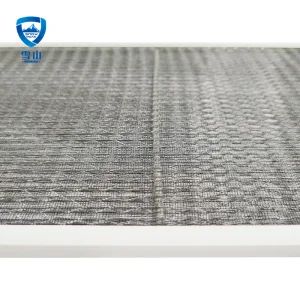
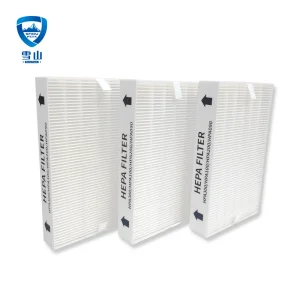
Complete your facility filtration scheme with OEM replacement cartridges, primary washable media, and custom fiberglass rolls.

Frequently Asked Technical Questions (B2B FAQ)
In-depth responses from our senior filtration engineers regarding custom sizing, gas velocity matching, carbon loading, and operational maintenance.
A: Dwell time ($t_r$) is calculated using the formula $t_r = \frac{V_{bed}}{Q}$, where $V_{bed}$ represents the effective volume of the carbon bed ($m^3$) and $Q$ is the volumetric airflow rate ($m^3/s$). For standard VOC removal, a minimum residence time of 0.1 seconds is recommended. For complex gas-phase chemisorption (such as $H_2S$, ammonia, or heavy industrial solvents), target residence times between 0.2 and 0.5 seconds to achieve >95% single-pass efficiency.
A: Physical adsorption relies on Van der Waals physical attractive forces within micro-pores to trap non-polar volatile organic compounds (VOCs). Chemical impregnation involves treating the activated carbon with liquid reagents (e.g., KOH, $KI$, $H_3PO_4$) that chemically react with target polar or corrosive gases ($H_2S$, $SO_2$, $NH_3$, Formaldehyde), converting them into stable inorganic salts via chemisorption. Impregnation is crucial when physical carbon reaches saturation prematurely due to gas volatility.
A: Water vapor competes directly with organic molecules for micropore adsorption sites. When ambient relative humidity exceeds 60% RH, physical adsorption capacity drops significantly as water molecules condense within pores. In high-humidity applications (>70% RH), we recommend specifying hydrophobic coal-based carbons or incorporating upstream dehumidification heating coils and high-efficiency pre-filters.
A: Yes. As a direct manufacturer with CNC metal processing and automated pleating lines, we engineer custom charcoal filters to exact client dimensions (from 100mm up to 2000mm side lengths, with frame depths ranging from 21mm to 600mm). We can build custom headers, side handles, pressure tap ports, and specialty gasket configurations according to your exact mechanical engineering drawings.
A: Unlike particulate filters where differential pressure increases as dust loads, activated carbon filters exhibit virtually constant pressure drop throughout their gas adsorption lifespan. Saturation is determined via: (1) downstream VOC photoionization detectors (PID), (2) chemical breakthrough test coupons, or (3) gravimetric coupon sampling analyzing percentage weight gain of the active carbon media.
A: Upstream particulate pre-filtration is essential. Dust and particulate matter blind the microscopic surface pores of activated carbon, reducing gas adsorption capacity. We specify a minimum of an ISO coarse 70% (G4) pre-filter, with ePM1 60% (F7/MERV 13) fine filters recommended for cleanroom and commercial HVAC applications to ensure maximum charcoal bed longevity.
Ready to Engineer Your Custom Gas Filtration System?
Contact our senior engineering and export division for technical consultations, customized dimensional quotes, carbon selection matrix matching, and OEM sample development.