

Featured OEM Commercial Products
OEM Replacement & Industrial Filtration Solutions
Standardized and custom-engineered filter assemblies built with high-efficiency MERV 13 and HEPA synthetic filter media.

China Honeywell HRF-R3 HEPA R Replacement Filter for HPA300 Series Air Purifiers
View Product Details
CE Certification High Efficiency G4 M5 Ceiling Filter Cotton - China Factory
View Product Details
Wholesale Customized China HEPA Filters Suppliers - High Efficiency Air Purifier Solutions
View Product Details
Wholesale Honeywell HRF-AP100 True H13 HEPA Replacement Filter for HPA100 Series
View Product Details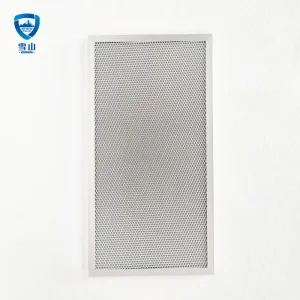
CE Certification Aluminum-Based Honeycomb Photocatalyst Air Purify Filter Media
View Product Details
Custom Pre Polyester Synthetic Laminated Wire Mesh Roll For G3 G4 Foldaway Air Filter
View Product Details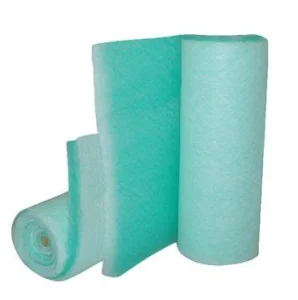
High-Quality China G2 G3 G4 Pre Fiberglass Media Paint Stop Floor Air Filter Roll
View Product Details
Technical Deep-Dive
MERV 13 Fabric Architecture & Filtration Physics
Understanding the electrostatic charge mechanisms, sub-micron particle collection dynamics, and structural composite engineering under ASHRAE 52.2 standards.
ASHRAE 52.2 & ISO 16890 Performance Spectrum
Under the ASHRAE 52.2 test standard, MERV 13 fabric is engineered to capture >50% of sub-micron bio-aerosols (0.3 to 1.0 µm) and >85% of fine particulate matter (1.0 to 3.0 µm). Equivalent to ISO 16890 rating ePM1 50-65% / ePM2.5 65-80%, this non-woven synthetic material strikes the critical balance between extreme airborne pathogen interception and low HVAC fan energy consumption.
Unlike standard mechanical coarse media, MERV 13 non-woven fabrics rely on a composite matrix consisting of spunbond strength carriers combined with electrostatically charged meltblown polypropylene microfibers. This dual-action capture mechanism stops dust, mold spores, bacteria, wildfire smoke, and carrier droplet nuclei carrying respiratory viruses.
Hydro-Charging vs. Corona Discharge Electret Stability
The primary technological differentiator among custom MERV 13 fabric suppliers lies in the electrostatic charging technique. Traditional corona charging imparts a superficial surface charge prone to rapid degradation in high-humidity ambient environments.
Leading Chinese manufacturers utilize Advanced Hydro-Charging Technology, where high-pressure water jets inject deep, polar charges into the polypropylene molecular matrix during meltblowing. This process yields superior charge retention half-life, ensuring zero efficiency decay even after 24 months of tropical or high-humidity HVAC operation.
| Filter Media Rating | Target Particle Size Range | Efficiency (0.3 – 1.0 µm) | Efficiency (1.0 – 3.0 µm) | Typical Initial Resistance (at 5.33 cm/s) | Primary Industrial Applications |
|---|---|---|---|---|---|
| MERV 8 | 3.0 – 10.0 µm | < 20% | 20% – 35% | 25 – 35 Pa | Pre-filtration, Residential Rough Dust |
| MERV 11 | 1.0 – 3.0 µm | 20% – 35% | 65% – 79% | 45 – 55 Pa | Commercial Office, Standard HVAC |
| MERV 13 (Custom Standard) | 0.3 – 3.0 µm | > 50% | > 85% | 55 – 70 Pa | LEED Commercial, Data Centers, Cleanroom Pre-filter |
| MERV 15 / F8 | 0.3 – 1.0 µm | 75% – 85% | > 90% | 85 – 110 Pa | Hospitals, Pharmaceutical, Automotive Paint Booths |
Global Market Analysis
Global Commercial & Industrial Market Dynamics
How regulatory shifts, building health certifications, and energy codes drive global procurement of custom MERV 13 media.
50%+
Sub-Micron (0.3-1.0µm) Capture
<65 Pa
Low Initial Delta P Drag
15+ Yrs
OEM Manufacturing Precision
100%
TSI 8130A Quality Verified
North America: Mandatory HVAC Retrofits
Following updated ASHRAE Epidemic Task Force guidance and LEED v4.1 Indoor Environmental Quality mandates, commercial building operators across the US and Canada have rendered MERV 13 the baseline filtration standard. Demand for pleated MERV 13 filter rolls and slit rolls has surged by 34% annually as facilities phase out outdated MERV 8 filters.
Europe: EN779 to ISO 16890 Transition
European Union buyers require strict compliance with ISO 16890 ePM ratings alongside Eurovent energy efficiency standards. Custom MERV 13 fabric suppliers must engineer media with ultra-low pressure drop characteristics to prevent fan motor energy penalties, balancing pressure differential with fine particulate arrestance.
Asia-Pacific: Tech Hub Clean Air Demand
Rapid expansion of semiconductor fabrication plants, bio-pharmaceutical facilities, and data centers in East Asia drives huge demand for MERV 13 as critical pre-filtration stages. Protecting secondary downstream HEPA (H13/H14) filters from premature loading is vital to minimizing facility downtime.
Manufacturing Edge
China Factory Supply Chain & Production Efficiency
How integrated non-woven polymer ecosystems and automated high-speed conversion yield unparalleled cost-performance ratios.
Upstream Raw Material Integration
Located within southern China's industrial hardware and polymer cluster, factory facilities source high-purity virgin polypropylene resins with precisely controlled Melt Flow Index (MFI 1300-1800 g/10min). This ensures uniform micro-denier fiber diameter distribution (1.0 to 3.0 µm) during high-throughput meltblowing extrusions.
Ultrasonic Multi-Layer Lamination
Modern production lines employ high-frequency continuous ultrasonic bonding. By fusing spunbond protection layers with hydro-charged meltblown media without chemical adhesives, air resistance remains exceptionally low while achieving superior pleat stiffness and structural integrity under high air velocity.
Rigid Quality Assurance & Testing
Every batch of MERV 13 filter fabric undergoes real-time automated quality checks using TSI 8130A automated filter testers. Parameters including airflow resistance, penetration rate, surface mass uniformity (GSM), and tensile break strength are logged for complete batch traceability.
Customization Matrix
Custom Fabrication & Material Composite Engineering
Tailoring weight, thickness, composite backings, functional coatings, and roll width dimensions to OEM client specifications.
Structural Composite Layer Options
OEM clients can specify multi-layer non-woven composite configurations depending on downstream manufacturing equipment (e.g., rotary pleaters, blade pleaters):
- 2-Layer Composite (S+M): Spunbond Polypropylene + Hydro-charged Meltblown. Ideal for low-cost pleated panel filters.
- 3-Layer Composite (S+M+S): Dual Spunbond sandwiching Meltblown. Maximizes abrasion resistance and handleability during automatic pleating.
- Wire-Mesh Laminated (S+M+Mesh): Integrated galvanized wire or synthetic polyester mesh backing for permanent pleat shape retention under heavy pressure.
- Carbon-Infused Composite (S+M+Carbon): Embedded functional spherical activated carbon particles for dual airborne particulate and VOC odor elimination.
Functional Surface Treatments
Enhance baseline MERV 13 fabric with specialized surface coatings for hostile operating environments:
- Antimicrobial & Silver-Ion Coating: Inhibits bacterial proliferation and fungal spore growth on the filter surface in moist climates.
- Hydrophobic / Oleophobic Modification: Fluorocarbon nano-coating repels water droplets and oil mists, protecting the meltblown electret charge.
- Flame-Retardant Treatment: Complies with UL 900 Class 1 & Class 2 fire safety codes for commercial HVAC equipment.
- Low-Decay Water Electret Tech: Extends shelf life up to 36 months under standard warehouse storage conditions.
Industrial Deployment
Localized Application Scenarios & Engineering Implementations
From commercial air handling units (AHUs) to precision cleanroom pre-filtration systems.
Commercial Office & Educational HVAC
Integrated into 1-inch, 2-inch, and 4-inch deep pleated HVAC filters for commercial towers, universities, and public buildings. Custom MERV 13 fabric maintains high indoor air quality while preventing dust buildup on evaporative cooling coils, reducing HVAC maintenance costs by up to 28%.
Semiconductor Cleanroom Pre-filtration
Microchip fabrication lines demand immaculate particulate control. Custom MERV 13 non-woven rolls are converted into V-bank and pocket filters to serve as primary stage filtration, extending the lifespan of expensive downstream Terminal HEPA/ULPA filters.
Smart Home Purifier OEM Replacement Rolls
Global consumer electronics brands utilize slit MERV 13 fabric rolls for manufacturing custom cylindrical and flat replacement filters for residential air purifiers, vacuum cleaner exhaust ports, and smart fresh-air ventilation systems.
Future Outlook
Industry Trends & Technological Roadmap (2025 – 2030)
Key innovations shaping the next generation of eco-friendly and smart synthetic filtration media.
Biodegradable PLA Meltblown Fabrics
To meet stringent EU eco-design directives, research is accelerating in bio-based Polylactic Acid (PLA) non-woven media. PLA MERV 13 fabrics offer identical filtration efficiency to traditional polypropylene while providing full industrial compostability after disposal.
Zero-Decay Water Electret Innovation
Next-gen hydro-charging tech integrates nano-structured electret additives directly into the polymer matrix. This creates molecular charge traps that withstand high heat (up to 80°C) and extreme chemical exposure, preventing field efficiency drop-offs.
Nanofiber-Spun Submicron Composites
Combining electrospun nanofibers with conventional meltblown layers creates ultrathin filter media. This hybrid structure achieves MERV 13/14 efficiency with 30% lower static pressure drag, enabling slimmer, energy-saving filter designs.
Sourcing Protocol
B2B Procurement Checklist & Quality Verification Guide
Essential technical benchmarks global sourcing managers must evaluate before selecting a custom MERV 13 fabric supplier.
Key Technical Evaluation Metrics
- Airflow Resistance (Initial Delta P): Verify initial pressure drop at standard face velocity (5.33 cm/s or 32 L/min). Ideal MERV 13 fabric should register between 55 Pa and 70 Pa.
- Dust Holding Capacity (DHC): Test cumulative dust loading using ISO Fine or ASHRAE synthetic dust. High DHC extends filter change-out intervals.
- Grammage Uniformity (GSM Tolerance): Ensure surface density tolerance remains within ±3% across the entire master roll width to prevent airflow channeling.
- Thermal & Humidity Aging Stability: Request isopropyl alcohol (IPA) vapor discharge testing to evaluate true mechanical vs. electrostatic filtration performance.
Logistics & Master Roll Specifications
Optimizing packaging and roll dimensions minimizes ocean freight costs and maximizes throughput on converting machinery:
- Standard Master Roll Widths: Custom slit widths from 100mm to 3200mm to eliminate fabric trim waste.
- Outer Diameter (OD) & Core Sizes: Available in 3-inch (76mm) heavy-duty paper cores up to 800mm roll OD for continuous automated pleating.
- Export Vacuum Packing: High-density poly-wrap with protective moisture barrier foils to prevent electret charge dissipation during long transit times.
Industrial & Material Lineup
Industrial Filter Rolls, Bag Filters & Cleanroom Media
Explore high-performance meltblown rolls, activated carbon composite media, pocket bag filters, and safety replacement bags.

ODM China Suppliers Factory BIBO Filter Replacement Bags - PVC Change Bags with Gloves
View Product Details
High-Efficient Activated Carbon Media with Wire Mesh for Pleated Filters
View Product Details
Custom China Factory Suppliers of Air Filter Pocket G4, M5, M6, F7, F8, F9 Synthetic Bag Filters
View Product Details
Custom China Suppliers Factory HEPA Mini-Pleated Filter - 99.97% Efficiency for VOC and PM2.5
View Product Details
CE Certification High-Performance Aluminum-Based Honeycomb Photocatalyst Air Purifier Filter Media
View Product Details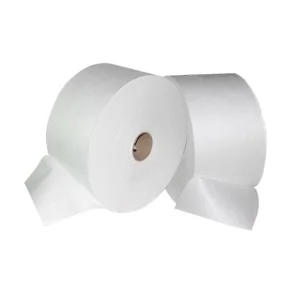
High-Efficiency Low Resistance Meltblown (MB) Fabric Material for Air Filter Media
View Product Details
CE Certification High Efficiency Low Resistance Meltblown MB Fabric for Air Filters
View Product Details
China Honeywell HRF-ARVP200 Replacement HEPA R Filter & Carbon Prefilter Set
View Product Details
Technical Intelligence & Inquiry Support
Frequently Asked Questions (FAQ) for B2B Procurement
Expert engineering answers addressing technical specifications, customization options, minimum order quantities, and export logistics.
What is the exact definition of MERV 13 fabric according to ASHRAE 52.2 standards?
Under the ASHRAE 52.2 test procedure, MERV 13 fabric must demonstrate a minimum particle size efficiency (PSE) of 50% or higher for particles in the 0.3 to 1.0 µm range (E1) and 85% or higher for particles in the 1.0 to 3.0 µm range (E2). Under European ISO 16890 standards, this correlates to an ePM1 50–65% rating. Our custom MERV 13 fabrics achieve these strict efficiency targets using advanced hydro-charged meltblown polyolefins while maintaining a low initial airflow resistance.
How does custom MERV 13 fabric differ from standard MERV 8 or MERV 11 filter media?
The key differences lie in fiber fineness, electrostatic charge density, and sub-micron particle arrestance. Standard MERV 8 fabric consists primarily of coarse spunbond or coarse fiberglass fibers designed to capture large lint and pollen (>3.0 µm). MERV 13 fabric incorporates micro-denier meltblown polypropylene fibers with deep electrostatic electret charges capable of capturing microscopic airborne droplets, bacteria, mold spores, and fine combustion soot without impeding airflow.
What customization options are available for master roll orders?
We provide extensive custom manufacturing services including: custom roll widths (from 100mm up to 3200mm), specific target basis weights (GSM ranging from 40 gsm to 180 gsm), multi-layer composite laminations (Spunbond + Meltblown + Wire Mesh / PET backing), functional antimicrobial or flame-retardant chemical treatments, and tailored roll lengths optimized for your automatic pleating machines.
Does hydro-charging offer superior stability compared to standard corona electret charging?
Yes. Hydro-charging uses high-pressure pure water jets to inject permanent dipole charges into the core of the polypropylene microfibers during extrusion. Standard corona charging only imparts surface charges that dissipate rapidly when exposed to atmospheric humidity or storage temperatures above 40°C. Hydro-charged MERV 13 fabrics maintain electret performance over extended shelf lives (up to 3 years) and high-humidity operational conditions.
Can MERV 13 synthetic fabric be processed on standard rotary or blade pleating equipment?
Absolutely. Our MERV 13 composite fabrics are engineered with high longitudinal and transverse tensile strength and controlled stiffness. Whether you utilize high-speed rotary pleating lines or reciprocating blade pleaters, our fabrics fold cleanly without micro-cracking the meltblown barrier layer or causing pleat collapse under high airflow.
What quality assurance testing protocols are performed on each production batch?
Every lot is sampled and tested in-house on TSI 8130A automated filter testers. Key parameters verified before release include: initial airflow pressure drop (Pa at 5.33 cm/s face velocity), penetration rate using NaCl aerosol, basis weight (GSM) uniformity across the roll width, caliper thickness, and heat-decay stability. Complete Certificate of Analysis (CoA) documentation is issued per shipment.
What is the typical lead time and minimum order quantity (MOQ) for custom roll orders?
Standard trial orders for stocked roll configurations start at an MOQ of 500 kg. Fully customized composite laminations or specialized color/width combinations carry an MOQ of 1,000 kg. Lead time for mass manufacturing in our Shenzhen facility typically ranges from 10 to 14 working days from technical sample approval.
How does MERV 13 filtration help buildings achieve LEED v4.1 certification?
LEED v4.1 Indoor Environmental Quality (EQ) credits reward building projects that install air filtration media rated MERV 13 or higher (or ISO ePM1 50%+) in main outdoor air supply streams. Upgrading from lower MERV ratings to our low-pressure-drop MERV 13 fabrics allows building owners to satisfy LEED requirements without needing costly fan motor upgrades.
Are OEM replacement filters compatible with major brands like Honeywell or Coway made by original OEMs?
No. Our replacement air filters and compatible MERV 13 filter cartridges are independent aftermarket products manufactured to meet or exceed OEM performance specifications. Brand names and model numbers are referenced solely for customer compatibility and fit verification.
How are MERV 13 master rolls packaged to prevent damage and charge decay during ocean freight?
Master rolls are wrapped in heavy-duty polyethylene inner sleeves, followed by moisture-proof aluminum foil barrier wrap, and secured in sturdy wooden crates or palletized master cartons with edge protectors. This hermetic packaging prevents ambient humidity degradation, dust contamination, and physical deformation during sea container shipping.