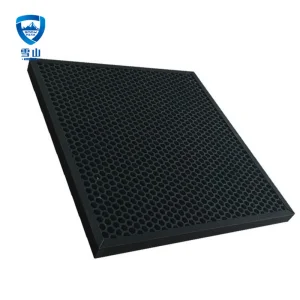
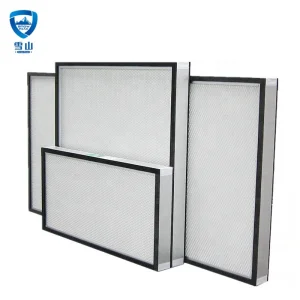
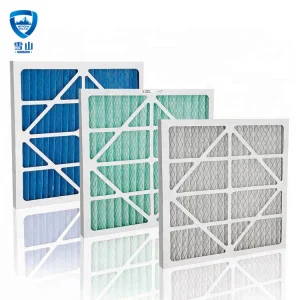
Primary Engineered Filtration Media & Assembly Systems
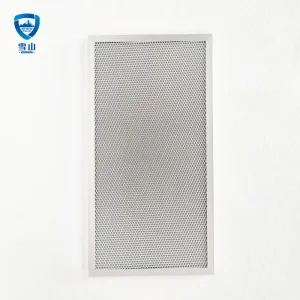
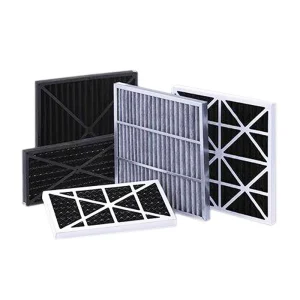
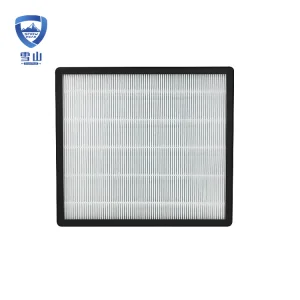
Explore initial technical configurations across HEPA, activated carbon, and specialized synthetic filter matrices engineered for industrial and OEM applications.

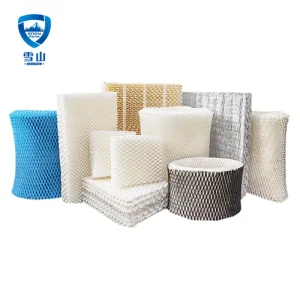



1. Macro-Trends & Technical Fundamentals of Custom MERV 13 Filter Media
The global air filtration landscape is undergoing a monumental paradigm shift driven by stringent indoor air quality (IAQ) mandates, updated building codes (such as ASHRAE Standard 62.1 and 62.2), and a heightened post-pandemic awareness of bio-aerosol mitigation. Within commercial, industrial, and residential HVAC systems, MERV 13 (Minimum Efficiency Reporting Value 13) filter material has emerged as the definitive benchmark balance point between high particle capture efficiency and manageable system static pressure resistance.
Key Engineering Insight: MERV 13 filter material is specifically formulated to arrest >50% of sub-micron particles (0.3 to 1.0 µm) and >85% of fine particles (1.0 to 3.0 µm). This makes MERV 13 media the minimum threshold recommended by public health agencies and LEED certification guidelines for capturing bacteria, droplet nuclei carrying viruses, fine combustion smoke, and micro-dust without requiring complete HVAC blower system overhauls.
As global manufacturers and commercial facility developers transition away from legacy MERV 8 fiberglass media, demand for customized MERV 13 synthetic media rolls, mini-pleated packs, and composite multi-layer structures has surged. B2B procurement directors are no longer merely seeking standardized dimensions; they require precise grammage engineering, tailored pleat spacing, flame-retardant chemistry, and low-initial-pressure-drop characteristics to optimize Total Cost of Ownership (TCO).
The Aerodynamic Physics of MERV 13 Filtration
Air filtration operates via four main mechanical mechanisms: Straining (Sieving), Impaction, Interception, and Diffusion. For MERV 13 media, which deals primarily with particle sizes between 0.3 and 10.0 micrometers, Interception and Electrostatic Attraction play the dominant roles.
Modern custom MERV 13 filter media utilizes a matrix of non-woven synthetic fibers (typically polypropylene or PET) combined with high-charge corona or hydro-electret technologies. Electret charging imparts permanent dipoles into the polymer fibers, allowing the media to attract fine airborne particulate matter like a magnet without restricting airflow fiber spacing. This electrostatic mechanism delivers exceptional initial filtration efficiency while keeping the initial resistance (pressure drop) low—crucial for energy conservation in large-scale commercial ventilation.
Electrostatic Charge Retention
Hydro-electret treated meltblown fibers retain charge stability under elevated thermal and humidity conditions, minimizing efficiency drop during prolonged operations.
Low Airflow Resistance
Engineered gradient density structures ensure an initial static pressure drop under 0.22 inches w.g. (55 Pa) at standard 492 FPM face velocities.
High Dust Holding Capacity (DHC)
Progressive fiber orientation traps coarse debris on the upstream side while fine fibers capture micro-particles downstream, extending filter lifespan.
2. Material Architecture: Synthetic Composites vs. Glass Fiber
Selecting the correct filter material requires understanding the physical trade-offs between synthetic meltblown/spunbond composite media and micro-glass media. While fiberglass was historically favored for high thermal stability, modern polypropylene (PP) synthetic MERV 13 composites have dominated the market due to zero fiber shedding, moisture resistance, and superior chemical compatibility.
| Performance Metric | Standard MERV 8 Synthetic | Custom MERV 13 PP Composite | MERV 13 Glass Fiber | HEPA H13 (EN1822) |
|---|---|---|---|---|
| E1 Efficiency (0.3 - 1.0 µm) | < 20% | 50% - 65% | 50% - 60% | > 99.95% |
| E2 Efficiency (1.0 - 3.0 µm) | 50% - 65% | > 85% | > 85% | > 99.99% |
| E3 Efficiency (3.0 - 10.0 µm) | 70% - 85% | > 90% | > 95% | 100% |
| Initial Pressure Drop (Pa @ 2.5m/s) | 25 - 40 Pa | 45 - 65 Pa | 75 - 95 Pa | 180 - 250 Pa |
| Fiber Shedding Risk | Zero | Zero (Laminated Spunbond) | Moderate to High | Zero (Membrane/Glass) |
| Moisture & Mold Resistance | High | Hydrophobic (100% RH) | Moderate | High |
| Relative Lifecycle Cost | Low ($) | Optimal ($$) | Medium ($$$) | High ($$$$) |
For enterprise filter manufacturers, custom laminations combine a structural spunbond outer layer (protecting against pleat collapse during high air volume surges) with an inner electrospun nanofiber or meltblown core layer. This multi-ply setup guarantees that pleat geometry remains uniform under varying face velocities.
3. Global Procurement Needs & Supply Chain Optimization
Procuring custom MERV 13 filter material requires evaluating far more than raw square-meter pricing. Global OEMs, commercial filter assemblers, and system integrators face severe supply chain dynamics, including raw polymer volatility, container shipping constraints, and strict quality control verification.
Evaluating Custom Manufacturing Capabilities
When selecting a primary supplier or contract manufacturer for MERV 13 media, global buyers must audit five core manufacturing dimensions:
- Grammage Consistency (GSM Tolerance): High-precision calendering and meltblown die-heads must maintain basic weight variations within ±3% across the entire master roll width (e.g., 1000mm - 2100mm).
- Thermal Stability during Pleating: The synthetic media must withstand mechanical rotary or blade pleating at speeds exceeding 150 pleats/minute without micro-tearing or structural delamination.
- Charge Decay Mitigation: Fast-decay electret charging leads to filters losing efficiency during storage. Superior factories utilize specialized charge additives (fluorochemicals or masterbatch electret synergists) that ensure a 5-year shelf life under ambient warehouse conditions.
- Roll Format Flexibility: Availability of custom slit widths, core diameters (3-inch vs. 6-inch paper/plastic cores), and specialized roll packaging (humidity-sealed foil lining) to prevent charge degradation during ocean freight.
- Regulatory Traceability: Full batch-level traceability linking finished media rolls back to specific polymer resin lots and TSI 8130 efficiency test certificates.
4. Macro-Industry Solutions & System Integration
Custom MERV 13 filter media is not a one-size-fits-all product. Different industrial sectors mandate tailored mechanical structures, composite backings, and chemical functionalizations to perform effectively.
Commercial Real Estate & Smart HVAC
Pleated MERV 13 panel filters engineered with wire-mesh backing or rigid cardboard frames to reduce fan energy draw in VAV systems while achieving LEED V4.1 IAQ credits.
Semiconductor & Cleanroom Pre-Filtration
Serves as the vital first-stage pre-filter in Fan Filter Units (FFUs) to protect costly ultra-low penetration air (ULPA) and HEPA terminal filters from early loading by ambient micro-dust.
Smart Home Air Purifiers & OEM Appliances
Composite media laminated with coconut-shell activated carbon layers, allowing dual-action PM2.5 particle filtration and gaseous VOC/formaldehyde adsorption within single compact cartridges.
Data Centers & Hyperscale Server Infrastructure
Low-resistance synthetic MERV 13 media tailored to handle massive air volume circulation while stripping out corrosive airborne particulate matter that causes server component degradation.
Transportation & High-Speed Rail Ventilation
Vibration-resistant, flame-retardant (UL 900 compliant) composite media engineered to maintain structural integrity under severe pressure surges inside subway and train HVAC compartments.
Healthcare & Clinical Outpatient Clinics
Antimicrobial treated MERV 13 media designed to inhibit mold, fungal growth, and bacterial colonization on the media surface in humid environments.
5. International Regulatory Standards & QA Protocols
To verify compliance in competitive global markets, custom MERV 13 filter material must be validated against standardized global testing protocols. Understanding the technical nuances between American and European testing standards is essential for international distribution:
Global Standard Equivalencies
- ASHRAE 52.2 (United States): Measures fractional efficiency across 12 particle size channels grouped into E1 (0.3-1.0µm), E2 (1.0-3.0µm), and E3 (3.0-10.0µm). MERV 13 requires E1 ≥ 50%, E2 ≥ 85%, and E3 ≥ 90%. Additionally, Appendix J tests conditioning to evaluate electrostatic charge loss.
- ISO 16890 (Global Standard): Replaced EN779 in Europe. MERV 13 typically correlates to ISO ePM1 50% to 65% or ISO ePM2.5 70% to 80%, depending on the specific electret vs. mechanical media composition. Iso-propanol (IPA) vapor conditioning is mandatory under ISO 16890 to measure uncharged mechanical baseline efficiency.
- EN 779:2012 (Legacy European Standard): Corresponds broadly to F7 / F8 grade pocket and pleated filters.
- UL 900 Flammability Standard: Guarantees that filter units, when clean, burn with limited intensity and do not emit toxic smoke volumes when subjected to direct flame testing.
Snow Peak Quality Assurance Framework: Every master roll of custom MERV 13 media produced undergoes strict four-tier Quality Control: IQC (Incoming Raw Material Inspection of PP resin & scrim) → IPQC (In-Process Automated TSI 8130 Laser Particle Counter Checks) → FQC (Finished Roll Tensile & Resistance Audits) → OQC (Pre-Shipment Container Moisture & Charge Packaging Checks).
6. Technical Roadmap & Next-Gen Material Developments
Anticipating industry trends for the next decade: Sustainable polymers, extended-charge electrospinning, and smart filtration integration.
PLA Bio-Degradable Media
Transitioning synthetic non-wovens from fossil-based PP to Polylactic Acid (PLA) polymers to reduce landfill footprint without sacrificing electret stability.
Electrospun Nano-Laminates
Integrating sub-100nm continuous nanofiber nets to achieve 100% mechanical (charge-independent) MERV 13 filtration at half the conventional thickness.
Cold Catalyst Composite
Incorporating room-temperature formaldehyde and ozone degradation catalysts directly into the MERV 13 substrate layer.
Conductive RFID Tracing
Embedding conductive printed threads into master rolls for real-time pressure drop monitoring and automatic filter replacement alerts.
7. Frequently Asked Questions (Technical B2B Procurement FAQ)
Clear, engineering-backed answers to the most common questions asked by sourcing managers, OEM engineers, and HVAC distributors.
What is the difference between custom MERV 13 synthetic media and standard off-the-shelf MERV 8 media?
Standard MERV 8 media is primarily designed to capture larger particles like lint, household dust, and pollen (3.0 to 10.0 microns) with minimal capture of sub-micron particles. Custom MERV 13 synthetic media incorporates fine meltblown fiber layers treated with electrostatic charges (electret), allowing it to capture over 50% of fine sub-micron particles (0.3 to 1.0 micron) such as bacteria, smoke, and virus-carrying droplets while maintaining low initial resistance.
Can standard HVAC fan blowers handle the static pressure drop of a MERV 13 filter?
Yes, provided the MERV 13 material is engineered with high-flow low-resistance synthetic composites. Traditional deep-bed MERV 13 media used to cause high pressure drop, but modern mini-pleated or high-pleat-density MERV 13 synthetic media operates at an initial pressure drop between 0.18 and 0.24 inches w.g. (45-60 Pa) at standard airflow velocities, making it fully compatible with standard residential and commercial HVAC blowers without causing motor overheating.
How does humidity affect the electrostatic charge in custom MERV 13 electret filter media?
Extreme humidity and atmospheric moisture can accelerate charge decay in basic tribo-charged media. However, high-quality custom MERV 13 media engineered via hydro-electret technology anchors charges deep within the hydrophobic polypropylene fiber matrix. This ensures that the electrostatic performance remains stable even under 100% relative humidity testing protocols.
What custom options are available when ordering MERV 13 filter media in master rolls?
Suppliers offer customized roll widths (e.g., from 100mm up to 2100mm), specific basis weights (GSM ranging from 70gsm to 200gsm), custom backing layers (such as wire mesh lamination, spunbond PET scrims, or activated carbon composite layers), custom color tinting (white, blue, green), and custom roll lengths suited for automated pleating machinery.
How does MERV 13 compare to HEPA H13 filters, and can MERV 13 replace HEPA?
MERV 13 and HEPA H13 serve different applications. MERV 13 captures >50% of 0.3-1.0µm particles and operates at low resistance (~50 Pa), making it ideal for continuous, high-volume building ventilation. HEPA H13 captures ≥99.95% of 0.3µm particles but creates high pressure drop (180-250 Pa), requiring specialized high-pressure fans (e.g., in cleanrooms or standalone air purifiers). MERV 13 cannot replace HEPA in sterile surgical or cleanroom environments, but it is often used as a pre-filter to extend HEPA life.
What testing documentation should enterprise buyers request from a filter material factory?
Buyers should request full ASHRAE 52.2 test reports (including Appendix J charge-depletion results), ISO 16890 fractional efficiency reports, TSI 8130 initial efficiency/resistance data, UL 900 flammability certificates, and RoHS/REACH compliance documentation for raw chemical components.
Advanced OEM Filters & Customized Material Series
Explore secondary engineered product configurations including pocket filter rolls, mini-pleated HEPA modules, and activated carbon composite filters.