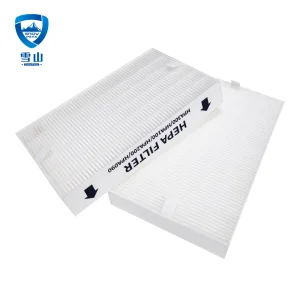
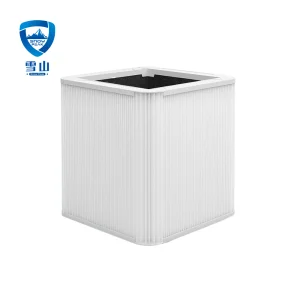
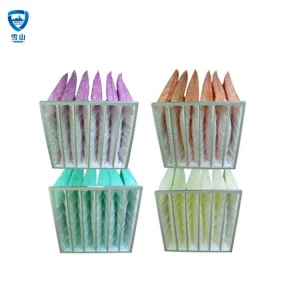
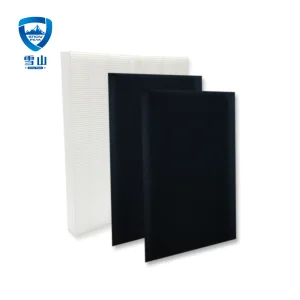
Primary Filtration Components & Assembly Series
Explore our top-tier air filtration products engineered for commercial buildings, industrial cleanrooms, and OEM replacement applications.

Custom China Metal Washable Metallic Mesh Air Filter - Stainless Steel Pre-Filter
View Product Details



Global Commercial & Industrial Landscape of MERV 13 Filter Materials
An exhaustive analysis of regulatory shifts, environmental standards, and the transition toward low-pressure-drop synthetic filtration media across global markets.
The global demand for MERV 13 filter materials has undergone a monumental shift over the last five years. Historically reserved for specialized medical cleanrooms and bio-pharmaceutical environments, MERV 13 rated filtration media has now established itself as the mandatory benchmark for commercial HVAC systems, high-density residential developments, educational institutions, and smart industrial air handling units (AHUs). Driven by revised ASHRAE (American Society of Heating, Refrigerating and Air-Conditioning Engineers) guidelines—specifically ASHRAE Standard 52.2-2017 and the post-pandemic Epidemic Task Force recommendations—building operators across North America, Europe, and Asia-Pacific are systematically replacing legacy MERV 8 and MERV 11 media with high-efficiency MERV 13 electrostatically charged non-woven synthetic fabrics.
This commercial evolution is heavily anchored in public health mandates and green building certification frameworks such as LEED v4.1 (Leadership in Energy and Environmental Design) and the WELL Building Standard. Under LEED Indoor Environmental Quality (EQ) credits, facilities must demonstrate continuous filtration capable of capturing fine particulate matter (PM2.5), airborne bacteria, carrier droplets, and combustion smoke. Consequently, global factories manufacturing MERV 13 composite filter rolls and pleated media face an urgent challenge: balancing microscopic particulate arrestance with optimal air permeability to minimize HVAC fan static pressure and operational electricity expenditure.
Performance Spectrum: ASHRAE 52.2 Efficiency Ratings
| Filter Rating Grade | E1 Particle Range (0.3 – 1.0 µm) | E2 Particle Range (1.0 – 3.0 µm) | E3 Particle Range (3.0 – 10.0 µm) | Primary Targets & Applications | Avg. Pressure Drop |
|---|---|---|---|---|---|
| MERV 8 | Unrated (<20%) | <20% | 70% – 85% | Dust mites, carpet fibers, pollen, lint | Very Low (~18 Pa) |
| MERV 11 | Unrated (<20%) | 65% – 79% | 85% – 95% | Auto emissions, mold spores, pet dander | Low (~28 Pa) |
| MERV 13 (Standard) | ≥ 50% | ≥ 85% | ≥ 90% | Bacteria, droplet nuclei, smoke, fine PM2.5 | Optimal (~35 Pa) |
| MERV 14 / F8 | 75% – 84% | 90% – 95% | ≥ 95% | Hospital general wards, paint spray booths | Moderate (~55 Pa) |
| HEPA (H13 / ISO 35E) | ≥ 99.95% (@ 0.3 µm) | ≥ 99.99% | ≥ 99.99% | Surgical ORs, microelectronics, cleanrooms | High (>120 Pa) |
Traditional mechanical-only media achieves sub-micron particle collection by tightening fiber density, which drastically increases airflow resistance and causes HVAC energy costs to spike by 30% to 50%. Custom MERV 13 filter material suppliers overcome this trade-off by utilizing multi-layer composite structures featuring corona hydro-charged electret meltblown polymers. This creates a permanent electrostatic dipole field within the fiber matrix, allowing sub-micron aerosol capture via electrostatic attraction while maintaining open porosity and ultra-low airflow resistance.
Advanced Manufacturing & Technology Roadmap for MERV 13 Media
Inside the factory line: From polymer extrusion and hydro-charging electret technology to composite thermal ultrasonic lamination.
Hydro-Charged Electret Processing
Utilizing high-pressure pure water atomization during meltblown fiber web formation to inject stable, deep-level real space charges into polypropylene microfibers. This achieves electrostatic retention stability exceeding 98% even after prolonged atmospheric exposure.
Gradient Density Multi-Layer Composites
Engineered with a progressive pore structure: a coarse spunbond PET pre-filter layer captures macroscopic lint, followed by ultra-fine meltblown electret fibers (0.5 – 3.0 µm diameter), backed by a rigid supporting scrim for high pleat integrity and structural rigidity.
Low Resistance & Static Decay Mitigation
Formulated with specialized nucleating additives and thermal stabilizers to prevent electrostatic charge decay under humid conditions (up to 95% RH) and elevated operating temperatures, ensuring long-term particulate efficiency during real-world lifecycle deployment.
Step-by-Step OEM Factory Manufacturing Workflow
- Polymer Resin Selection & MFI Control: High melt flow index (MFI 1200–1800 g/10min) virgin polypropylene resin is blended with custom electret masterbatches to guarantee uniform fiber spinning and thermal stability.
- Meltblown Microfiber Extrusion: Extruders push molten PP through microscopic spinneret nozzles, attenuated by supersonic hot airflow into ultrafine fibers ranging from 800 nanometers to 2.5 microns.
- High-Voltage Hydro-Electric Charging: The web passes through a proprietary liquid-jet charging field where dipolar polarization occurs at the molecular level, freezing charges within high-energy trap levels.
- Ultrasonic Thermal Lamination: The charged meltblown layer is ultrasonically bonded or hot-melt spray laminated with spunbond PET/PBT non-woven substrates and wire-mesh reinforcement without blocking air passage pores.
- Precision Slitting & Roll Packaging: Automated slitters cut master rolls into custom customer widths (from 100mm up to 2100mm) with electronically monitored tension control to prevent fiber compression or pleat deformation.
Macro-Industry Solutions & Localized Application Scenarios
Tailored OEM material formulations designed to solve complex air quality and HVAC engineering challenges across diverse commercial sectors.
Commercial Office Towers & Smart Complexes
In commercial AHUs, high initial pressure drops translate directly into increased fan motor energy consumption. Our custom low-drop MERV 13 media lowers initial resistance to under 32 Pa at 2.5 m/s velocity. This retrofits directly into 1-inch, 2-inch, and 4-inch deep filter frames without requiring costly HVAC fan motor upgrades, delivering up to 22% annual building energy savings while maintaining strict LEED IAQ compliance.
Healthcare Facilities & Outpatient Clinics
In accordance with ASHRAE Standard 170 for Healthcare Facilities, non-isolation clinical areas require robust filtration against bio-aerosols, bacteria-laden fungal spores, and respiratory droplets. Our MERV 13 materials utilize active antibacterial micro-treatments that inhibit microbial growth on the media matrix, preventing secondary contamination during high-humidity seasons.
Cleanroom & High-Tech Manufacturing Pre-Filtration
Semiconductor fabrication plants, automotive SMT assembly halls, and lithium battery dry-rooms rely on terminal HEPA/ULPA filters (H13–U15). Deploying custom MERV 13 pleated pre-filters upstream traps 90%+ of coarse and medium ambient particulate, effectively extending the working lifespan of expensive downstream cleanroom HEPA modules by 200% to 300%.
Residential & OEM Smart Purifier Systems
For global air purifier OEM brand manufacturers, our MERV 13 media is supplied in slit rolls optimized for mini-pleat production equipment. Combining high dust holding capacity (DHC) with customizable color scrims (white, blue, black carbon composite), our media satisfies strict consumer demands for low noise (CADR enhancement) and long filter replacement cycles.
Custom MERV 13 Media Technical Data Sheet & Parameters
Precision physical and performance specifications for OEM procurement managers and quality engineers.
| Parameter Test Item | Testing Standard / Condition | Technical Value / Range | OEM Customization Options |
|---|---|---|---|
| Base Weight (GSM) | ISO 536 / GB/T 451.2 | 60 g/m² – 140 g/m² (±5%) | Adjustable based on pleat depth requirement |
| Air Permeability | ASTM D737 (@ 125 Pa) | 850 – 1600 L/m²/s | Ultra-high flow versions available |
| Initial Pressure Drop | ASHRAE 52.2 @ 5.33 cm/s face velocity | 28 Pa – 38 Pa | Optimized for energy-saving HVAC filters |
| Fractional Efficiency (E1) | 0.3 – 1.0 µm Particulate | 50.0% – 68.0% | Exceeds standard MERV 13 thresholds |
| Fractional Efficiency (E2) | 1.0 – 3.0 µm Particulate | ≥ 86.5% | Ensures high-efficiency PM2.5 reduction |
| Dust Holding Capacity (DHC) | ASHRAE 52.2 Loading to 250 Pa | 70 g/m² – 120 g/m² | Multi-density composite layers for extended life |
| Tensile Strength (MD/CD) | GB/T 3923.1 | MD ≥ 110 N/5cm | CD ≥ 85 N/5cm | High rigidity for auto-pleating machines |
| Master Roll Width | Factory Mill Standard | 100 mm – 2100 mm | Precision slitting to exact customer width |
Engineering Trade-offs & Quality Control Protocol
When specifying custom MERV 13 media, engineering teams must evaluate the critical relationship between Pleat Density (Pleats Per Inch - PPI), media thickness, and pressure drop. Increasing PPI maximizes surface area and dust holding capacity, but overcrowding pleats leads to bridging—where airflow becomes choked between tightly compressed folds. Our factory application engineering team provides free computational fluid dynamics (CFD) pleat optimization modeling to help client factories determine the exact optimal pleat geometry for their custom filter frame housings.
Future Trends & Sustainability in MERV 13 Media Production
Exploring next-generation bio-based polymers, circular recycling, and smart IoT-enabled HVAC filtration integration.
Bio-Based & Recycled Polymers
To meet corporate Scope 3 carbon reduction targets, our R&D lab is pioneering PLA (Polylactic Acid) biodegradable meltblown webs and rPET (recycled Polyethylene Terephthalate) support scrims, cutting fossil-based resin consumption by 40% while preserving high electret charge retention.
Nanofiber Scrim Coatings
Electrospun polymer nanofibers (50–150 nm diameter) deposited on MERV 13 substrates provide surface-loading filtration characteristics. This prevents particles from penetrating deep into the media core, making pulse-jet self-cleaning systems significantly more efficient.
Smart IoT Pressure Drop Monitoring
Next-gen MERV 13 filter materials are integrated with RFID tags and conductive grid threads, enabling real-world continuous loading measurements and communicating directly with automated Building Management Systems (BMS).
Frequently Asked Questions (FAQ) for OEM Sourcing & Procurement
Get authoritative answers regarding MERV 13 material specifications, factory testing, minimum order quantities, and custom production capabilities.
What makes MERV 13 material superior to MERV 8 or MERV 11 for commercial buildings?
MERV 13 is the minimum threshold rated to capture sub-micron bio-aerosols, fine combustion particles, airborne bacteria, and respiratory droplets in the 0.3 to 1.0 micron size range (E1 efficiency ≥50%). In contrast, MERV 8 and MERV 11 materials are unrated for E1 sub-micron capture and only target larger dust, pollen, and lint particles.
How does your factory prevent electrostatic charge decay in humid climate environments?
We utilize advanced hydro-charging corona electret processing combined with thermal-stabilizing masterbatches. Unlike standard dry-corona charging which loses charge rapidly when exposed to humidity above 70% RH, hydro-charged microfibers trap electrical dipoles deep within the crystalline regions of the polypropylene structure, maintaining stable efficiency for over 12 to 18 months of continuous service.
Can you supply custom roll slit widths and master roll lengths for automated pleating machines?
Yes. Our factory operates precision computerized slitting and rewinding production lines. We supply slit rolls from 100 mm up to 2100 mm in width, with outer roll diameters up to 1000 mm on 3-inch (76mm) or 6-inch inner paper cores, tailored precisely to your automated rotary or blade pleating equipment.
Does upgrading an HVAC system to MERV 13 cause dangerous pressure drop spikes?
Not when using engineered synthetic electret composite media. While older mechanical glass-fiber MERV 13 media caused high airflow resistance, our hydro-charged synthetic composite keeps initial resistance below 35 Pa at standard face velocities (2.5 m/s or 500 FPM), allowing standard commercial AHU blowers to operate normally without motor strain.
What third-party testing reports and international certifications do you provide?
Every production batch undergoes strict internal Quality Control (IQC & OQC) using TSI 8130 Automated Filter Testers. Furthermore, we provide full third-party test reports according to ASHRAE 52.2-2017, ISO 16890 (ePM1 / ePM2.5 rating), RoHS compliance, and REACH chemical safety declarations.
What is the typical factory lead time and MOQ for custom OEM MERV 13 media orders?
Standard trial orders start at an MOQ of 1,000 kg or 5,000 m² for standard specifications. Production lead time is typically 7 to 14 working days from design confirmation, supported by our direct proximity to major ocean shipping ports in Shenzhen for fast export logistics.
Specialty Media Rolls, Replacement Filters & Carbon Composites
Explore our full line of specialized replacement filter elements, non-woven humidifier pads, and carbon-infused composite fabrics.