
Featured Activated Charcoal & Replacement Filtration Solutions (Batch A)
Explore high-efficiency gas-phase and particulate filtration assemblies, engineered for seamless OEM compatibility and high-capacity VOC adsorption.

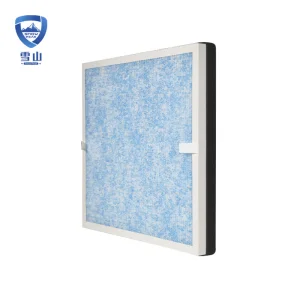




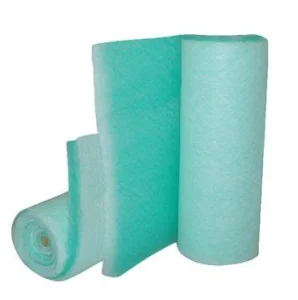

Global Market Landscape: Industrial & Commercial Activated Charcoal Air Filtration
In modern industrial manufacturing and high-occupancy built environments, particulate removal alone is no longer sufficient to guarantee compliance with indoor air quality (IAQ) mandates. The modern air treatment paradigm requires aggressive Gas-Phase Air Cleaning (GPAC) capabilities capable of capturing airborne molecular contaminants (AMCs), volatile organic compounds (VOCs), hazardous air pollutants (HAPs), and corrosive industrial off-gases. Leading activated charcoal air filter manufacturers and exporters occupy a vital position in the global clean-air supply chain, engineering carbon matrix filters that seamlessly integrate with HVAC systems, semiconductor cleanrooms, pharmaceutical facilities, automotive cabins, and residential air purifiers.
The global demand for high-grade activated carbon air filtration is driven by escalating regulatory frameworks—such as ASHRAE Standard 62.1, EN 13779 / ISO 16890, and stringent ambient WHO air quality guidelines. Industrial operators and HVAC engineering procurement construction (EPC) firms increasingly specify activated charcoal matrices to address complex chemical abatement challenges: from sulfur dioxide ($SO_2$), hydrogen sulfide ($H_2S$), and ammonia ($NH_3$) in wastewater facilities, to formaldehyde ($CH_2O$), benzene, and nitrogen dioxide ($NO_2$) in urban commercial towers and residential complexes.
Physical Physisorption
Driven by van der Waals forces across massive internal micro-porous surface areas ($1000–1500\, m^2/g$). Ideal for high molecular weight VOCs, organic solvents, hydrocarbons, and nuisance odors.
Chemical Chemisorption
Engineered via chemical impregnation ($KI, KOH, H_3PO_4$) to react synthetically with low molecular weight gases like $H_2S$, $NH_3$, $SO_x$, and formaldehyde, neutralizing toxic compounds through covalent bonding.
Hybrid Particulate-Gas Media
Advanced non-woven synthetic or HEPA fiberglass layers melt-laminated with micro-particulate carbon granules, achieving simultaneous PM2.5 capture and gas adsorption at low pressure drop.
Information Gain Insight: Residence Time vs. Adsorption Kinetics
Achieving superior gas removal efficiency requires optimizing dwell time (residence time) within the carbon bed. Standard particulate filters operate at high face velocities ($1.5–2.5\, m/s$), but effective activated charcoal adsorption demands residence times between $0.05$ and $0.2$ seconds depending on the target VOC spectrum. Premier Chinese exporters utilize dynamic bed geometry, mini-pleated carbon channels, and honeycomb carbon blocks to maximize surface contact while maintaining system energy efficiency.
Technical Carbon Architecture: Material Science & Metric Benchmarks
The efficiency of an activated charcoal filter is fundamentally determined by its precursor material, thermal activation process, pore structure distribution, and structural binding matrix. High-quality manufacturers categorize active carbon media into distinct grades based on physical and chemical performance standards:
| Parameter Benchmark | Coconut Shell Carbon | Coal-Based Carbon | Wood-Based Carbon | Impregnated Custom Carbon |
|---|---|---|---|---|
| Primary Precursor | Selected Virgin Coconut Shell | Bituminous / Anthracite Coal | Hardwood / Pine Sawdust | Coal / Coconut Base + Impregnants |
| Dominant Pore Type | Microporous (< 2 nm) | Meso & Macroporous (2-50 nm) | Macroporous (> 50 nm) | Targeted Modified Pores |
| Iodine Number (mg/g) | 950 - 1300 mg/g | 800 - 1050 mg/g | 900 - 1150 mg/g | 850 - 1100 mg/g |
| CTC Activity (%) | 60% - 90% | 50% - 70% | 60% - 85% | 55% - 75% |
| Hardness Index / Ball-Pan | > 97% (Ultra-Low Dust) | 90% - 95% | 85% - 92% | > 95% |
| Primary Application | Low Conc. VOCs, Purifiers | Industrial Air Exhaust, HVAC | Large Organic Molecules | Acid Gas, $NH_3$, $H_2S$, Formaldehyde |
Key Material Forms Manufactured for Global Export
- Carbon-Impregnated Non-Woven Foam & Cotton: Polyurethane open-cell foams coated with fine carbon powder. Offers minimal airflow resistance—ideal as pre-filters in HVAC units, window ACs, and residential purifiers.
- Honeycomb Activated Carbon Filters: Manufactured by extruding active carbon into rigid hexagonal cellular structures. Delivers exceptional air permeability, low pressure drop, and high volumetric holding capacity for high-CFM industrial handling units.
- Pleated Composite Media (HEPA + Carbon): Micro-granular carbon bonded between dual layers of synthetic meltblown or fiberglass media. Simultaneously achieves MERV 13 to H13 particulate filtration alongside targeted chemical adsorption.
- Extruded Pellets & Granular Carbon Pack Filter V-Banks: Heavy-duty rigid plastic or galvanized steel header frames loaded with loose 3mm/4mm carbon pellets for heavy industrial gas scrubbers and airport terminal HVACs.
China Manufacturing Efficiency & Strategic Supply Chain Benchmarks
China has solidified its position as the premier manufacturing hub for global air filtration products through unmatched supply chain clustering, advanced automation, and sophisticated material processing ecosystems. Leading Chinese manufacturers—such as Shenzhen Snow Peak Clean Technology Co., Ltd.—leverage vertical integration to deliver significant competitive advantages to international buyers, OEM brands, and distributor networks.
Vertical Supply Integration
Proximity to premier active carbon activation hubs (Ningxia coal carbon & Fujian/Guangdong coconut carbon refining) enables direct factory-gate raw material sourcing with verified CTC activity testing and guaranteed lot-to-lot consistency.
Automated Precision Pleating
High-speed CNC pleating lines equipped with robotic hot-melt glue bead dispensing ensure uniform pleat spacing, optimized airflow channels, zero bypass leakage, and maximal active surface area utilization.
Rigorous QC System
Four-stage Quality System (IQC → IPQC → FQC → OQC) adhering to ISO 9001 and ISO 16890. Every production batch undergoes strict pressure drop testing, initial fractional efficiency validation, and structural seal verification.
OEM/ODM Prototyping Agility
Rapid custom tooling turnaround: engineered sample creation within 48 to 72 hours for custom dimensional specifications, customized plastic/cardboard/aluminum frame moldings, and private-label packaging.
Localized Industrial & Commercial Application Scenarios
Activated charcoal filters are utilized across highly diverse environmental conditions. Manufacturers must engineer specialized media combinations tailored to the specific chemical contaminant profiles of each industry.
Airport Terminals & Urban Commercial HVAC
High ambient concentrations of jet engine exhaust fumes, kerosene vapors, $NO_x$, and ozone ($O_3$). Standard solution utilizes MERV 13 pleated composite carbon filters or multi-pocket synthetic bag filters impregnated with coconut carbon.
Semiconductor & Electronics Cleanrooms (AMC Control)
Airborne Molecular Contamination (AMC) can corrode micro-circuitry and degrade silicon wafer yields. Low-outgassing chemical filters with bonded carbon matrix panels capture trace organosilicones, acid gases, and dopants down to parts-per-billion (ppb) levels.
Paint Spray Booths & Automotive Refinishing
Exhaust systems release intense concentrations of aromatic hydrocarbons (Toluene, Xylene, Ethylbenzene). Heavily loaded wood/coal-based carbon pleated cells prevent environmental VOC emissions and ensure compliance with local EPA emission regulations.
Residential Air Purifiers & Smart Home Devices
OEM aftermarket replacement filters matching brands like Honeywell, Coway, Levoit, and Blueair. Combines True H13 HEPA for PM0.3 micro-particles with honeycomb carbon pellets for pet odors, cooking fumes, and formaldehyde off-gassing.
Hospitals, Labs & Isolation Facilities
Removal of anesthetic gas residues, disinfectant chemicals (Isopropanol, Ethanol, Glutaraldehyde), and necropsy odors. Requires high-efficiency HEPA + chemisorption impregnated carbon dual-stage filter modules.
Wastewater Treatment & Chemical Off-Gas Remediation
Severe corrosive environments containing high concentrations of Hydrogen Sulfide ($H_2S$) and Ammonia ($NH_3$). Utilizes heavy-duty V-bank or deep-bed filters filled with caustic-impregnated pellets ($KOH/KI$).
Global Procurement Standards & Strategic Sourcing Checklist for B2B Buyers
When evaluating international suppliers for large-scale carbon filtration contracts or ongoing OEM replacement filter supply chains, procurement officers must conduct thorough technical due diligence beyond basic price-per-unit metrics. Key evaluation parameters include:
- Gas-Phase Test Protocol Compliance (ISO 10121 / ASHRAE 145.2): Ensure the manufacturer provides verified third-party laboratory test reports validating gas removal efficiency, initial capacity, and breakthrough curves for standard test gases (Toluene, $SO_2$, Ozone, Formaldehyde).
- Dusting & Particle Shedding Resistance: Poorly bound carbon media releases fine carbon dust downstream, clogging secondary filters or damaging HVAC motors. High-grade suppliers utilize non-dusting polymer binders and secondary downstream synthetic scrim linings.
- Structural Integrity under High Relative Humidity (RH): Physical physisorption of VOCs degrades rapidly when RH exceeds 70% as water vapor competes for micropores. Leading manufacturers supply hydrophobic moisture-resistant carbons or custom-treated impregnants for tropical and humid environments.
- Frame Options & Flame Retardancy: Verify fire resistance compliance (UL 900 / DIN 53438) and specify rigid materials appropriate for the installation: heavy-duty moisture-proof beverage board, extruded aluminum, stainless steel, or ABS plastic frames.
- Packaging & Shelf-Life Protection: Activated carbon begins adsorbing ambient moisture and gases immediately upon exposure to air. Manufacturers must seal filters in hermetic, multi-layer polybags with vapor barriers to ensure a minimum 2-year factory-fresh shelf life prior to installation.
Future Industry Trends: The Next Generation of Carbon Air Filtration
The chemical filtration market is rapidly evolving toward sustainable, intelligent, and multi-functional material formulations. Key advancements driving the industry include:
Cold Catalyst & Photocatalyst Integration
Combining active carbon substrates with nano-titanium dioxide ($TiO_2$) or manganese-based cold catalysts. Instead of merely storing trapped VOCs, the catalyst continuously breaks down formaldehyde and benzene into $H_2O$ and $CO_2$ at room temperature, dramatically extending filter lifespan.
Bio-based & Regenerative Carbon Media
Shift toward zero-carbon footprint precursor materials derived from agricultural biomass (coconut husks, bamboo, nut shells) activated via eco-friendly steam processes without harsh chemical reagents.
Smart Sensor & IoT Break-Through Monitoring
Incorporation of embedded optical or RFID differential pressure and gas saturation sensors within the filter cassette, alerting building automation systems (BAS) precisely when chemical breakthrough occurs.
Featured Industrial & HEPA Filtration Products (Batch B)
Browse our expanded portfolio of medium, high-efficiency, cleanroom, and customized air filter replacements exported globally.






Frequently Asked Questions (FAQ) - Sourcing & Technical Insights
Get authoritative answers directly from our senior filtration engineers regarding active carbon specifications, OEM order workflows, and operational performance.