
Featured Air Filtration Products & OEM Replacement Series
Explore our factory-direct activated charcoal, HEPA combination filters, and high-efficiency gas-phase adsorption media engineered for global commercial, industrial, and residential air quality management.

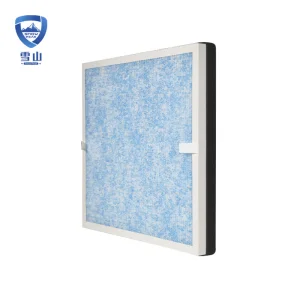





1. Technical Architecture & Chemical Mechanisms of Activated Charcoal in Gas-Phase Filtration
A comprehensive examination of pore matrix distribution, Iodine/CTC metrics, substrate selection, and chemical impregnation technologies powering modern airborne molecular contamination (AMC) control.
In modern industrial and commercial ventilation engineering, particulate filtration handled by standard mechanical substrates (such as fiberglass or meltblown non-wovens) is inherently incapable of capturing gaseous phase pollutants, Volatile Organic Compounds (VOCs), or toxic chemical vapours. To neutralize airborne molecular contamination, engineers rely on Activated Charcoal (Activated Carbon)—a highly porous carbonaceous adsorbent characterized by an extraordinary internal surface area ranging from 800 m²/g to over 1,500 m²/g.
Selecting a premier Activated Charcoal For Air Filtration Supplier & Factory requires evaluating key physical and chemical characteristics. Physical adsorption (van der Waals attraction) relies heavily on matching the kinetic diameter of target gas molecules with the carbon material’s pore size distribution:
Microporous Domain (< 2 nm)
Dominates gas-phase air purification. Ideal for trapping small-molecule VOCs, low-molecular-weight hydrocarbons, formaldehydes, and odor-causing molecules under atmospheric pressure.
Mesoporous Matrix (2 - 50 nm)
Serves as crucial transport arteries for larger organic vapors, complex aromatic compounds, and heavy industrial emissions, ensuring fast adsorption kinetics and reduced residence time requirements.
Chemical Impregnation
Treating virgin carbon with chemisorbents (such as Potassium Iodide KI, KOH, or phosphoric acid) enables targeted catalytic destruction of acidic gases (H₂S, SO₂), basic compounds (NH₃), and mercury vapors.
To quantify carbon quality during global procurement audits, factories evaluate two benchmark testing standards: Iodine Number (mg/g) and Carbon Tetrachloride Activity (CTC %). Higher CTC values (ranging from 50% to 90%) directly correlate with extended saturation life in HVAC recirculating units, reducing replacement frequency for facility managers.
| Raw Material Substrate | Iodine Number (mg/g) | CTC Value (%) | Hardness / Abrasion Index | Primary Air Filtration Application |
|---|---|---|---|---|
| Coconut Shell Activated Carbon | 1,000 - 1,300 | 60% - 85% | 97% - 99% (Ultra-High) | Residential Air Purifiers, Cleanroom AMC Filters, Respirators |
| Bituminous Coal Carbon | 800 - 1,050 | 45% - 65% | 90% - 95% (Medium-High) | Commercial HVAC AHU Filters, Industrial Exhaust Scrubbers |
| Wood-Based Carbon | 900 - 1,200 | 70% - 95% | 80% - 88% (Moderate) | High-Volume Low-Pressure Drop V-Bank Carbon Modules |
| Catalytic/Impregnated Formulations | 950 - 1,150 | 55% - 75% | 95% - 98% (High) | Sewer Treatment Plants, Semiconductor Fabs, Biopharmaceutical Facilities |
2. Global Commercial & Industrial Market Status: Demand Drivers & Growth Trajectory
Macroeconomic market analysis across North America, Europe, and Asia-Pacific detailing regulatory pressure, ESG compliance, and industrial cleanroom expansions.
The global demand for high-performance activated charcoal in air filtration is expanding at a CAGR of 7.8% (2024–2030). Industry adoption is driven by stringent indoor air quality (IAQ) mandates, rising industrialization in emerging markets, and environmental ESG compliance across chemical processing, automotive manufacturing, and microelectronics production.
Across key geographic sectors, purchasing dynamics vary based on localized regulatory structures and specialized industrial focus:
- North America: Driven by ASHRAE 62.1 standards and EPA regulations governing industrial VOC emissions. Demand centers on MERV 13 to MERV 16 combination filters incorporating carbon-impregnated media for commercial office towers, healthcare systems, and wildfire smoke mitigation.
- Europe: Governed by EN 16798 standards and REACH environmental compliance. EU facilities prioritize circular economy products—demanding low-pressure drop V-bank carbon packs, low energy consumption, and thermal reactivation capabilities.
- Asia-Pacific: Rapid expansion of semiconductor cleanrooms (EUV lithography AMC control), battery gigafactories, and massive urbanization drives demand for OEM activated carbon filter rolls, honeycomb carbon blocks, and high-efficiency HEPA-carbon composite assemblies.
3. China Manufacturing Powerhouse & Supply Chain Efficiency Advantages
Why Tier-1 global importers, distributor networks, and OEM purifier brands partner with specialized Chinese manufacturing hubs like Shenzhen Snow Peak Clean Technology.
China maintains a world-leading ecosystem in activated carbon processing, non-woven substrate laminations, and automated filter frame assembly. Partnering with a specialized Chinese Activated Charcoal For Air Filtration Supplier & Factory provides significant structural and financial advantages:
End-to-End Vertical Integration
From raw coconut carbonization and chemical impregnation to high-speed ultrasonic pleating and polyurethane foam sealing—all manufacturing steps occur under one roof, reducing intermediary margins.
Automated Carbon Distribution Engineering
Advanced scatter-coating lines ensure uniform carbon grammage (from 100g/m² to 800g/m²) across non-woven substrates without pinholes, air bypass channels, or micro-cracks.
Proximity to Ocean Logistics Hubs
Located in Shenzhen's manufacturing corridor, facilities leverage direct port access (Yantian/Shekou) to offer fast container dispatch, flexible FOB/CIF logistics, and expedited sample turnaround within 5-7 working days.
4. Field-Tested Application Scenarios & Engineering Case Matrix
Specific operational implementations showing how custom carbon impregnated media solves targeted contamination challenges across key commercial and industrial sectors.
Commercial HVAC & Airport Ventilation
Challenge: High concentrations of jet fuel exhaust, sulfur dioxide (SO₂), and nitrogen oxides (NOx) entering passenger terminal HVAC units.
Solution: Custom multi-pocket bag filters and V-bank modules packed with KI-impregnated coconut carbon, achieving 92% single-pass gaseous contaminant removal at 2.5 m/s face velocity.
Semiconductor Cleanroom AMC Control
Challenge: Trace organic outgassing (organosilicon compounds) corroding lithography mirrors and wafer surfaces in Class 100 cleanrooms.
Solution: Mini-pleated carbon composite filters with zero off-gassing synthetic frames and ultralow initial pressure drop (< 65 Pa), extending wafer yield by 14%.
Residential Air Purifiers & OEM Refills
Challenge: Off-gassing formaldehydes and TVOCs from new home furniture, carpet adhesives, and cooking odors.
Solution: Dual-layer composite HEPA + honeycomb activated carbon filters, custom-sized for major brands (Honeywell, Blueair, Coway), achieving GB/T 18801-2022 F4 CADR ratings.
Industrial Exhaust & Spray Booth Scrubbers
Challenge: Heavy paint solvent vapors (xylene, toluene) emitted during automotive repair paint spraying.
Solution: Heavy-duty metal panel filters packed with high-CTC extruded pelleted carbon (4mm diameter) combined with G4 paint-stop fiberglass pre-filter rolls.
5. Global Procurement Strategy & Quality Control Verification Audit
Essential testing parameters and standardized audit protocols required when sourcing OEM/ODM activated charcoal filters from overseas manufacturing partners.
Procurement directors must establish rigorous quality assurance benchmarks to avoid common market issues, such as premature carbon dust shedding, uneven media packing, or rapid gas bypass. When auditing a potential factory partner, enforce the following technical protocols:
1. Pressure Drop vs. Residence Time Ratio
Ensure the filter design provides a minimum residence time of 0.05 to 0.1 seconds without imposing excess static resistance on HVAC blower motors. High-performance honeycomb structures typically keep initial pressure drops under 45 Pa at 1.5 m/s.
2. Dust Shedding & Hardness Control
Require a minimum carbon hardness rating of 95% (ASTM D3802). Carbon dust shedding can contaminate downstream HEPA filters or sensitive electronic server racks. Demand hot-melt encapsulation or protective non-woven backing layers.
3. Global Certification Compliance
Verify that filters comply with international testing standards including ISO 16890 (for general ventilation), EN 1822 (for HEPA integration), UL 900 (flammability standards), and RoHS / REACH chemical safety mandates.
6. Industry Trends: Catalytic Hybridization & Sustainable Bio-Carbon
Next-generation advancements in gas-phase filtration technology, combining physical adsorption with room-temperature catalytic oxidation.
The air filtration industry is undergoing a paradigm shift from passive adsorption to active continuous breakdown. Passive activated charcoal saturates over time, requiring physical replacement once micropores fill. Emerging technologies implemented by advanced suppliers include:
- Cold Catalyst & Carbon Hybrids: Integrating manganese-copper oxide catalyst nano-coatings directly onto activated carbon substrates. This enables continuous room-temperature decomposition of formaldehyde into H₂O and CO₂, dramatically extending active filter lifespan.
- Electrostatic-Laminated Carbon Scrims: Laminating low-resistance meltblown electrostatic fibers with fine activated carbon powder (mesh size 200-300). This delivers dual-action PM2.5 particle capture and rapid VOC removal in a single ultra-thin, low-profile media roll.
- Sustainable Bio-Charcoal Sourcing: Transitioning from coal-derived carbon to renewable agricultural waste streams (coconut husk, bamboo, fruit pits) to help corporate end-users meet Scope 3 carbon footprint reduction goals.
7. Frequently Asked Questions (FAQ) - Buyer's Technical Reference
Expert answers to critical procurement, chemical compatibility, and installation questions asked by global B2B buyers.
More Specialized Air Filtration Products & Factory Direct Media
Explore our extensive product line including customized humidifier pads, high-efficiency HEPA filters, replacement cartridges, and raw non-woven filter media rolls.






Partner with a Leading China Air Filtration Manufacturer
Whether you require bulk rolls of impregnated activated carbon media, custom OEM purifier replacement filters, or high-efficiency HVAC modules—our engineering team is ready to deliver tailored solutions.
Request Factory Quote & Free Samples