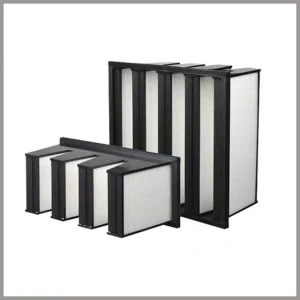
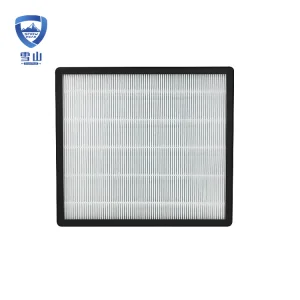
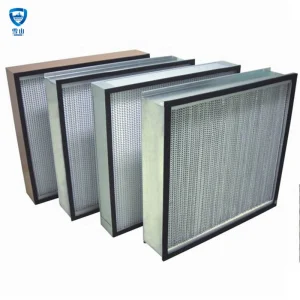
Featured Air Filter Fabric & Assembly Products (Part I)
Explore our engineering-grade air filter fabrics, pleated inserts, and high-efficiency filtration elements manufactured under ISO 9001:2015 certified cleanroom environments.

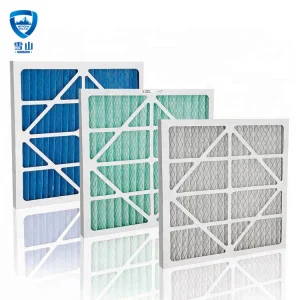


1. Executive Whitepaper: Evolution of Air Filter Fabric Materials
In the contemporary industrial cleanroom, commercial HVAC, and specialized OEM air purification sectors, the choice of air filter fabric directly governs system efficiency, operational energy expenditure, and environmental compliance. Air filter fabric—encompassing non-woven synthetic fibers, electrostatically charged meltblown polymers, borosilicate micro-glass media, and advanced nanofiber laminates—acts as the foundational barrier against airborne particulate matter (PM10, PM2.5, PM1.0), bio-aerosols, and volatile organic compounds (VOCs).
As global standards such as ISO 16890 and EN 1822:2019 redefine particle size fraction capture requirements, industrial procurement teams must look beyond superficial metrics. Evaluating air filter fabric suppliers requires a deep technical comprehension of microstructural fiber geometry, gradient density distribution, electrostatic charge durability (corona vs. hydro-triboelectric charging), and resistance to thermal or chemical degradation.
E-E-A-T Technical Benchmark: Information Gain for B2B Buyers
This technical whitepaper compiles over 15 years of manufacturing telemetry, empirical laboratory testing data (evaluated on TSI 8130A automated filter testers), and real-world performance metrics. It provides procurement directors and filtration engineers with actionable criteria to select high-performing fabric suppliers while mitigating supply chain risks.
Guaranteed Filtration Efficiency
From G2–G4 primary synthetic rolls to HEPA (H13–H14) and ULPA (U15–U17) grades, our fabric media delivers certified fractional efficiency aligned with ISO 29463 standards.
Optimized Energy Consumption
Engineered with gradient fiber packing, our low-resistance fabric structures minimize differential pressure drop (ΔP), cutting HVAC fan power consumption by up to 28%.
High Dust Holding Capacity (DHC)
Multi-layered meltblown non-wovens and wire-mesh laminated synthetic media extend service life cycles, dramatically lowering maintenance frequencies.
2. Global Market Dynamics & International Compliance Standards
The global market for air filter fabrics is undergoing a structural paradigm shift driven by stringent indoor air quality (IAQ) mandates, ESG decarbonization goals, and rapid expansion in semiconductor micro-fabrication and biopharmaceutical manufacturing. Leading OEM filter manufacturers and engineering procurement contractors (EPCs) require suppliers who comply with comprehensive regulatory frameworks across North America, Europe, and Asia-Pacific.
| Standard / Regulation | Geographic Scope | Technical Focus Area | Implications for Filter Fabric Selection |
|---|---|---|---|
| ISO 16890 | Global / Europe | ePM1, ePM2.5, ePM10 Particulate Classification | Replaces EN 779; requires fabrics tested against uncharged IPA vapor discharge to verify mechanical efficiency. |
| ASHRAE 52.2 | North America | MERV 1 to MERV 16 Rating System | Demands consistent velocity performance (295 fpm) and resistance to electrostatic decay in synthetic media. |
| EN 1822 / ISO 29463 | Global | HEPA (E10-H14) & ULPA (U15-U17) Testing | Focuses on MPPS (Most Penetrating Particle Size: 0.12–0.25 µm); requires pinhole-free micro-glass or nanofiber webs. |
| EU REACH & RoHS | European Union | Chemical Safety & Restricted Substances | Mandates heavy-metal-free, PFOA-free, and halogen-free binders in non-woven composite fabrics. |
| UL 900 / DIN 53438 | Global / Germany | Flame Retardancy & Smoke Generation | Ensures synthetic filter fabric rolls pass self-extinguishing F1/K1 thermal safety tests for HVAC installation. |
Understanding the interplay between these international standards is paramount when sourcing custom filter rolls or finished filter elements. For instance, synthetic media relying purely on electrostatic charge may exhibit high initial MERV ratings under ASHRAE 52.2, but can experience efficiency degradation when subjected to liquid aerosols or urban smog. A reputable Air Filter Fabric Supplier utilizes dual-phase media engineering—combining strong mechanical interlinking with durable hydro-triboelectric charging to preserve efficiency throughout the product lifespan.
3. Material Science: Non-Woven Air Filter Fabric Methodologies
Air filter fabric engineering relies on precise polymeric physics and fiber arrangement. Below is an exhaustive breakdown of the primary non-woven fabric technologies manufactured and exported for industrial filter assembly.
Material Architecture & Performance Telemetry
Comparative physical characteristics of core filter media substrate configurations:
Meltblown Polypropylene (PP) Media
Produced via ultra-high velocity hot air extrusion, micro-denier meltblown fibers create a dense three-dimensional labyrinth. When treated with corona field charging or water-based hydro-tribo electrification, these fabrics achieve H11–H13 efficiency at extremely low pressure drops.
Borosilicate Micro-Glass Fiber
Constructed via a wet-laid paper-making process, micro-glass fabric provides absolute mechanical filtration without relying on electrostatic charges. Ideal for critical pharmaceutical, semiconductor, and nuclear containment facilities requiring H13–U17 HEPA/ULPA standards.
Needle-Punched & Thermal Synthetic Rolls
Heavy-duty coarse filter fabrics engineered from polyester (PET) or polyacrylonitrile (PAN). Designed for G2–G4 pre-filtration, spray booth floor filtration, and industrial dust collection bags with high mechanical tensile strength and moisture resistance.
Activated Carbon Composite Media
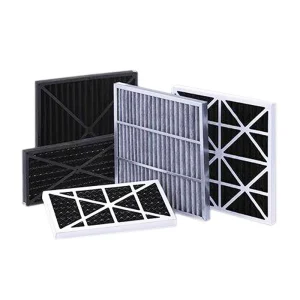
A multi-layer sandwich structure comprising non-woven carrier fabric laminated with coconut-shell activated carbon, cold catalyst, or alumina particles. Designed to simultaneously capture particulate matter and eliminate VOCs, formaldehyde, and toxic odor gases.
Electrospun Nanofiber Laminates
State-of-the-art nanofiber webs (fiber diameter < 100 nm) electrospotted onto spunbond or mesh substrates. Provides surface-loading filtration that prevents depth clogging and enables automated pulse-jet cleaning in industrial collectors.
Wire-Mesh Reinforced Fabric Rolls
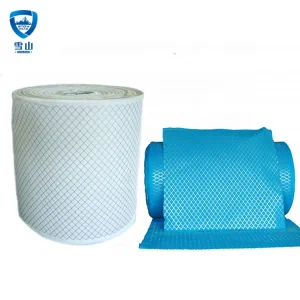
Synthetic synthetic fabric laminated with galvanized or stainless-steel wire mesh. Essential for pleated HVAC filter construction, providing structural rigidity and preventing pleat collapse under high air volume conditions.
4. Macro Industry Solutions & Custom Application Engineering
Different industrial sectors present unique challenges, ranging from ambient humidity and high operating temperatures to corrosive chemical exposure. Below is a comprehensive matrix detailing how our fabric media solutions address specific macro-industry operational challenges.
Semiconductor & Microelectronics Cleanrooms
Cleanroom environments demand ultra-low outgassing fabrics to prevent airborne molecular contamination (AMC). Our gel-seal HEPA/ULPA filter fabrics use high-purity borosilicate micro-glass or PTFE membranes that emit zero organic volatiles, maintaining ISO Class 1 to Class 5 cleanroom integrity.
Commercial HVAC & Building Automation
Modern commercial buildings demand low-energy MERV 8 to MERV 16 pleated filters. Our wire-mesh laminated synthetic fabrics and pocket bag filter media allow system integrators to meet ASHRAE 52.2 standards while minimizing pressure drop across fan coils and air handling units (AHUs).
High-Temperature Industrial Exhaust
Foundries, cement kilns, and incineration plants generate exhaust streams exceeding 200 °C. Our heat-resistant stainless-steel frame HEPA assemblies and woven fiberglass filter fabrics withstand extreme thermal stress, corrosive acid gases, and heavy dust loading.
Aftermarket Consumer Air Purifier Brands
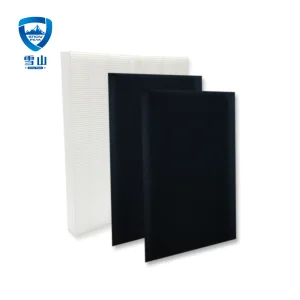
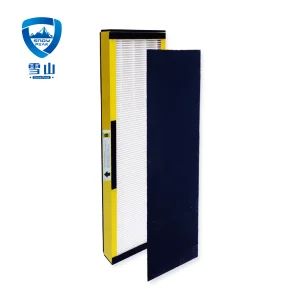
OEM consumer brands (such as Coway, Honeywell, GermGuardian, Levoit, and Blueair) require high-volume replacement filters matching exact dimensional tolerances. We produce private-label replacement inserts featuring True H13 HEPA fabric combined with honeycombed activated carbon frames.
5. Localization Support & Comprehensive Quality Control
Sourcing air filter fabric from international suppliers requires rigorous quality control protocols to ensure every roll or finished batch meets specified performance metrics. As a national high-tech enterprise, our manufacturing ecosystem employs a standardized 4-stage Quality Assurance System (IQC → IPQC → FQC → OQC).
1. Incoming Quality Control (IQC)
Every batch of raw polypropylene resin, polyester fiber, or micro-glass web undergoes spectroscopic analysis, basis weight verification (g/m²), and tensile strength testing prior to production line feeding.
2. In-Process Quality Control (IPQC)
Continuous inline laser particle counters and differential pressure transducers monitor fabric porosity, thickness uniformity, and electrostatic charge levels during extrusion, pleating, and lamination.
3. Final Quality Control (FQC)
Finished filter fabric rolls and pleated filter elements are sample-tested on automated TSI 8130A equipment using NaCl and DOP/PAO oil aerosols to confirm exact penetration percentage and airflow resistance.
4. Outgoing Quality Assurance (OQC)
Pre-shipment verification covers moisture-proof packaging, edge sealing, barcode labeling, custom box printing, and international freight container loading security.
Global Procurement & OEM Private-Label Service
We provide global partners with localized custom options: bespoke fabric roll widths (from 100 mm up to 2200 mm), custom slit roll lengths, private-label box packaging, custom frame material integration (aluminum, stainless steel, plastic, or moisture-resistant cardboard), and export customs support.
6. Technological Roadmap & Future Outlook (2025–2030)
As the air filtration industry transitions toward smart, eco-friendly technologies, air filter fabric suppliers must innovate across material sustainability, functional surface coatings, and digital integration.
Bio-Based & Recyclable Polymers
Transitioning from petroleum-derived polypropylene to polylactic acid (PLA) and recycled PET (rPET) non-wovens, reducing carbon footprints without compromising filtration efficiency.
Self-Cleaning & Antimicrobial Coatings
Integrating cold-catalyst, silver-zinc ion matrixes, and titanium dioxide (TiO2) photocatalytic nanoparticles into non-woven fabrics to actively neutralize bacteria, viruses, and VOCs upon contact.
Smart IoT Integrated Fabrics
Developing conductive thread webs and piezoresistive non-woven layers that send real-time pressure-drop and particulate-saturation signals to building automation software.
7. Frequently Asked Questions (B2B Technical FAQ)
Comprehensive answers to common procurement, technical, and manufacturing questions regarding air filter fabric and supply programs.
Featured Air Filter Fabric & Assembly Products (Part II)
Discover additional high-efficiency filter media pads, cleanroom mini-pleats, gel-seal assemblies, and OEM filter elements manufactured to stringent global specifications.