
Featured Industrial Air Filtration Products
Direct OEM/ODM Solutions for Air Handling Units (AHU), Cleanrooms & Commercial Ventilation Systems



Executive Whitepaper: Industrial Gas-Phase Filtration in Modern AHUs
Addressing Volatile Organic Compounds (VOCs), Airborne Molecular Contaminants (AMCs), and Indoor Air Quality (IAQ) Standards
In modern industrial HVAC architecture, the integration of high-performance gas-phase molecular filtration within Air Handling Units (AHUs) has evolved from an optional IAQ enhancement into a non-negotiable mission-critical requirement. Rapid urbanization, stringent municipal environmental emissions mandates, and the rising prevalence of sensitive production processes (such as sub-nanometer semiconductor photolithography and sterile biopharmaceutical compounding) demand sophisticated removal of volatile organic compounds (VOCs), acid gases, toxic industrial chemicals (TICs), and ambient odorous molecules.
Traditional particulate filtration media (such as MERV 8 to HEPA H14) rely on physical interception, inertial impaction, diffusion, and straining mechanisms to capture airborne solid and liquid aerosols. However, these media are entirely transparent to gaseous-phase molecular pollutants. To eliminate gaseous contaminants with aerodynamic diameters under 0.001 micrometers, commercial and industrial HVAC engineers must deploy Activated Carbon Air Filters engineered with high microporosity, exceptional specific surface area, and chemical surface functionalization within the AHU mechanical plenum.
The Thermodynamics & Physics of Activated Carbon Adsorption
The core mechanism of activated carbon filtration in AHU applications relies on two distinct phenomena: Physisorption (Physical Adsorption) and Chemisorption (Chemical Adsorption).
- Physisorption via van der Waals Forces: Non-polar organic vapors, heavy hydrocarbons, aromatic solvents (such as Benzene, Toluene, Xylene - BTX), and elevated molecular weight VOCs are condensation-captured inside the highly convoluted microporous network (pores < 2 nm) of the activated carbon matrix. The adsorption efficiency directly correlates with the carbon matrix’s Iodine Number (typically >1000 mg/g) and Carbon Tetrachloride (CTC) value (ranging between 50% and 80%).
- Chemisorption via Chemical Impregnation: Low molecular weight, highly volatile, polar gases such as Hydrogen Sulfide (H₂S), Ammonia (NH₃), Sulfur Dioxide (SO₂), Formaldehyde (HCHO), and Nitrogen Dioxide (NO₂) cannot be held effectively by weak physical forces alone. Premium factory-engineered AHU carbon filters utilize chemical impregnants—such as Potassium Hydroxide (KOH), Phosphoric Acid (H₃PO₄), Potassium Permanganate (KMnO₄), or Metal Oxides—to react chemically with incoming toxic molecules, converting them into stable non-volatile salts embedded within the media.
Carbon Filter AHU Media Architectures & Engineering Types
Selecting the Right Structural Configuration for Pressure Drop, Contact Time, and Lifecycle Optimization
Honeycomb Activated Carbon Panels
Engineered with extruded aluminum, plastic, or paper honeycomb cores filled with virgin activated carbon powder. Offers an ultra-low initial pressure drop (<45 Pa at 2.5 m/s) and a high structural contact area, ideal for space-constrained residential and light commercial AHUs where fan horsepower is restricted.
Rigid V-Bank / W-Bank Modules
Constructed with multiple mini-pleated activated carbon media packs arranged in a V-shaped geometric configuration within an ABS or galvanized steel header frame. Maximizes active media area up to 10 m² per 24"x24" unit, providing exceptional dust holding and long gas residence time for heavy industrial air handlers.
Granular Carbon Deep-Bed Trays
Utilizes bulk pelletized virgin bituminous coal or coconut-shell carbon (typically 3mm or 4mm extrusion) packed into refillable heavy-duty steel trays. Engineered for industrial exhaust scrubbing, wastewater odor control, and chemical process facilities where maximum gas dwell time (>0.1s) and high contaminant loading are required.
Combination Sandwich Media (HEPA + Carbon)
Integrates electrostatically charged meltblown non-woven synthetic fibers with micro-encapsulated active carbon particles. Provides dual-stage simultaneous elimination of fine PM2.5 particulates and gaseous odors in a single compact frame, reducing system footprint in modular air handling units.
Engineering Specifications & Performance Comparison Matrix
Quantitative Technical Reference for HVAC Design Engineers and Procurement Directors
| Filter Configuration | Primary Target Pollutants | Typical CTC / Iodine Rating | Nominal Face Velocity | Initial Resistance (Pa) | Typical Service Life |
|---|---|---|---|---|---|
| 3D Honeycomb Carbon Panel | TVOCs, Organic Odors, Smoke Vapors | CTC 50% - 60% / >800 mg/g | 1.5 - 2.5 m/s | 35 - 65 Pa | 6 - 9 Months |
| Rigid Mini-Pleat V-Bank Module | BTX Solvents, Acid Gases, Heavy VOCs | CTC 60% - 75% / >1050 mg/g | 2.5 m/s (500 FPM) | 85 - 130 Pa | 12 - 18 Months |
| Impregnated Granular Bed Tray | H₂S, NH₃, SO₂, Mercaptans, Chlorine | Impregnated 5-10% wt KOH/Acid | 0.5 - 1.2 m/s | 150 - 250 Pa | 18 - 24 Months |
| Non-Woven Carbon Fabric Pleat | Nuisance Odors, Ozone, Light VOCs | CTC 45% - 55% / >750 mg/g | 2.0 - 2.8 m/s | 45 - 80 Pa | 3 - 6 Months |
| Synthetically Bonded Carbon Cylinder | Kitchen Grease Odors, Industrial Exhaust | CTC 70% Coconut Shell Base | 1.5 m/s per cylinder | 110 - 180 Pa | 12 - 24 Months |
Global Industrial Scenarios & Sector Solutions
Cross-Industry Integration of High-Quality Carbon Filters in Air Handling Plenums
Semiconductor & Electronics Cleanrooms
Sub-nanometer silicon wafer fabrication lines require total elimination of Airborne Molecular Contaminants (AMCs) such as organosiloxanes, dopants, and volatile acids. Specially formulated low-outgassing carbon V-bank filters installed upstream of ULPA filter fan units prevent micro-corrosion and circuit defects.
Biopharmaceutical & Containment Labs
Protecting sterile production spaces and animal holding facilities from external chemical fumes while preventing cross-contamination. Carbon AHU systems combined with PVC Bag-In/Bag-Out (BIBO) safety housings ensure zero-leakage isolation during dangerous filter change-outs.
Commercial Real Estate & Airports
Urban office towers and airport terminal AHUs face heavy ingress of jet fuel fumes, automobile exhaust (NOx, SOx), and ambient smog. Low-pressure drop carbon panels maintain high outdoor air exchange rates while ensuring compliance with ASHRAE Standard 62.1 ventilation mandates.
Industrial Surface Coating & Paint Booths
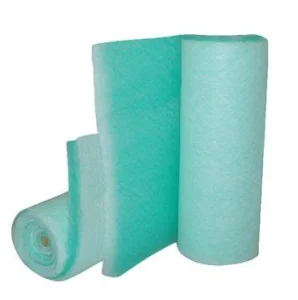
High-volume spray painting operations emit dangerous solvent VOC fumes (such as toluene, methyl ethyl ketone, and acetates). Multi-stage filtration trains consisting of fiberglass floor paint-stop media backed by heavy-duty active carbon beds adsorb organic vapors prior to atmospheric exhaust.
Municipal Wastewater Treatment Facilities
Wastewater pumping stations and sludge drying buildings release high concentrations of corrosive and noxious gases (Hydrogen Sulfide, Ammonia, Mercaptans). Chemisorbative carbon filters loaded with caustic impregnants neutralize toxic gas streams and protect surrounding urban communities.
Data Centers & Mission Critical Facilities
Server rooms located in polluted industrial corridors suffer from copper and silver blade corrosion due to airborne sulfur compounds. AHU carbon air scrubbing guarantees ISA-71.04 Class G1 mild environmental levels to maximize IT equipment uptime.
Localized Support, Quality Assurance & Compliance Standards
Rigorous Quality Control Systems (IQC-IPQC-FQC-OQC) and International Certification Benchmarks
To succeed in international markets across North America, Europe, Asia-Pacific, and the Middle East, OEM/ODM manufacturing of carbon AHU filters must satisfy stringent environmental, performance, and safety protocols. As a national high-tech manufacturing leader, our production facility executes a strict four-stage quality assurance protocol:
1. IQC (Incoming QC)
Verification of raw coconut shell / coal carbon pellet CTC adsorption values, specific surface area, moisture content, frame tolerance, and non-woven substrate basis weight prior to production batch approval.
2. IPQC (In-Process QC)
Automated monitoring during pleating, continuous hot-melt sealant application, frame ultrasonic welding, and polyurethane gasket dispensing to eliminate air bypass routes.
3. FQC (Finished QC)
Random sampling per batch for pressure drop vs. airflow testing, initial single-pass gaseous efficiency testing per ISO 10121, and structural dimensional validation.
4. OQC (Outgoing QC)
Hermetic plastic sealing, vacuum shrink packaging, export-grade corrugated box drop testing, and palleted container load balancing for damage-free transit.
Global Compliance Framework
Our carbon AHU filters and raw filtration media are fully certified under leading global regulatory standards:
- ISO 10121-1 & ISO 10121-2: Standardized test methods for evaluating the performance of gas-phase air cleaning media and devices in general ventilation systems.
- ASHRAE 145.2: Laboratory method of testing gas-phase air-cleaning systems for efficiency and capacity under controlled pollutant loading conditions.
- UL 900 Flammability Standard: Testing for flame resistance and smoke generation characteristics in commercial and industrial air filter units.
- REACH & RoHS Compliance: Strict chemical safety compliance ensuring zero hazardous heavy metals, banned plasticizers, or SVHC substances in raw materials.
- ISO 9001:2015 & ISO 14001:2015: Certified Quality and Environmental Management Systems overseeing all factory operations.
Technology Roadmap & Future Outlook for Carbon AHU Filtration
Pioneering Next-Generation Decarbonized, Regenerative & Smart Molecular Air Cleaning Systems
Nanoporous Carbon & MOF Hybrid Composite Media
Integrating Metal-Organic Frameworks (MOFs) into conventional activated carbon structures to create ultra-selective, tailor-made adsorption sites. Enables targeted elimination of low-concentration ambient pollutants such as formaldehydes and nitrogen dioxides with 3x higher capacity.
In-Situ Regenerative & Photocatalytic Carbon Beds
Developing hybrid activated carbon filters embedded with Titanium Dioxide (TiO₂) and cold-catalyst layers. Under low-energy UV light exposure or mild thermal pulsing, adsorbed organic molecules are decomposed into H₂O and CO₂ in-situ, vastly extending filter operating life.
IoT-Enabled Smart Saturation Sensing
Replacing traditional schedule-based filter change-outs with real-time gas saturation monitoring. Embedded micro-differential pressure sensors combined with VOC gas sensors transmit real-time breakthrough curves to Central Building Management Systems (BMS).
Additional High-Performance Air Filtration Products
Explore Our Comprehensive Range of HEPA, Activated Carbon, and Specialty Industrial Media
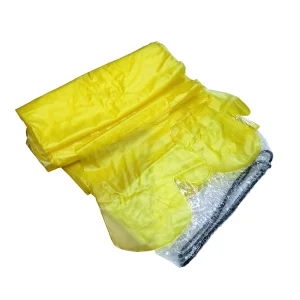
ODM China Suppliers Factory BIBO Filter Replacement Bags - PVC Change Bags with Gloves
View Product Details
CE Certification Honeywell HRF-AP100 True H13 HEPA Replacement Filter for HPA100 Series
View Product Details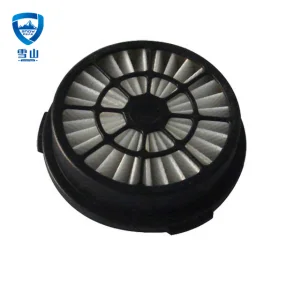



Wholesale Sandwich Type Carbon Fabric Mini-Pleated HEPA Efficient VOC Removal Filter
View Product Details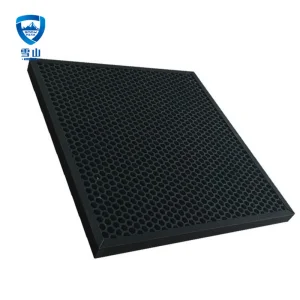
Frequently Asked Questions (Engineering & Procurement FAQ)
In-Depth Technical Insights for HVAC Consultants, System Integrators, and Global Wholesale Buyers
How do I calculate the correct active carbon quantity and contact time for an AHU system?
To determine the proper carbon mass and contact time, HVAC design engineers evaluate the total volumetric airflow rate ($Q$, in m³/h or CFM), target gas concentration (ppm/ppb), and desired single-pass filtration efficiency. The residence time ($t$) is calculated as:
Residence Time (s) = Bed Volume (m³) / Volumetric Airflow (m³/s)
For general VOC removal in commercial real estate, a contact time of 0.02s to 0.05s is standard. For heavy industrial exhaust scrubbing or hazardous chemical removal, a residence time of 0.1s to 0.2s or higher is required. Our factory engineering team provides custom mathematical modeling for exact pressure drop and residence time optimizations.
What is the difference between physical activated carbon and chemically impregnated carbon?
Physical virgin carbon relies solely on van der Waals physisorption inside high-surface-area micropores (ideal for organic solvents, VOCs, gasoline fumes, and aromatic hydrocarbons). Chemically impregnated carbon is treated with chemical reagents (such as 5-10% KOH for acid gases like H₂S, H₃PO₄ for alkaline gases like Ammonia, or KMnO₄ for oxides) to induce chemisorption. Chemisorption locks volatile inorganic molecules into non-volatile chemical salts permanently.
How does ambient relative humidity (RH) affect carbon filter efficiency in Air Handling Units?
Relative humidity plays a critical role in physisorption efficiency. When RH exceeds 60% to 70%, water vapor molecules compete aggressively with non-polar VOCs for active adsorption sites inside the carbon pores, causing a dramatic drop in VOC retention capacity. For humid AHU environments, pre-dehumidification coils or specialized hydrophobic coconut-shell carbon with higher micropore-to-mesopore ratios are recommended.
What pre-filtration is required upstream of a carbon AHU filter bank?
Carbon filters must ALWAYS be protected by upstream particulate pre-filters (minimum MERV 11 / ISO ePM1 55% or higher, such as G4 + F7/F9 pocket filters). Airborne dust, grease, and liquid aerosol particles will blind the microscopic pores of the carbon matrix, reducing gaseous adsorption capacity by up to 80% before the carbon itself is chemically exhausted.
How can maintenance teams determine when a carbon filter in an AHU needs replacement?
Unlike particulate HEPA filters (where replacement is dictated by pressure drop increase), carbon filters do NOT exhibit a significant pressure drop change as they become saturated with gas. Saturation must be monitored via:
1) Downstream photoionization detector (PID) VOC sensors;
2) Periodic laboratory destructive analysis of carbon test coupons;
3) Breakthrough time calculation based on total operating hours and inlet mass loading.
Does your factory offer private-label OEM manufacturing and custom frame sizing?
Yes. As a direct high-tech factory in Shenzhen, we support complete OEM/ODM customization. We produce customized dimensions, specialized header frames (galvanized steel, extruded aluminum, stainless steel, ABS plastic), custom carbon impregnation mixes, and private-label box packaging tailored for global distributors and brand owners.
What are the lead times and shipping capabilities for international container orders?
Standard prototype sampling takes 3-5 working days. Mass container production cycles typically average 15-20 days. Located near Shenzhen sea ports (Yantian/Shekou), we offer seamless FOB, CIF, or DDP logistics with full export documentation, UL 900 compliance reports, and ISO quality certificates.