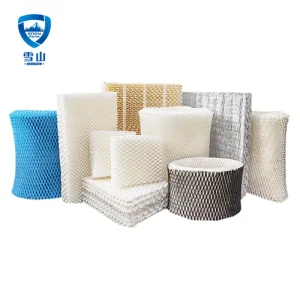
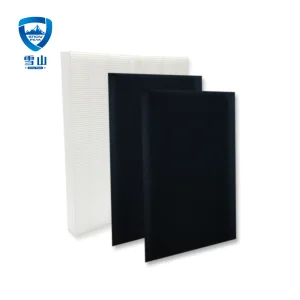
Featured Carbon & Mechanical Pre-Filter Series
Explore our OEM/ODM factory-direct pre-filtration products engineered for industrial HVAC, cleanroom HVAC systems, and residential air purifiers.
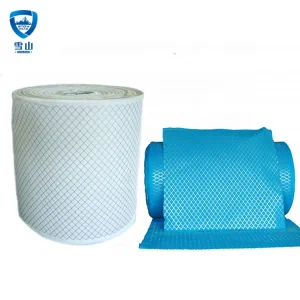

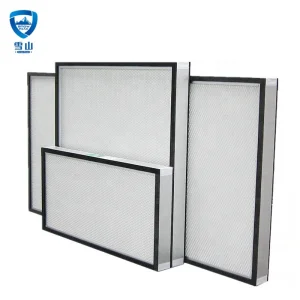
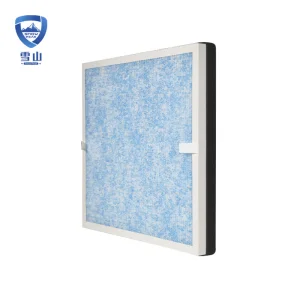

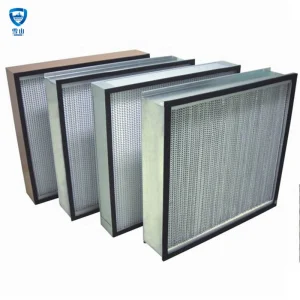

Global Trends in Activated Carbon & Mechanical Pre-Filtration
The global air filtration market is undergoing a paradigm shift. Modern industrial ventilation, commercial HVAC architecture, and consumer air purification systems no longer treat particulate capture and gas-phase adsorption as separate entities. Instead, the demand for integrated Carbon Filter Pre-Filters—which combine coarse mechanical dust holding (ISO Coarse / G3–G4 / MERV 7–8) with high-CTC (Carbon Tetrachloride) molecular adsorption—has expanded exponentially.
1. Dual-Phase Contaminant Capture
Modern indoor air quality (IAQ) metrics prioritize the simultaneous mitigation of PM10 coarse particulate and Airborne Molecular Contamination (AMC). Impregnated carbon pre-filters eliminate volatile organic compounds (VOCs), formaldehyde, and nitrogen dioxide before air masses collide with high-cost downstream HEPA/ULPA filters.
2. Decarbonization & ESG Compliance
Enterprise buyers are bound by strict LEED v4.1 and WELL Building Standard v2 frameworks. Utilizing low initial resistance carbon pre-filters reduces air handler fan energy draw while lowering system life-cycle carbon footprints. Carbon regeneration techniques further align with global circular economy goals.
3. Smart HVAC System Integration
With the rise of IoT building automation, pre-filters now incorporate differential pressure sensors and VOC gas sniffers. Factory-calibrated carbon media ensures predictable pressure-drop progression curves ($\Delta P$), allowing facilities managers to schedule predictive maintenance without unexpected system shut-downs.
Material Science: Adsorption Mechanics & Substrate Engineering
Achieving superior information gain and operational security requires understanding the molecular and mechanical interaction within a high-performance Carbon Filter Pre Filter. Raw activated carbon selection and substrate lamination methods directly dictate breakthrough curves and structural longevity.
Virgin Coconut Shell vs. Coal Matrix
Our OEM factory utilizes premium virgin coconut shell activated carbon featuring a dominant microporous structure (< 2 nm pore diameter). Coconut shell carbon delivers a superior specific surface area ($1,000 \text{ to } 1,300 \, \text{m}^2/\text{g}$) and higher hardness, preventing carbon powder shedding into downstream cleanrooms, unlike softer coal-based media.
Substrate Lamination & Wire Mesh Support
To resolve structural collapse under high facial air velocities ($>2.5 \, \text{m/s}$), synthetic nonwoven polyester (PET) fibers are thermally bonded with pulverized activated carbon. Lamination with electro-galvanized or aluminum wire mesh ensures uniform pleat spacing and geometric stability across high-humidity HVAC ducts.
Targeted Chemical Impregnation
For specialized industrial exhaust, physical adsorption is chemically augmented. Impregnating carbon media with Potassium Permanganate ($\text{KMnO}_4$) or Phosphoric Acid ($\text{H}_3\text{PO}_4$) facilitates chemisorption for acidic gases ($\text{H}_2\text{S}, \text{SO}_2$) and basic compounds ($\text{NH}_3$), achieving targeted gas abatement.
Technical Matrix: Carbon Pre-Filter Media Grades & Performance Benchmarks
Standardized performance data evaluated per ISO 16890, EN779, and ASTM D3467 quality control standards.
| Filter Substrate Type | Mechanical Efficiency (EN779 / ISO 16890) | Carbon Loading Density ($\text{g/m}^2$) | CTC (Carbon Tetrachloride) % | Initial Resistance (@ 1.5 m/s) | Primary Target Contaminants |
|---|---|---|---|---|---|
| Carbon Impregnated PET Foam | G3 / ISO Coarse 50% | 150 – 250 g/m² | ≥ 45% | 25 Pa | Coarse Dust, Pet Hair, Odors |
| Pleated Carbon Nonwoven + Wire Mesh | G4 / ISO Coarse 75% | 250 – 400 g/m² | ≥ 60% | 42 Pa | Lint, Pollen, Light VOCs, Kitchen Smells |
| Honeycomb Carbon Granule Panel | M5 / ePM10 55% | 600 – 1000 g/m² | ≥ 80% | 65 Pa | Formaldehyde, Industrial Solvents, Benzene |
| Catalytic Impregnated Composite Roll | F7 / ePM1 60% | 350 – 500 g/m² | ≥ 70% | 58 Pa | Acid Gases ($\text{SO}_2, \text{NO}_x$), Ammonia, Ozone |
Macro Industry Solutions & B2B Sourcing Framework
Procurement engineers and sourcing managers face multi-faceted challenges across diverse application domains. As a specialized high-tech manufacturer in Shenzhen, Snow Peak Clean Technology delivers custom-tailored pre-filtration solutions optimized for operational efficiency, regulatory compliance, and total cost of ownership (TCO).
Commercial HVAC & Office Towers
Office ventilation systems handle high volumes of outside air tainted by vehicle exhaust and urban smog. Our pleated G4 synthetic carbon pre-filters eliminate toxic $\text{NO}_2$ and odors, protecting downstream VAV boxes and ensuring occupants breathe clean air certified to international indoor air quality benchmarks.
Semiconductor & Cleanrooms
In precision electronics, micro-contamination of silicon wafers by molecular outgassing causes severe yield loss. Installing our low-outgassing, virgin coconut shell carbon pre-filters upfront captures ambient hydrocarbons, maintaining pristine cleanroom ISO Class 5–8 environments.
Paint Booth & Industrial Exhaust
Automotive paint booths generate heavy solvent vapor loads (xylene, toluene, acetone) along with sticky paint overspray. Heavy-duty fiberglass pre-filters laminated with high-capacity carbon granules trap sticky paint particulates while adsorbing hazardous air pollutants (HAPs).
Localization Support & Regulatory Compliance Assurance
Navigating international trade standards demands stringent factory quality assurance. As a recognized national high-tech enterprise operating standardized cleanroom production lines, Shenzhen Snow Peak Clean Technology guarantees full compliance with global regulatory bodies.
ISO 16890 & EN779
Fully tested under standardized wind tunnels to verify particle fractional efficiency (ePM1, ePM2.5, ePM10) and airflow resistance metrics.
REACH & RoHS Compliant
All synthetic polymers, adhesives, and carbon media are certified non-toxic, free of SVHCs (Substances of Very High Concern) and heavy metals.
UL 900 Flammability
Pre-filter materials meet Class 1 and Class 2 fire retardancy standards required by North American and European commercial building codes.
Strict Four-Stage QC
Every batch undergoes rigorous IQC (Incoming), IPQC (In-process), FQC (Final Quality), and OQC (Outgoing) validation prior to container loading.
Technology Roadmap & Future Outlook (2025–2030)
Snow Peak R&D engineers actively advance next-generation filtration media. By synthesizing physical adsorption with advanced chemical catalysts, our upcoming carbon pre-filter iterations break down airborne pollutants permanently.
Phase 1: Cold Catalyst & Photocatalytic Hybrid Integration
Integrating cold catalyst nano-coatings onto carbon-loaded synthetic nonwovens allows continuous catalytic oxidation of formaldehyde into water ($\text{H}_2\text{O}$) and carbon dioxide ($\text{CO}_2$) at ambient room temperature, extending chemical service life indefinitely.
Phase 2: Nanofiber-Coated Electrostatic Pre-Filters
Electrospun nanofibers deposited on activated carbon substrates lower structural pressure drop by 30% while significantly enhancing initial capture efficiency for sub-micron particulate matters without sacrificing dust holding capacity.
Phase 3: Fully Biodegradable Bio-Synthetic Frames
Replacing traditional beverage board and petroleum plastic frames with PLA (Polylactic Acid) bio-polymers and natural fiber matrices to achieve zero-landfill, fully incinerable commercial filter disposals.
Authoritative Technical Q&A: Engineering & Sourcing Insights
Clear, accurate technical guidance to help B2B procurement managers and HVAC engineers make informed buying decisions.
Industrial Air Filtration & Media Roll Catalogue
Comprehensive selection of industrial pleated filters, pocket bag media, metallic mesh pre-filters, and replacement purifier filter sets.