
Primary Industrial Carbon & Filtration Portfolio
High-efficiency gas-phase media, pre-filter rolls, and custom VOC reduction assemblies manufactured for OEM brands and industrial plant deployments worldwide.






Macro Environmental Landscape: VOC Abatement Requirements (2025–2030)
Global regulatory mandates from the U.S. EPA (NESHAP), EU Directive 2010/75/EU, and China's GB 37822-2019 are driving unprecedented enterprise investment in advanced gas-phase filtration infrastructure.
Volatile Organic Compounds (VOCs)—including benzene, toluene, xylene, ethylbenzene, formaldehyde, and chlorinated solvents—represent one of the most critical challenges facing modern industrial manufacturing. Released across semiconductor fabrication cleanrooms, automotive spray booths, pharmaceutical synthesis facilities, flexible packaging printing lines, and chemical processing plants, VOC emissions pose severe occupational health risks, generate tropospheric ozone (smog), and lead to significant regulatory fines if left unchecked.
Semiconductor & Electronics
Airborne Molecular Contamination (AMC) control requires high-purity virgin coconut shell activated carbon to prevent outgassing, wafer defect rates, and optics clouding during photolithography.
Automotive Spray Finishing
High-volume solvent emissions (isocyanates, esters, aromatic hydrocarbons) require multi-stage pre-filtration combined with high-density pleated carbon matrices to withstand elevated airflow velocities.
Chemical & Fine Synth
Corrosive organic vapors and hydrogen sulfide co-pollutants demand chemically impregnated activated carbon (KI, KOH, or metal oxide treatments) for chemisorption and physical adsorption.
Engineering & Material Science: Activated Carbon Adsorption Dynamics
Understanding the physics of physical adsorption (Van der Waals forces) versus chemical adsorption (chemisorption) for targeted industrial gas removal.
Industrial activated carbon filter performance depends heavily on precursor choice, thermal activation parameters, and structural consolidation. Activated carbon derived from coconut shell offers superior microporosity (pore diameters < 2 nm), making it ideal for low-molecular-weight VOCs like benzene, ethanol, and acetone. Coal-based carbon exhibits wider mesopores (2–50 nm), providing faster kinetic adsorption for complex organic molecules, dyes, and heavy hydrocarbons.
| Parameter / Metric | Virgin Coconut Shell Carbon | Pelletized Coal Carbon | Chemically Impregnated Carbon | Synthetic Carbon Media Mesh |
|---|---|---|---|---|
| Primary Target Pollutants | Low MW VOCs, Benzene, Toluene | Heavy Hydrocarbons, Solvent Vapors | H2S, SO2, NH3, Acid Gases | General Odor, Low-P Pre-filter |
| CTC Adsorption Level | 60% – 90% CTC | 50% – 70% CTC | 50% – 65% Base Carbon | 40% – 60% CTC Equivalent |
| Specific Surface Area (BET) | 1,050 – 1,250 m²/g | 850 – 1,000 m²/g | 800 – 950 m²/g | 600 – 850 m²/g |
| Pore Size Dominance | Microporous (< 2 nm) | Mesoporous (2 - 50 nm) | Micro/Mesoporous Hybrid | Macroporous Carrier Layer |
| Pressure Drop Penalty | Moderate to High | Low to Moderate | Moderate | Ultra-Low Pressure Drop |
Adsorption Kinetics & The Wheeler-Jonas Breakthrough Model
In industrial plant engineering, carbon bed sizing is governed by the Wheeler-Jonas equation, which predicts the operational lifespan (breakthrough time $t_b$) of gas-phase filters under continuous contaminant mass flow:
$t_b = \frac{W_e}{C_0 Q} \left[ W - \frac{\rho_b Q}{k_v} \ln\left(\frac{C_0}{C_x}\right) \right]$
Where $W_e$ represents adsorption capacity (g/g), $W$ is total carbon mass (g), $C_0$ is inlet concentration (g/cm³), $Q$ is volumetric flow rate (cm³/min), $\rho_b$ is packed bed density, and $k_v$ is the overall absorption rate constant. Snow Peak's custom filter configurations optimize carbon weight to velocity ratio to ensure operational longevity while keeping HVAC energy consumption low.
Global Procurement Demand & Strategic Supply Chain Integration
How global procurement directors, OEM brand managers, and plant engineers mitigate supply disruptions, ensure regulatory compliance, and lower Total Cost of Ownership (TCO).
1. TCO & Energy Optimization
Over 70% of an industrial filtration system's lifetime cost stems from fan power consumption needed to overcome pressure drop. Using low-resistance wire-mesh laminated carbon media minimizes static pressure loss across AHUs.
2. OEM & Private-Label Customization
From dimensional scaling (cardboard, galvanized steel, stainless steel, or aluminum frames) to specialized branding packaging, global exporters require agile OEM/ODM production lines capable of supporting both small batch trials and container-load fulfillment.
3. Multi-Stage Filter Compatibility
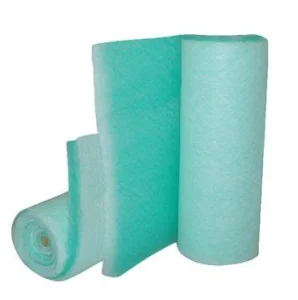
VOC carbon filters must be paired with coarse dust pre-filters (G2–G4) upstream to prevent particulate clogging of carbon micropores, and HEPA units (H13–H14) downstream to capture micro-particulates or carbon dust shedding.
Technology Roadmap: Next-Generation Gas-Phase Innovations
Pioneering advancements in non-thermal plasma integration, metal-organic frameworks (MOFs), and self-regenerative cold catalyst matrix technologies.
Metal-Organic Frameworks (MOFs) Integration
Next-gen hybrid filters combine traditional activated carbon with synthetic MOFs. These ultra-porous crystalline materials can be tuned to selectively capture target molecules (such as formaldehyde or ethylene oxide) at concentrations under 1 PPM, delivering 300% higher volumetric efficiency than standard carbons.
Photocatalytic & Cold Catalyst Synergy
Combining impregnated activated carbon substrates with TiO₂/nano-catalytic layers allows continuous catalytic oxidation (PCO) of VOCs into water vapor ($H_2O$) and carbon dioxide ($CO_2$) under ambient indoor room temperatures, extending filter service intervals by up to 2.5x.
Quality Assurance, Testing Standards & Global Compliance
Demonstrating rigorous testing protocols and international certification standards required for North American, European, and Asia-Pacific export markets.
Every industrial filtration solution leaving Snow Peak facilities passes through a comprehensive 4-stage Quality Control Framework (IQC → IPQC → FQC → OQC). Filter media performance and structural integrity are benchmarked according to global industrial standards:
- ISO 16890 / EN 779: Standardized classification of particulate pre-filters (e.g., ePM1, ePM2.5, ePM10, G4, F7–F9) ensuring air feeding into active carbon beds is clean of particulate interference.
- ASHRAE 145.2 / ISO 10121: Standard laboratory test methods for assessing the performance of gas-phase air-cleaning media and devices against specific gaseous contaminants.
- CE Marking & RoHS/REACH Compliance: Ensuring cardboard, wire mesh, adhesives, and activated carbon compounds are free from SVHCs (Substances of Very High Concern), heavy metals, or toxic chemical binders.
- UL 900 Flammability Standard: Fire-safety classification verifying that carbon filter assemblies meet non-combustibility and low-smoke emission parameters during elevated thermal conditions.
Extended Industrial & Replacement Filter Catalog
Explore our specialized range of coarse mesh rolls, HEPA replacement sets, and specialized cylindrical dust collector units.




Frequently Asked Questions (FAQ) for Industrial Procurement & Engineering
Expert insights addressing key questions on carbon filter sizing, breakthrough indicators, chemical impregnations, and operational lifespan.
Optimize Your Facility's VOC Extraction Efficiency Today
Connect with Snow Peak's air filtration engineering team to request custom carbon bed calculations, technical datasheets, or volume wholesale quote proposals for international shipment.