

Carbon monoxide ($\text{CO}$) is a colorless, odorless, tasteless, and highly toxic gas produced by the incomplete combustion of carbon-containing fuels. Unlike particulate matter ($\text{PM}_{2.5}/\text{PM}_{10}$) or high-molecular-weight Volatile Organic Compounds ($\text{VOCs}$), carbon monoxide presents a unique molecular challenge for environmental control engineers. Standard physical adsorption media, such as conventional activated carbon, demonstrate virtually zero retentive capacity for carbon monoxide at ambient temperatures due to $\text{CO}$'s extremely low boiling point ($-191.5^\circ\text{C}$), non-polar molecular structure, and minimal van der Waals force interaction.
To overcome these physical limitations, high-quality carbon monoxide air filter manufacturers utilize advanced chemical engineering methodologies—primarily catalytic oxidation and chemically impregnated chemisorption media. By transforming lethal $\text{CO}$ molecules into inert carbon dioxide ($\text{CO}_2$) via room-temperature heterogeneous catalysis, industrial-grade filter systems guarantee worker safety, process integrity, and strict regulatory compliance across mining, metallurgy, commercial HVAC, aerospace, and emergency response operations.
Understanding the thermodynamic and kinetic mechanisms of $\text{CO}$ removal is crucial for procurement teams and industrial system designers. Carbon monoxide filtration relies on two primary technological pathways:
1. Heterogeneous Hopcalite Catalysts
Hopcalite is a specialized mixture of manganese dioxide ($\text{MnO}_2$) and copper oxide ($\text{CuO}$), typically formulated in a 60:40 mass ratio. It acts as a heterogeneous catalyst that promotes the oxidation of $\text{CO}$ to $\text{CO}_2$ using ambient atmospheric oxygen ($2\text{CO} + \text{O}_2 \rightarrow 2\text{CO}_2$). The catalyst operates continuously without becoming consumed, provided relative humidity ($\text{RH}$) is strictly controlled below 15% via desiccant pre-layers.
2. Precious Metal Nano-Catalysts
Utilizing nano-dispersed Platinum ($\text{Pt}$), Palladium ($\text{Pd}$), or Gold ($\text{Au}$) anchored onto high-surface-area metal oxide supports like Titania ($\text{TiO}_2$) or Alumina ($\text{Al}_2\text{O}_3$). These formulations offer exceptional moisture tolerance and high conversion kinetics at ambient room temperatures ($0^\circ\text{C}$ to $40^\circ\text{C}$), rendering them ideal for emergency escape re-breathers and high-humidity HVAC streams.
3. Impregnated Carbon Chemisorption
Activated carbon matrices impregnated with transition metal salts (such as copper salts or potassium permanganate $\text{KMnO}_4$). While limited in absolute lifetime capacity compared to true catalytic oxidation, chemisorption beds provide dual-action removal of low-ppm $\text{CO}$ alongside sulfur dioxide ($\text{SO}_2$), ammonia ($\text{NH}_3$), and volatile organic compounds.
The global carbon monoxide air filter market is undergoing rapid expansion, driven by stringent occupational health regulations, expanding underground infrastructure, and heightened industrial process safety standards worldwide.
Regulatory bodies including the United States Occupational Safety and Health Administration (OSHA), the European Chemicals Agency (ECHA), and the National Institute for Occupational Safety and Health (NIOSH) have established strict Permissible Exposure Limits (PEL) for $\text{CO}$, generally capped at 35 PPM to 50 PPM over an 8-hour Time-Weighted Average (TWA), with ceiling limits as low as 200 PPM. In critical environments like underground mining refuge chambers, the emergency limit is fixed at under 35 PPM to prevent acute hypoxia and fatal carboxyhemoglobin ($\text{COHb}$) buildup in human blood.
| Sector / Region | Primary CO Source | Technical Filter Requirements | Key Regulatory Standards |
|---|---|---|---|
| Underground Mining & Tunneling | Diesel exhaust, blasting fumes, mine fires | Hopcalite catalyst beds + Silica gel desiccant pre-layers + Flame arrestors | MSHA 30 CFR, EN 14387, OSHA PEL |
| Steel & Metallurgical Smelting | Blast furnace gas (BFG), coke oven off-gas | High-temperature ceramic honeycomb catalysts, metal mesh pre-filters | ISO 14001, GB/T 20908, EPA MACT |
| Commercial Underground Parking | Automotive internal combustion exhaust | Pleated composite carbon media, high-flow inline HVAC modules | ASHRAE 62.1, EN 16798, DIN 1946 |
| Chemical & Hydrogen Synthesis | Syngas processing, steam methane reforming | Precious metal catalyst grids, zero-outgassing stainless steel framing | ATEX Directive 2014/34/EU, ISO 9001 |
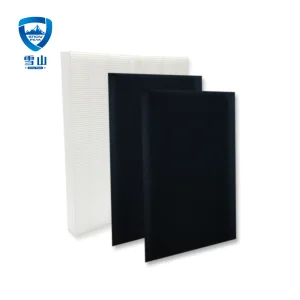
| Fire Safety & Emergency Respirators | Building fires, wildfire smoke plumes | Compact particulate HEPA + Ambient temperature CO catalyst cartridges | EN 403, NIOSH 42 CFR 84 |
The design of a commercial carbon monoxide filter extends far beyond filling a canister with active granules. Industrial air filter manufacturers must optimize spatial velocity, static pressure drop ($\Delta P$), residence time, and thermal dissipation.
Extruded Honeycomb Substrates
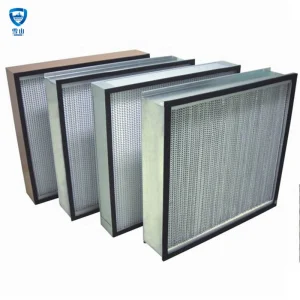
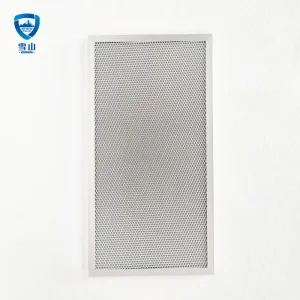
Aluminum or ceramic honeycombs coated with active catalyst washcoats provide maximum geometric surface area with minimal pressure resistance. Ideal for high-velocity HVAC ductwork ($2.5\text{ m/s}$ to $5.0\text{ m/s}$), honeycomb matrices eliminate dust bypass and granular settling caused by vibration.
Granular Catalyst Packed Beds
Deep-bed designs utilizing $1\text{--}3\text{ mm}$ extruded Hopcalite pellets offer maximum chemical holding capacity for enclosed refuge shelters. Spring-loaded compression plates prevent channeling, ensuring uniform contact time ($\tau \ge 0.1\text{ seconds}$).
Pleated Composite Media
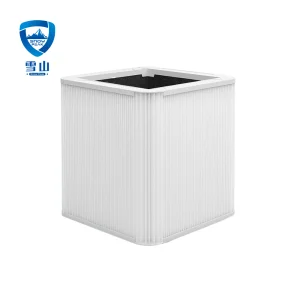
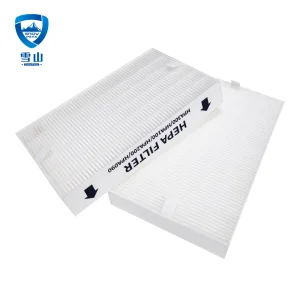
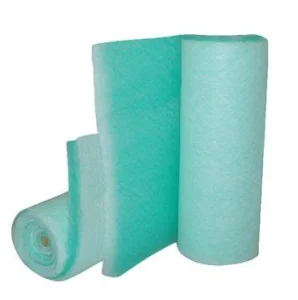
Flexible synthetic or fiberglass substrates impregnated with micro-fine catalyst powders. Pleated structure multiplies filtration surface area by up to 15 times compared to flat panels, integrating particulate HEPA filtration and $\text{CO}$ conversion into a single compact housing.
The primary failure mode for Hopcalite-based $\text{CO}$ catalysts is water vapor poisoning. Water molecules adsorb strongly onto the active manganese oxidation sites, blocking carbon monoxide access and deactivating catalytic performance at relative humidity levels exceeding 20%. To guarantee lifetime performance, premium OEM manufacturers integrate a three-stage moisture protection system:
- High-Capacity Desiccant Stage: Upstream placement of molecular sieve 13X, activated alumina, or engineered silica gel layers to lower inlet stream $\text{RH}$ to under 5%.
- Hydrophobic Catalyst Coatings: Nano-scale fluoropolymer or hydrophobic silane surface modifications that repel liquid water droplets while permitting gaseous $\text{CO}$ diffusion.
- Exothermic Heat Utilization: The oxidation reaction ($2\text{CO} + \text{O}_2 \rightarrow 2\text{CO}_2$) generates exothermic thermal energy ($\Delta H = -283\text{ kJ/mol}$). Strategic thermal isolation design utilizes this localized heat rise to naturally drive moisture off the catalyst bed during high $\text{CO}$ spike events.
As the world's primary manufacturing hub for advanced filtration technology, Chinese OEM/ODM factories deliver unmatchable supply chain integration, rapid prototyping, and cost efficiencies for global procurement partners.
Vertical Supply Integration
From raw synthetic fiber meltblown production and chemical catalyst synthesis to precision frame stamping (galvanized steel, aluminum alloy, ABS) and automated polyurethane sealing. Domestic raw material access eliminates multi-tier supplier markups and reduces lead times by up to 60%.
ISO & Cleanroom Rigor
Modern Chinese filter facilities feature Class 100,000 (ISO 8) and Class 10,000 cleanroom assembly lines equipped with automated pleating machines, continuous ultrasonic welding, and robotics-assisted foam gasket dispensing. Quality systems adhere strictly to ISO 9001, ISO 14001, and ISO 45001.
100% Quality Assurance & Testing
Every industrial filter batch undergoes comprehensive efficiency testing via calibrated NDIR (Non-Dispersive Infrared) carbon monoxide gas analyzers, gas chromatography, and automated aerosol leak detection rigs (MPPS testing per EN 1822 and ASHRAE 52.2 standards).
Carbon monoxide filtration units are customized to match specific airflow dynamics, temperature ranges, gas concentration profiles, and mechanical space constraints.
1. Mining Refuge Chambers & Self-Rescuers
Operating Environment: Sealed underground refuge pods containing up to 30 miners for up to 96 hours post-explosion.
Engineering Solution: Positive-pressure closed-loop scrubbers incorporating particulate HEPA pre-filtration, Hopcalite catalyst beds, lithium hydroxide ($\text{LiOH}$) $\text{CO}_2$ absorbers, and passive cooling fins.
2. Underground Parking & Tunnel Ventilation
Operating Environment: High-volume air handling units handling $10,000\text{--}100,000\text{ m}^3/\text{h}$ containing car exhaust pulses.
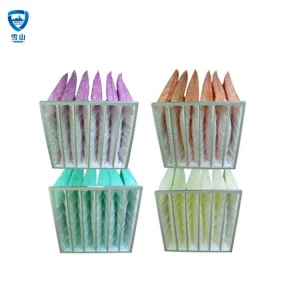
Engineering Solution: V-bank or metallic frame pleated carbon-catalyst modules operating at low pressure drops ($\Delta P < 120\text{ Pa}$), tied to automated sensor-driven variable frequency drive (VFD) fans.
3. Metallurgy & Steel Mill Off-Gas Scrubbing
Operating Environment: Flue exhaust streams with elevated temperatures ($80^\circ\text{C}$ to $250^\circ\text{C}$) and heavy particulate loading.
Engineering Solution: High-temperature ceramic or stainless-steel mesh coated catalysts preceded by pulse-jet baghouse dust collectors and inline gas chillers.
When requesting quotations (RFQs) or initiating OEM custom engineering projects with Chinese manufacturers, procurement managers should specify parameters against this standardized engineering matrix:
| Technical Parameter | Standard Range / Options | Engineering Impact / Significance |
|---|---|---|
| Volumetric Airflow Rate | $100\text{ m}^3/\text{h}$ to $50,000+\text{ m}^3/\text{h}$ | Determines filter face velocity, bed depth, and total catalyst weight required. |
| Inlet CO Concentration | $50\text{ PPM}$ to $10,000+\text{ PPM}$ (1%) | Dictates reaction kinetics, thermal rise calculation, and catalyst formulation choice. |
| Operating Temperature | $-20^\circ\text{C}$ to $+200^\circ\text{C}$ | Determines catalyst thermal stability requirement (Noble metal vs. Hopcalite). |
| Relative Humidity (RH) | 0% to 95% Non-condensing | Determines depth of desiccant pre-layer or need for hydrophobic catalyst media. |
| Target Conversion Efficiency | 90.0% to 99.99% | Directly impacts residence time ($\tau$) and allowable facial velocity. |
| Frame & Housing Material | Galvanized Steel, Stainless Steel (304/316L), ABS, Anodized Aluminum | Ensures mechanical structural rigidity, corrosion resistance, and zero off-gassing. |
The air filtration industry is evolving rapidly toward multi-functional composite media, smart sensor integration, and eco-friendly manufacturing methodologies.
1. All-in-One Multi-Gas Composite Filters
Future HVAC and cleanroom architectures demand simultaneous removal of particulate matter ($\text{PM}_{0.1}$), carbon monoxide ($\text{CO}$), volatile organic compounds ($\text{VOCs}$), nitrogen oxides ($\text{NO}_x$), and ozone ($\text{O}_3$) within a single multi-layer pleated matrix, reducing equipment footprint and fan power consumption.
2. IoT-Enabled Smart Filter Modules
Integration of low-power RFID tags and inline chemical resistance sensors into the filter frame. Smart modules continuously communicate real-time catalytic efficiency, remaining moisture capacity, pressure drop, and service life directly to building management systems (BMS).
3. Zero-Carbon & Regenerative Media
Development of thermal and electrical self-regenerating catalyst beds. By applying a low-voltage electrical pulse, adsorbed moisture is driven off and chemical active sites are refreshed in-situ, extending operational service lifespan up to 5 times over conventional disposable cartridges.
Technical, procurement, and engineering answers addressing carbon monoxide filter selection, customization, and factory operations.
1. Can standard activated carbon filters absorb carbon monoxide (CO)?
No. Standard activated carbon is ineffective for carbon monoxide removal. $\text{CO}$ is a non-polar gas with a very low boiling point ($-191.5^\circ\text{C}$) and small kinetic diameter ($0.376\text{ nm}$), meaning physical van der Waals adsorption forces are virtually non-existent at room temperature. Carbon monoxide removal requires specialized catalytic oxidation media (such as Hopcalite or precious metal catalysts) or chemical chemisorption impregnants that chemically convert $\text{CO}$ to $\text{CO}_2$.
2. What is Hopcalite, and how does it convert CO to CO2?
Hopcalite is a synthetic catalyst typically composed of manganese dioxide ($\text{MnO}_2$) and copper oxide ($\text{CuO}$). It acts as a heterogeneous catalyst, facilitating the reaction between carbon monoxide and atmospheric oxygen ($2\text{CO} + \text{O}_2 \rightarrow 2\text{CO}_2$) at ambient temperatures. Because it is a catalyst rather than an absorbent, it is not consumed in the reaction and can theoretically operate indefinitely if kept free from moisture and dust contamination.
3. How does high humidity affect carbon monoxide filter performance?
Moisture is the primary poison for Hopcalite catalysts. Water molecules preferentially adsorb onto the active catalytic sites, preventing $\text{CO}$ molecules from reacting. If relative humidity ($\text{RH}$) exceeds 15% to 20%, catalytic efficiency degrades rapidly. To prevent this, professional OEM manufacturers incorporate upstream desiccant layers (such as molecular sieves or engineered silica gel) or utilize moisture-tolerant precious metal catalysts.
4. What OEM and ODM customization options do Chinese filter factories provide?
Full OEM/ODM engineering services include custom dimensional sizing, tailored facial velocities, custom catalyst loadings, custom frame materials (galvanized steel, 304/316 stainless steel, extruded aluminum, molded ABS plastic), integrated sealing gaskets (EPDM, continuous PU foam), and private-label packaging with full compliance documentation.
5. How do manufacturers test and certify CO filter conversion efficiency?
Filters are mounted in sealed single-pass or recirculating test rigs equipped with Non-Dispersive Infrared (NDIR) gas analyzers and gas chromatographs. Known challenge concentrations of $\text{CO}$ (e.g., $1,000\text{ PPM}$ or $5,000\text{ PPM}$) are introduced at controlled airflows, temperatures, and humidity levels. Conversion percentage is calculated by comparing upstream and downstream concentrations ($[\text{CO}]_{\text{in}} - [\text{CO}]_{\text{out}} / [\text{CO}]_{\text{in}} \times 100\%$) according to standards such as EN 14387 and ISO 11155.
6. What is the typical shelf life and operational lifespan of a CO filter?
When sealed in moisture-proof foil packaging with desiccants, un-opened filter cartridges have a shelf life of 3 to 5 years. Once installed and exposed to active airflow, operational lifespan depends on continuous $\text{RH}$ levels and cumulative $\text{CO}$ exposure. Industrial HVAC modules are typically replaced every 12 to 24 months, while refuge chamber self-rescuers are rated for emergency usage durations (e.g., 60 minutes to 96 hours continuous operation).
7. Does the catalytic oxidation of carbon monoxide generate heat?
Yes. The reaction $2\text{CO} + \text{O}_2 \rightarrow 2\text{CO}_2$ is exothermic, releasing approximately $283\text{ kJ}$ of thermal energy per mole of oxidized $\text{CO}$. At low concentrations ($< 100\text{ PPM}$), temperature rise is negligible. However, at high concentrations ($> 5,000\text{ PPM}$ / 0.5%), air stream temperature downstream of the filter bed can rise significantly. System engineers must factor in heat dissipation or heat exchangers when designing high-concentration scrubbers.
8. What are the minimum order quantities (MOQ) and production lead times for factory sourcing?
Standard prototype and sample orders are generally produced within 5 to 7 working days. Batch manufacturing MOQs range from 100 units for large industrial HVAC frames to 1,000+ units for compact replacement filters. Full container mass production runs are typically completed within 15 to 25 days, with direct shipping via major ports in Shenzhen, Shanghai, or Ningbo.