
Featured Activated Carbon & HEPA Solutions
Engineered for precise molecular adsorption, volatile organic compound (VOC) removal, and cleanroom particle filtration.





The Global State of Industrial Activated Charcoal & Carbon Filtration
In modern industrial environments, commercial building operations, and cleanroom air systems, gas-phase contaminant control has transitioned from an optional enhancement to a critical operational requirement. As global environmental mandates tighten under US EPA Title V regulations, European REACH and EN 16798 standards, and Asia-Pacific indoor air quality (IAQ) mandates, activated charcoal and impregnated carbon filtration systems are at the forefront of chemical air purification.
As an industry-leading Charcoal Activated Filter Exporter & Service provider, our engineering architecture is tailored to solve complex gas-phase challenges: from targeted airborne molecular contamination (AMC) in semiconductor fabrication facilities to toxic volatile organic compound (VOC) abatement in automotive finishing plants.
Macro Market Highlights & Demand Drivers
- Stringent VOC Regulations: Global industrial mandates demand continuous abatement of BTEX (Benzene, Toluene, Ethylbenzene, Xylene) and acidic gas emissions.
- Micro-Electronics Growth: Sub-nanometer semiconductor lithography requires AMC removal down to parts-per-trillion (ppt) concentration levels.
- Energy Efficiency Integration: Demands for low air flow resistance (low pressure drop ΔP) media to reduce HVAC energy consumption while preserving residence time.
Advanced Adsorption Mechanics & Impregnation Science
Understanding the thermodynamic, physical, and chemical interactions within activated charcoal matrices is paramount to selecting the right filter system.
Physical Adsorption (Physisorption)
Driven by van der Waals forces, physical adsorption condenses gas molecules into the microporous network (< 2 nm pore diameter) of activated carbon. High Iodine Numbers (>1000 mg/g) and Carbon Tetrachloride (CTC) values reaching 60%–105% directly correlate to superior capacity for high-molecular-weight hydrocarbons, solvents, and organic vapors.
Chemical Impregnation (Chemisorption)
Low-molecular-weight or highly polar gases (such as Formaldehyde $CH_2O$, Hydrogen Sulfide $H_2S$, Ammonia $NH_3$, and Sulfur Dioxide $SO_2$) cannot be efficiently retained by physical forces alone. Our proprietary impregnation processes introduce chemical catalysts such as Potassium Permanganate ($KMnO_4$), Potassium Iodide ($KI$), or Phosphoric Acid ($H_3PO_4$) directly into the carbon pore structure to neutralize toxic species via irreversible oxidation or acid-base reactions.
Substrate Architecture & Matrix Forms
We engineer activated charcoal across multi-tiered substrates: virgin coconut shell granules, extruded carbon pellets, honeycombed ceramic/polyurethane monoliths, and non-woven synthetic activated carbon fiber (ACF) matrices. Each configuration balances residence time, dust-holding performance, structural stability, and pressure drop.
Activated Carbon Media Performance Matrix
| Media Type / Base Material | Target Pollutant Class | CTC Activity Range (%) | Iodine Value (mg/g) | Typical Air Resistance (ΔP @ 1.5 m/s) | Primary Application Area |
|---|---|---|---|---|---|
| Coconut Shell Granular | VOCs, High MW Solvents, Gasoline Vapors | 65% – 90% | 1050 – 1250 | 45 – 85 Pa | Commercial HVAC, Air Purifiers |
| KMnO4 Impregnated Carbon | Formaldehyde, Ethylene, Acid Gases | 50% – 70% | 850 – 1000 | 60 – 110 Pa | Hospitals, Museums, Cold Storage |
| Extruded Coal Pellet (4mm) | Industrial Exhaust, Heavy VOCs, Odors | 60% – 80% | 950 – 1100 | 35 – 70 Pa | Industrial Exhaust Towers, AHUs |
| Synthetic Carbon Non-woven Fabric | Particulates + Trace Light Odors | 45% – 65% | 800 – 950 | 15 – 35 Pa | Automotive Cabin Filters, Pre-filters |
| Activated Carbon Honeycomb | High Flow VOC Abatement, Low ΔP System | 70% – 95% | 1000 – 1150 | 10 – 25 Pa | Cleanroom AMC, Spray Booth Air Intake |
Macro Solutions & Localized Application Scenarios
Engineered charcoal filtration modules tailored to specific regional regulations, facility designs, and industry demands.
1. Semiconductor & Electronics Manufacturing Cleanrooms
Target: Airborne Molecular Contamination (AMC) ControlSemiconductor photolithography and wafer fabrication lines are sensitive to nanogram levels of organic vapors, siloxanes, acid gases, and dopants. Our custom gel-seal and V-bank chemical filter systems deploy ultra-pure activated carbon honeycomb grids that capture sub-ppb AMC levels without outgassing organic or inorganic species, ensuring maximum yield protection in ISO Class 3 to Class 5 cleanroom environments.
2. Commercial HVAC & Smart Infrastructure
Target: Urban Smog, Exhaust Vapors & Indoor Air QualityCommercial office towers, airport terminals, and healthcare facilities located in dense metropolitan regions encounter heavy traffic exhaust (NOx, SOx, VOCs) and indoor off-gassing. We export high-capacity pleated carbon panels and MERV 13-16 composite carbon-HEPA filters that seamlessly integrate into standard Air Handling Units (AHUs), maintaining energy efficiency while ensuring compliance with WELL and LEED indoor air standard certifications.
3. Industrial Paint Booths & Chemical Exhaust
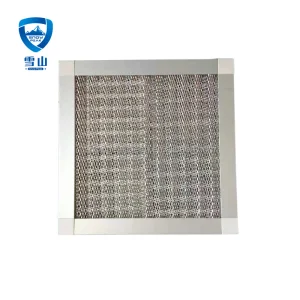
Target: High-Concentration VOC AbatementAutomotive refinishing, furniture spraying, and chemical synthesis processes emit volatile solvents including toluene, xylene, and ketones. Our industrial deep-bed filter frames and metallic mesh carbon assemblies handle high volumetric airflows while providing superior single-pass removal efficiencies, ensuring compliance with local environmental protection agency emission limits.
4. Consumer OEM & Aftermarket Purifier Systems
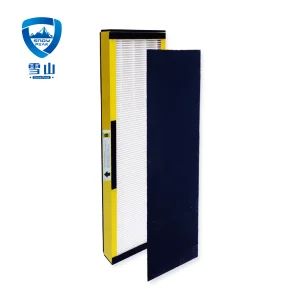
Target: Household Odors, Pet Allergens & FormaldehydePartnering with global appliance brands and e-commerce leaders, we provide custom-molded, private-label replacement filters compatible with leading residential air purifiers. Combining True H13 HEPA media with activated carbon foam or coconut carbon pellets, our OEM filters deliver whisper-quiet operation and prolonged CADR (Clean Air Delivery Rate) performance.
Technological Roadmap & Future Outlook
Leading the transition toward sustainable carbon media, catalytic regeneration, and smart filtration monitoring.
Cold-Catalyst Hybrid Carbon
Integration of room-temperature cold catalyst nano-coatings onto carbon matrices. Enables continuous catalytic oxidation of Formaldehyde ($CH_2O \rightarrow CO_2 + H_2O$) without physical saturation, drastically extending active filter lifespan.
Bio-Derived Sustainable Carbon
Transitioning base raw materials to upcycled agricultural by-products (coconut coir, agricultural biomass) activated via eco-friendly steam processes to reduce the cradle-to-gate carbon footprint of industrial filter manufacturing by 40%.
Smart Saturation Sensing
Embedding micro-conductive carbon fiber lines into filter matrices. Allows IoT-enabled real-time electrical resistance monitoring to detect true chemical saturation levels, eliminating premature replacements or breakthrough risks.
Industrial & Specialty Replacement Filters
Factory-direct OEM components, HVAC replacements, and specialized industrial filtration modules.





Frequently Asked Questions (FAQ)
Expert engineering insights regarding activated charcoal filter selection, CTC testing, lifetime calculation, and custom manufacturing capabilities.
The Iodine Number (measured in mg/g according to ASTM D4607) indicates the micropore volume (< 2 nm) of the activated carbon and measures its ability to adsorb small organic molecules. Carbon Tetrachloride (CTC) activity (ASTM D3467) measures overall pore volume, specifically predicting performance against volatile organic compounds (VOCs). Higher values in both metrics signify premium adsorption capacity.
Unlike HEPA filters, which show a distinct increase in static pressure drop as dust accumulates, charcoal filters do not significantly increase in airflow resistance as they adsorb gases. Saturation is determined by gas breakthrough (detected via photoionization detectors or gas sensors), cumulative operating hours based on continuous VOC challenge tests, or by monitoring filter weight gain.
Formaldehyde ($CH_2O$) and Ammonia ($NH_3$) have low molecular weights and small kinetic diameters, making their van der Waals bonding with virgin charcoal pores extremely weak at room temperature. Effective removal requires chemisorption via chemical impregnation—such as using Potassium Permanganate ($KMnO_4$) or acid-impregnated media—which chemically degrades or neutralizes the gas molecules.
Yes. We offer complete OEM and ODM customization services. We support a variety of frame materials—including beverage board, extruded aluminum, stainless steel, galvanized iron, and ABS plastic—along with custom dimensions, efficiency ratings, composite layering options, and private-label packaging tailored to client requirements.