
Featured Commercial & Residential Charcoal Filtration Units
Factory-direct engineering meeting international MERV, HEPA, and ISO 16890 performance benchmarks for global suppliers and OEMs.







Leading Charcoal Air Purifier Filter Manufacturing Ecosystem
Shenzhen Snow Peak Clean Technology Co., Ltd. operates state-of-the-art standardized and cleanroom production lines dedicated to gas-phase adsorption and high-efficiency particulate filtration.
15+ Years R&D Mastery
Deep expertise in physical vapor deposition, chemical impregnation (KOH, KI, Metal Oxides), and granular-to-matrix charcoal formulation for target pollutant elimination.
ISO Class 7 Cleanrooms
Zero-contamination manufacturing environments ensuring micro-pore structural integrity and precise bonding for critical pharmaceutical and cleanroom applications.
High-CTC Media Engine
Utilizing premium virgin coconut shell carbon with Carbon Tetrachloride (CTC) values exceeding 60%–90%, delivering superior specific surface area (>1100 m²/g).
Macro Industry Solutions: Engineering Gas-Phase Carbon Adsorption
In modern industrial, commercial, and residential environments, gaseous molecular contaminants present a far more complex challenge than solid particulates. While High-Efficiency Particulate Air (HEPA) filters capture microscopic dust, bio-aerosols, and PM2.5 via interception, impaction, and diffusion, they are completely transparent to Volatile Organic Compounds (VOCs), toxic fumes, industrial off-gasses, and odoriferous molecules. Achieving total Indoor Air Quality (IAQ) requires integrated Charcoal Air Purifier Filters engineered with optimized pore kinetics and target-tailored chemistry.
1. Micro-Porous Physics & Physical Adsorption (Physisorption)
At the micro-scale, activated charcoal (carbon) functions through weak intermolecular Van der Waals forces. Thermal activation via steam or carbon dioxide creates millions of sub-microscopic pores within the carbon matrix. A single gram of high-grade virgin coconut shell charcoal possesses a internal surface area exceeding 1,100 to 1,300 square meters—equivalent to the surface area of nearly four full-sized tennis courts.
When contaminated air flows across the filter bed, gaseous molecules penetrate these micro-pores ($< 20 \text{ \AA}$) and meso-pores ($20 \text{ \AA} - 500 \text{ \AA}$). Once trapped inside the pore channels, condensation dynamics lock the pollutants in place, stripping hazardous compounds like Benzene, Toluene, Xylene, and long-chain alkanes from the air stream.
2. Chemical Impregnation (Chemisorption) for Reactive Gases
Unmodified physical carbon exhibits relatively low adsorption capacity for low-molecular-weight or highly polar gasses such as Ammonia ($NH_3$), Formaldehyde ($CH_2O$), Hydrogen Sulfide ($H_2S$), and Sulfur Dioxide ($SO_2$). To overcome this chemical limitation, Snow Peak engineers advanced impregnated charcoal formulations:
- Alkaline-Impregnated Carbon (KOH / $K_2CO_3$): Neutralizes acidic gasses including $H_2S$, $SO_2$, and chlorine gasses via acid-base neutralization reactions within the carbon pore structures.
- Acid-Impregnated Carbon ($H_3PO_4$): Targets basic amines and ammonia compounds, converting volatile airborne gasses into stable, non-volatile inorganic salts.
- Metal Oxide Catalysts (Cu-Mn Oxides / Hopcalite): Promotes ambient catalytic oxidation of carbon monoxide ($CO$) and formaldehyde into harmless carbon dioxide and water vapor.
| Media Type | Primary Target Contaminants | Standard CTC Index | Typical Application Scenario |
|---|---|---|---|
| Virgin Coconut Shell Charcoal | High-MW VOCs, Gasoline Fumes, Cooking Odors, Solvents | 60% – 90% | Commercial HVAC, Residential HEPA Replacements |
| KOH Impregnated Carbon | Hydrogen Sulfide ($H_2S$), Sulfur Dioxide ($SO_2$), Acid Gases | 50% – 70% | Wastewater Treatment, Paper Mills, Chemical Plants |
| Phosphoric Acid Carbon | Ammonia ($NH_3$), Low-MW Amines, Agricultural Off-Gasses | 50% – 65% | Laboratories, Livestock Air Handling, Semiconductor Cleanrooms |
| Cold Catalyst Composite | Formaldehyde ($CH_2O$), Benzene, VOC Degradation | N/A (Catalytic) | Medical Cleanrooms, Smart Home Air Purifiers |
Global Commercial & Industrial Carbon Filtration Status
Regulatory pressure, urban densification, and industrial expansion are driving unprecedented demand for multi-stage molecular filtration globally.
The global industrial and commercial air filtration market is undergoing a structural transition. Legacy HVAC systems that relied exclusively on mechanical particulate media (such as MERV 8 fiberglass panels) are rapidly being retrofitted or replaced with combined HEPA + Charcoal Composite Systems. Key global drivers include:
Strict Indoor Air Standards
Global building standards such as WELL Building Standard v2 and LEED v4.1 explicitly award credits for active VOC mitigation and continuous molecular contaminant monitoring.
Semiconductor Yield Protection
Sub-nanometer microchip fabs require airborne molecular contaminant (AMC) control under 1 part-per-billion (ppb) to prevent wafer corrosion and photolithography defects.
E-Commerce Aftermarket Demand
Explosive global retail growth for compatible OEM/ODM replacement filter packs tailored for brands like Honeywell, Coway, Blueair, and Levoit.
Snow Peak Clean Technology maintains direct supply linkages across North America, Europe, East Asia, and the Middle East, offering bulk OEMs and regional distributors direct access to high-capacity carbon pleating, carbon-impregnated foam, bonded carbon honeycomb structures, and multi-stage bag filters.
Targeted Scenarios for Activated Charcoal Air Filters
From heavy industrial exhaust abatement to whisper-quiet home purifiers, custom filter media architectures match exact operational environments.
Residential & Smart Home
Multi-stage composite filters merging true H13 HEPA with coconut charcoal layers to remove pet dander, cooking fumes, tobacco smoke, and off-gassing from new furniture.
Commercial Buildings & HVAC
Low-pressure-drop pleated charcoal panels and pocket filters designed to fit standard Air Handling Units (AHUs), lowering fan power consumption while stripping urban smog.
Healthcare & Laboratories
Specialized chemical-grade carbon banks removing anesthetic gasses, formalin vapors, pathogen-carrying aerosols, and chemical reagents in negative-pressure isolation wards.
Cleanrooms & Microelectronics
Gel-sealed compact fluid-tank HEPA filters combined with ultra-clean carbon media to prevent outgassing of siloxanes, dopants, and organic contaminants onto silicon wafers.
Industrial Spray Booths
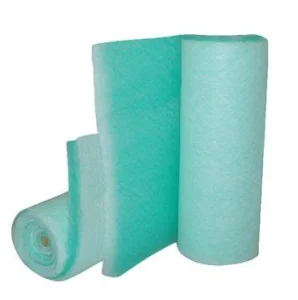
Heavy-duty fiberglass paint-stop roll media paired with downstream activated carbon bed collectors to capture paint overspray and absorb solvent VOCs before stack emission.
Data Centers & Telecommunications
Preventing gaseous electronic corrosion on server motherboards caused by atmospheric sulfur compounds ($H_2S$, $SO_2$) through continuous carbon-filtered recirculating air.
Localization Support, Regulatory Compliance & Testing
Rigorous international certification pipelines guarantee compliance with regional environmental standards and safety mandates.
Procurement managers and engineering importers face stringent compliance frameworks across different economic zones. Snow Peak guarantees complete technical transparency, providing certified laboratory test reports and third-party audit documentation for every batch shipped.
European Union (CE, REACH, RoHS)
All Charcoal Air Purifier Filter products conform to CE Directive standards. Raw materials undergo rigorous testing to ensure zero heavy metal leaching and compliance with REACH SVHC (Substances of Very High Concern) and RoHS chemical limits.
North America (ASHRAE 52.2 & UL 900)
Our pleated charcoal and HEPA replacement lines are benchmarked under ASHRAE 52.2 testing standards for MERV ratings (MERV 8 through MERV 16). Filter frames and adhesives comply with UL 900 flammability safety classifications.
ISO 16890 Filtration Classification
Particulate pre-filters and bag filters are evaluated according to ISO 16890 metrics (ePM1, ePM2.5, ePM10), allowing global engineering teams to specify exact fractional efficiencies for air handling plants.
GB/T 18801-2022 National Standard
Fully updated to meet China’s stringent GB/T 18801-2022 air purifier standards, measuring cumulative clean mass (CCM) for both particulate matter and gaseous formaldehyde.
Technology Roadmap & Next-Gen R&D Horizons
Pioneering green adsorption media, catalytic regeneration, and dynamic sensor-integrated filter architectures.
As sustainability goals drive corporate procurement, Snow Peak’s R&D division is focused on three critical technological evolutions in charcoal and molecular air filtration:
- 1. Ambient Thermal Regenerable Carbon Beds: Developing modified carbon matrix structures capable of offloading trapped VOCs during low-energy thermal purge cycles, drastically extending filter replacement lifespans.
- 2. Bio-Based Circular Carbon Substrates: Transitioning from coal-based activates to 100% sustainably harvested coconut shells and agricultural waste derivatives, reducing the embodied carbon footprint of filter production by 40%.
- 3. Nanoparticle-Impregnated Catalytic Composites: Fusing platinum-group metal oxides with carbon nano-fibers to achieve continuous catalytic destruction of airborne formaldehyde and ozone at room temperature without saturation degradation.
Industrial Pre-Filtration, HEPA & Filter Media Series
High-capacity roll media, gel-seal cleanroom modules, spray booth floor media, and OEM replacement filters.





Frequently Asked Technical & Sourcing Questions
Detailed answers for engineers, OEM brand managers, and international buyers regarding charcoal air filtration technology.
Does Snow Peak offer OEM and ODM customization for charcoal air filters?
Yes, absolutely. Snow Peak specializes in full OEM/ODM manufacturing. We customize charcoal pore structures, Carbon Tetrachloride (CTC) activity ratings (40% to 90%), frame materials (cardboard, anodized aluminum, galvanized steel, plastic injection frames), filter dimensions, and private-label packaging. We accommodate both small-batch trial orders and multi-container commercial shipments.
How do I choose between physical activated carbon and chemically impregnated carbon?
Physical virgin coconut carbon is optimal for non-specific organic gasses, general VOCs, solvent fumes, gasoline vapors, and ambient cooking odors. However, if your application involves targeted low-molecular-weight gasses—such as ammonia ($NH_3$) in agricultural/lab settings, or hydrogen sulfide ($H_2S$) in wastewater treatment—you require chemically impregnated carbon (e.g., KOH, $H_3PO_4$) to perform chemisorption and chemically neutralize the target compound.
What determines the pressure drop (airflow resistance) of a charcoal filter?
Airflow resistance is governed by granule mesh size (e.g., 4x8 mesh vs. 20x50 mesh), bed depth, face velocity, and substrate bonding method. Extruded monolithic carbon honeycombs and carbon-impregnated non-woven foams offer extremely low initial resistance ($<25 \text{ Pa}$), making them ideal for high-CFM HVAC systems, whereas granular carbon beds offer longer contact dwell times at higher resistance penalties.
Are Snow Peak replacement filters manufactured by original equipment purifier brands?
No. Snow Peak produces high-grade compatible aftermarket replacement filters engineered to meet or exceed original OEM specifications. All third-party trademark references (such as Honeywell, Coway, Blueair, or Levoit) are used solely for fit, compatibility, and descriptive identification purposes.
What quality control standards are applied prior to global export?
Every order undergoes a rigid 4-stage Quality Assurance framework: 1) Incoming Quality Control (IQC) testing carbon Iodine and CTC values; 2) In-Process Quality Control (IPQC) checking pleat geometry and seal integrity; 3) Finished Quality Control (FQC) testing initial pressure drop and particulate efficiency; and 4) Outgoing Quality Control (OQC) reviewing export palletization and moisture barrier packaging.
How often should commercial and industrial charcoal air purifier filters be replaced?
Unlike particulate HEPA filters—which indicate replacement via increased pressure drop as pores clog—charcoal filters eventually become chemically saturated without a significant rise in pressure drop. For typical commercial applications, replacement is recommended every 6 to 12 months, or as determined by continuous volatile gas sensor readings ($TVOC$ or target gas detectors).