
High-Performance Carbon & HEPA Solutions
Explore our engineered filtration products designed for commercial HVAC units, cleanrooms, and OEM replacement applications.






Global Commercial Air Filtration: Macro Trends & Molecular Control
In modern commercial infrastructure, indoor air quality (IAQ) management has transitioned from basic particulate capture to sophisticated gas-phase molecular filtration. Commercial buildings, microelectronics fabrication plants, healthcare networks, and data hubs face dual threats: particulate matter (PM2.5, PM1.0) and airborne gaseous contaminants—including Volatile Organic Compounds (VOCs), formaldehyde, hydrogen sulfide (H2S), nitrogen dioxide (NO2), and ozone (O3).
Selecting a premier commercial carbon air filter supplier is no longer merely a procurement task; it is a critical engineering decision impacting mechanical HVAC energy consumption, occupant health, compliance with ASHRAE Standard 62.1, ISO 16890, and protective standards for sensitive data hardware (ISA-71.04). Commercial carbon air filters utilize customized activated carbon matrix media to adsorb gaseous phase pollutants that traditional HEPA and MERV filters cannot capture.
As global decarbonization mandates demand lower static pressure drop across central Air Handling Units (AHUs), advanced manufacturers are innovating with composite media: integrating meltblown synthetic media with highly porous virgin coconut-shell activated carbon, honeycomb catalyst matrices, and antibacterial synthetic layers.
Molecular Adsorption Chemistry & Activated Carbon Technology
The effectiveness of a commercial carbon air filter is governed by physical adsorption (physisorption) and chemical adsorption (chemisorption). Understanding these mechanisms allows facility managers and HVAC engineers to select the exact carbon substrate for their targeted molecular contaminants.
Physical Adsorption (Physisorption)
Driven by London dispersion forces (Van der Waals forces), physisorption traps high molecular weight organic molecules inside the porous micro-architecture of activated carbon. Carbon with a high specific surface area (BET surface area exceeding 1,000–1,200 m²/g) traps VOCs, benzene, toluene, and solvent vapors without altering the chemical structure of the pollutant.
Chemical Impregnation (Chemisorption)
Low molecular weight gases (such as H2S, NH3, SO2, and Formaldehyde) do not adsorb well through physisorption alone. Carbon granules are chemically impregnated with potassium hydroxide (KOH), phosphoric acid (H3PO4), or metal oxides to initiate covalent chemical reactions, transforming toxic gases into stable non-volatile salts.
Photocatalytic & Cold Catalyst Layers
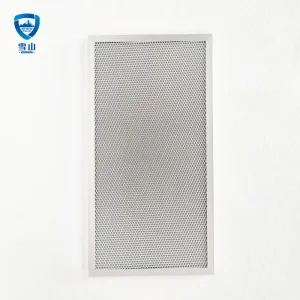
Incorporating aluminum-based honeycomb photocatalyst media allows all-weather, continuous decomposition of formaldehyde and TVOCs at room temperature without saturation limits, releasing harmless trace amounts of water and carbon dioxide.
Technical Specification Matrix: Carbon Media Selection
| Parameter / Carbon Type | Virgin Coconut Shell Granular | Pelletized Coal-Based Carbon | Impregnated Chemisorption Carbon | Carbon Fabric / Non-Woven Synthetic |
|---|---|---|---|---|
| Iodine Value (mg/g) | 1000 - 1250 mg/g | 800 - 950 mg/g | 900 - 1100 mg/g | 600 - 850 mg/g |
| CTC (Carbon Tetrachloride Adsorption) | 60% - 90% | 45% - 60% | 55% - 75% | 35% - 50% |
| Target Pollutants | High-MW VOCs, Odors, Solvents | Coarse VOCs, Industrial Exhaust | Acid Gases (H2S, SO2), Ammonia (NH3), HCHO | Light Commercial Odors, Pre-filtration |
| Air Flow Resistance | Medium - High (Bed depth dependent) | Medium | Medium - High | Ultra-Low (Minimizes Fan Energy) |
| Primary Application | Commercial Cleanrooms & Air Purifiers | Heavy Industrial Exhaust Scrubbers | Chemical Plants, Airports, Hospitals | HVAC Pleated Filters & Air Conditioner Pads |
Localized Commercial Application Scenarios
Commercial carbon air filters play diverse roles across commercial environments, tailored to address specialized gaseous threats and regulatory compliance demands.
1. Data Centers & Telecom Server Rooms
In urban data hubs, airborne sulfur compounds (H2S, SO2) cause micro-corrosion on copper circuits and silver contacts. Implementing high-capacity impregnated carbon bed filters ensures compliance with ISA-71.04 Severity Level G1 (Mild) standards, preventing hardware downtime and multi-million dollar server loss.
2. Airports & Transit Terminals
Airports face heavy concentrations of jet fuel exhaust, unburnt hydrocarbons, diesel particulate matter, and NO2. Central Air Handling Units (AHUs) fitted with V-bank carbon filter modules sanitize fresh air intakes, delivering odor-free passenger lounges and protecting indoor air quality against ambient runway pollution.
3. Healthcare & Biopharmaceutical Cleanrooms
Surgical suites, compounding pharmacies, and biopharma facilities must continuously eliminate trace solvent vapors, anesthetic gases, and disinfectant odors. Combining mini-pleated HEPA gel seal filters with high-absorption carbon fabric layers ensures sterile particulate control alongside total gas-phase containment.
4. Commercial Real Estate & High-Rise Office Towers
Addressing Sick Building Syndrome (SBS) requires continuous removal of indoor off-gassing from furniture, paints, carpets (formaldehyde, benzene), and outdoor traffic fumes. MERV 13 to MERV 16 pleated filters combined with carbon non-woven media maintain optimal building occupant wellness and support LEED certification.
5. Hospitality, Commercial Kitchens & CEA
Controlled Environment Agriculture (CEA) and commercial kitchens require heavy-duty VOC and odor abatement. High-density granular carbon canisters scrub organic terpenes, cooking grease fumes, and volatile odors before exhaust air is recirculated or released into urban districts.
Technology Roadmap & Future Outlook (2025–2030)
As global energy standards prioritize reduced fan power consumption in HVAC systems, the commercial air filtration industry is undergoing a major technological transition. Key innovations being integrated into next-generation carbon filtration systems include:
Low-Resistance Honeycomb Carbon Structures
Traditional packed-bed carbon filters create high static pressure loss, increasing HVAC energy costs. Emerging 3D honeycomb activated carbon matrices utilize continuous ceramic or aluminum channels coated with micro-porous carbon, reducing air resistance by up to 45% while maintaining rapid adsorption kinetics.
Smart Sensor & IoT Breakthrough Prediction
Integrating real-time TVOC and differential pressure sensors with cloud telemetry allows facilities to monitor carbon bed saturation continuously. Predictive algorithms calculate remaining filter service life based on gas concentration exposure, shifting maintenance from fixed calendar intervals to dynamic, condition-based replacement.
Sustainable & Regenerative Substrates
Environmental regulations are driving the development of renewable, bio-based activated carbon derived from agricultural byproducts, paired with non-toxic, water-based binders. Thermal and microwave in-situ reactivation technologies are also extending carbon filter operational lifespans.
Supply Chain Resilience & China Factory Efficiency
Located in Shenzhen, China's core high-tech manufacturing hub, Shenzhen Snow Peak Clean Technology Co., Ltd. stands as a national high-tech enterprise backed by over 15 years of air filtration manufacturing expertise. China's integrated industrial supply chain provides unique structural advantages for global buyers, procurement heads, and OEM brand owners.
Fully Integrated Material Sourcing
Our proximity to raw material suppliers (virgin coconut shell charcoal, meltblown non-woven fabric, aluminum extrusions, gel seal polymers) allows us to maintain strict material quality while reducing lead times and buffering global supply chain shocks.
Rigorous 4-Stage Quality Assurance (QC)
Every commercial filter order passes through a four-stage quality verification protocol: IQC (Incoming Quality Control of raw media), IPQC (In-Process Quality Control during pleating & framing), FQC (Finished Quality Control testing MPPS efficiency & pressure drop), and OQC (Outgoing Quality Control before container loading).
OEM & ODM Customization Excellence
We provide end-to-end custom production services, supporting non-standard frame dimensions (cardboard, galvanized steel, aluminum alloy, ABS), custom efficiency grades (G2–G4 coarse, M5–F9 fine, MERV 8–16, H13–U17 HEPA/ULPA), private label packaging, and replacement filter engineering compatible with leading international brands.
Industrial Air Filters & Specialized Media
Direct factory-supplied filtration media rolls, bag filters, V-bank modules, and multi-stage carbon combinations.






International Standards & Compliance Framework
Global enterprise buyers require strict compliance to ensure smooth cross-border customs clearance and flawless performance inside regulated commercial facilities. Our air filtration products are designed and certified to adhere to major international standard frameworks:
ISO 10121-1 / -2 Testing
Evaluates gas-phase air cleaning media and devices for general ventilation, assessing breakthrough curves and capacity for target VOCs, acid gases, and bases.
ISO 16890 & EN 779
Certifies particulate filtration performance (ePM1, ePM2.5, ePM10), ensuring our pre-filter and fine bag filter components protect down-stream carbon beds.
CE, REACH & RoHS Compliance
All synthetic polymers, carbon binders, and gel sealants comply with EU REACH regulations (SVHC-free) and RoHS environmental standards.
Frequently Asked Procurement Questions
In-depth answers from our senior engineering team regarding commercial carbon filter selection, custom OEM specifications, and operational maintenance.
How do I determine whether to use physisorption or chemisorption carbon for my building?
Selection depends on the specific gaseous contaminants present. For general commercial real estate with office VOCs, paints, and carpet odors, standard virgin coconut shell carbon with high iodine values (physisorption) is ideal. If your facility is exposed to sewer gas (H2S), airport jet exhaust (NO2/SO2), or cafeteria cooking odors (ammonia), chemically impregnated carbon (chemisorption) is required to neutralize these reactive molecules.
Does Snow Peak offer custom sizing, framing materials, and OEM brand compatibility?
Yes. We specialize in OEM and ODM air filter production. We manufacture filters to your exact dimensional requirements using cardboard, galvanized steel, extruded aluminum, stainless steel, or plastic (ABS) frames. We also produce direct compatible aftermarket replacement filters for major brands including Honeywell, Coway, Levoit, Germ Guardian, and Blueair.
How does carbon filter media affect HVAC fan static pressure and energy consumption?
Traditional thick carbon packed beds introduce high static resistance, requiring higher fan energy. To solve this, Snow Peak manufactures low-resistance carbon fabric, mini-pleated composite carbon media, and aluminum honeycomb photocatalyst structures. These designs maintain high single-pass removal efficiency while keeping initial pressure drops under 40–80 Pa, reducing central system energy costs.
What quality control measures ensure continuous consistency for large container orders?
Our manufacturing facility follows ISO 9001 quality management guidelines and operates dedicated cleanroom filter workshops. We execute a strict 4-stage Quality Assurance system: IQC for incoming media, IPQC during automated pleating and framing, FQC testing for seal integrity and particle efficiency, and OQC prior to export packaging.
Are replacement air filters manufactured by Snow Peak original equipment manufacturer (OEM) parts?
Snow Peak replacement filters are high-quality aftermarket compatible products engineered by our factory to meet or exceed original performance standards. Brand names, registered trademarks, and model numbers cited on this page are used strictly for compatibility verification and fit identification.